Malacanthus brevirostris
Slender, pale, and always near a burrow: find flagtail tilefish over sand flats in Guanacaste, Costa Rica and KwaZulu-Natal year-round.
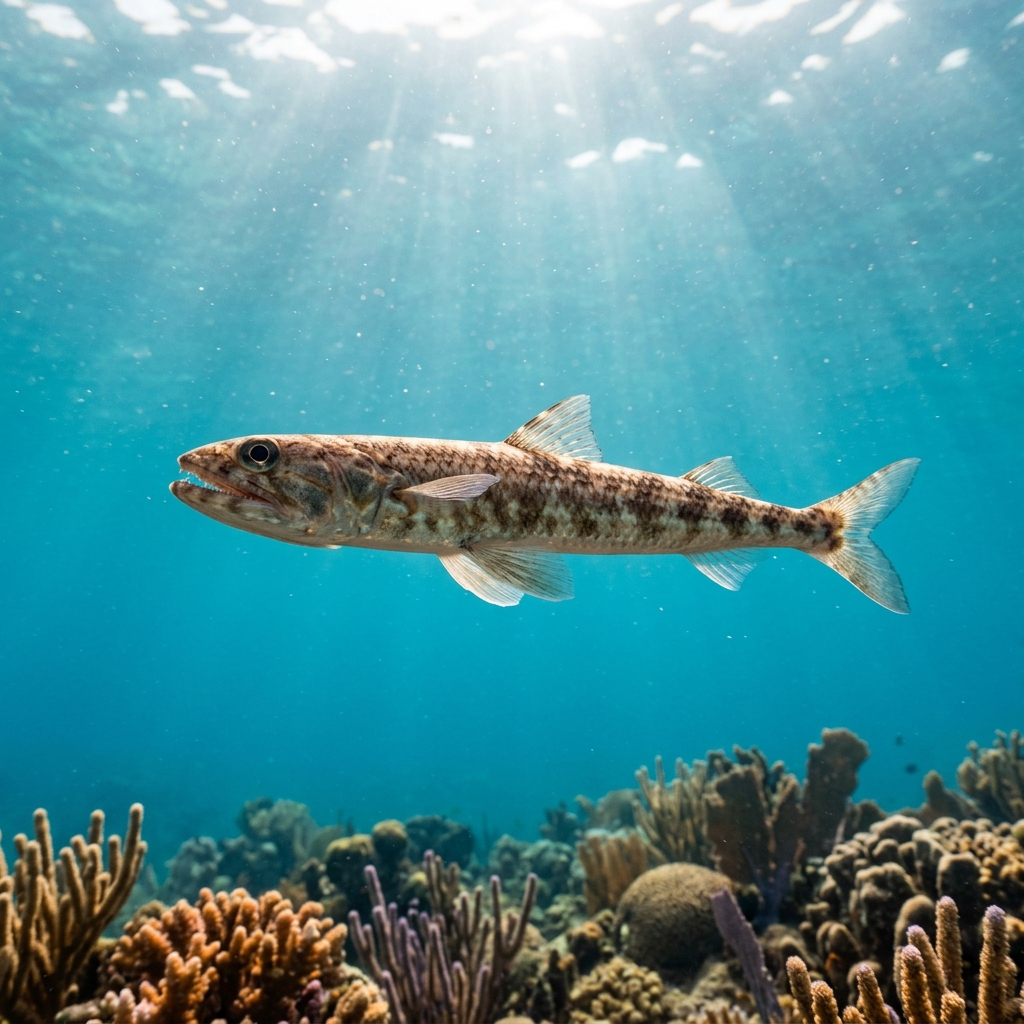
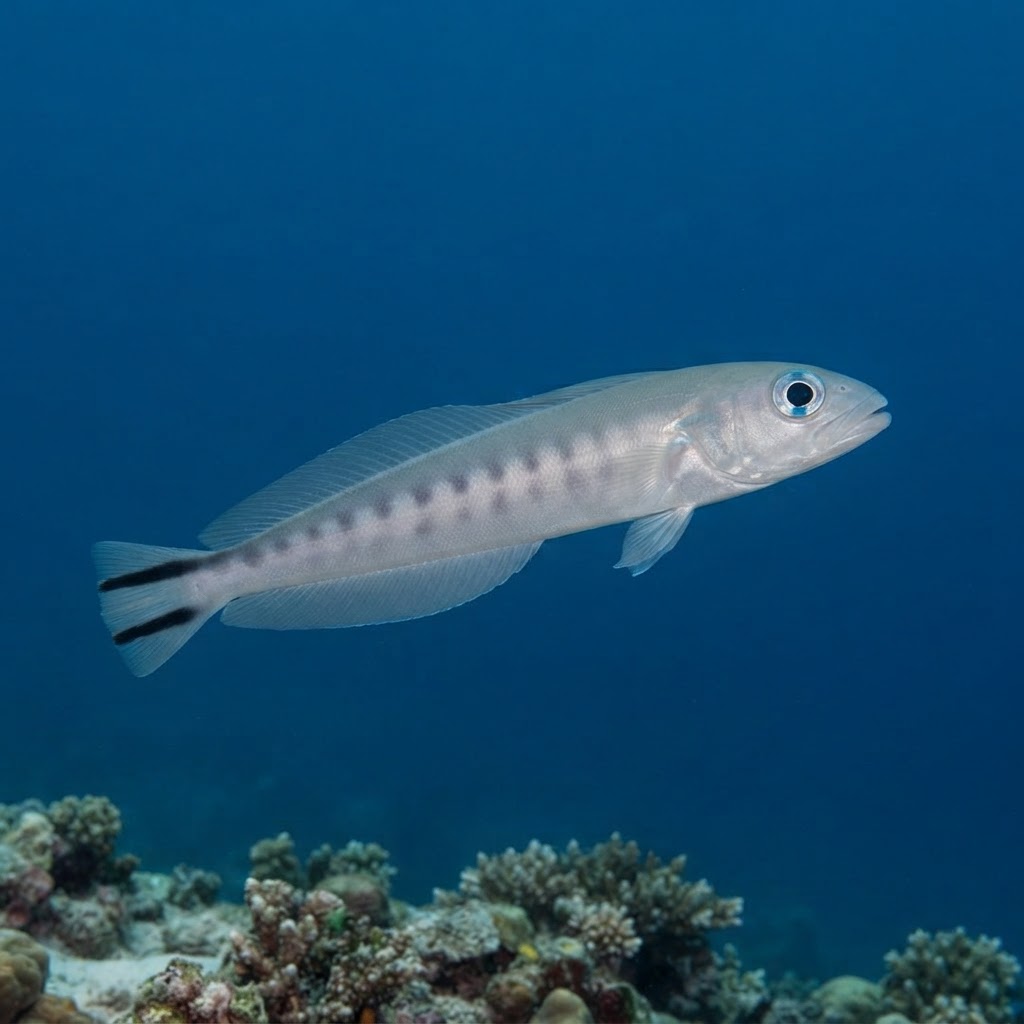
A slender, elongated body around 22 cm long, pale grey to bluish-white with a faint yellow wash and a forked tail edged in black and white stripes, which is the mark most divers key on. It hovers just above sand or rubble patches near reef edges rather than sitting on the reef itself, and darts down into a burrow when startled rather than swimming off into open water.
Typically seen hovering solo or in loose pairs a body-length or two above sand and rubble patches at the base of a reef, picking at small invertebrates stirred up from the bottom. It keeps a wary distance from divers and will retreat headfirst into a burrow it has dug in the sand if approached too fast, so a slow, low approach gives the best look. Most sightings come from patient scanning of open sand near reef structure rather than from reef swim-throughs.
It excavates and defends its own burrow in sand or rubble, using it as a bolt-hole, which is why you'll often see one vanish downward rather than swim away when approached.
Comfortable across a 24.5 to 29 C range, so it's on the reef year-round with no clear seasonal peak in the data. Plan around whichever region's general dive season suits you rather than chasing a window for this fish specifically.
Most reliably logged in Guanacaste, Costa Rica, with further strongholds in KwaZulu-Natal, South Africa, the Pacific coast of Panama, and Sabah, Malaysia. Divers also find it around the Rock Islands of Palau, on Cocos Island and the South Pacific coast of Costa Rica, and in Egypt's Marsa Alam and Deep South region.
Mapping where Flagtail Tilefish is logged…
Guanacaste in Costa Rica has the strongest numbers, with further sightings in KwaZulu-Natal (South Africa), Pacific Panama, Sabah (Malaysia), and Palau's Rock Islands. It also turns up at Cocos Island and in Egypt's Marsa Alam and Deep South region.
There's no strong seasonal pattern in sightings, and its comfortable temperature range of roughly 24.5 to 29 C means it's present on tropical and subtropical reefs throughout the year.
Look for a slender, pale grey-to-white fish around 22 cm long hovering just above sand near a reef edge, with a forked tail marked by dark and white stripes. It's usually alone or in a pair and will dive into a burrow rather than swim away if you get too close.
They typically reach about 22 cm in length, a slim build that makes them easy to overlook against open sand until they move.
Yes, they excavate a burrow in sand or rubble near the reef and retreat into it headfirst when threatened, using it as a permanent home base rather than just an escape hole.
Site and sighting data is aggregated from diver logs, iNaturalist and GBIF. For taxonomy and conservation status:
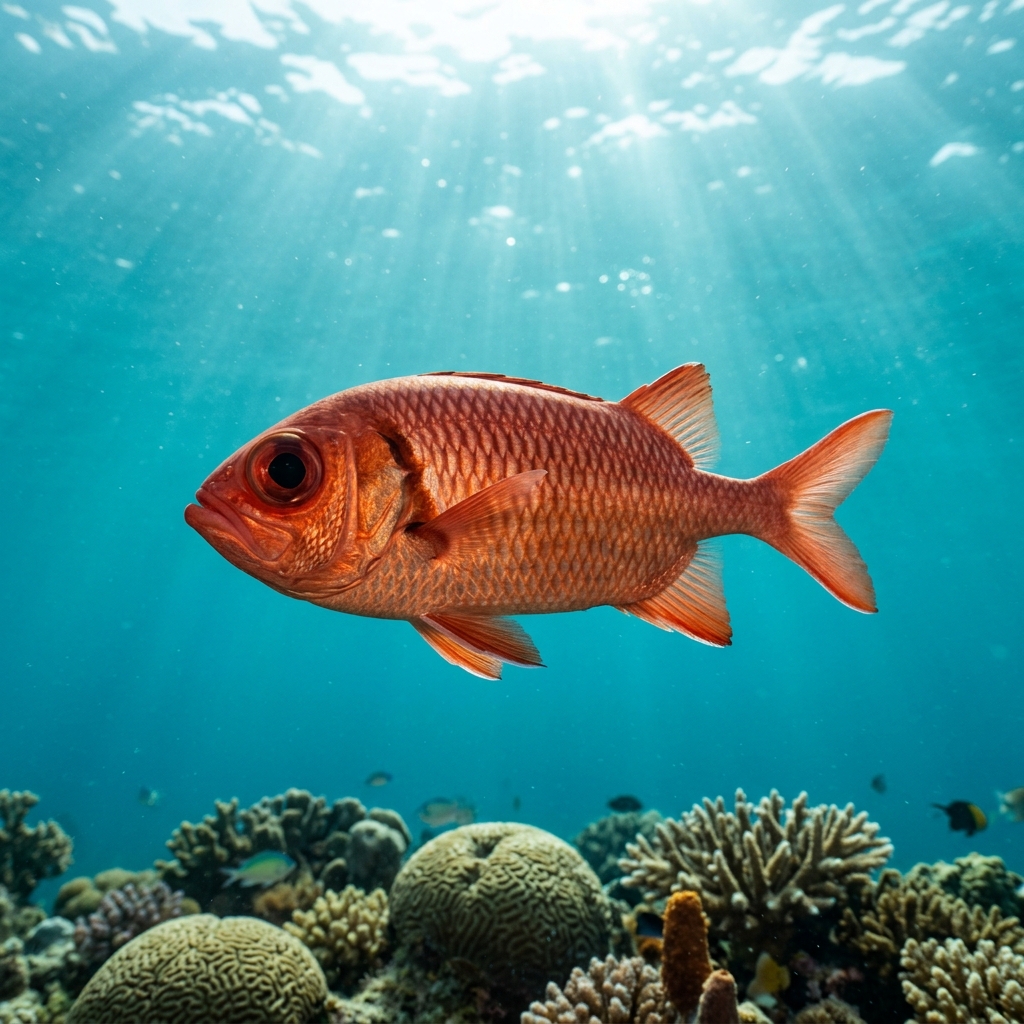
Soldierfish
3,612 sites