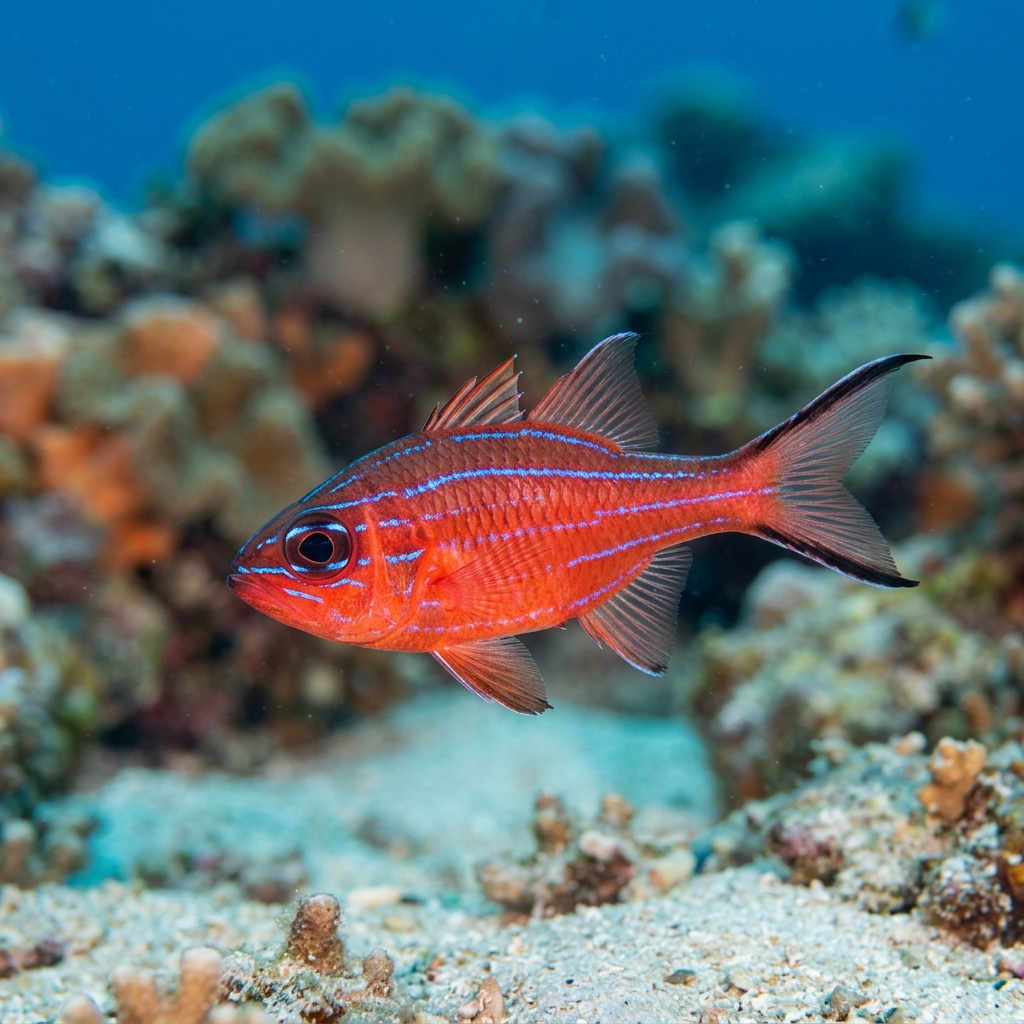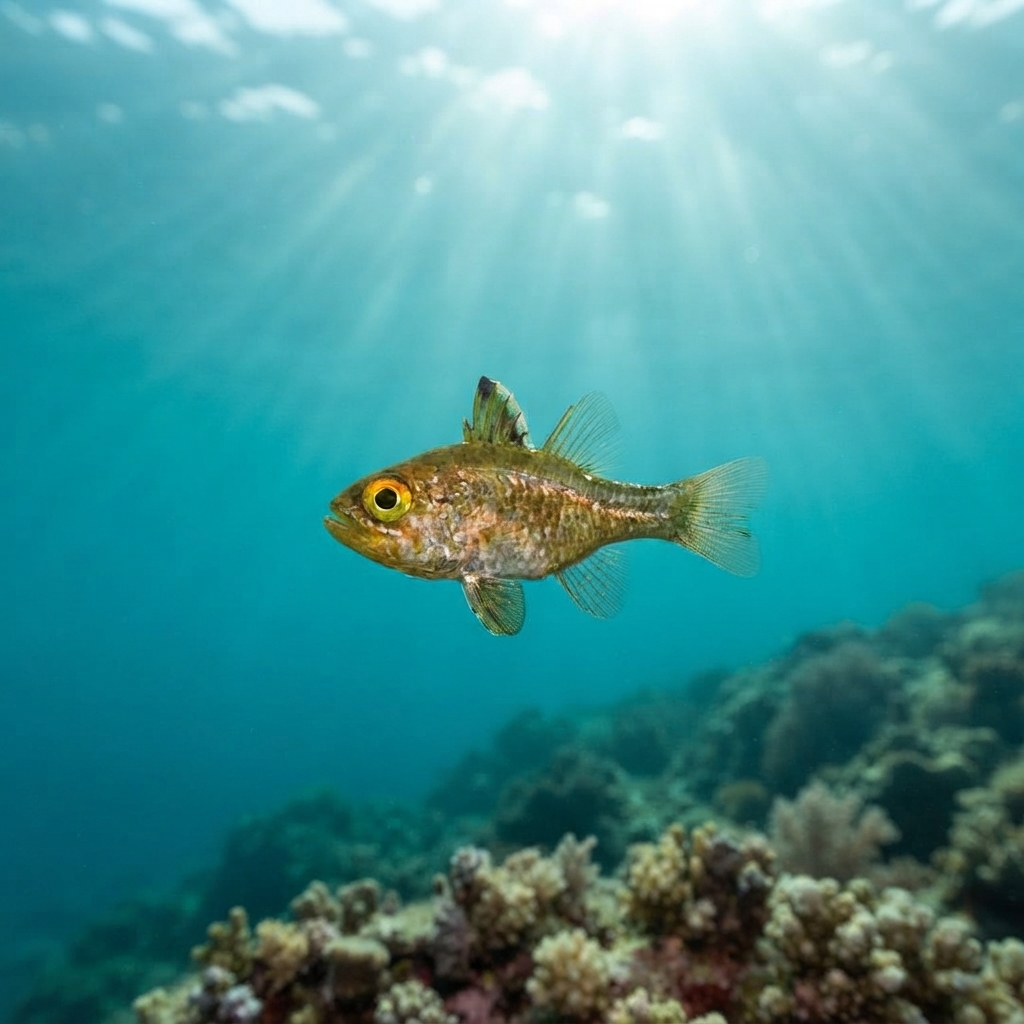
Ostorhinchus hoevenii
Small reef cardinalfish logged in 25-28C waters across Luzon and Maluku. Here's how to spot one and where it's most reliably seen.
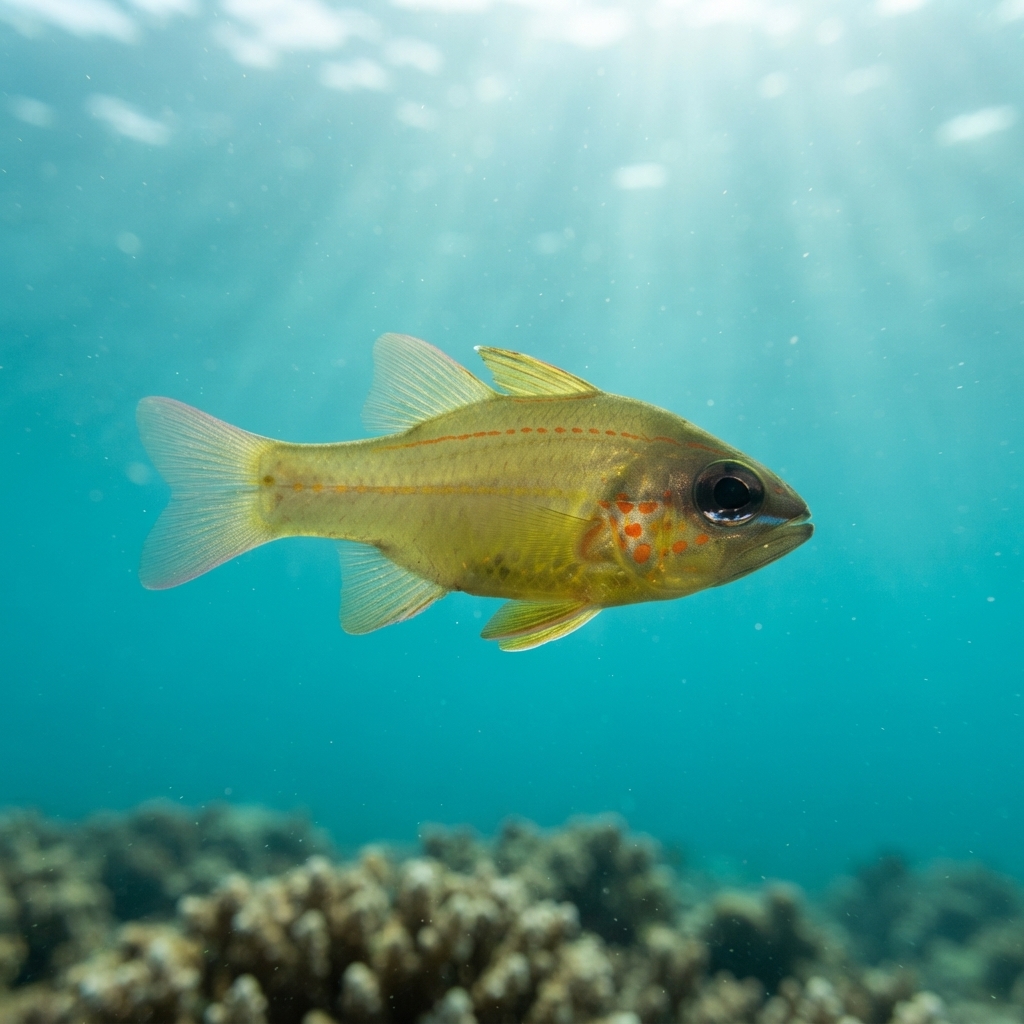
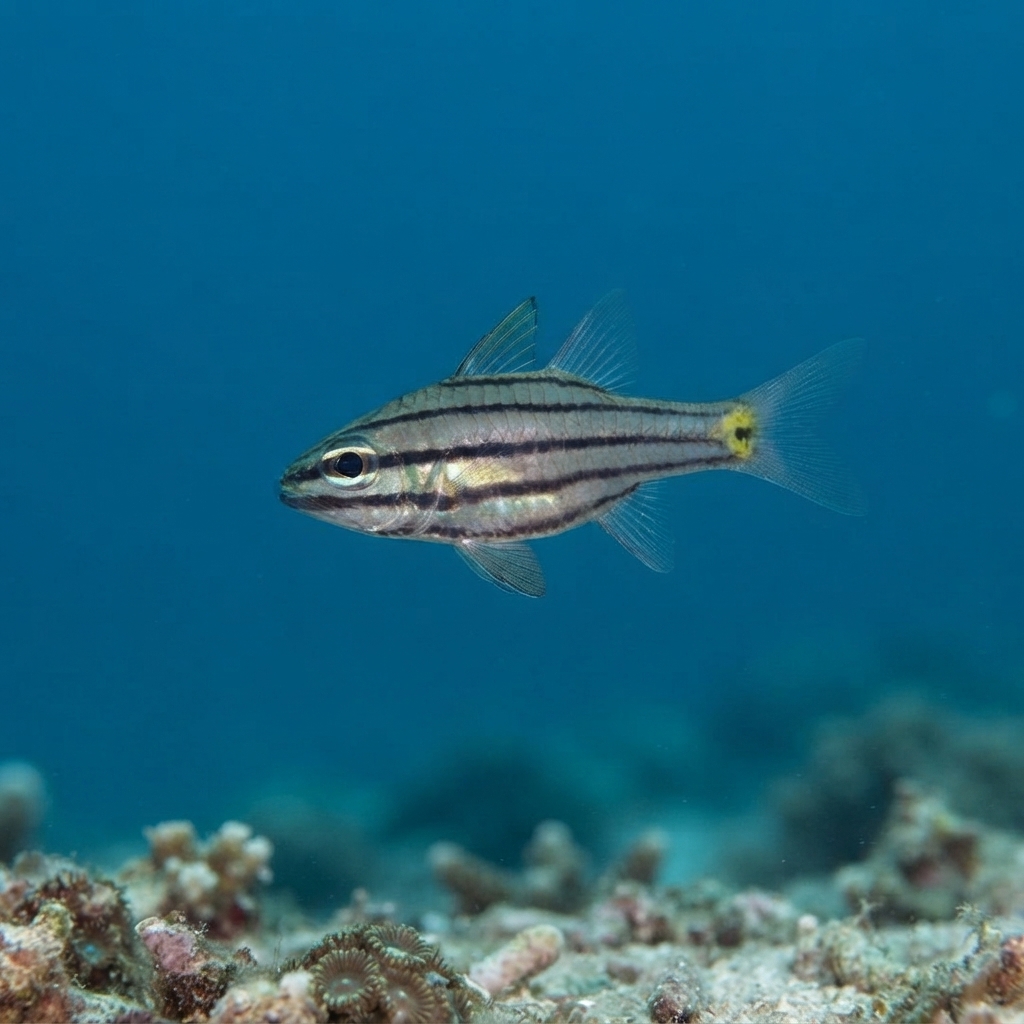
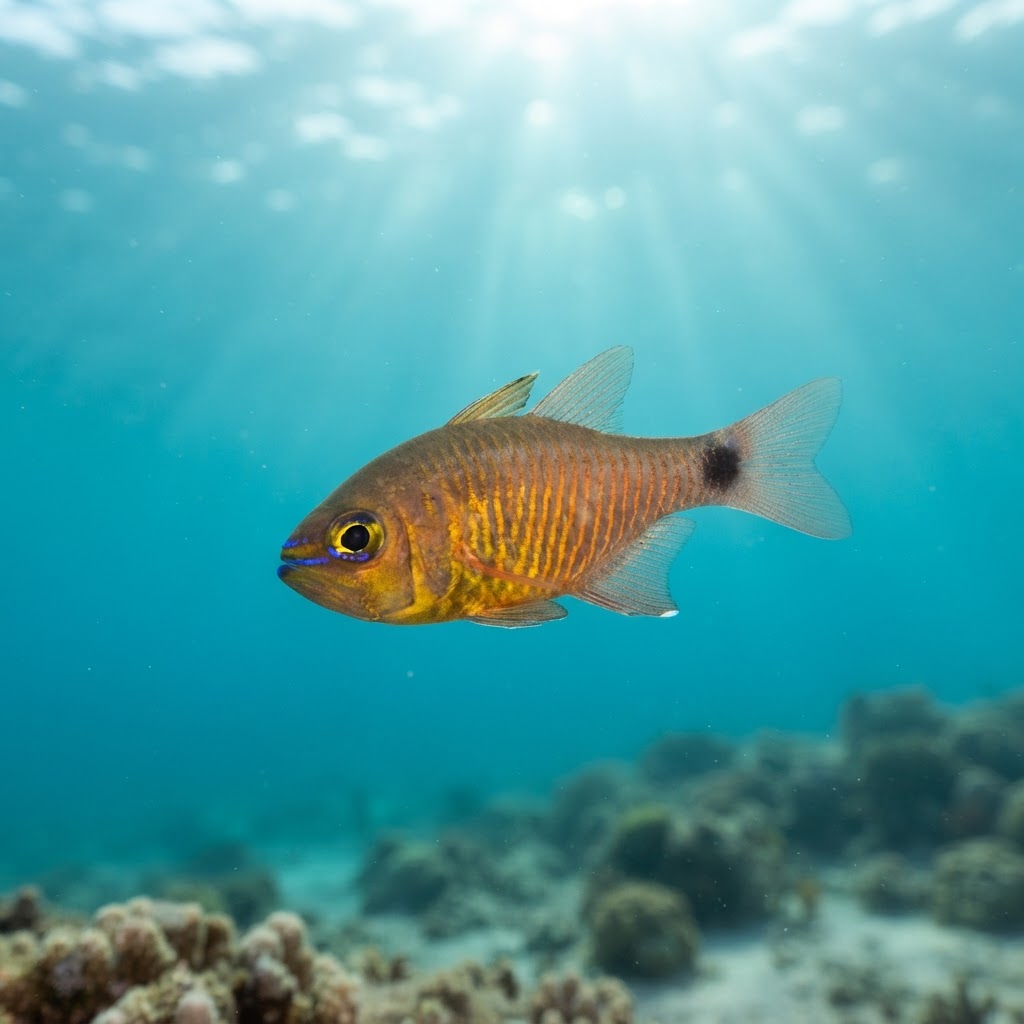
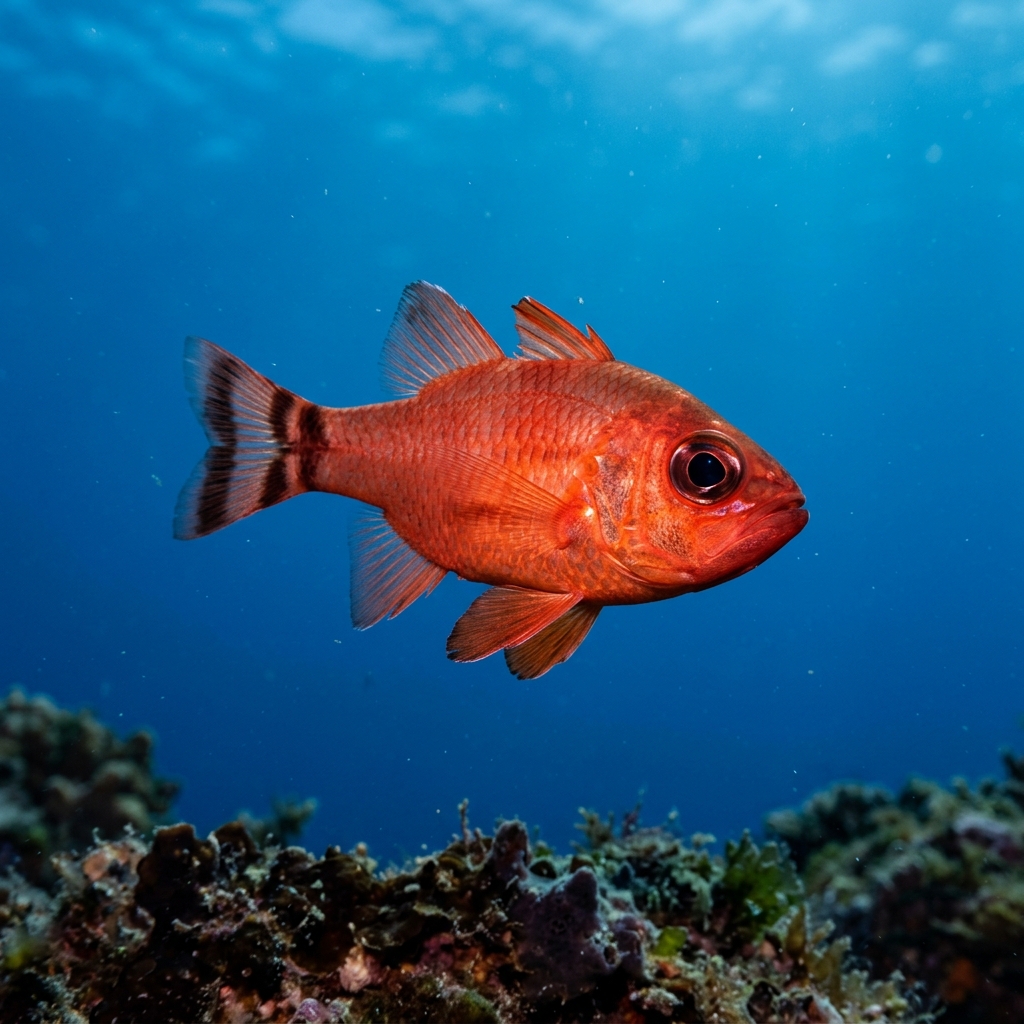
A tiny reef fish at around 4 cm, best picked out by its slightly translucent, pale body and a dark stripe running through the eye toward the tail. It hovers nose-down or tilted near crevices and coral rubble rather than swimming openly, and the large eyes and upturned mouth typical of cardinalfish are easy to spot once you're close. Look for a faint golden or reddish wash along the body under torchlight, which helps separate it from plainer look-alikes.
Expect to find it hovering in small, loose groups close to coral heads, sponges, or rubble patches, often tucked just out of open water rather than cruising the reef face. It's an easy fish to overlook given its size and shy positioning, staying near shelter and drifting back into cover if you get too close or move quickly. Most sightings come during typical daytime reef dives rather than night dives, though cardinalfish as a family are often more active after dark.
Like other cardinalfish, males of this family are typically mouthbrooders, carrying fertilised eggs in their mouth until the young are ready to fend for themselves, a trait worth watching for if you see one with a visibly swollen jaw.
No clear seasonal pattern shows up in the sighting data, and with a comfortable range of 25 to 28.4C on tropical reefs, it's present year-round wherever it's found. Plan around good diving conditions in the Philippines or Indonesia rather than a specific month.
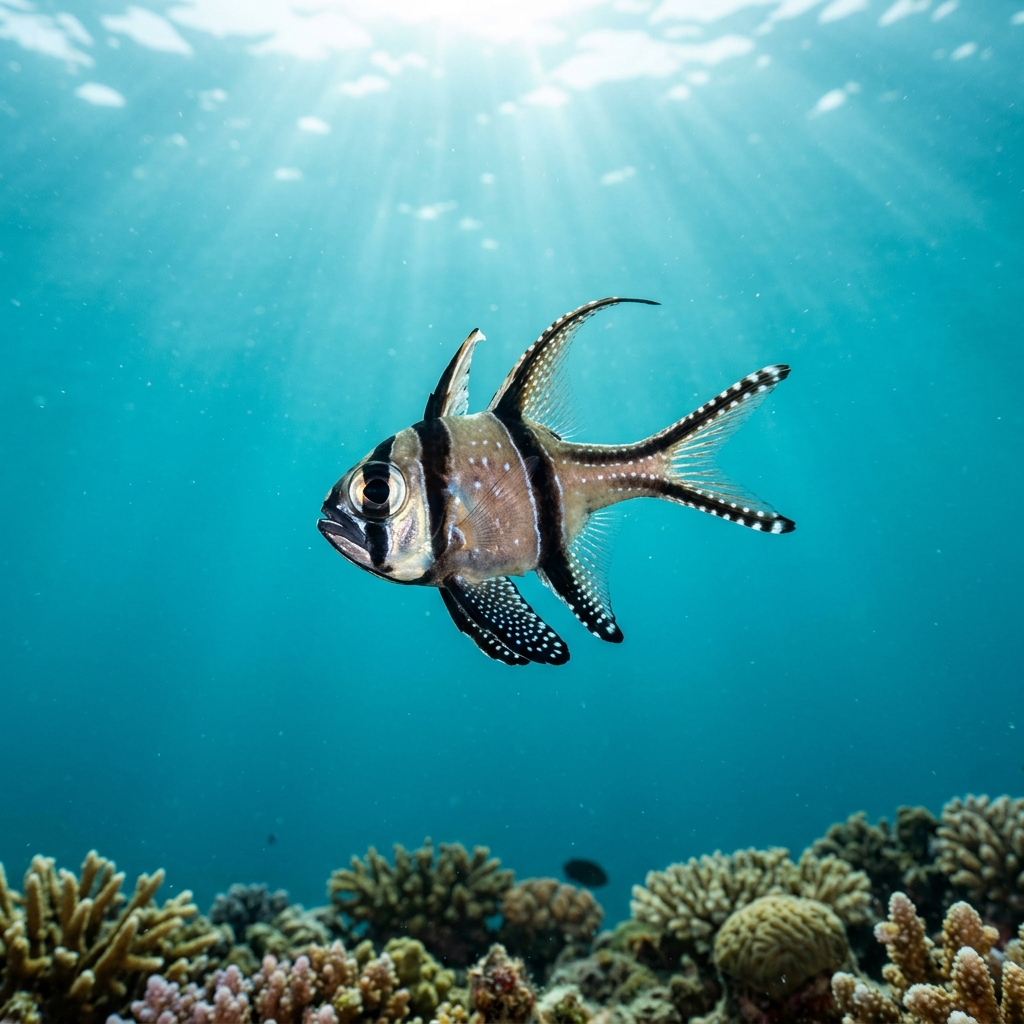
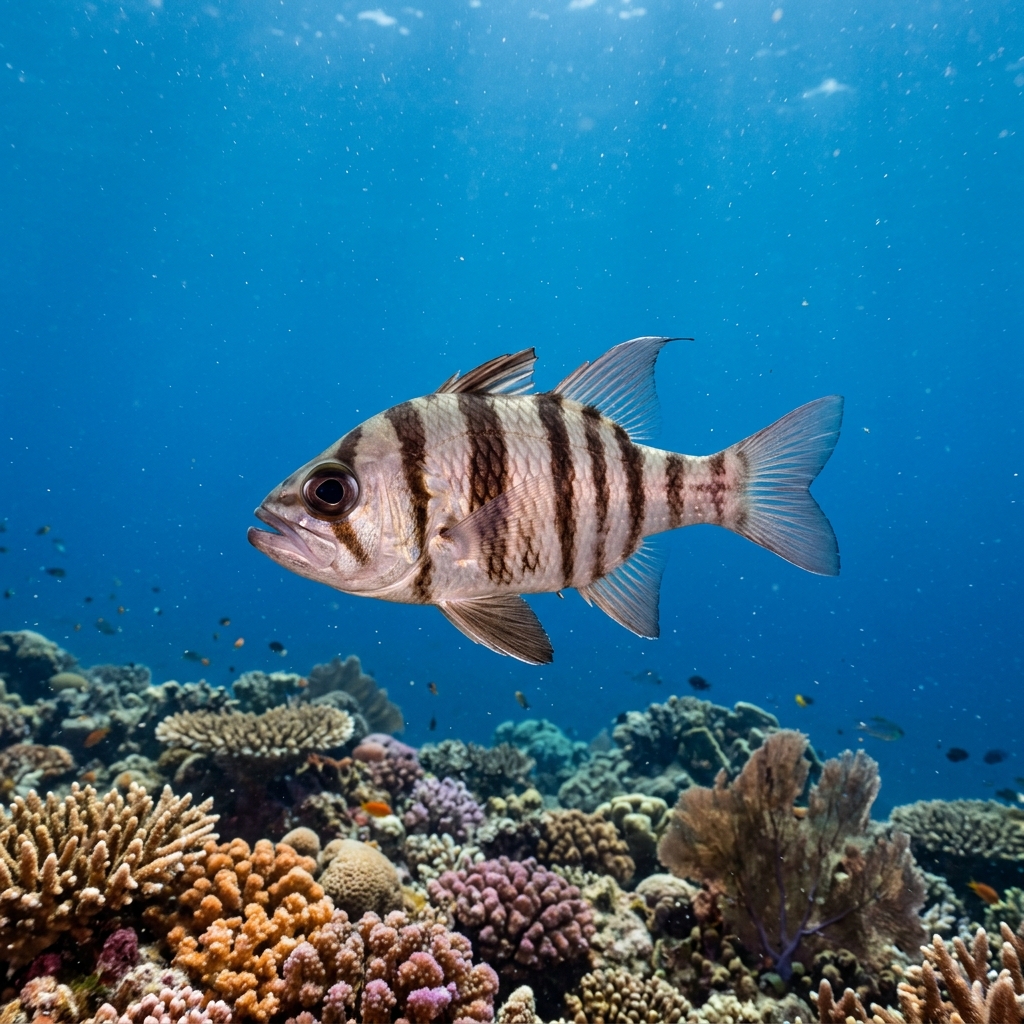
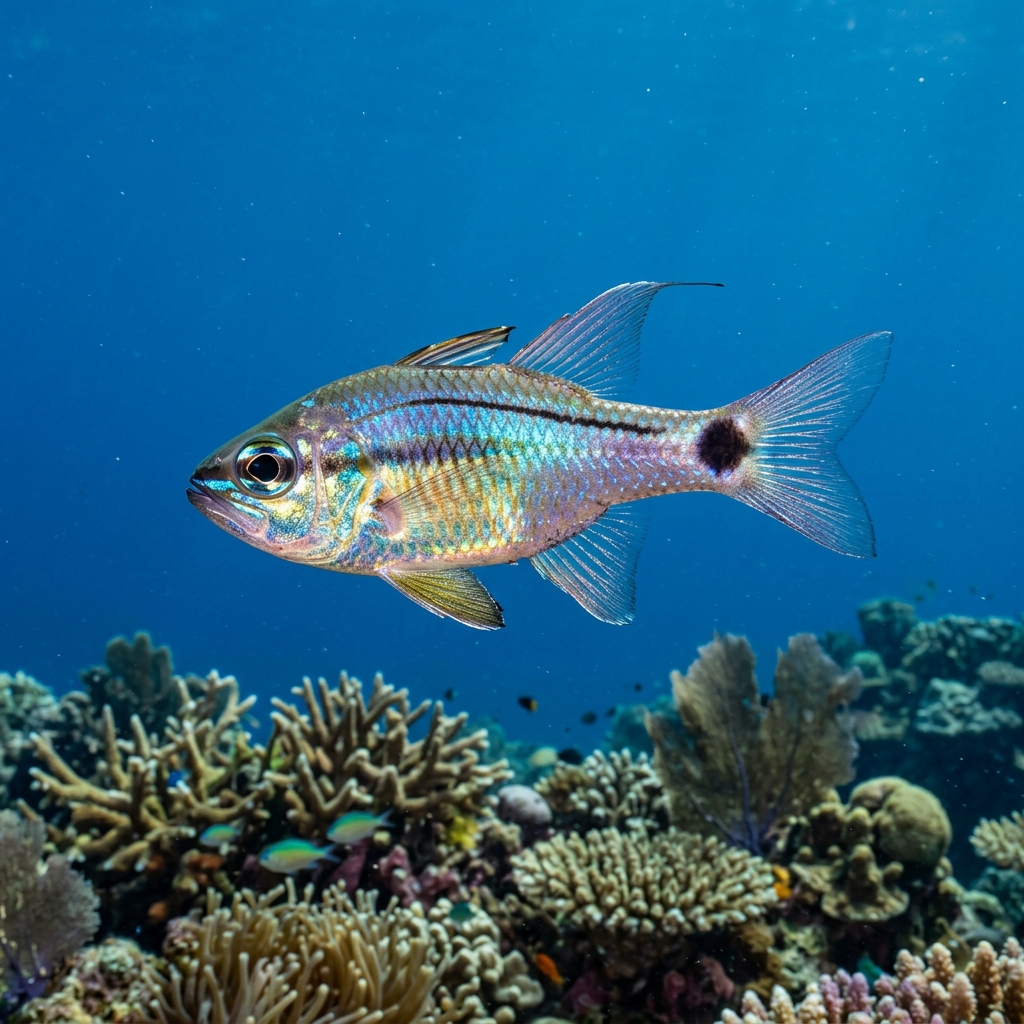
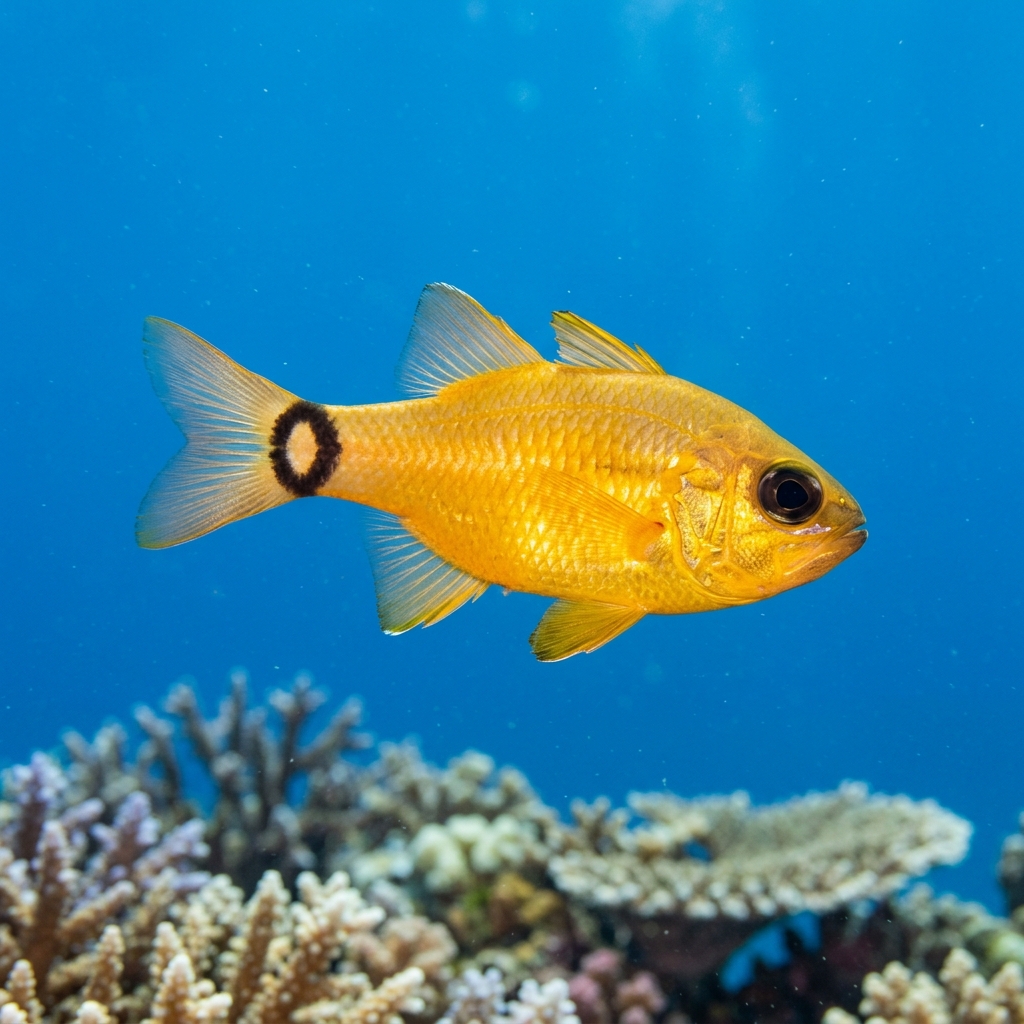
Reef neighbours a diver could mistake it for. Use the identification notes above to tell them apart.
Most commonly logged in Indonesia and the Philippines, with a strong showing in Luzon and further sightings across Maluku and Sulawesi. Papua New Guinea's Milne Bay region also produces regular records, making the Coral Triangle the reliable heartland for this species.
Mapping where Flag-fin Cardinalfish is logged…
It's most reliably seen in Indonesia and the Philippines, particularly around Luzon, Maluku, and Sulawesi, with additional records from Milne Bay in Papua New Guinea. These Coral Triangle regions offer the best odds of a sighting.
There's no strong seasonal pattern in the data, and it lives comfortably in water between 25 and 28.4C year-round, so any time you're diving the Coral Triangle is fair game.
Look for a small, roughly 4 cm fish with a pale, slightly translucent body and a dark stripe through the eye, usually hovering near rubble or coral crevices rather than out in the open.
They stay small, typically around 4 cm, which is part of why they're easy to miss unless you're looking closely at sheltered reef structure.
No. They're harmless, small reef fish that pose no threat and will simply retreat into cover if approached too closely.
Like most cardinalfish, males are believed to carry fertilised eggs in their mouth until the young hatch, a behaviour called mouthbrooding that protects the eggs from predators.
Site and sighting data is aggregated from diver logs, iNaturalist and GBIF. For taxonomy and conservation status:
Iridescent Cardinalfish
1,781 sites