Epinephelus labriformis
Spot this reef grouper in Baja California and the Galápagos, comfortable in 23-30C water and logged year-round on rocky reefs.
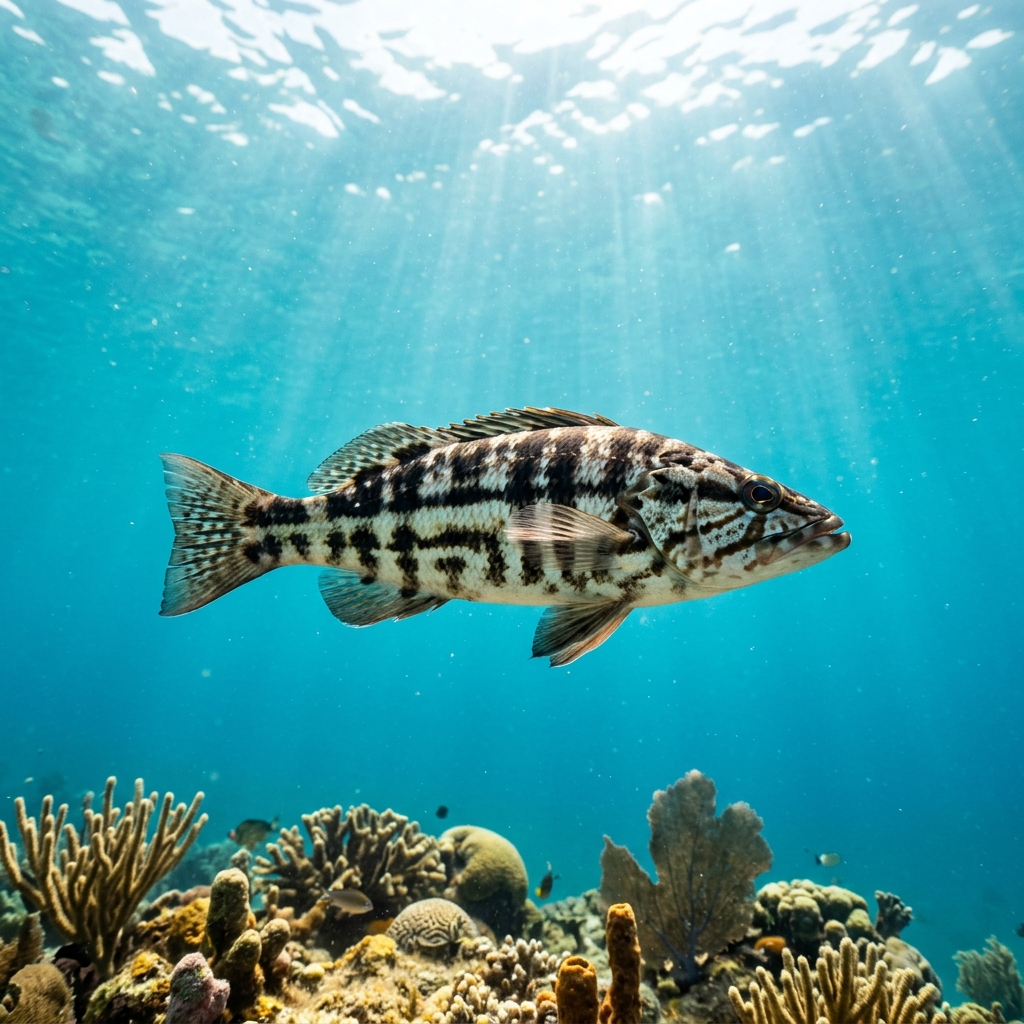
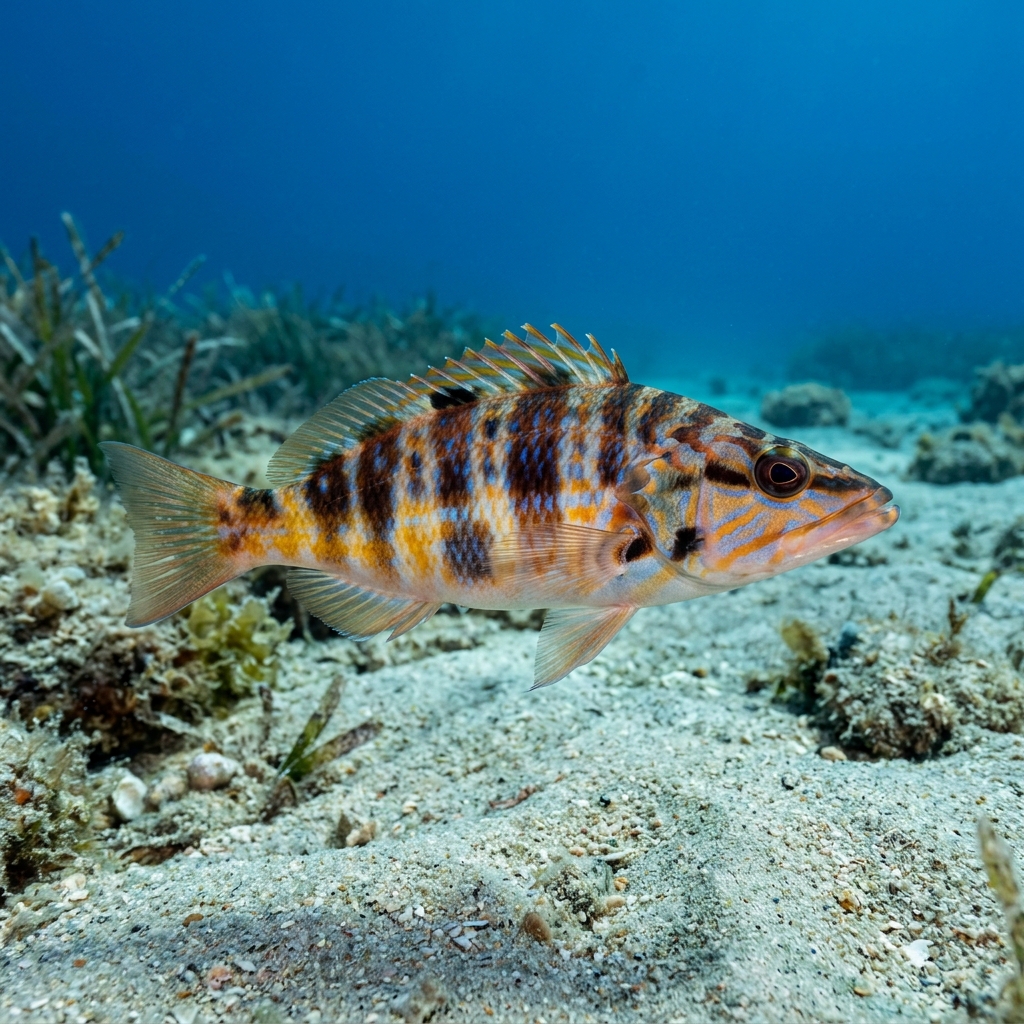
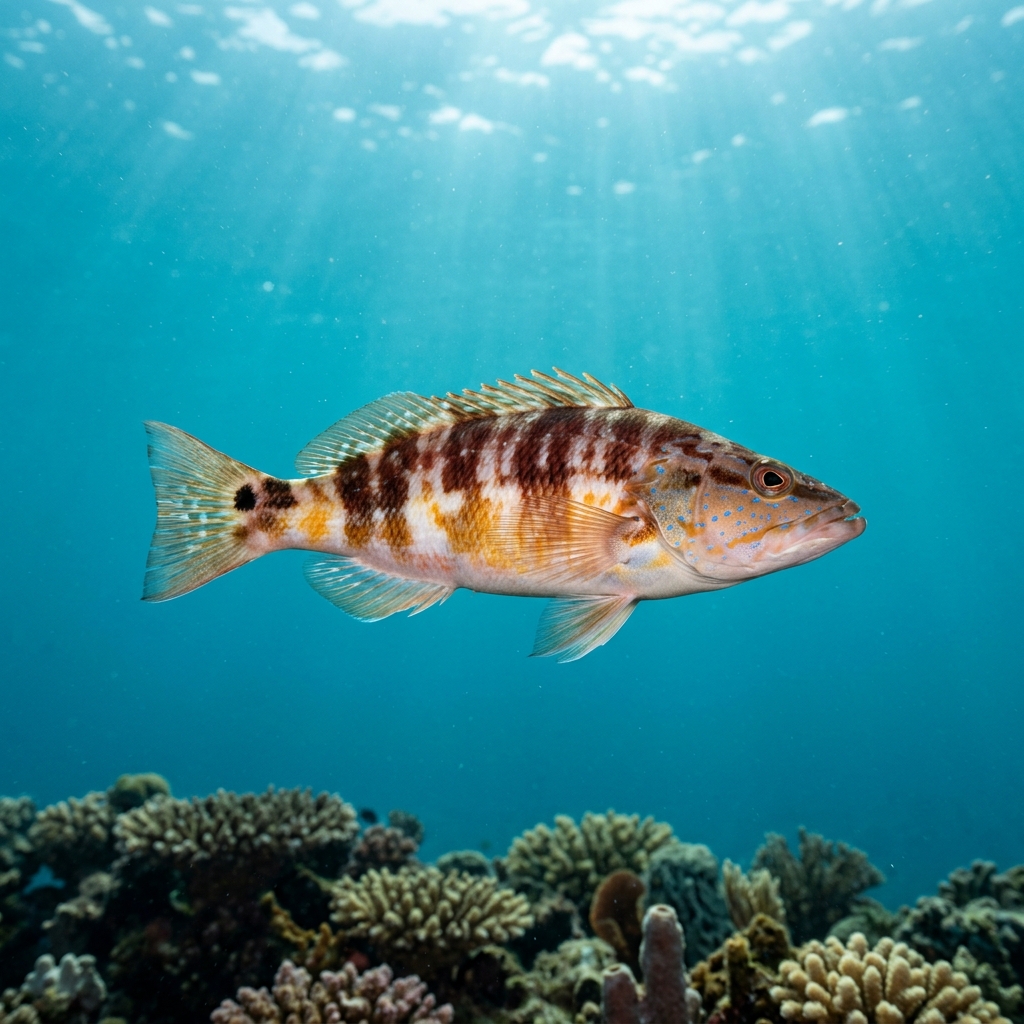
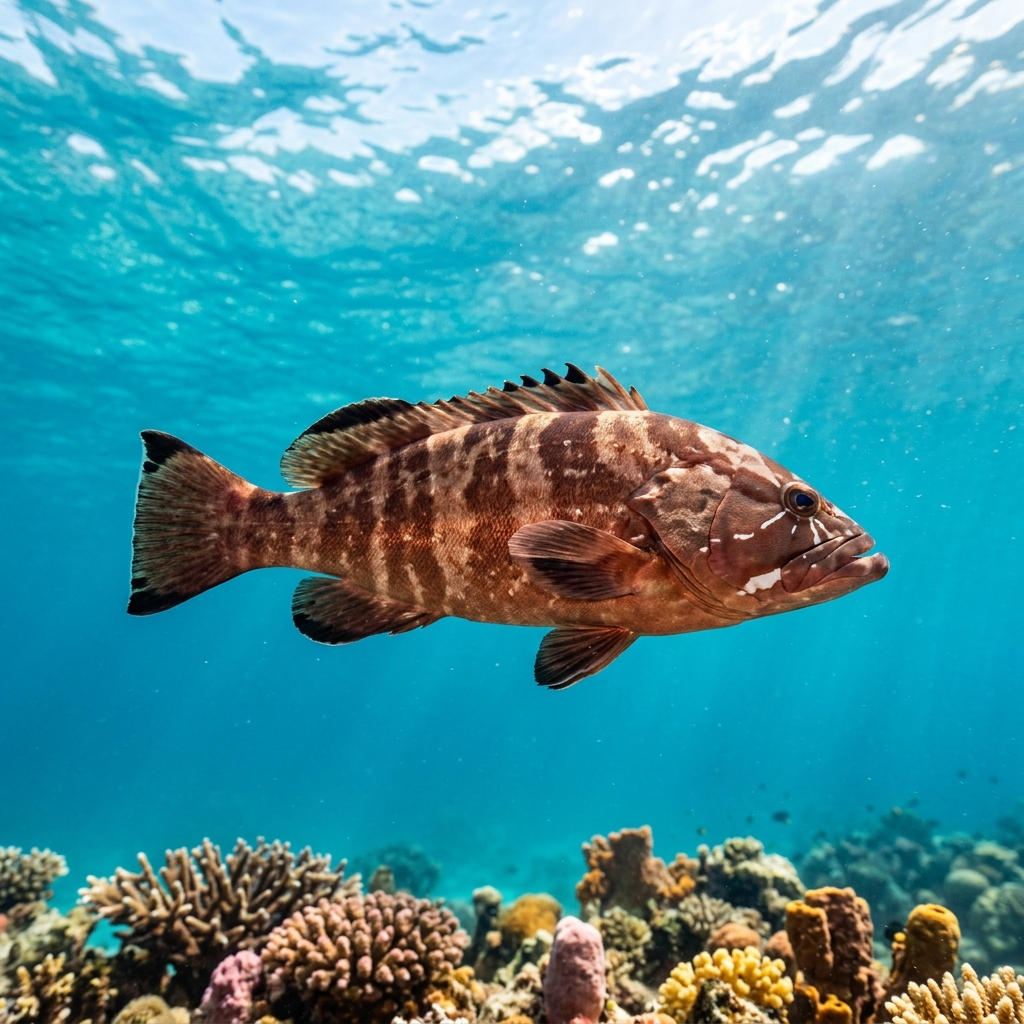
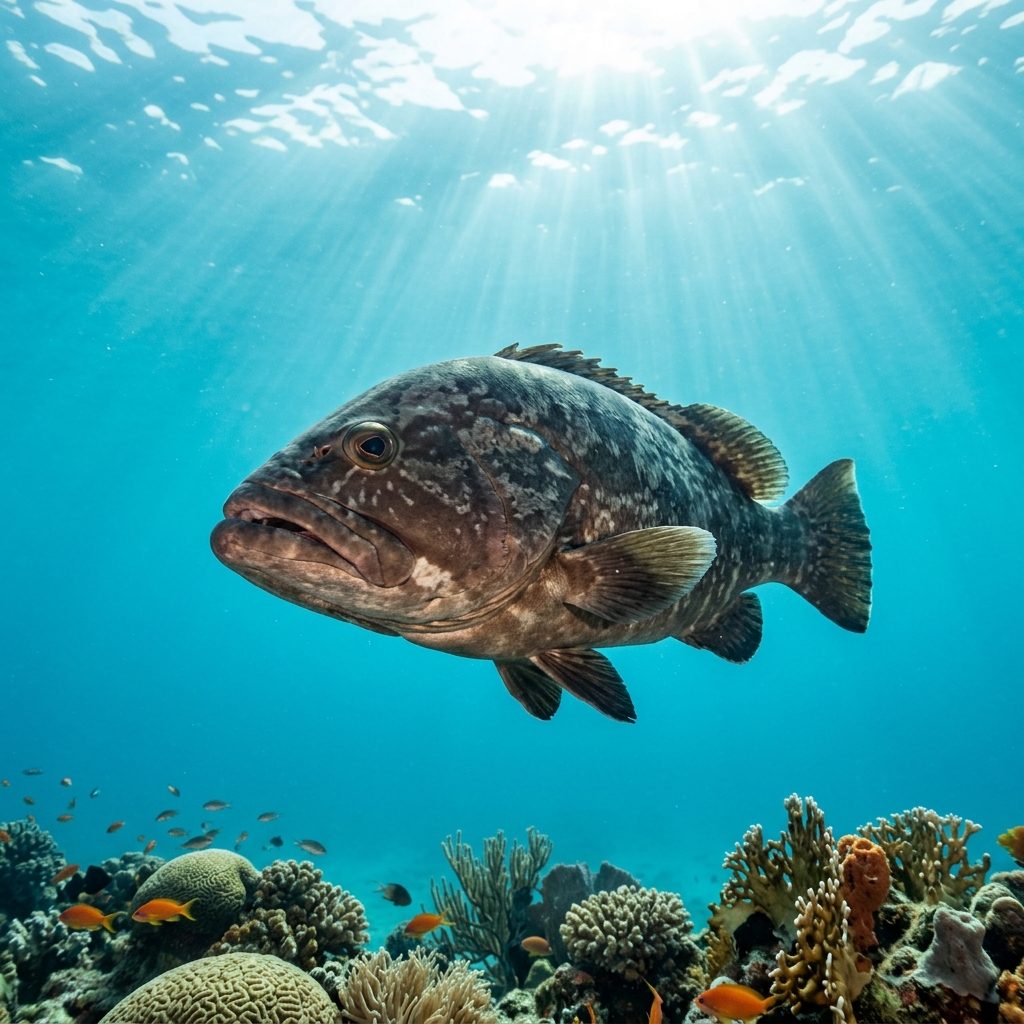
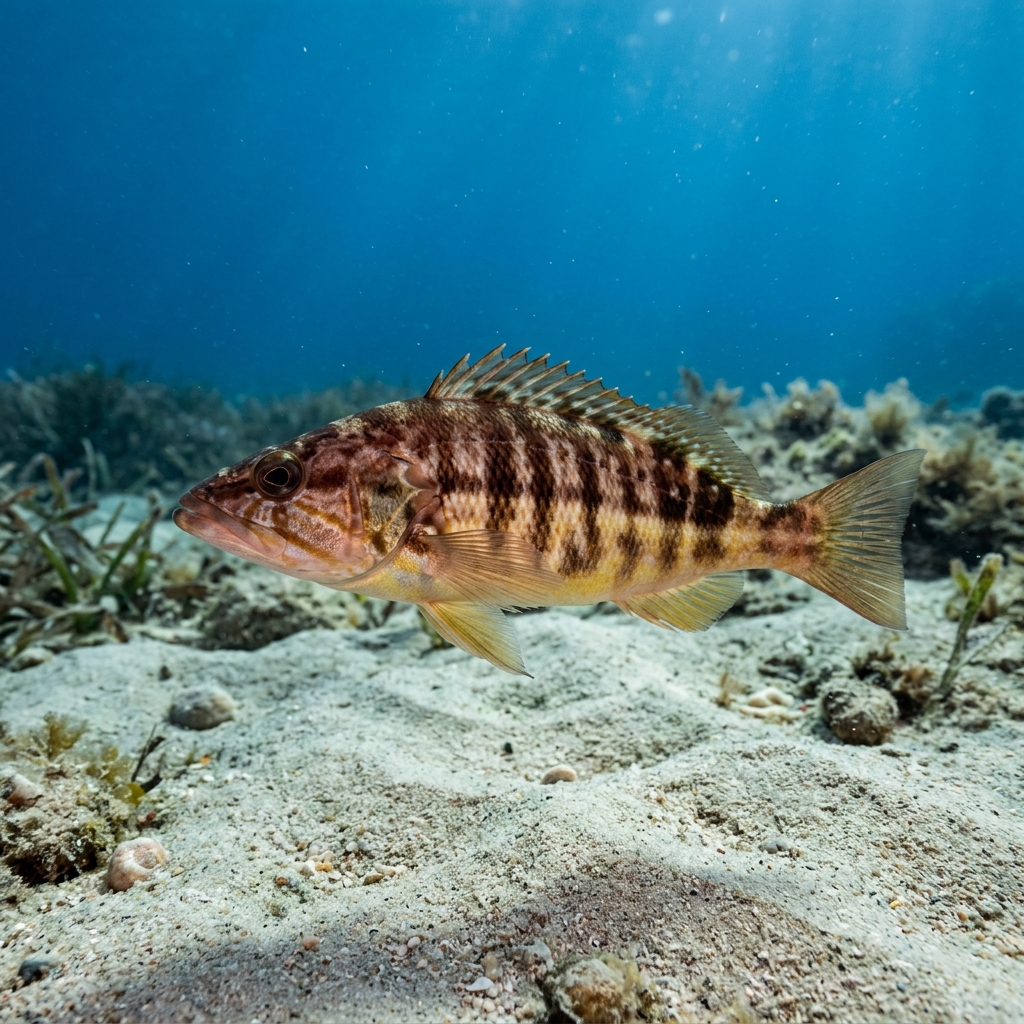
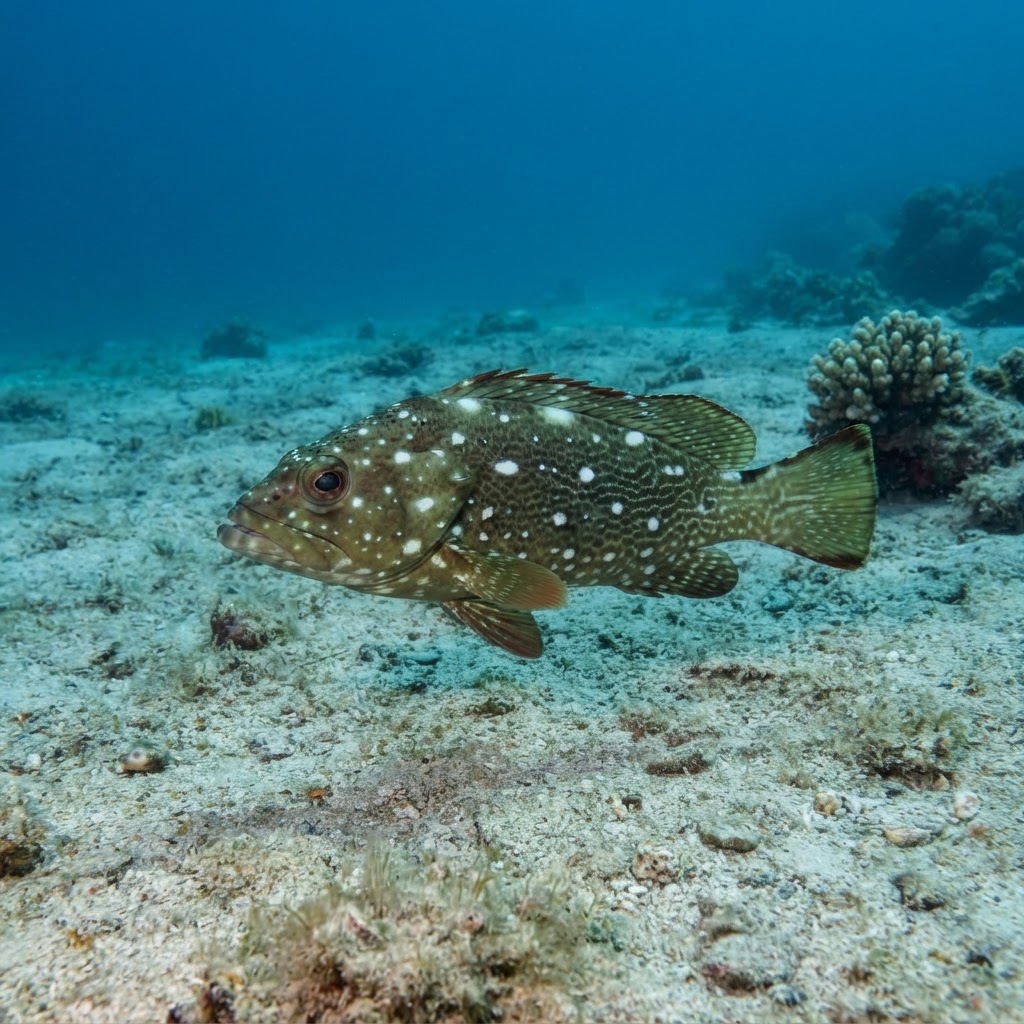
Look for a stocky, thick-bodied grouper around 40cm long with a mottled pattern of dark brown to olive blotches scattered over a pale cream to tan body, giving it a blotchy, camouflaged look rather than clean stripes or spots. The head is broad and the mouth wide, typical of an ambush predator built to sit still. It often perches motionless on rock or rubble, propped on its pectoral fins, which is usually the giveaway before the pattern registers.
Expect to find it parked on a rock ledge or wedged into rubble, barely moving, watching the water column for anything small enough to ambush. It is not shy and will often let divers get close for a photo before sliding off to another perch a few metres away. Most sightings come from shallower rocky and volcanic reef structure rather than open sand or deep walls.
That blotchy camouflage is not just for hiding from prey, it also lets this grouper sit in plain sight on mixed rock and rubble while looking like part of the substrate, which is why divers often swim right past one before noticing it.
No clear season shows up in the sighting data, so treat this as a year-round find. It sits comfortably in water from 23 to nearly 30C, which covers most of the diving calendar across its eastern Pacific range.
This is a rocky-reef regular across the eastern Pacific, most reliably logged in Baja California and the Pacific Coast of Mexico, and in strong numbers around the Galápagos Islands in Ecuador. Costa Rica's Guanacaste and Central Pacific regions turn it up often too, with smaller but consistent sightings in Panama's Pacific Coast and Gorgona in Colombia.
Mapping where Flag Cabrilla is logged…
Baja California and the Pacific Coast of Mexico are the most consistent spots, alongside the Galápagos Islands in Ecuador. Guanacaste and the Central Pacific in Costa Rica, plus sites in Panama and Gorgona, Colombia, also produce regular sightings.
There is no strong seasonal pattern in the sighting data, so it is considered a year-round species. It tolerates a wide temperature range from the low 20s to nearly 30C, keeping it visible across most of the diving season in its range.
Look for a stocky grouper with a blotchy brown and cream pattern, no clean stripes, resting motionless on rock or rubble propped on its pectoral fins. It grows to around 42cm and has a broad head suited to ambush feeding.
They typically reach about 42cm in length, a mid-sized grouper by reef standards. Most individuals divers encounter are around this size rather than notably larger.
No, they pose no threat to divers and are generally calm, approachable fish. They will usually hold still or move off slowly rather than react defensively.
Its mottled colouring works as camouflage against rocky rubble, letting it sit still and ambush passing prey while blending into the substrate. Divers often overlook one sitting in plain view because of this pattern.
Site and sighting data is aggregated from diver logs, iNaturalist and GBIF. For taxonomy and conservation status:
Blacktip Grouper
2,726 sites