Flabellina affinis
Spot the vivid violet Mediterranean Violet Aeolid on reefs across the French Riviera, Costa Brava, and Croatia. Present year-round in 13-22 °C waters.
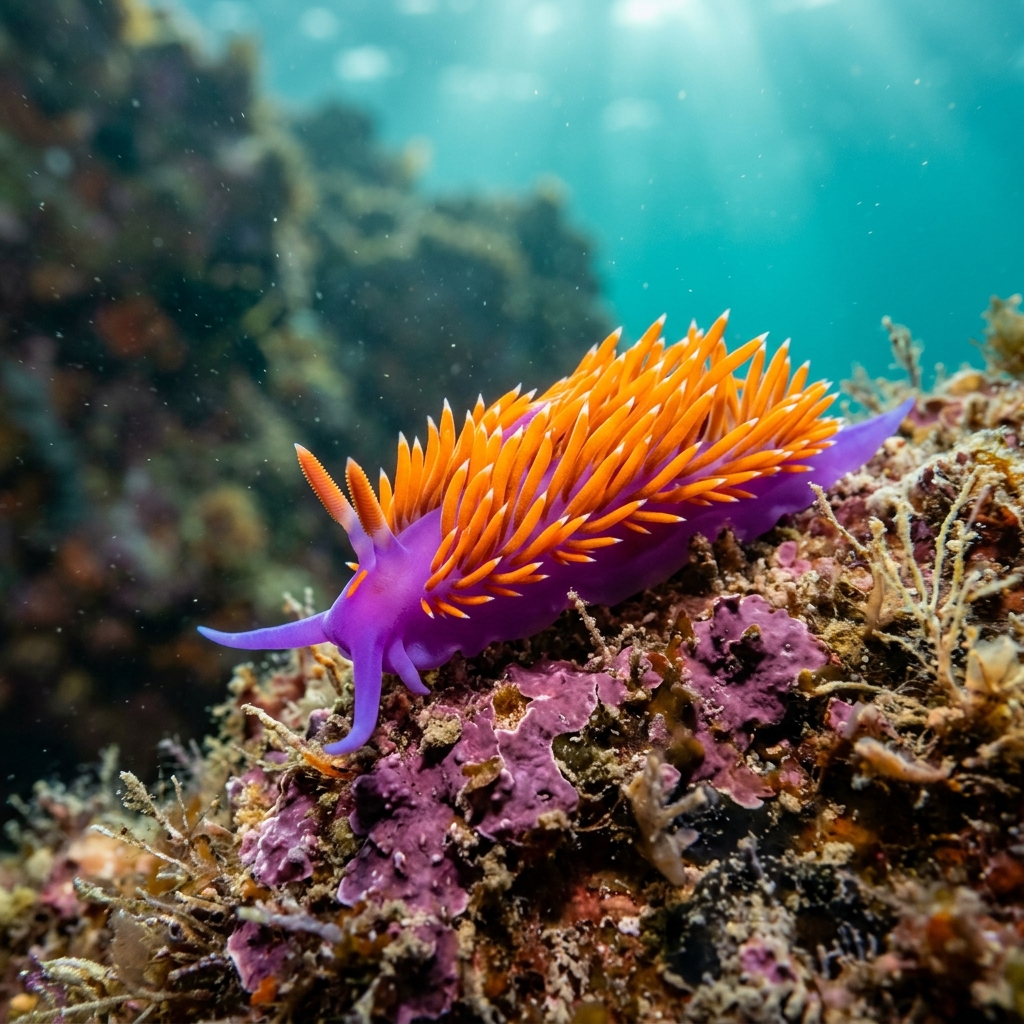
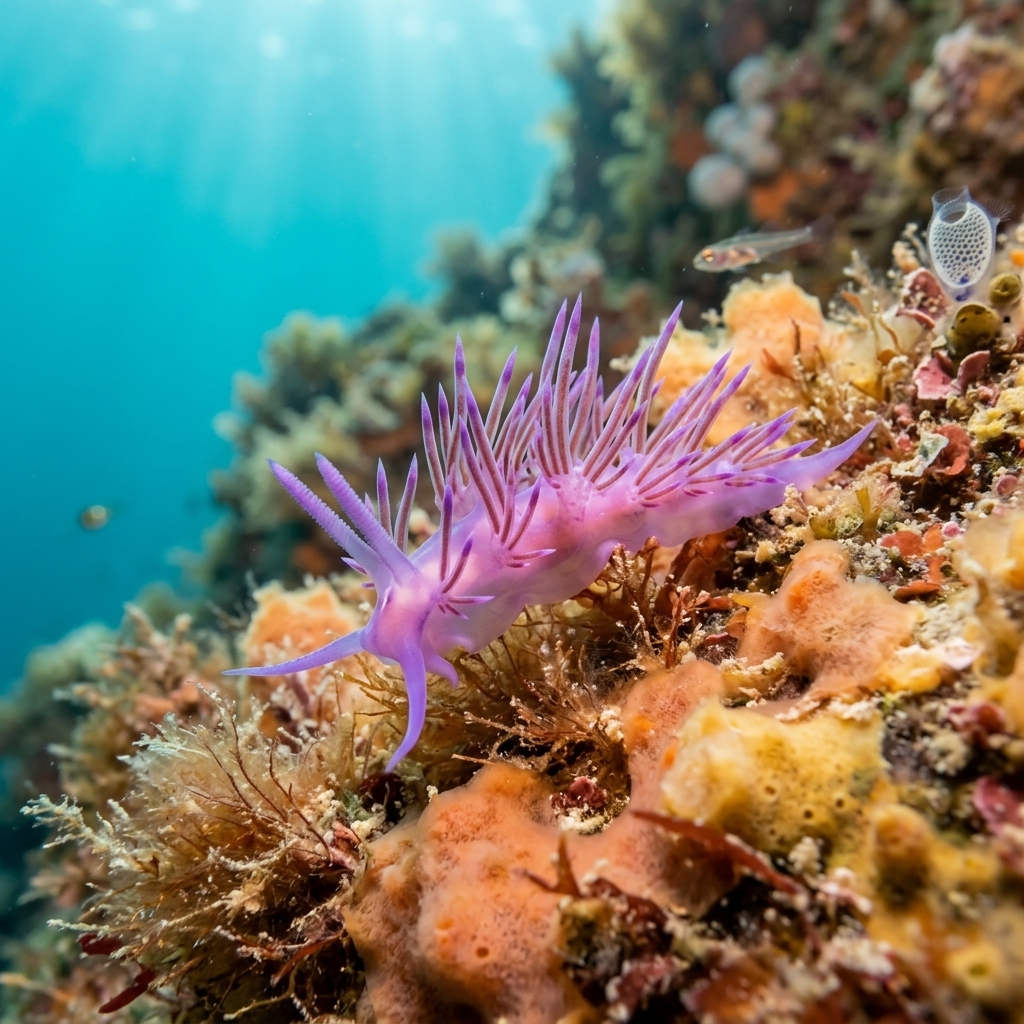
A slender, elongated nudibranch covered in densely packed cerata (the finger-like projections on its back) that range from deep violet to vivid purple, often tipped with white. The body itself is translucent to pale, making the cerata the dominant visual feature underwater. Look for the paired violet oral tentacles and rhinophores (sensory head appendages) that match the cerata colour exactly. On rocky Mediterranean reefs it tends to be small enough that most divers pass it without noticing, so slow down and scan the substrate carefully.
You will almost always find it moving slowly across rocky substrate, encrusted walls, or amid hydroids on which it feeds, rarely pausing for long in one spot. It shows little reaction to divers and does not retract sharply the way some nudibranchs do, making patient observation at close range straightforward. Searches at slower depths on shaded rock faces or under ledges tend to be more productive than open sandy areas.
Like other aeolid nudibranchs, it sequesters stinging cells (nematocysts) from the hydroids it eats and stores them in the tips of its cerata as a chemical defence against predators.
Sightings are spread across all twelve months with no concentrated peak season, so this species can be looked for year-round. It tolerates a fairly wide temperature band of roughly 13 to 22 °C, which covers most of the Mediterranean through all seasons.
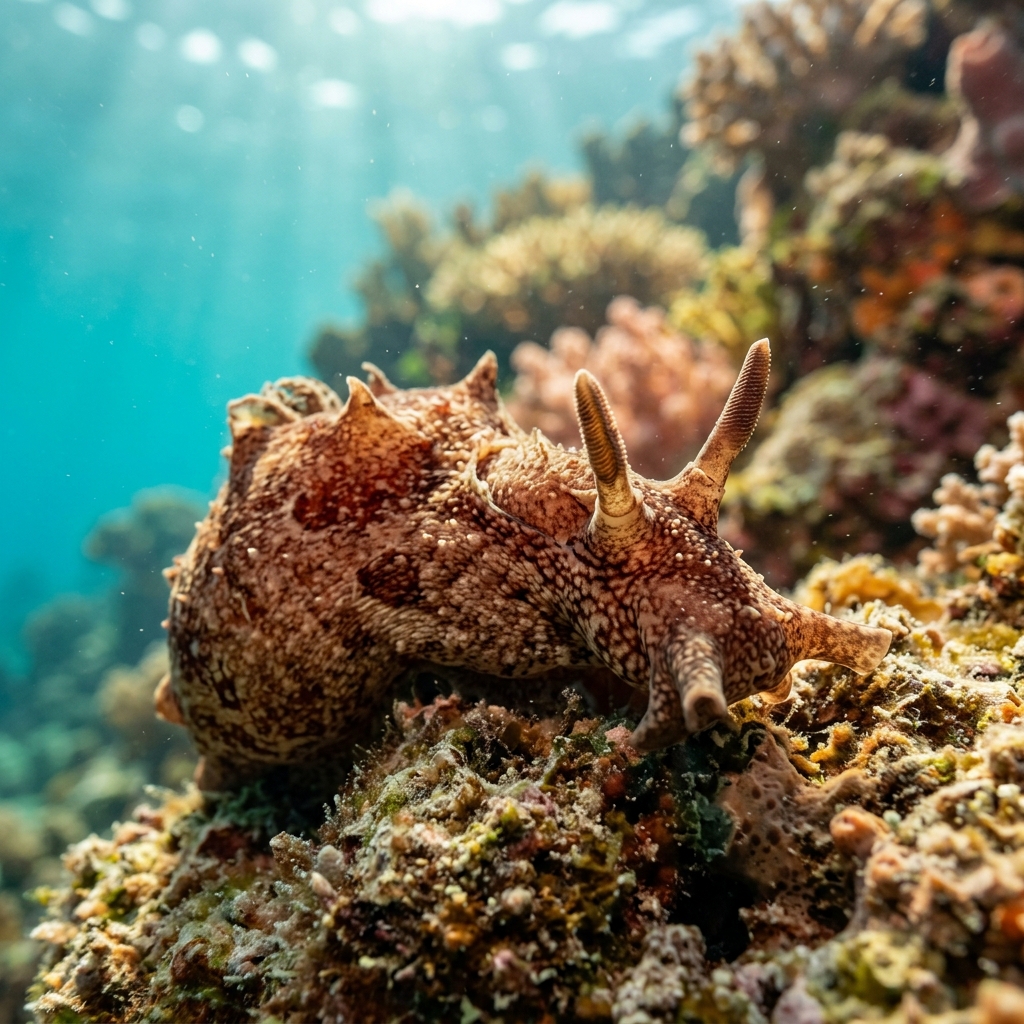
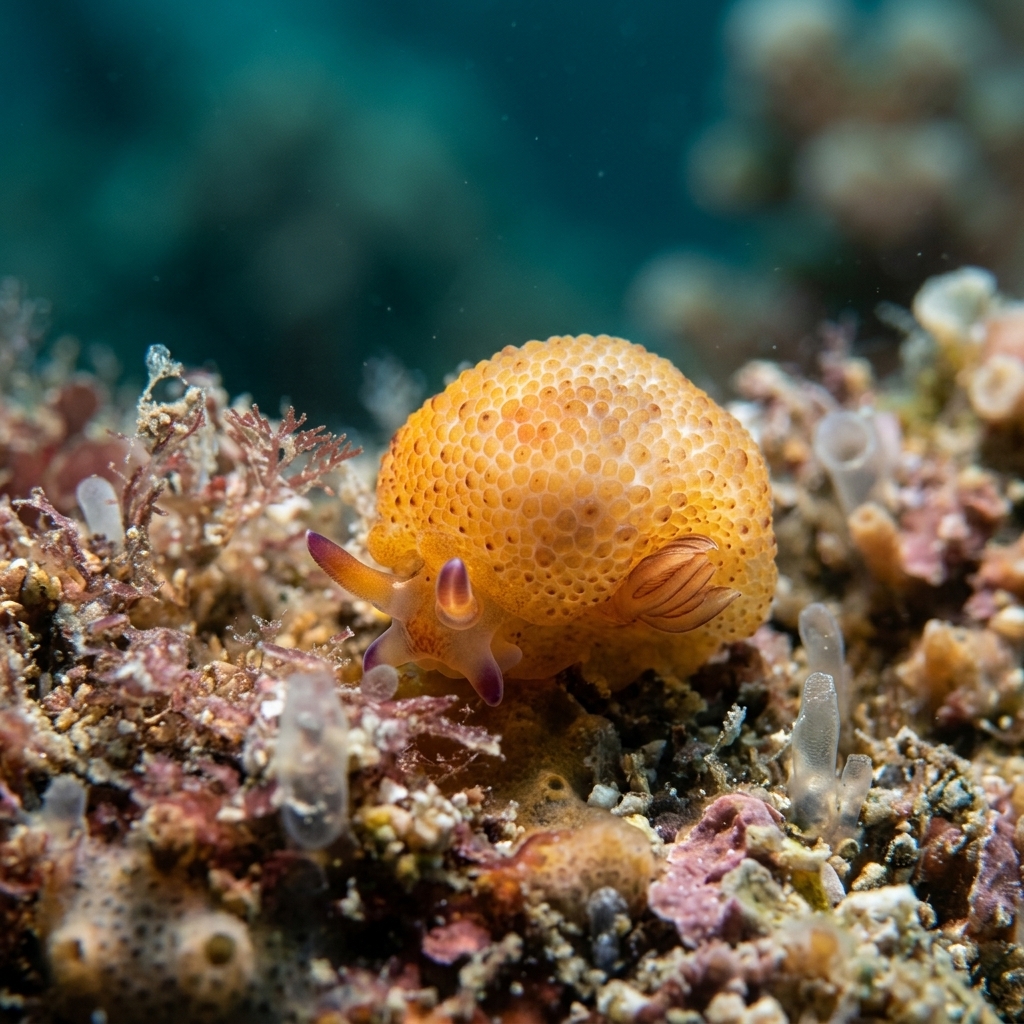
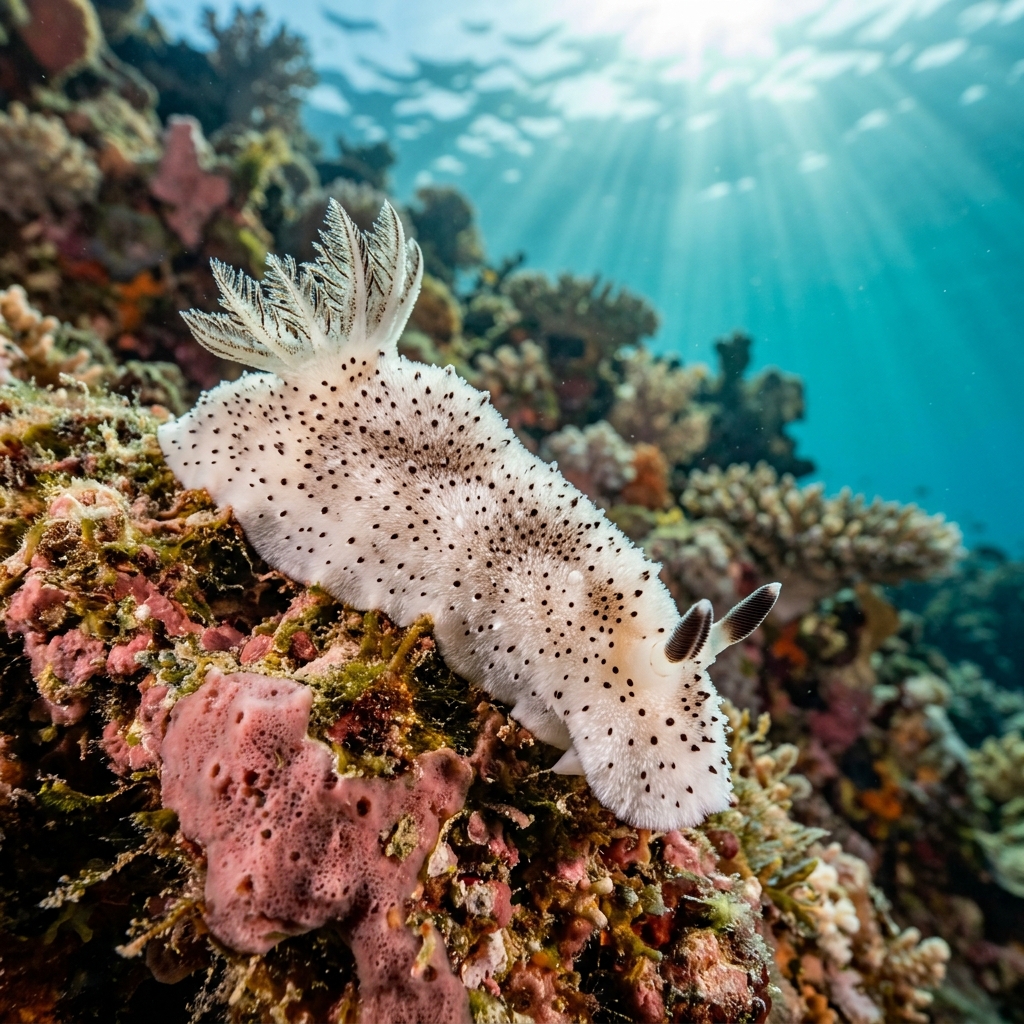
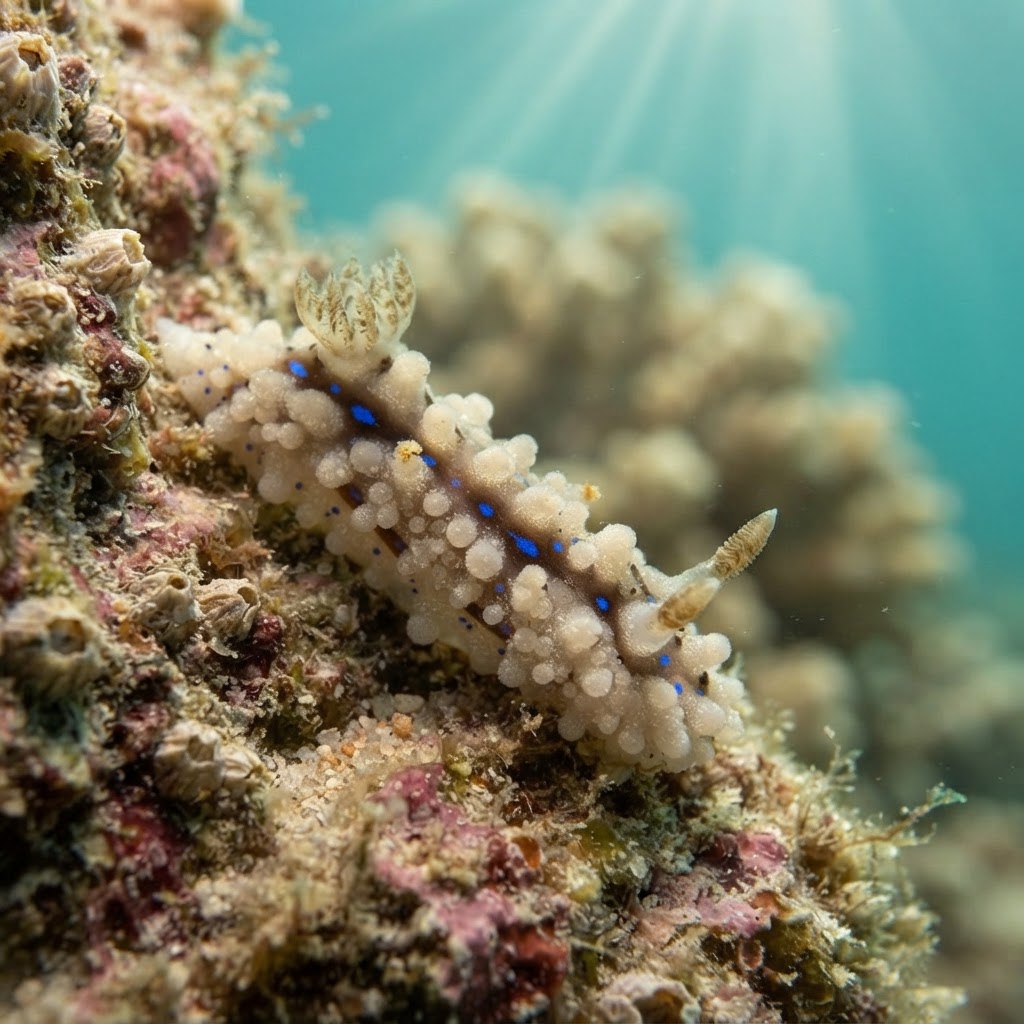
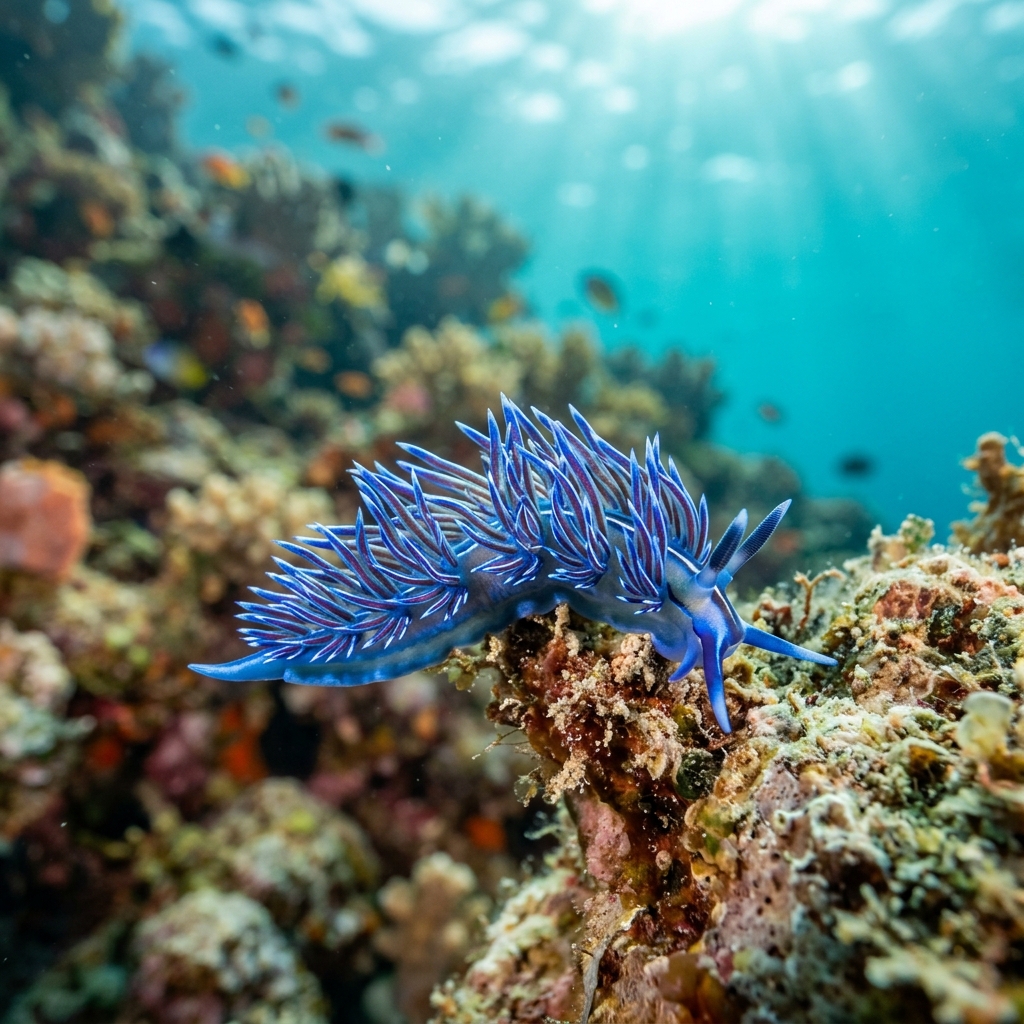
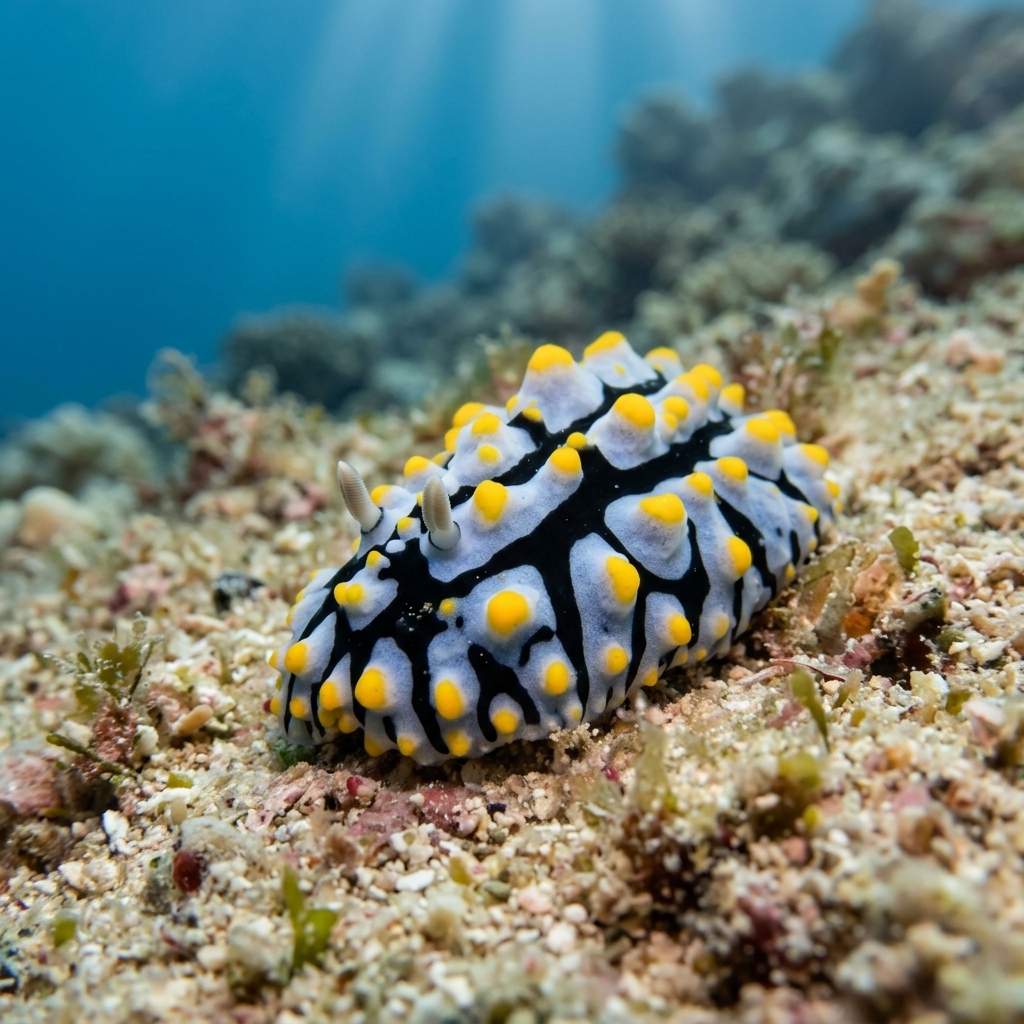
Reef neighbours a diver could mistake it for. Use the identification notes above to tell them apart.
Most commonly logged across the western and central Mediterranean, with Spain leading the records particularly along the Costa Brava and Costa Blanca, followed by the French Riviera and Provence, and then Italy including Sardegna and Tuscany. Croatia's Kvarner Gulf and the island of Gozo in Malta are also reliable spots. The Canary Islands and Portugal round out the Atlantic-facing sites where it has been recorded.
Mapping where Mediterranean Violet Aeolid is logged…
The strongest records come from Spain's Costa Brava and Costa Blanca, the French Riviera and Provence, and the Italian coast including Sardegna and Tuscany. Croatia's Kvarner Gulf, Gozo in Malta, and the Balearic Islands are also solid options. Portugal and the Canary Islands extend the range beyond the Mediterranean.
It has been recorded in every month of the year with no obvious peak, so there is no single best season. It tolerates water temperatures from around 13 °C to 22 °C, meaning Mediterranean dive conditions across all seasons fall within its comfort range.
Look for a small, slender nudibranch blanketed in densely packed violet-to-purple cerata tipped in white. The rhinophores and oral tentacles are the same vivid violet as the cerata. It moves slowly over rocky reef or hydroids, and its colour is distinctive enough to separate it from most other Mediterranean nudibranchs at a glance.
Precise size data for this species is limited in dive records, but as a member of the Flabellinidae family it is typically small, generally in the range of a few centimetres in length. In practice, they are easy to miss without deliberate slow searching of the substrate.
It feeds on hydroids, small colonial animals that grow on rocky reefs. As it digests them, it retains the stinging cells from its prey and concentrates them in the tips of its cerata, giving it a chemical defence that deters would-be predators.
Site and sighting data is aggregated from diver logs, iNaturalist and GBIF. For taxonomy and conservation status:
Light-spotted Aegires
3,168 sites