Thalassoma quinquevittatum
Small, fast, and colour-shifting: fivestripe wrasse turn up on reefs across the Society Islands, Central Atolls Maldives, and Orchid Island, Taiwan year-round.
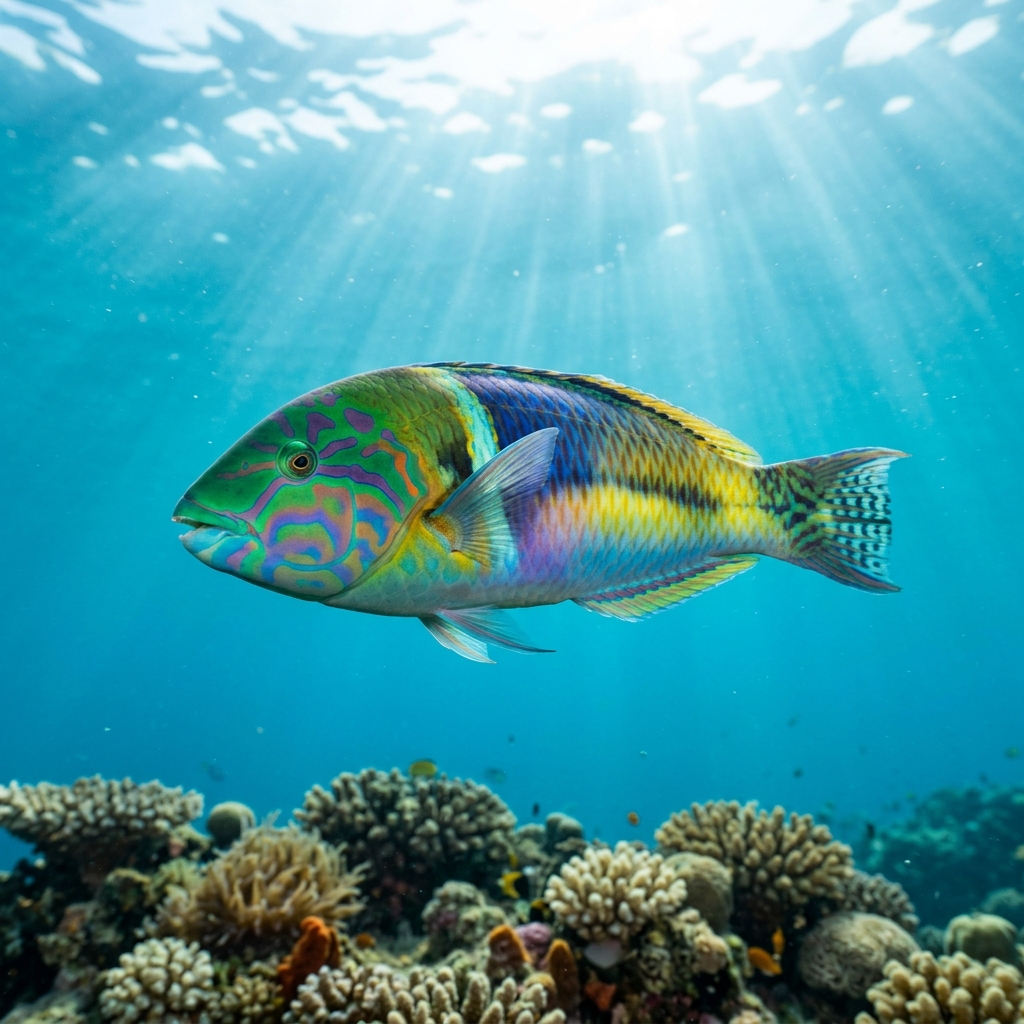
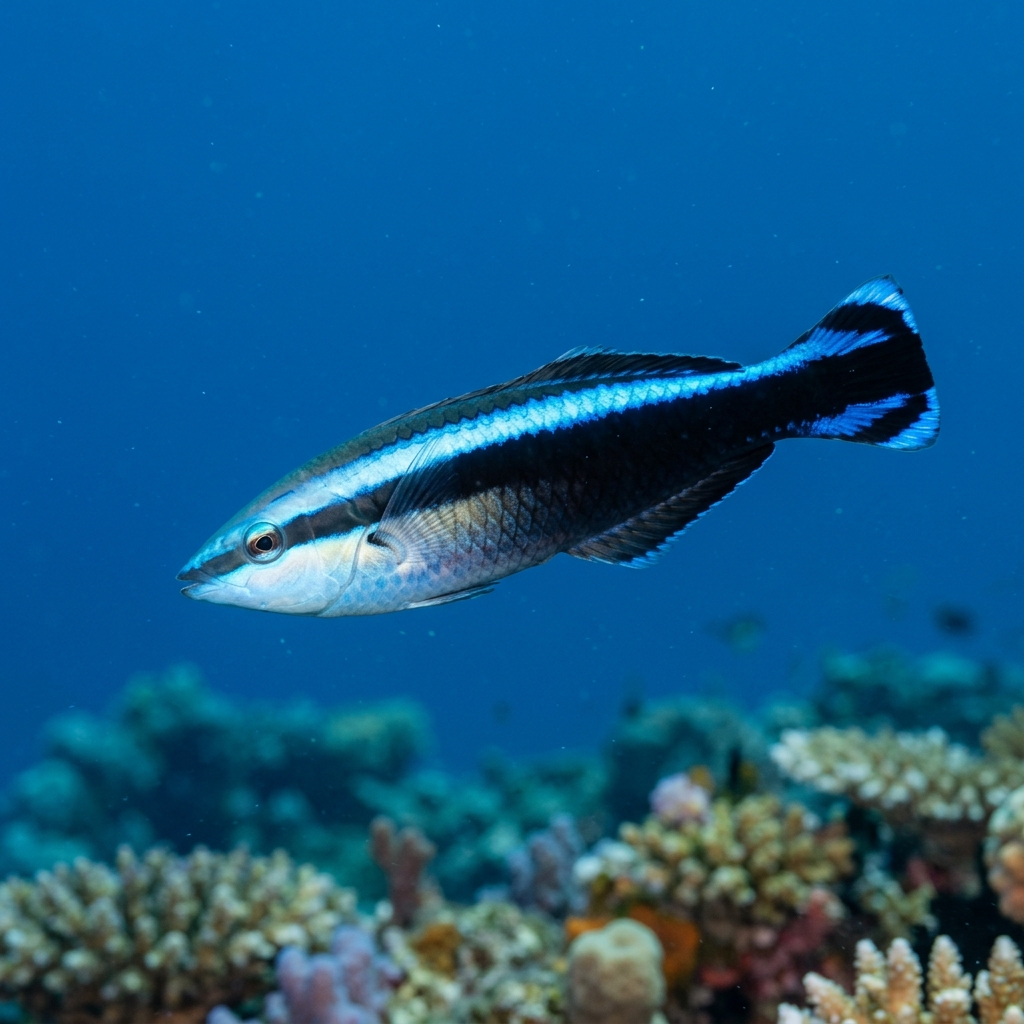
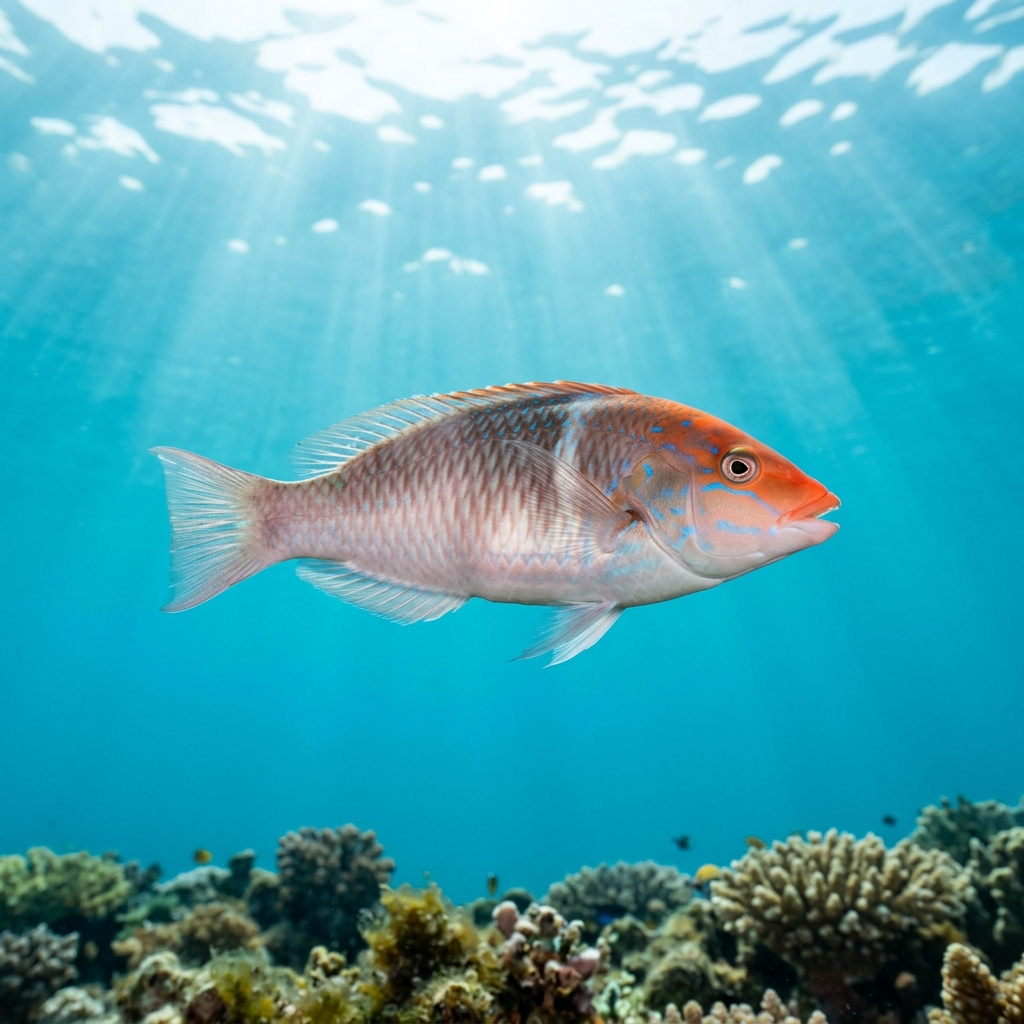
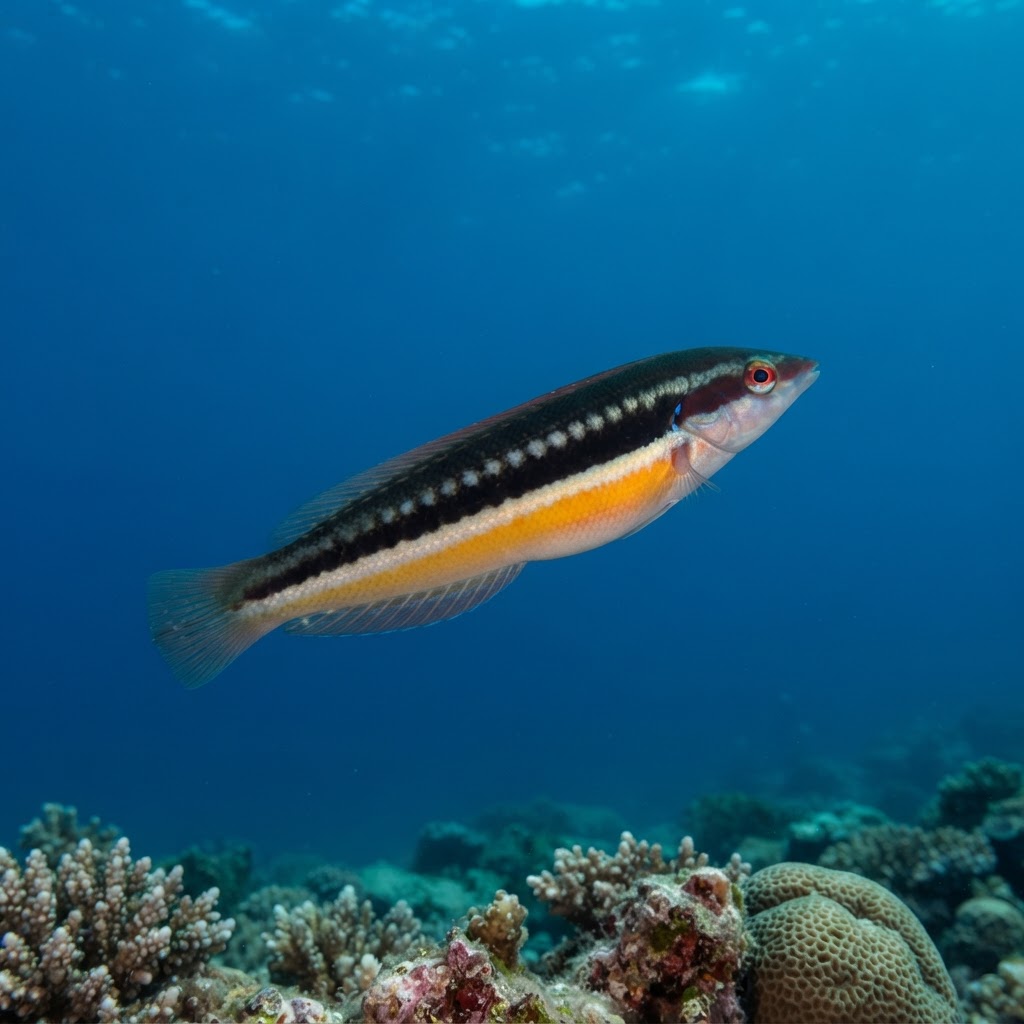
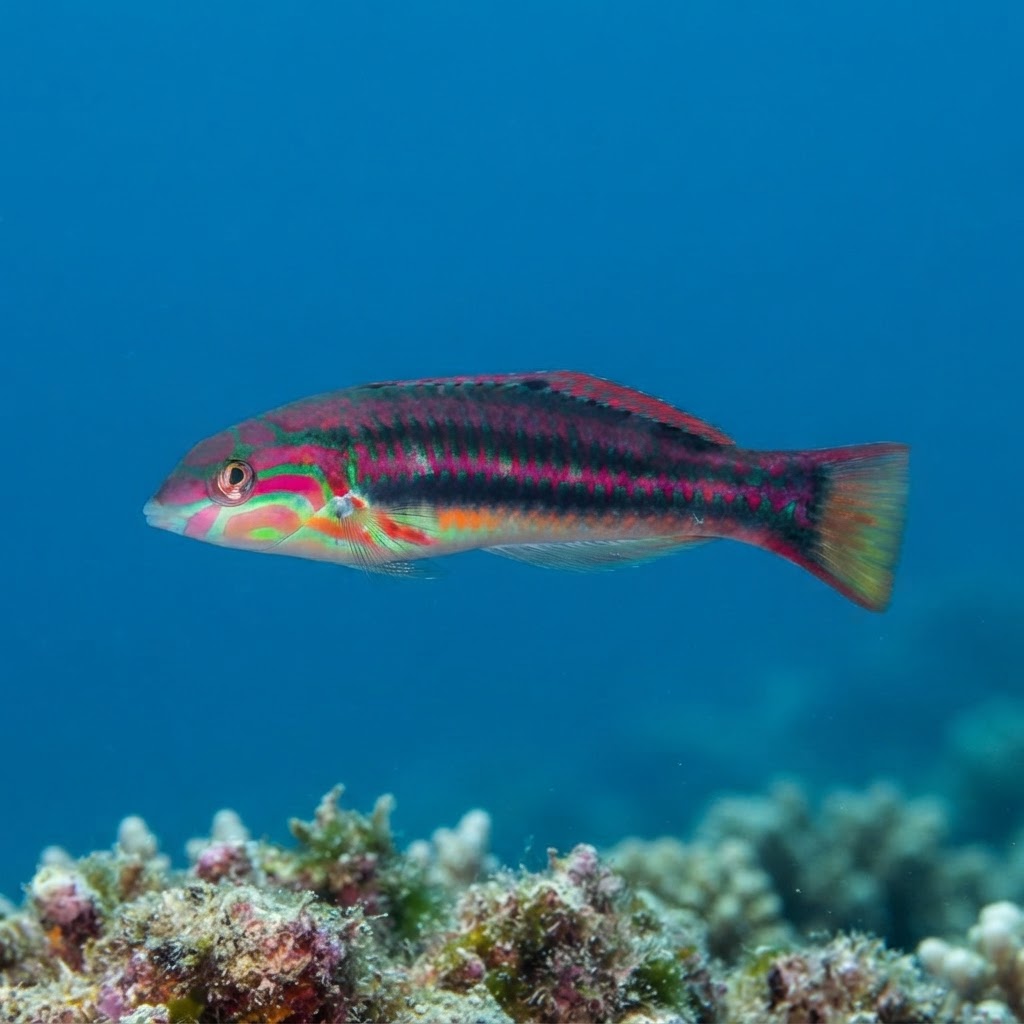
A slim, torpedo-shaped little wrasse topping out around 11 cm, so it registers as a quick flash of colour rather than a fish you get a long look at. Adults show a green to blue-green body crossed by five thin pink or purple stripes running from head to tail, with a yellowish patch near the tail base that helps separate it from the reef clutter. Like many wrasses it changes colour and pattern through life stages, so the sharp five-stripe look is your best cue on a typical adult.
Expect quick, darting movement low over reef structure rather than anything that holds still for a photo, typically picked up as an uncommon sighting rather than a guaranteed one at most sites. It patrols coral heads and rubble patches hunting small invertebrates, staying close to shelter and generally indifferent to divers unless approached quickly. Like other Thalassoma wrasses it's most active in daylight, tucking into the reef at dusk.
As a wrasse it likely follows the family's protogynous pattern, where individuals can start life as females and later transition into males, which explains why colour and pattern can vary noticeably between fish on the same reef.
No clear seasonal pattern shows up in the sighting data, and with a comfortable range of roughly 25 to 29 C it has warm water year-round across its Indo-Pacific range, so any month works for a dive trip built around it.
Most reliably logged in French Polynesia, especially around the Society Islands and Tuamotu Islands, with strong numbers also coming out of Taiwan's Orchid Island and Kenting sites and the Central Atolls of the Maldives. Beyond those hotspots it shows up steadily in Palau, Fiji's Taveuni region, Guam, and the Philippines' Luzon area, so it's a fair bet on reef dives across a wide swathe of the Indo-Pacific.
Mapping where Fivestripe Wrasse is logged…
Best odds are in French Polynesia's Society and Tuamotu Islands, Taiwan's Orchid Island and Kenting, and the Central Atolls of the Maldives. It's also a regular sighting in Palau, Fiji, Guam, and the Philippines.
There's no strong seasonal pattern in sightings, and it tolerates warm tropical reef temperatures year-round, so it can be seen on any dive trip timing across its range.
Look for a small, fast-moving wrasse around 11 cm long with a green to blue-green body marked by five thin pink or purple stripes and a yellowish tail patch. It's usually seen darting low over coral rubble rather than sitting still.
They stay small, typically around 11 cm as adults, making them easy to overlook against busier reef backgrounds.
No, they pose no danger to divers. They're small, reef-associated fish that keep their distance and have no venom or aggressive behaviour toward people.
Like many wrasses, it likely changes sex during its life, starting as female and later becoming male, which along with normal colour variation explains why individuals on the same reef can look different from one another.
Site and sighting data is aggregated from diver logs, iNaturalist and GBIF. For taxonomy and conservation status:
Bird Wrasses
3,632 sites