Iniistius melanopus
A sand-diving wrasse rarely logged outside Luzon, Philippines, in warm 23-29C water year-round. Here's how to spot one.
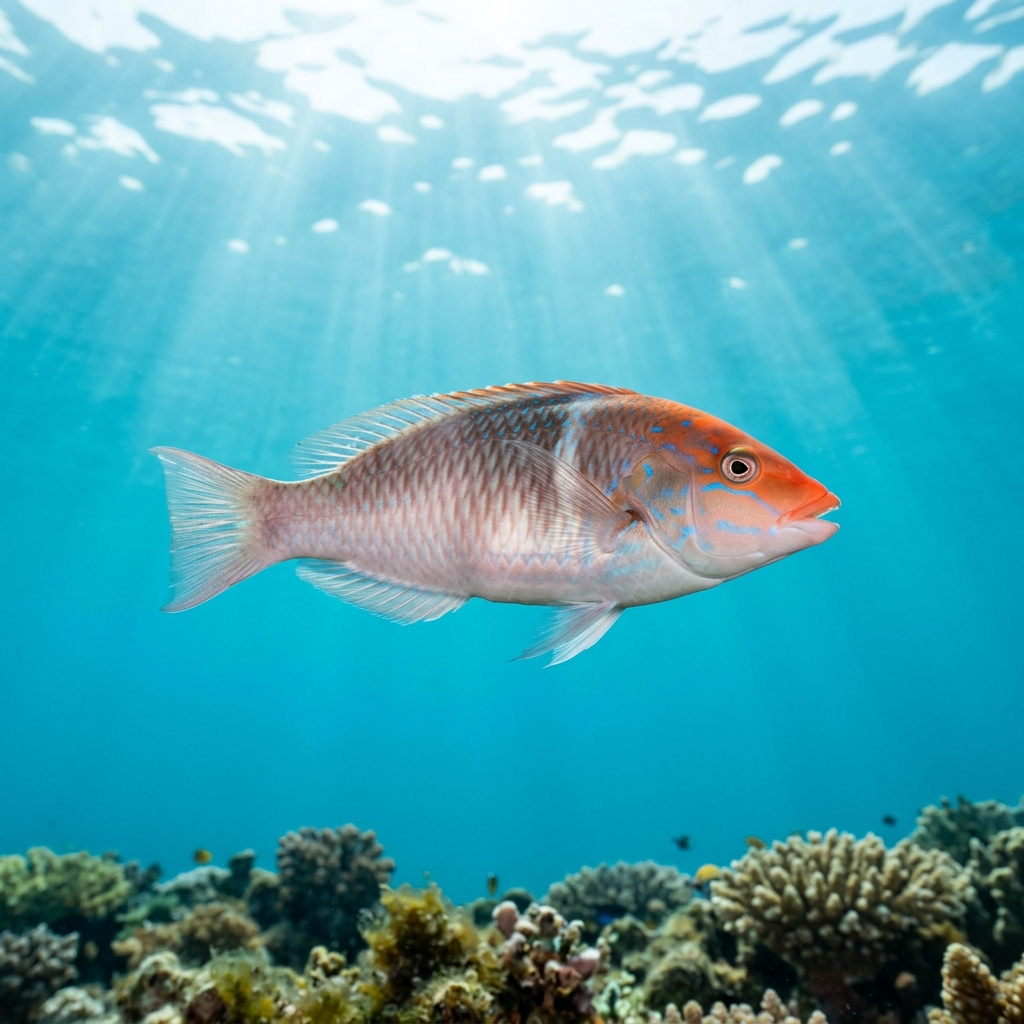
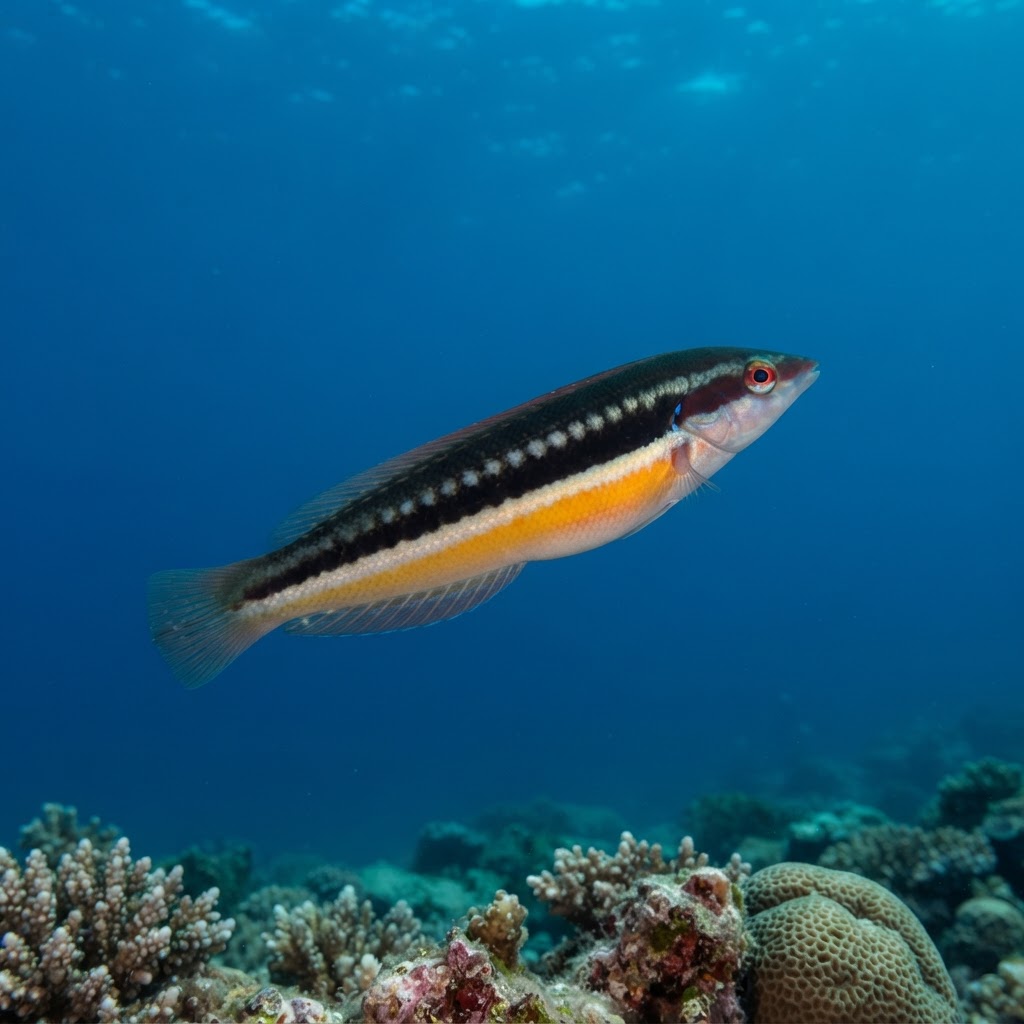
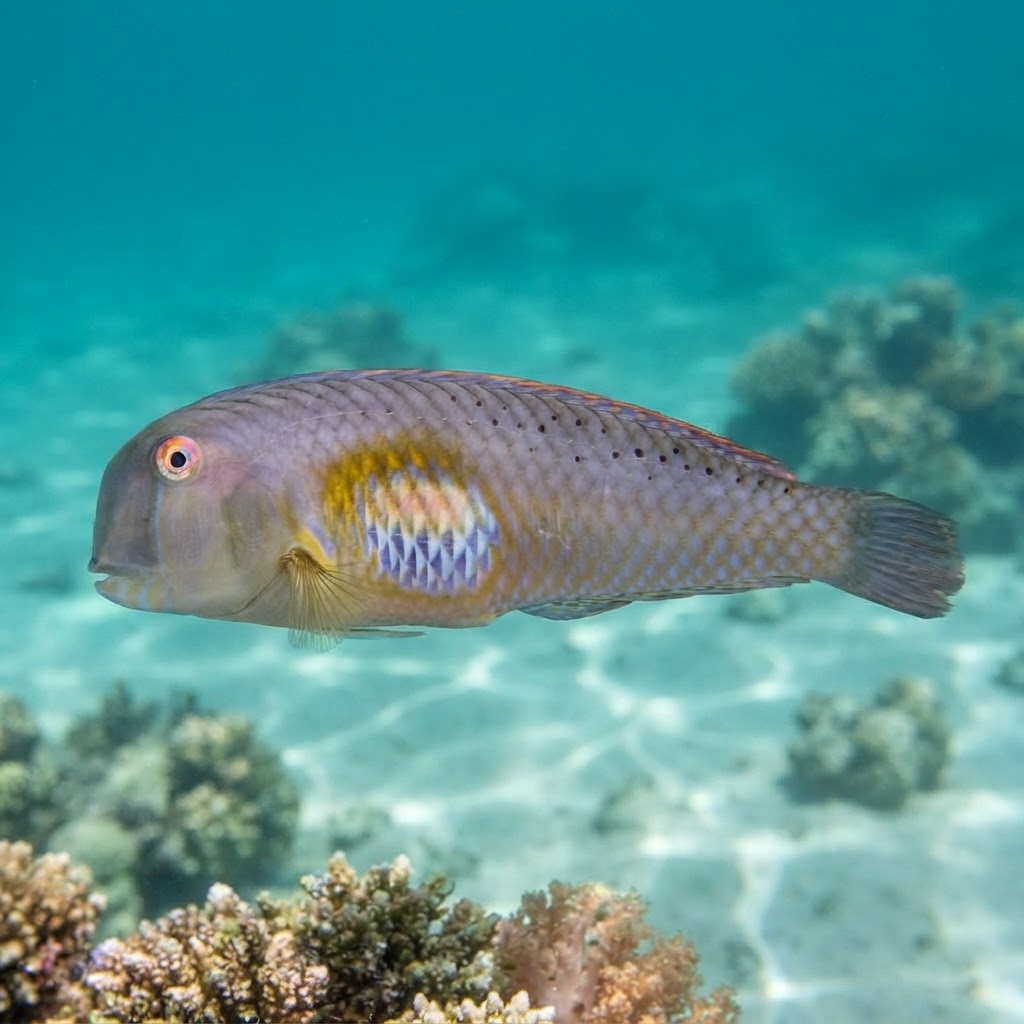
Slender, torpedo-shaped body around 18 cm long with a steeply sloped, almost knife-edged head that lets it dive headfirst into sand when spooked. Look for the dark spot near the base of the tail that gives this wrasse its name, set against a pale to sandy-coloured body. It swims low over open sand and rubble rather than around coral heads, often tilted at an angle as it scans the bottom.
Divers typically find it hovering or gliding low over open sand and rubble patches, using that sloped head to probe for small invertebrates. Like other razorfish, it will bolt and bury itself headfirst into loose sand the instant it feels threatened, so a slow approach and a bit of patience gives the best chance of a proper look before it vanishes. Most sightings happen on lighter, open bottom sections rather than dense coral, often during the day when visibility over sand is best.
That head-first dive into sand is a real escape trick shared across the razorfish group, not a party trick, it can vanish into the seabed in a split second, leaving no visible burrow or trace.
No clear seasonal pattern shows up in the sightings, and its comfort range of 23.1 to 29.3C matches Luzon's water year-round, so any month is fair game.
Reef neighbours a diver could mistake it for. Use the identification notes above to tell them apart.
Logged sightings for this species come out of Luzon in the Philippines, currently the only confirmed region for divers hoping to tick it off. It's an uncommon find even there, so pair a dive request with sand and rubble patches rather than pure reef.
Mapping where Finspot Razorfish is logged…
Confirmed sightings so far are concentrated in Luzon, Philippines. It's logged as uncommon even there, so treat any sighting as a bonus rather than a guarantee.
There's no detected seasonal pattern, and the water temperatures it's found in, roughly 23 to 29C, hold steady year-round in the Philippines, so it can turn up on any dive.
Look for a slim, sand-coloured wrasse around 18 cm with a sharply angled head and a dark spot near the tail base. It hovers low over sand and rubble rather than around coral structure.
They reach around 18 cm in length, a small to mid-sized wrasse that's easy to overlook against open sand.
When threatened, it dives headfirst into loose sand and buries itself almost instantly, a defence trick shared by other razorfish species. It can vanish completely within a second, leaving the sand undisturbed.
Site and sighting data is aggregated from diver logs, iNaturalist and GBIF. For taxonomy and conservation status:
Bird Wrasse
3,632 sites