Balistes polylepis
Grey-blue triggerfish common along Baja California and Guanacaste, comfortable from 19 to 29C, and lurking on reefs year-round.
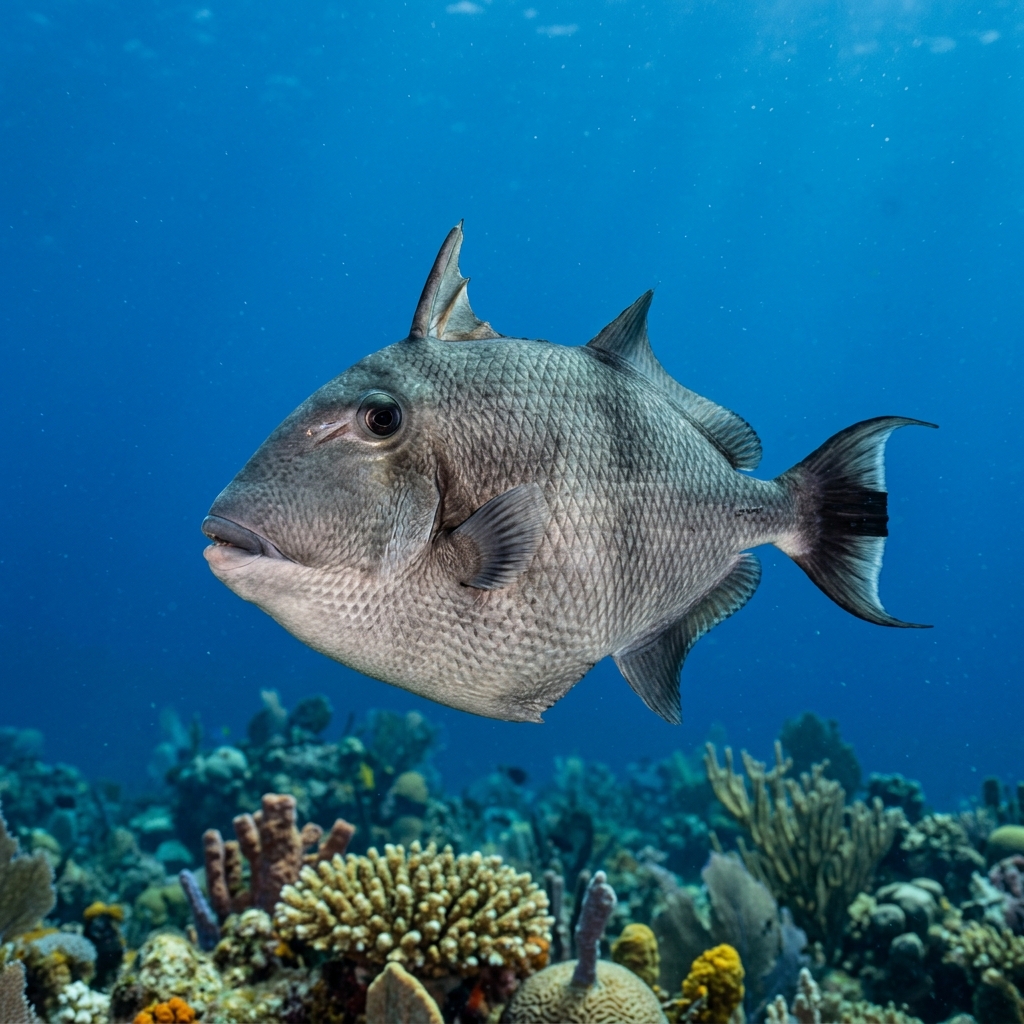
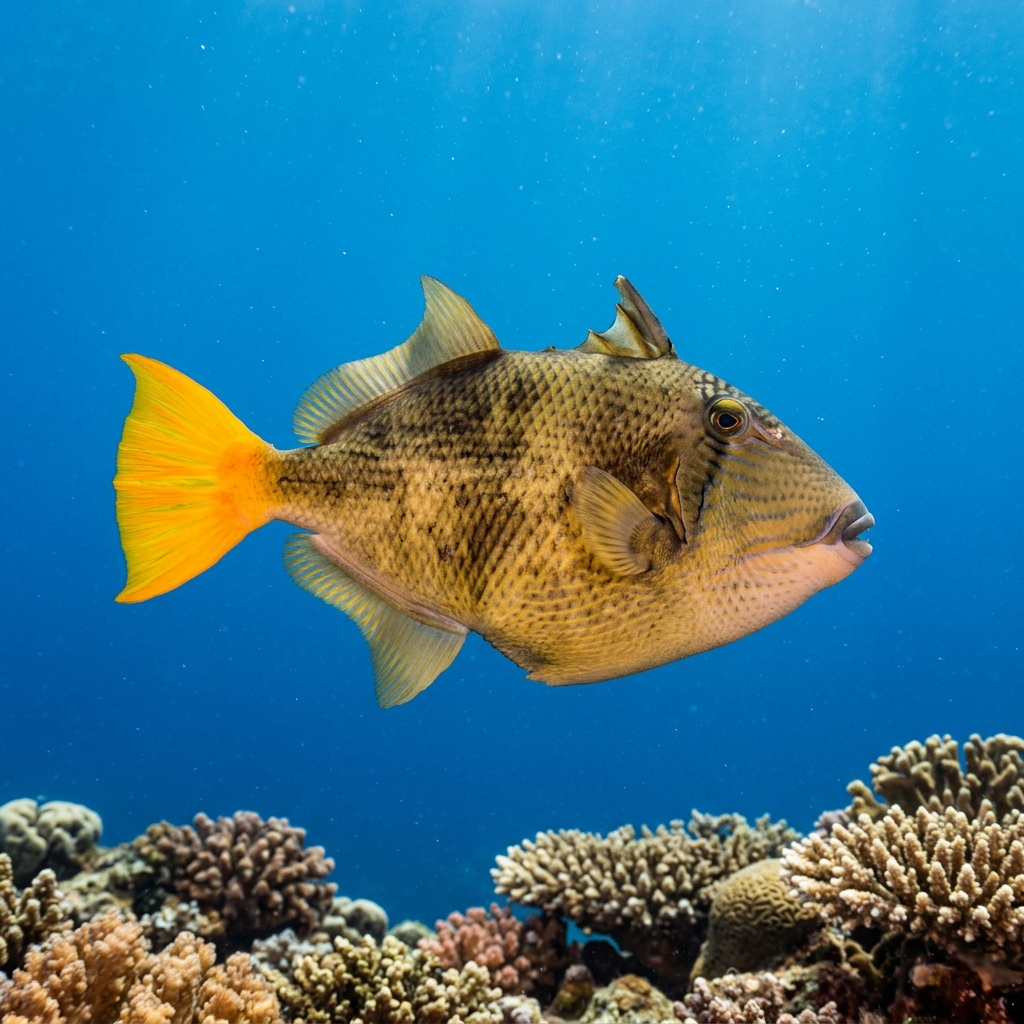
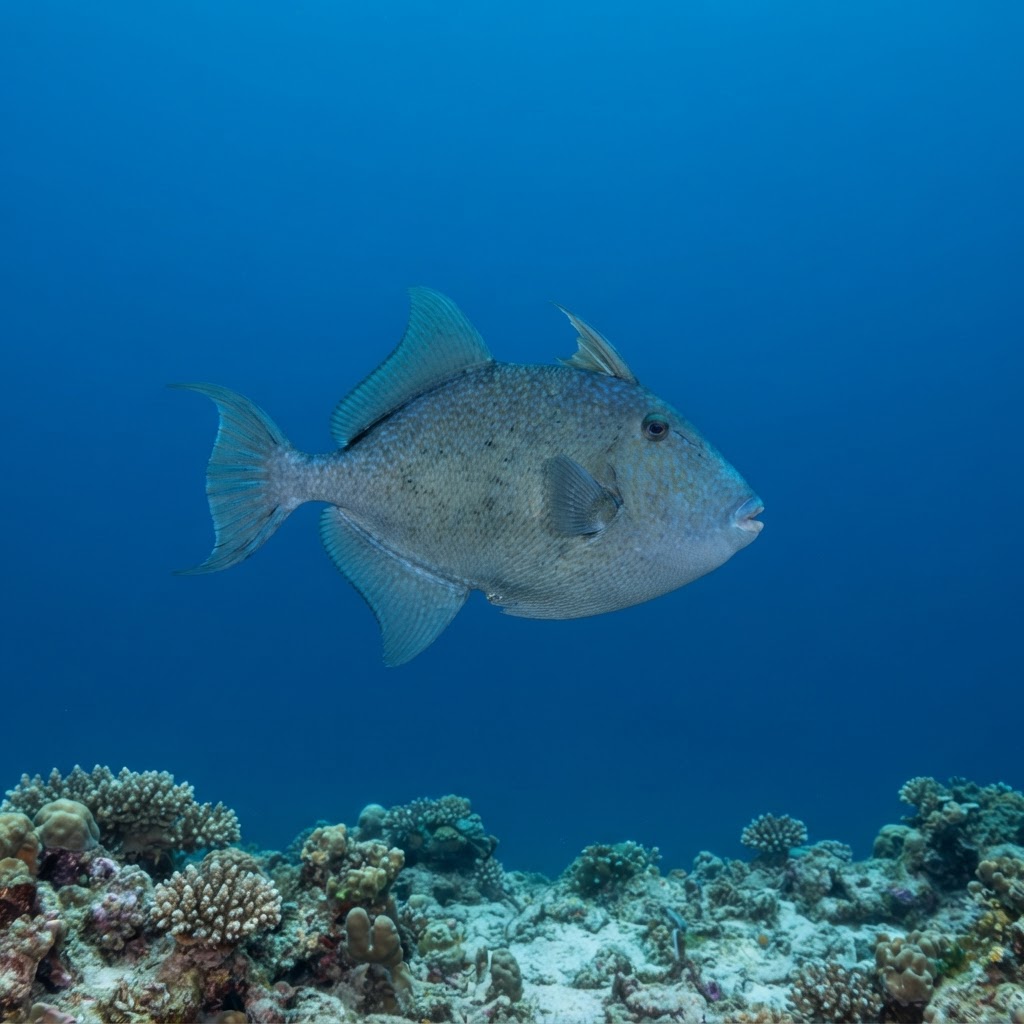
A deep, oval-bodied fish reaching around 53 cm, with a grey to bluish-grey body covered in fine pale blue speckling that gives it a scaly, dusted look. The tail fin often shows a yellowish or orange tinge, and like other triggerfish it has small eyes set high and far back on a blunt head, with a single erectile spine on its dorsal fin that it can lock upright when threatened. Its swimming style is distinctive too, an undulating motion from the dorsal and anal fins rather than the tail.
Usually seen cruising alone over rocky or sandy patches near reef structure, often at a cautious distance from divers rather than approaching. It picks at the bottom for food and will sometimes hover in the water column mid-reef, and it's just as likely to turn up on a shallow snorkel as on a deeper dive given its wide depth range. Most encounters are logged as uncommon rather than guaranteed, so it rewards divers who keep an eye on open sand and rubble zones as well as the reef itself.
Like other triggerfish, it can lock its first dorsal spine upright using a second smaller spine as a trigger, wedging itself into a crevice at night or when threatened so it can't easily be pulled out.
No clear seasonal pattern shows up in sighting data, and its comfortable range of roughly 19 to 29C covers conditions on these coasts most of the year, so it's a reasonable year-round sighting rather than a seasonal special.
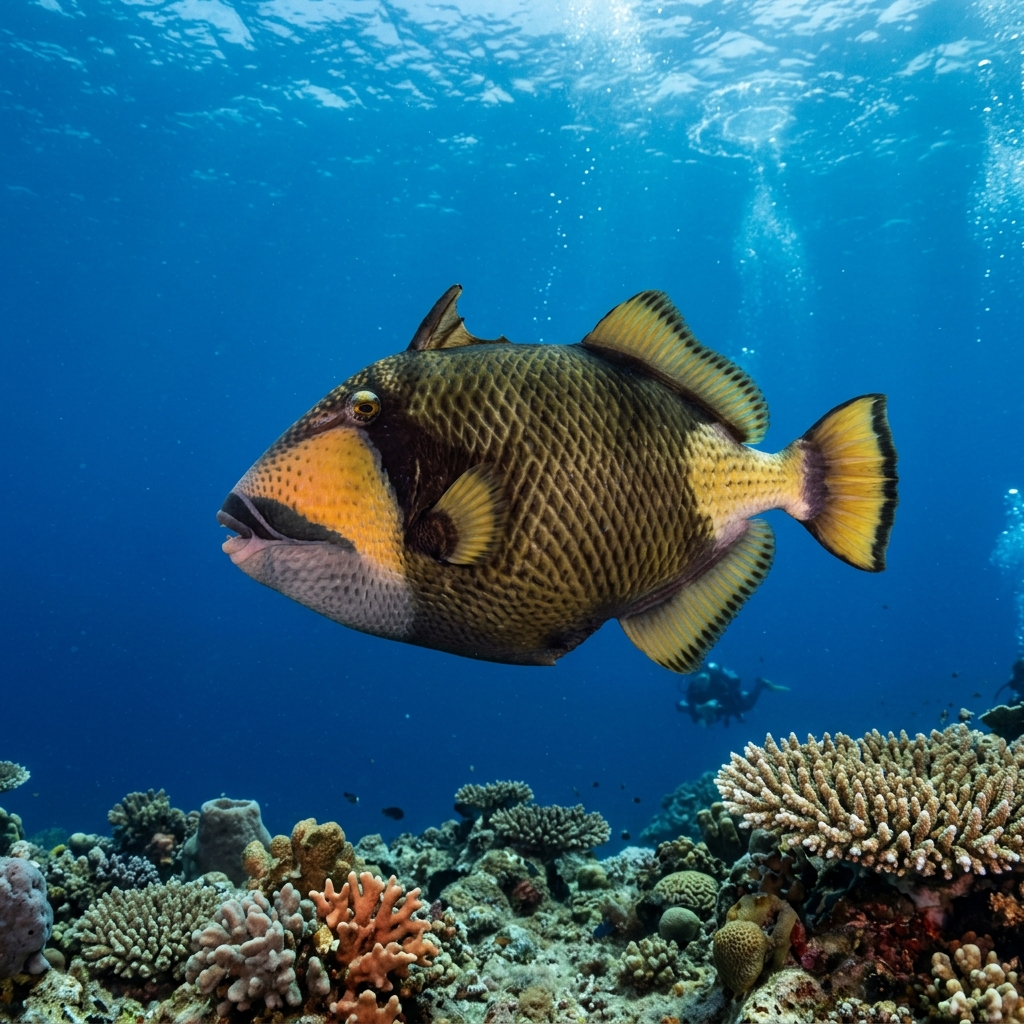
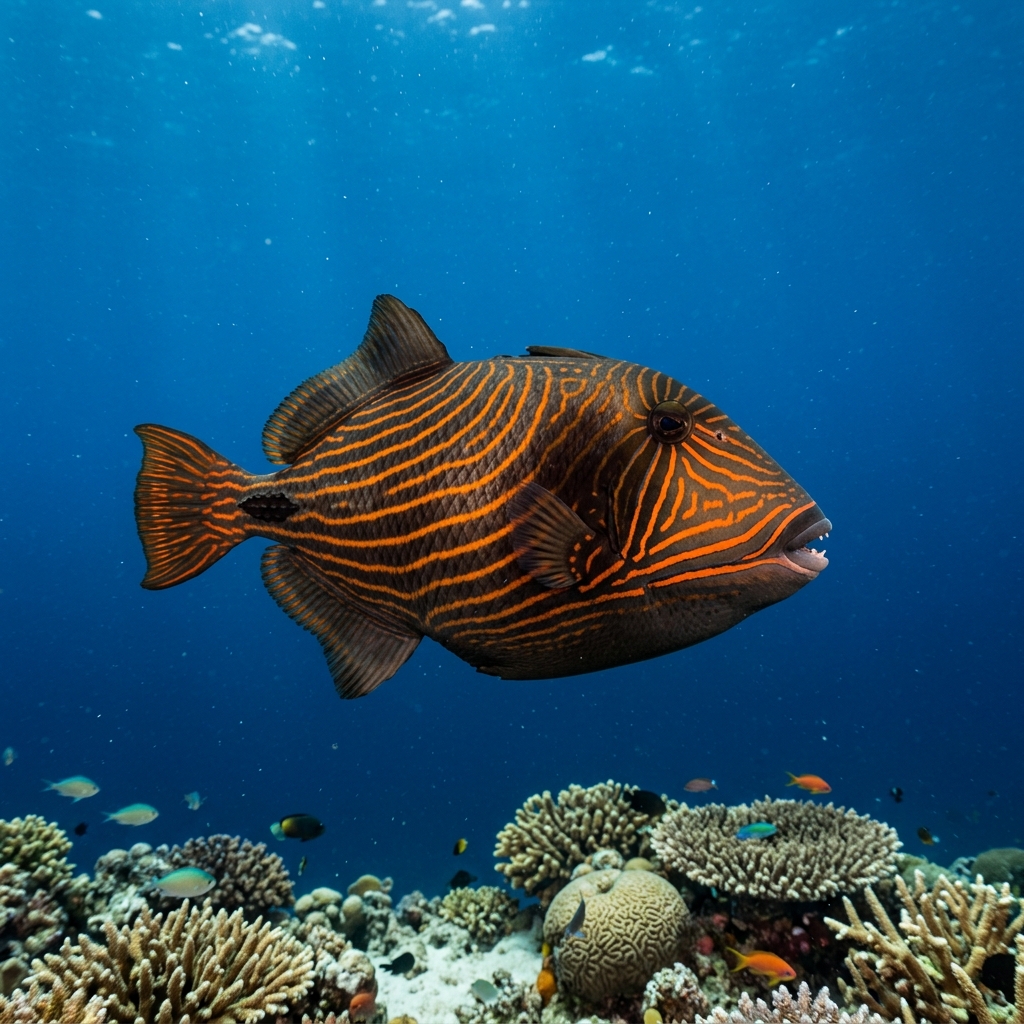
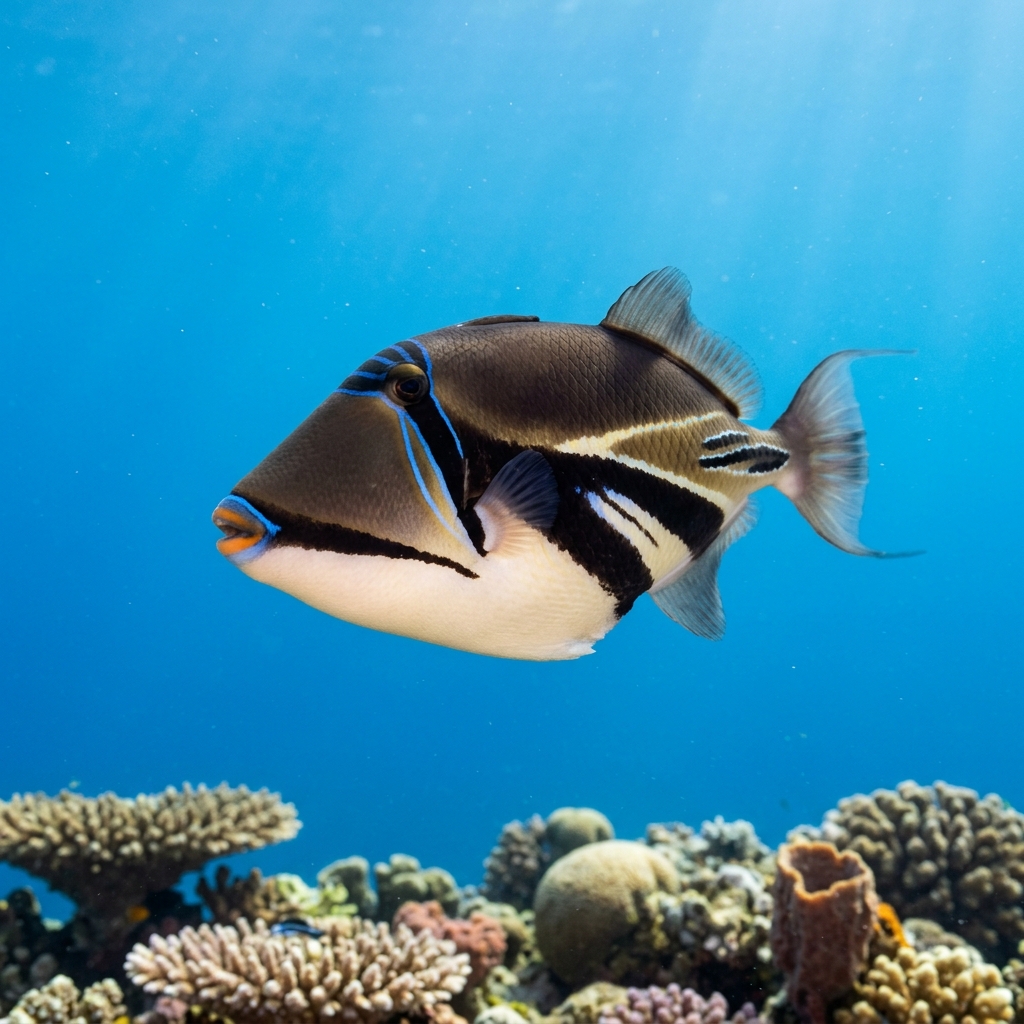
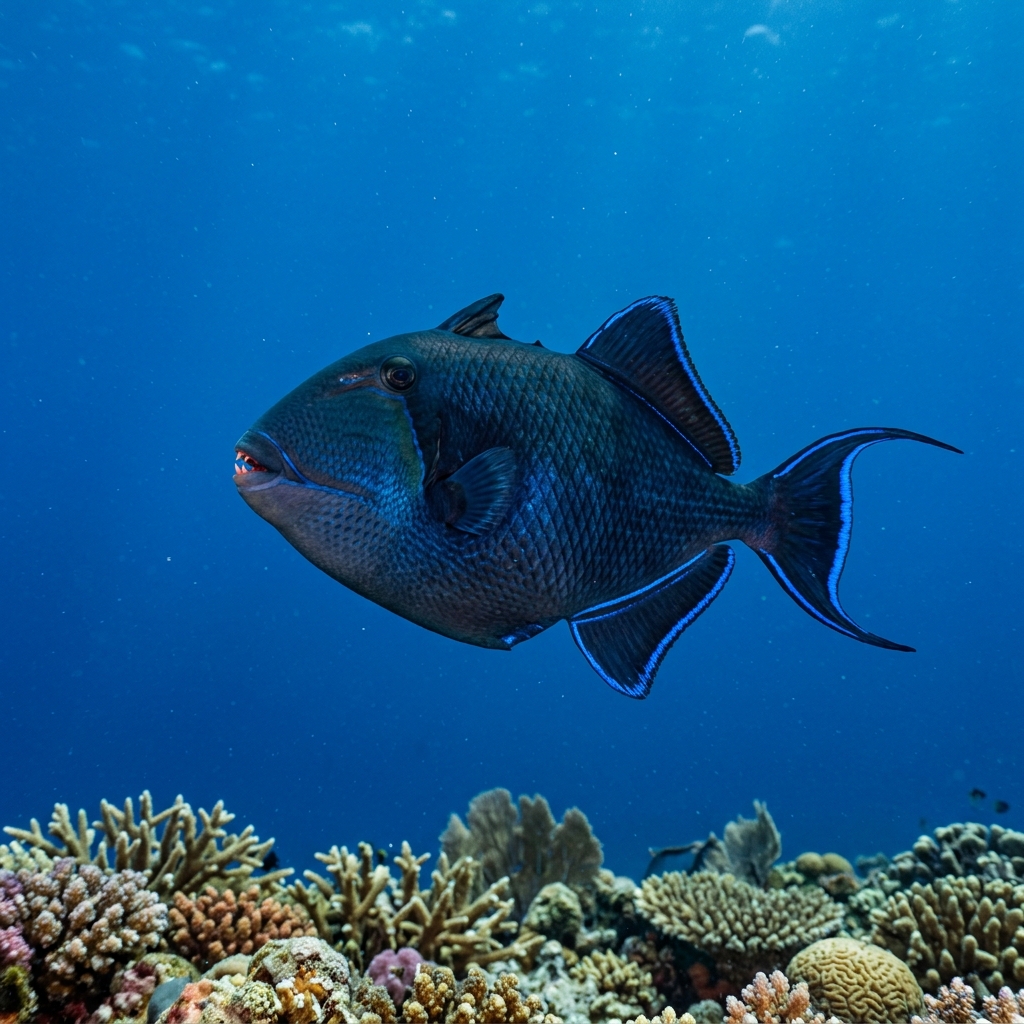
Reef neighbours a diver could mistake it for. Use the identification notes above to tell them apart.
Most reliably logged along Baja California and the Pacific coast of Mexico, with strong numbers also in Guanacaste, Costa Rica and the Galápagos Islands in Ecuador. Divers also report it consistently in Hawaii, Cocos Island, and off Pucusana in Peru, making it a widespread find across the eastern Pacific.
Mapping where Finescale Triggerfish is logged…
Baja California and the Pacific coast of Mexico are the most productive regions, with good numbers also around Guanacaste in Costa Rica and the Galápagos Islands. Hawaii, Cocos Island, and Pucusana in Peru also turn up regular sightings.
There's no strong seasonal pattern in sighting data, and its temperature range of about 19 to 29C spans most of the year across its range, so it can turn up on any dive rather than during a specific season.
Look for a deep-bodied, grey-blue fish around half a metre long with fine pale speckling across its flanks and a yellowish tint to the tail. Its swimming motion, rippling the dorsal and anal fins rather than kicking the tail, is a good giveaway even at a distance.
They typically reach around 53 cm in length, making them a solid mid-sized reef fish rather than a small one, easy to pick out cruising over open sand or reef edges.
No, they're not considered dangerous to divers and typically keep their distance rather than approaching. As with any triggerfish, giving space around potential nest sites is good practice, though no aggressive behaviour is documented for this species.
Site and sighting data is aggregated from diver logs, iNaturalist and GBIF. For taxonomy and conservation status:
Lagoon Triggerfish
2,435 sites