Filicampus tigris
Spot the Tentacled Pipefish in New South Wales and Western Australia, a rare find in cooler 18-23 °C waters. Tips on ID and where divers log it most.
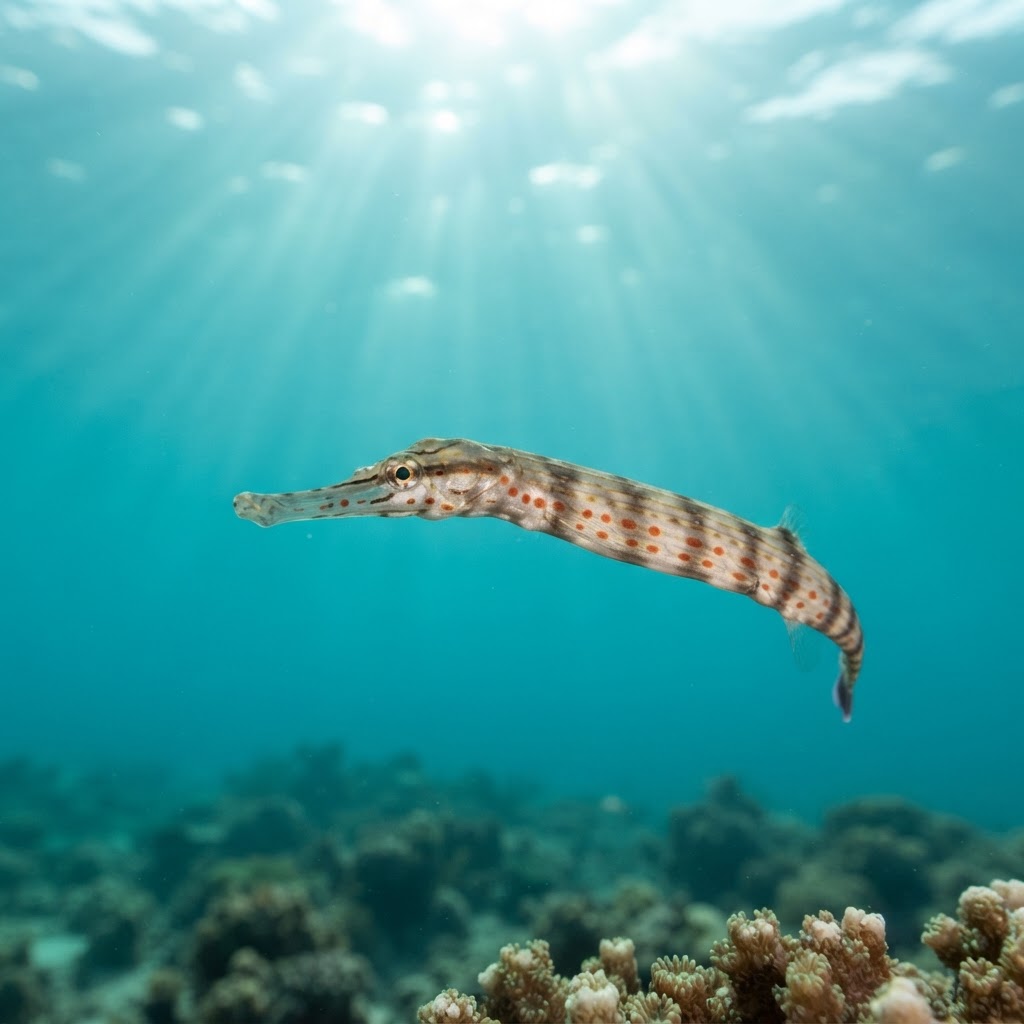
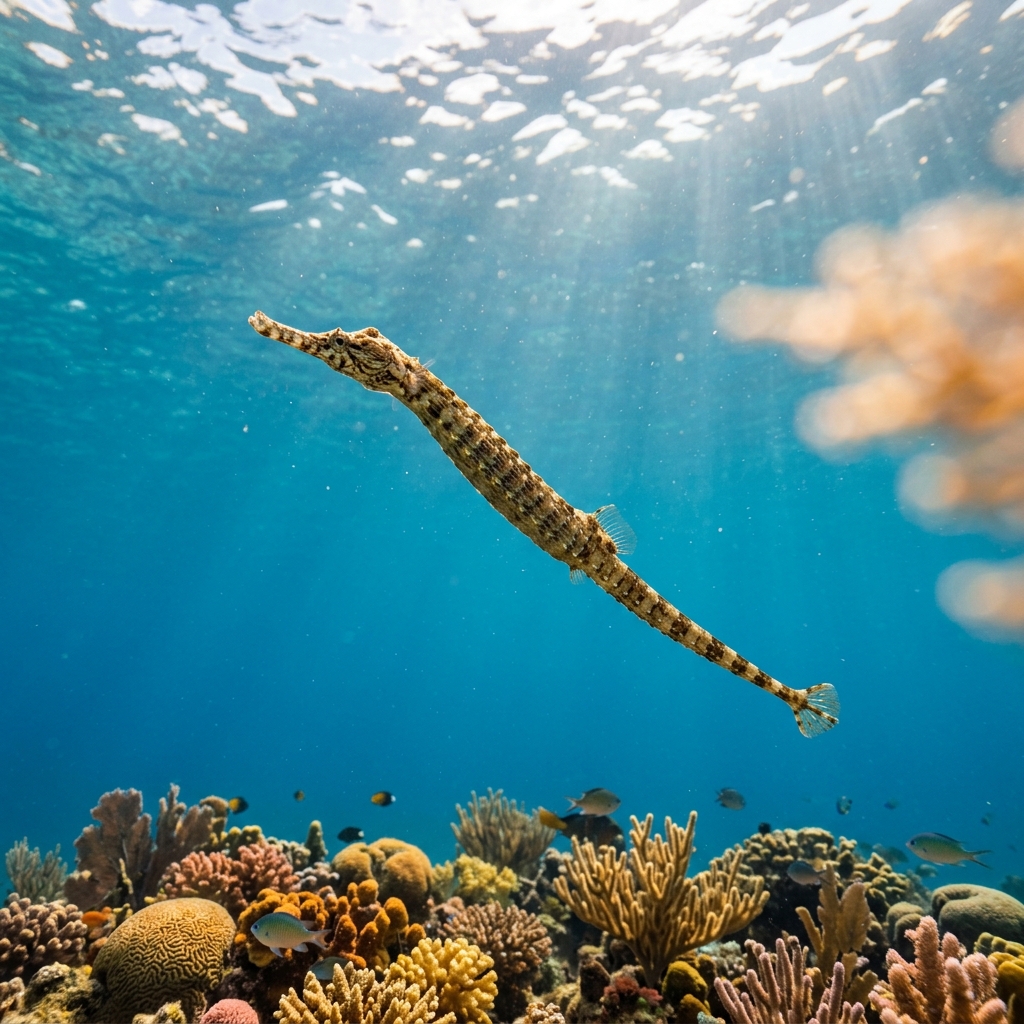
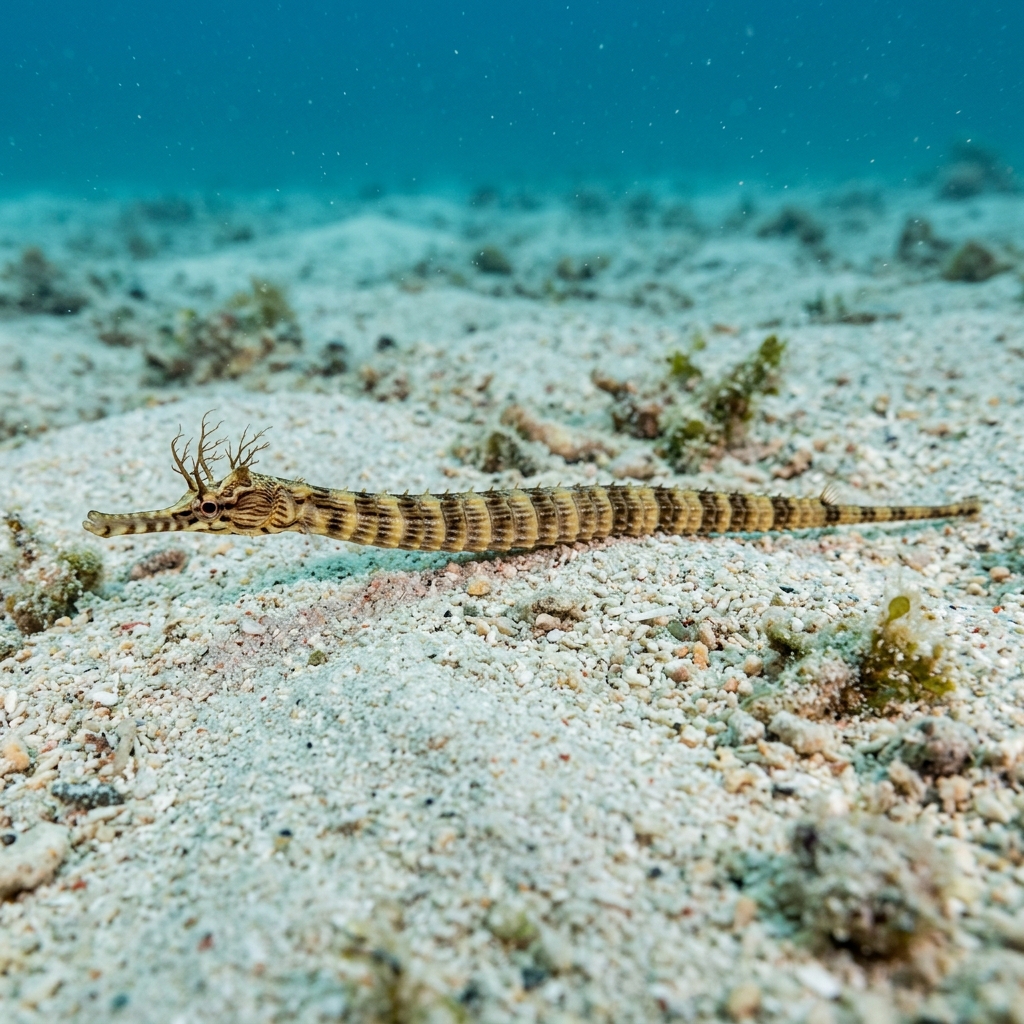
Look for a slender, elongated pipefish body with bold tiger-like banding along its length, that striped patterning is the key field mark underwater. The standout feature is the small, fleshy tentacle-like projections on the head, which give the species its name and set it apart from most other Australian pipefish at a glance. It tends to hold a stiff, upright or angled posture among seagrass or algae, relying on camouflage rather than movement.
When you find one, it is almost always stationary, tucked upright among seagrass blades or weedy rubble, depending entirely on its banding to stay invisible. Disturbed individuals tend to sway gently with the current rather than flee, making slow, calm approaches from a distance the best tactic. Most sightings are during daylight dives in relatively shallow, sheltered coastal sites.
Like all syngnathids (the pipefish and seahorse family), it is the male that carries and broods the eggs in a specialised pouch until the young are ready to hatch, so a swollen-looking male is an especially worthwhile find.
There is not enough monthly data to point to a peak season, so treat it as a year-round resident. Its observed water temperature range of roughly 18 to 23 °C fits temperate Australian coastal conditions, suggesting it is present whenever those temperatures are holding.
Australia is the only country where divers reliably log this species, with the strongest concentration of sightings in New South Wales. Western Australia and Queensland also have recorded sites, making the east and west Australian coasts the places to focus your search. Within those regions, shallow seagrass beds and coastal reefs are the most productive habitats.
Mapping where Tentacled Pipefish is logged…
All confirmed diver sightings come from Australia. New South Wales has the greatest concentration of logged sites, followed by Western Australia and Queensland. Look in sheltered coastal bays with seagrass or weedy reef in those regions.
There is no clear seasonal peak in the data, so it can be treated as a year-round species. Its preferred water temperature of 18 to 23 °C aligns with temperate Australian coastal conditions, meaning it is likely present at most times of year at suitable sites.
Focus on two things: the tiger-stripe banding running along the body, and the small fleshy tentacle-like projections on the head. No other common Australian pipefish combines both of those features. It usually sits motionless and angled among seagrass, so scan slowly.
Reliable size data for this species is limited. As a member of the pipefish group it is likely in the range of a few to several centimetres in total length, but divers should not rely on size alone as an identification tool, pattern and the distinctive head tentacles are more useful.
Yes. As with all syngnathids, the male broods the eggs in a specialised pouch on his underside until the juveniles hatch. A male with a visibly swollen pouch is a rare and rewarding sighting.
Site and sighting data is aggregated from diver logs, iNaturalist and GBIF. For taxonomy and conservation status:
Seahorse
1,346 sites