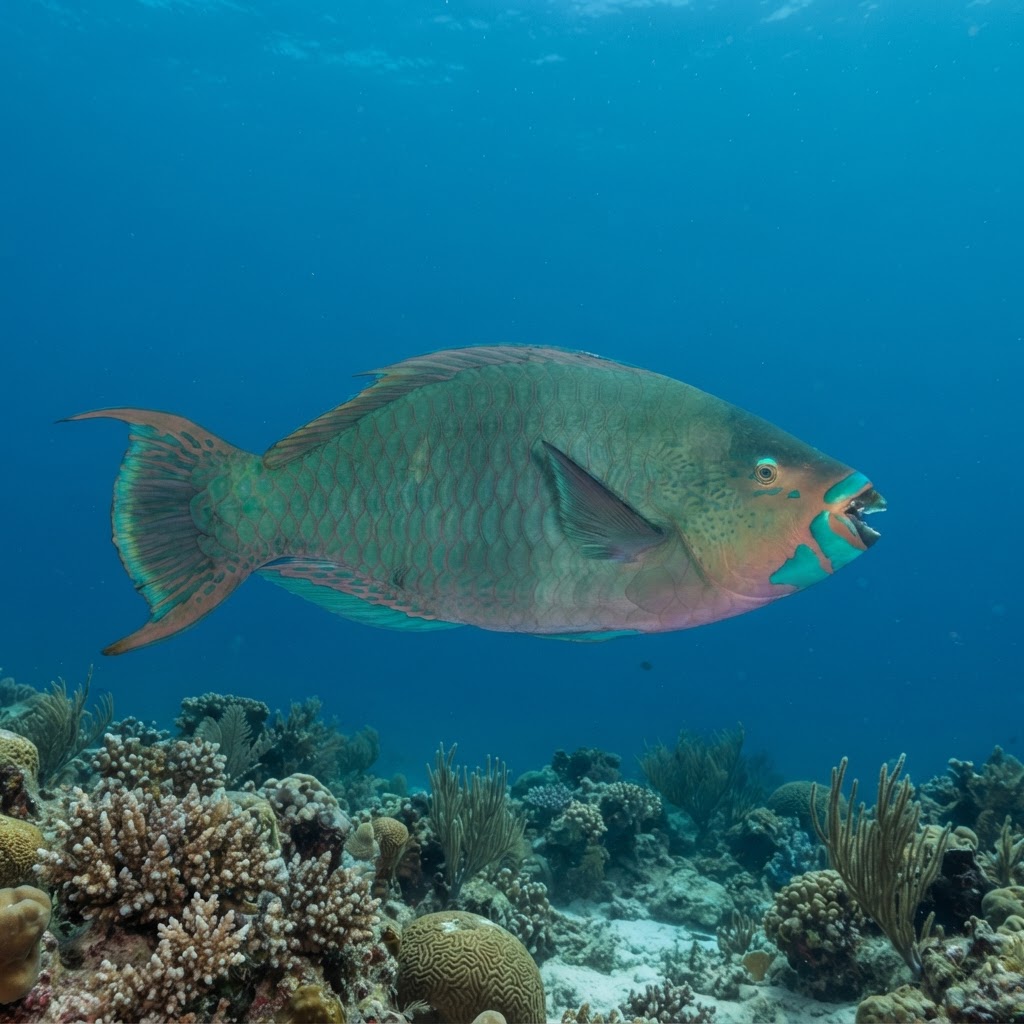
Scarus altipinnis
Look for trailing filament fins on Queensland and Tuamotu reefs, this uncommon parrotfish shows up year-round in 24.5-28C water.
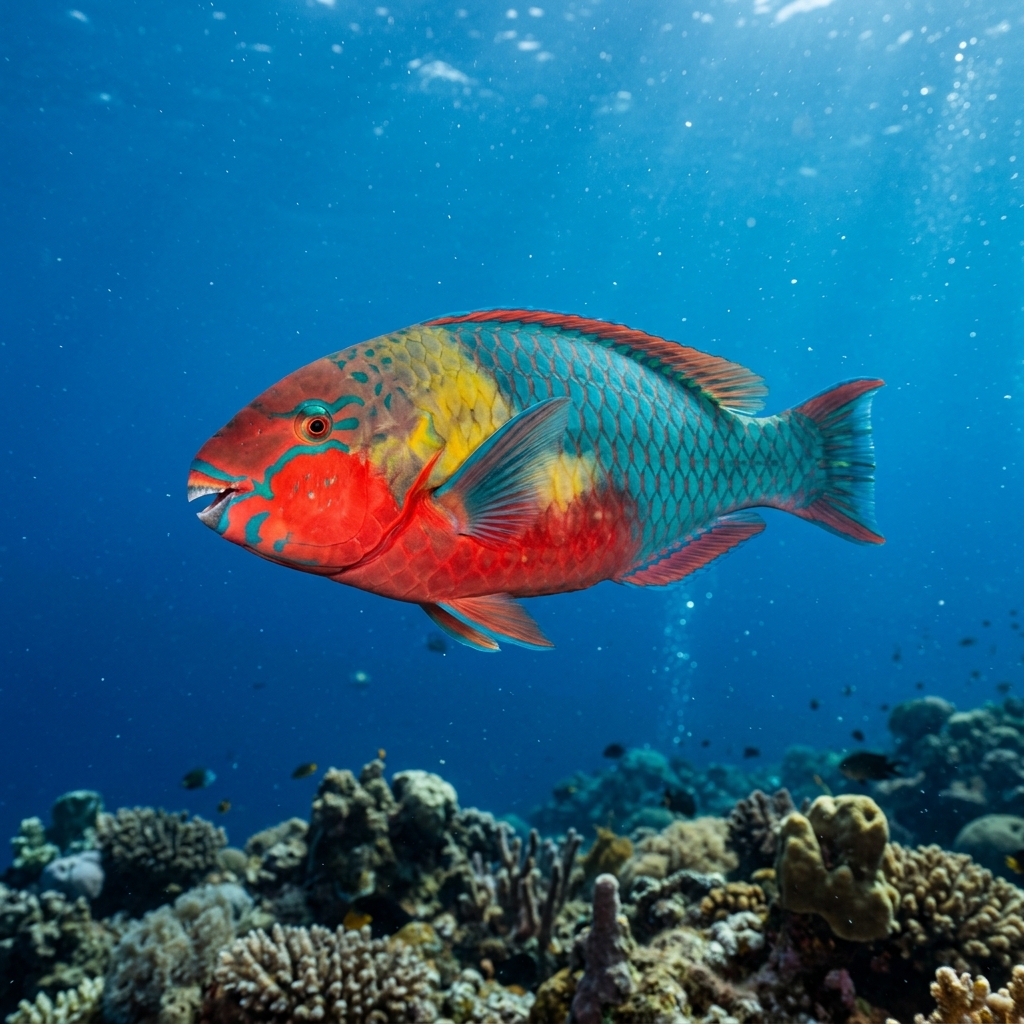
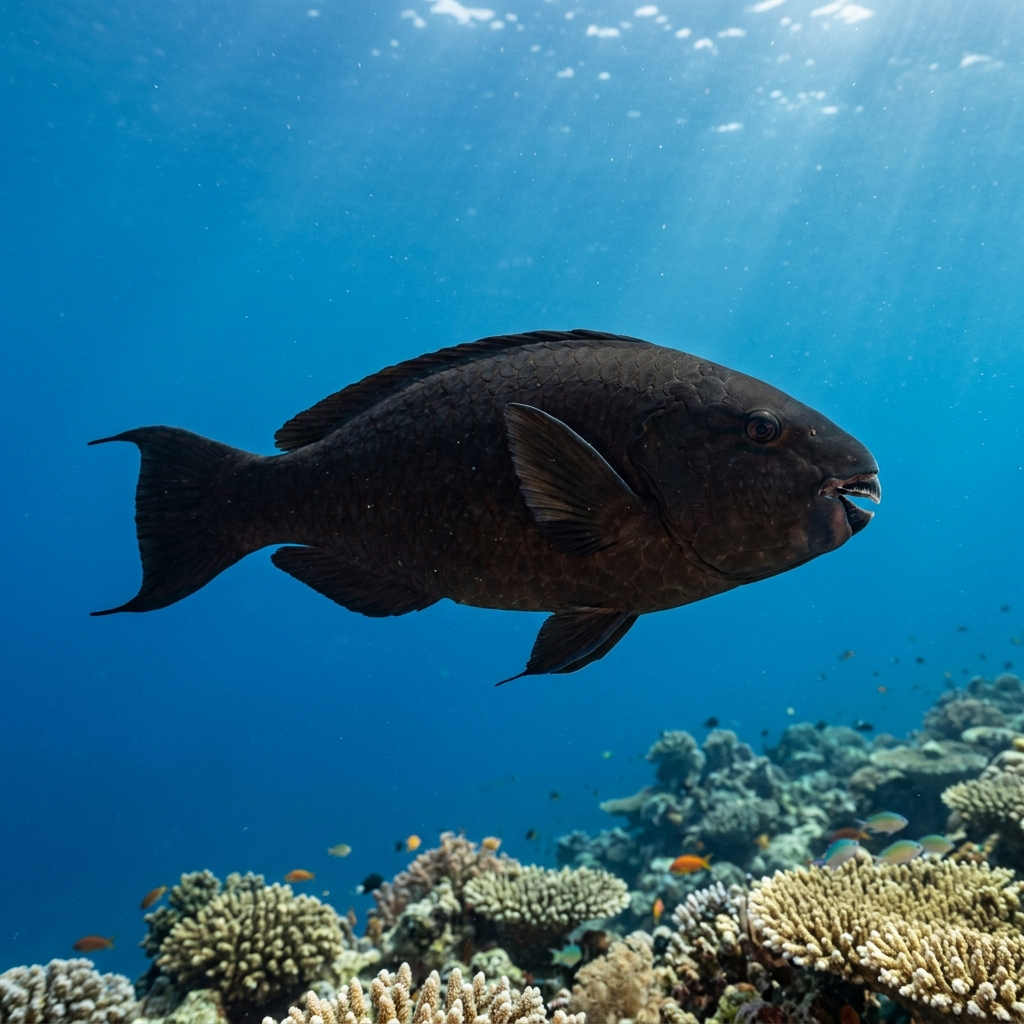
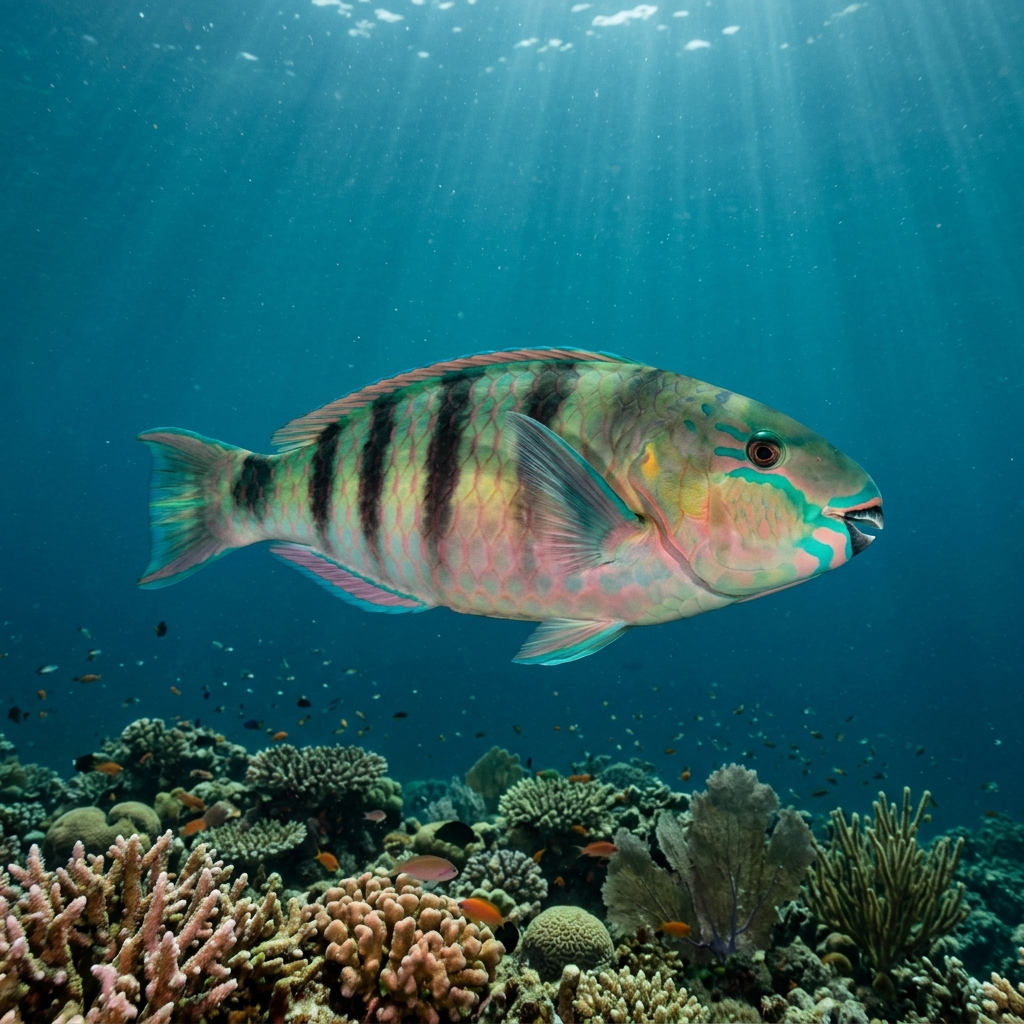
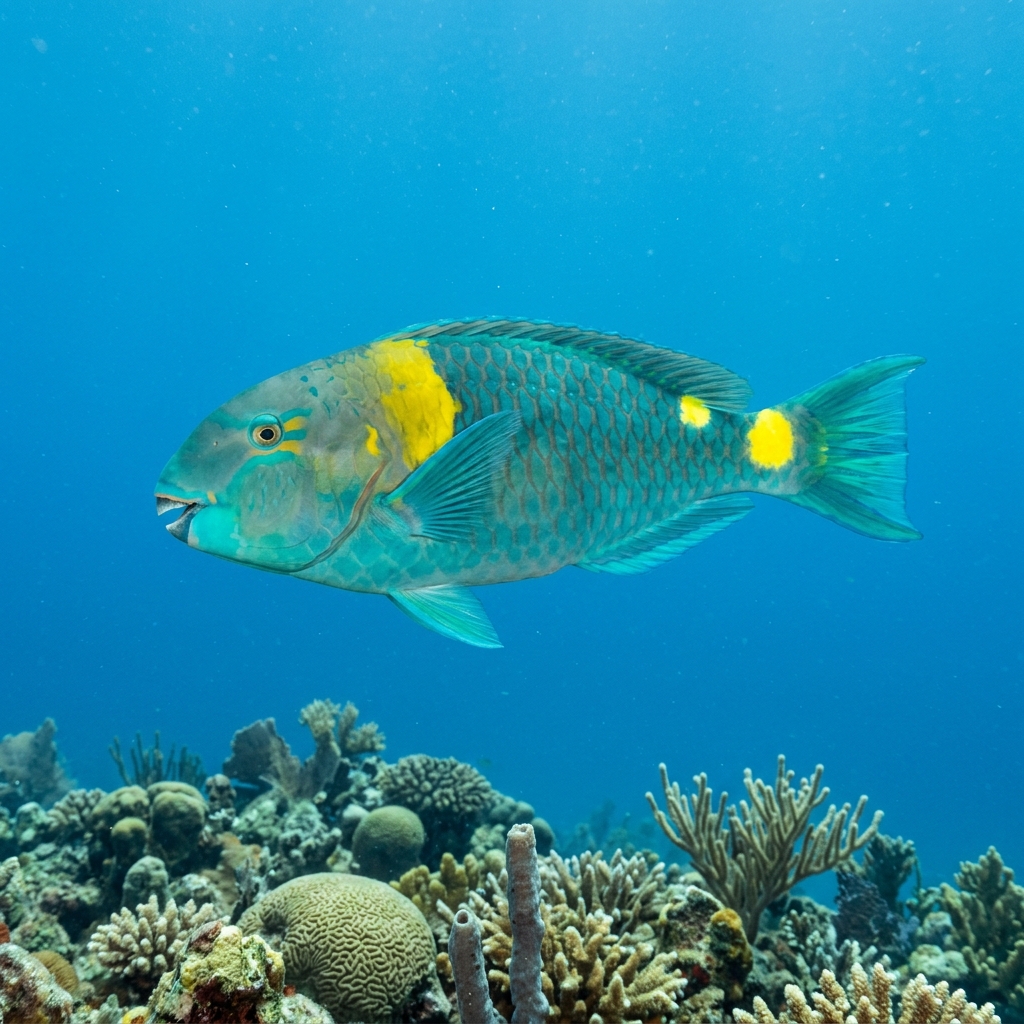
Grows to about 42cm, a chunky reef parrotfish with a blue-green body washed in pink and orange around the head and fins. The giveaway is the trailing filament that streams off the upper and lower tips of the tail fin, longer and more obvious than on most other parrotfish. Look for it grazing head-down against the reef, its thick beak-like teeth visible as it works over algae-covered rock or dead coral.
Divers most often spot it alone or in loose association with other parrotfish, grazing steadily on algae along reef slopes and flats rather than schooling tightly. It tends to keep a cautious distance and moves off unhurriedly rather than bolting, giving you a decent look before it drifts back into cover. Most logs describe it as uncommon at a given site, so a sighting feels like a real find rather than a given.
Like other parrotfish, it scrapes algae and fine organic film off dead coral and rock with a fused beak, and the resulting bite marks and sand-like waste play a small part in reef sediment turnover.
No clear seasonal pattern shows up in the data, so it is a year-round sighting on tropical reefs. It sits comfortably in 24.5 to 28C water, the kind of stable warm range found on Indo-Pacific reefs all year.
Most reliably logged on the Great Barrier Reef in Queensland, Australia, which accounts for the bulk of sightings, followed by the Tuamotu Islands and Society Islands in French Polynesia. Smaller but consistent populations turn up around Rarotonga in the Cook Islands, the Visayas in the Philippines, and Apra Harbor and the Southern Coast of Guam.
Mapping where Filament-finned Parrotfish is logged…
Queensland, Australia is the strongest area for sightings, particularly along the Great Barrier Reef. French Polynesia's Tuamotu and Society Islands, Rarotonga in the Cook Islands, the Visayas in the Philippines, and Guam also have consistent records.
There is no strong seasonal pattern in sightings, so it can be seen year-round. It favours warm reef water between roughly 24.5 and 28C, which holds steady on tropical reefs through the year.
Check the tail fin first: it trails long thread-like filaments off both tips, unusual among reef parrotfish. Body colour is blue-green with pink and orange highlights around the head, and adults reach around 42cm.
They reach about 42cm in length, a solidly built mid-size parrotfish rather than a small reef grazer.
No, they pose no danger to divers. They are herbivores that graze algae off the reef and typically keep their distance rather than approach.
Their most distinctive feature is the elongated filament trailing from each tip of the tail fin, a trait that gives the species its common name and sets it apart from other parrotfish on the reef.
Site and sighting data is aggregated from diver logs, iNaturalist and GBIF. For taxonomy and conservation status:
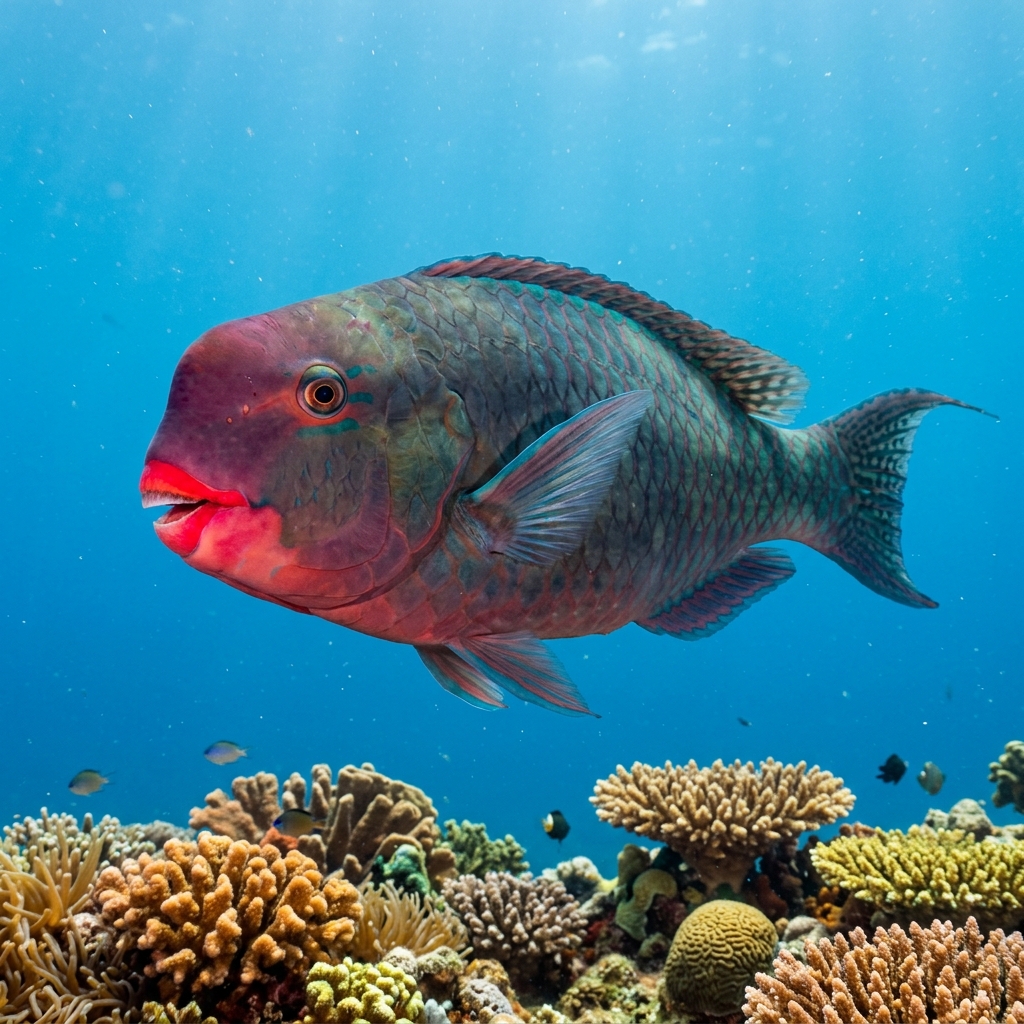
Redlip Parrotfish
2,789 sites