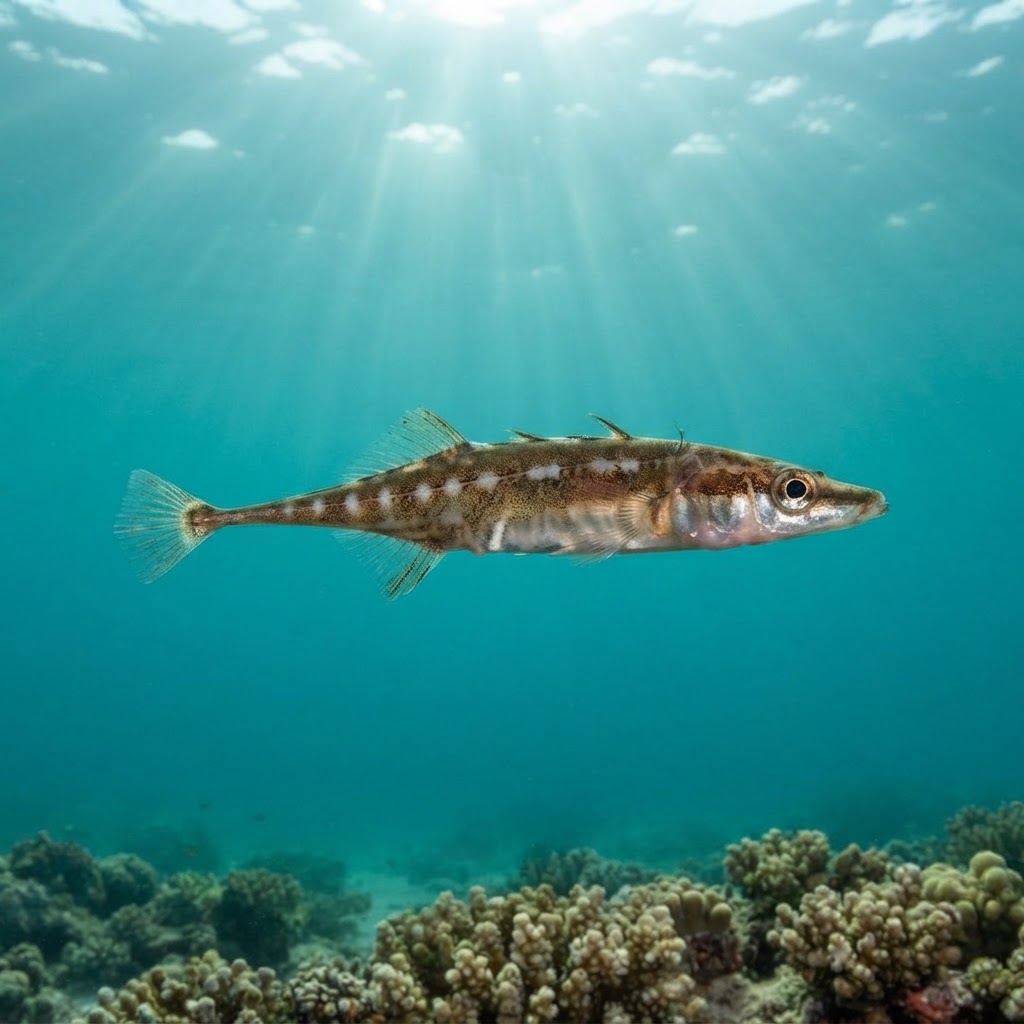
Spinachia spinachia
Spot this slender eelgrass-dweller in Brittany, Northern Ireland and Jutland, cold water 7.5-12.5C, seen year-round.
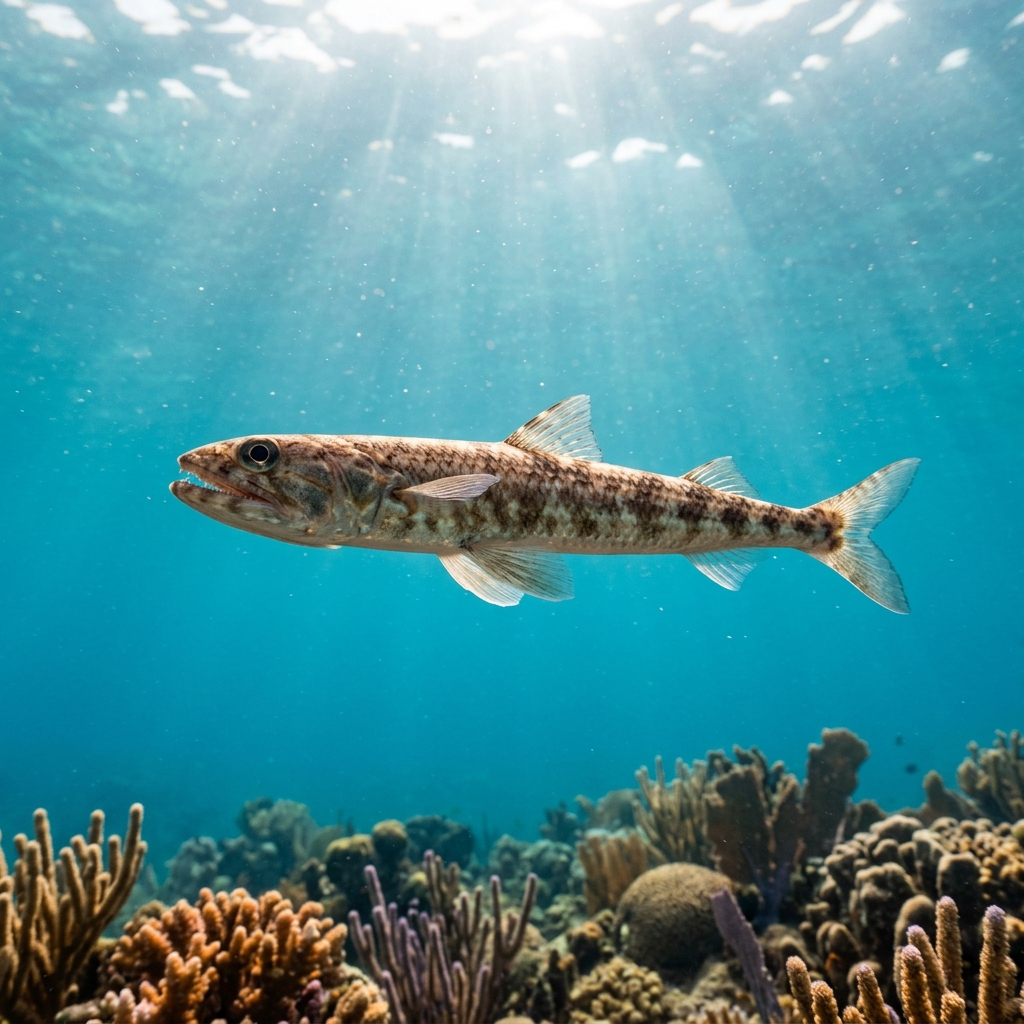
Look for a long, slim, almost eel-like body up to 15 cm, olive-brown to greenish so it blends straight into eelgrass and weed. The giveaway is the row of short isolated spines running along its back ahead of the dorsal fin, more numerous than the freshwater sticklebacks divers might already know. It swims with a stiff, hovering posture, often holding station in weed rather than darting about in open water.
Divers usually find it holding still or drifting slowly through eelgrass and seaweed beds, using its camouflage rather than speed to avoid attention. It tends to stay close to vegetation in shallow, sheltered water and shows little reaction to a calm diver nearby, making it easy to swim past without noticing.
Males build and guard a small nest woven from algae and held together with sticky secretions, then fan and defend the eggs inside it, a level of parental care that is unusual among small inshore fish.
No clear seasonal peak shows in the sightings, and with a cold-water niche of 7.5 to 12.5 C it stays active through this range, so treat it as a year-round find in the cooler shelf seas of northwest Europe.
Most reliably logged in Brittany in France, Northern Ireland in the UK, Schleswig-Holstein in Germany and Jutland in Denmark, with further sightings around Cork and Clare in Ireland and southern Norway. Across these sites it turns up as an uncommon or rare find in shallow, weedy inshore water rather than as a headline species.
Mapping where Fifteen-spined Stickleback is logged…
Best chances are in Brittany, France, Northern Ireland, Schleswig-Holstein in Germany and Jutland in Denmark, with additional records from Ireland and Norway. Look for shallow, sheltered water with eelgrass or weed rather than open reef.
Sightings do not show a strong season, so it is considered a year-round species in the cool waters it inhabits, generally between 7.5 and 12.5 C.
Check for a slim, elongated olive-brown body around 15 cm long with a line of short separate spines along the back. It usually sits motionless in eelgrass or weed rather than swimming in open water.
They reach about 15 cm in length, making them one of the larger stickleback species, though their slender shape keeps them easy to overlook against weed.
Males build a small nest from algae bound with a sticky secretion, then guard and fan the eggs laid inside it, a rare example of nest-building parental care in a small marine fish.
Site and sighting data is aggregated from diver logs, iNaturalist and GBIF. For taxonomy and conservation status:
Soldierfish
3,612 sites