Cambaridae spp.
Spot American crayfish on lake and river bottoms from Zurich to Ontario, walking silty floors year-round in cool freshwater.
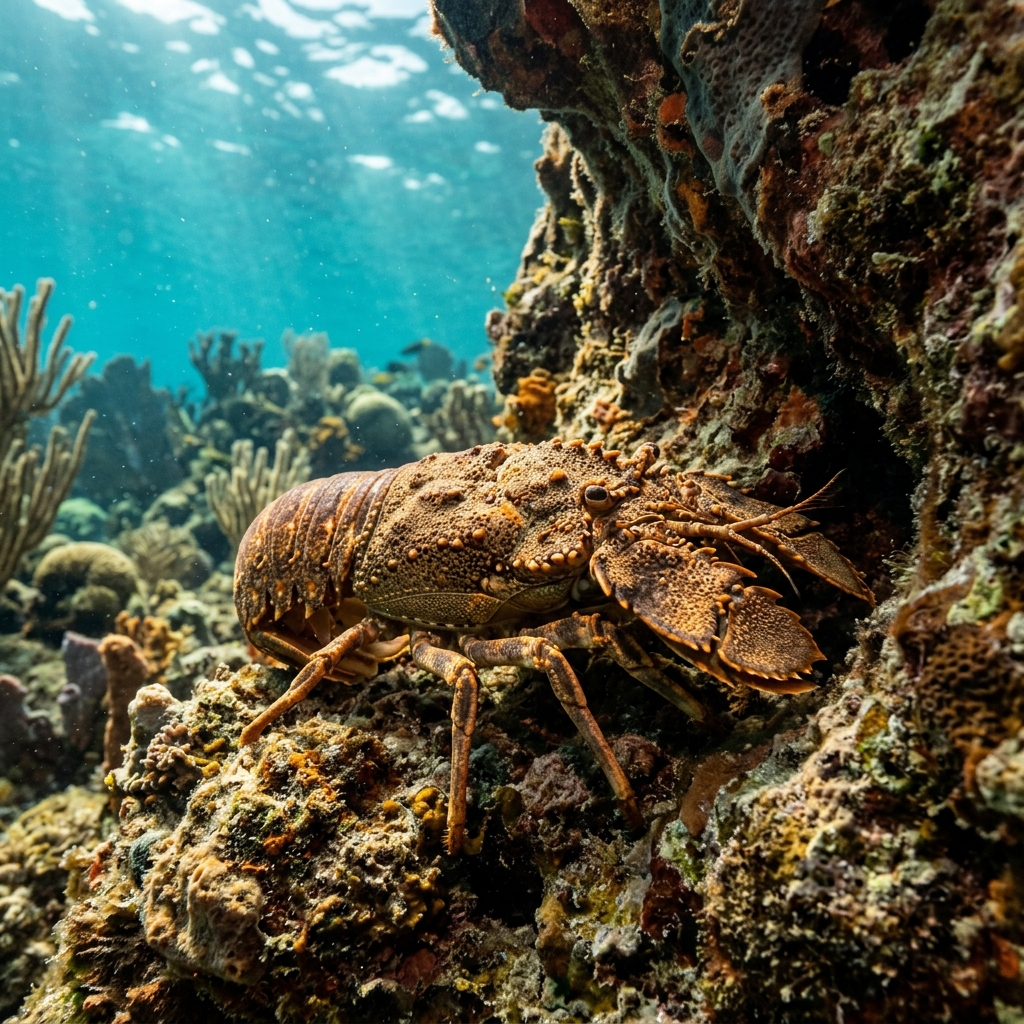
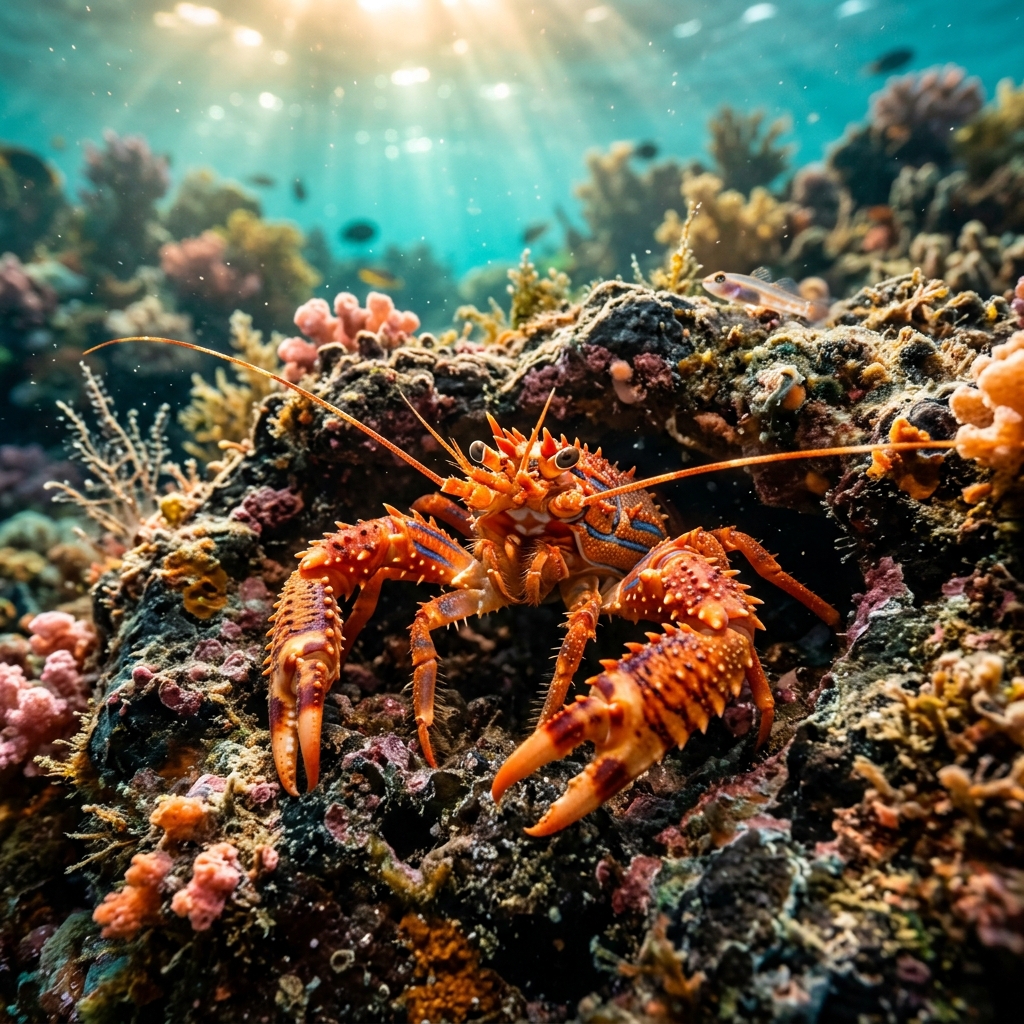
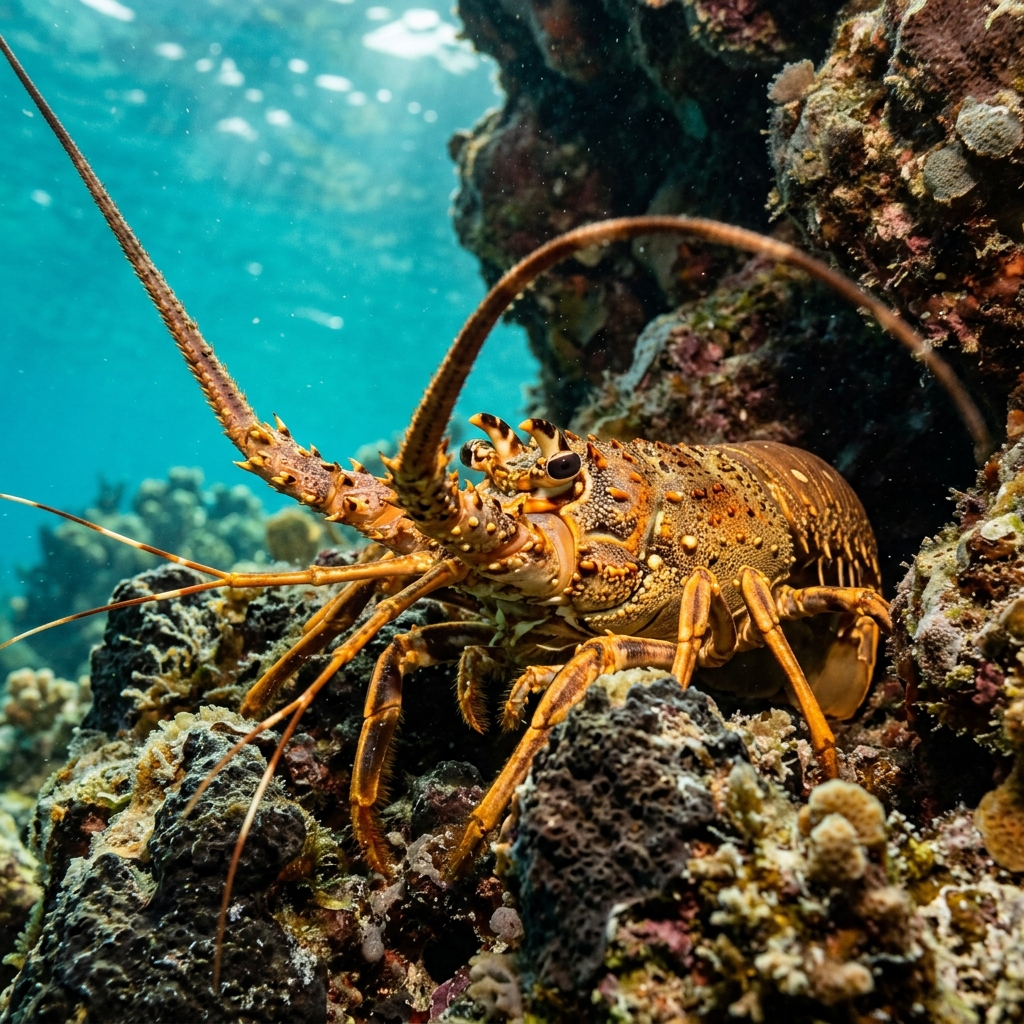
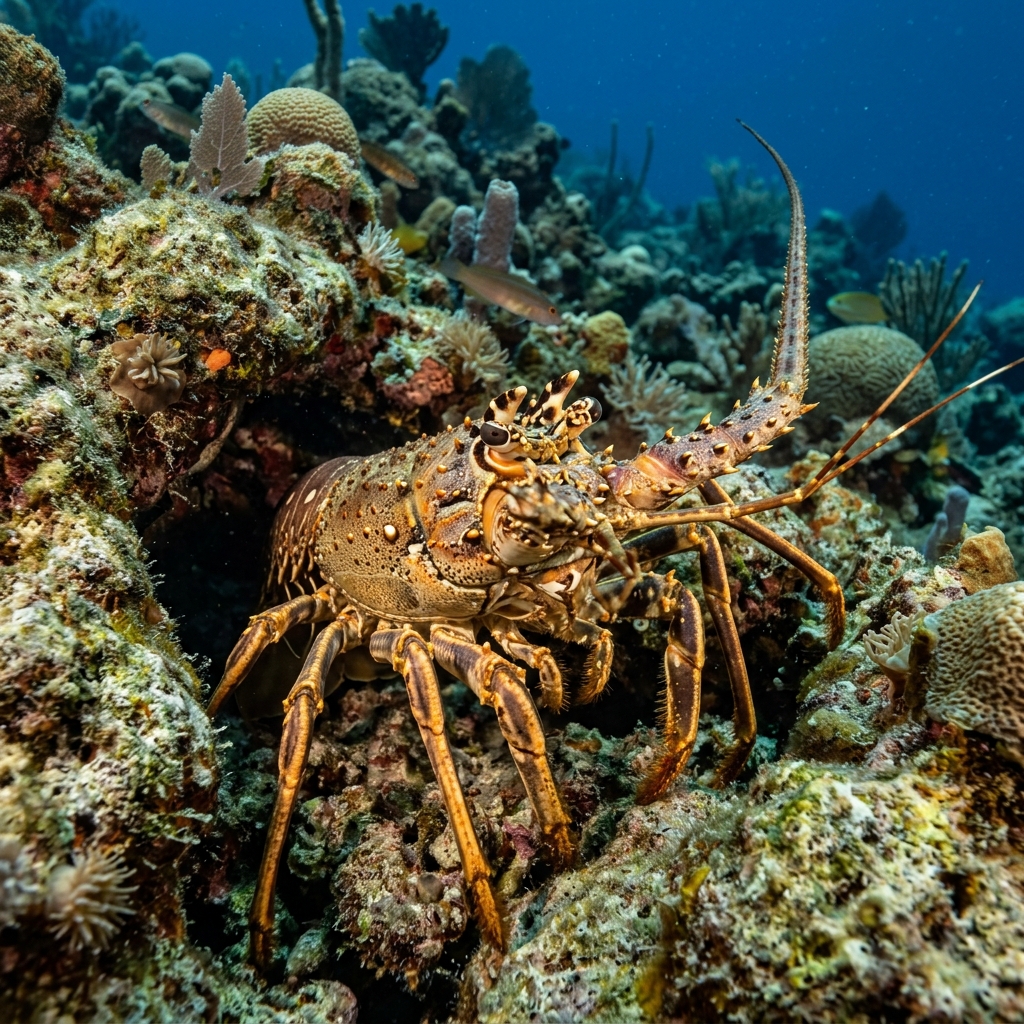
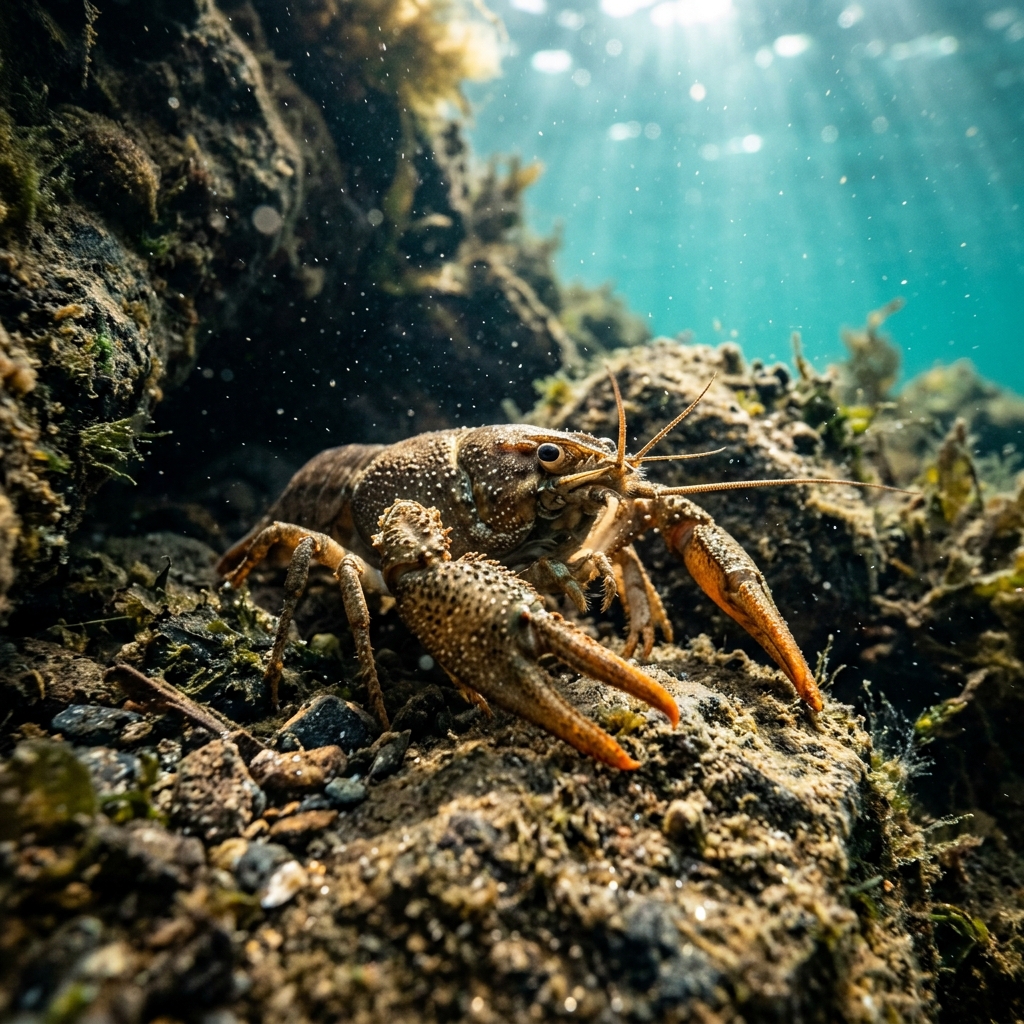
Small lobster-like crustaceans with a hard, segmented shell in shades of brown, olive or rust, usually spotted moving deliberately across silt, gravel or leaf litter rather than swimming. The big giveaway is the pair of pincers out front, noticeably chunkier and more robust on males than on females. Egg-carrying females are easy to sex on sight, as they carry a visible cluster of eggs glued beneath the tail.
Expect to find it walking steadily along silty lake floors, gravel beds or tangles of submerged roots and rocks, scanning the bottom for cover. Rather than bolting when a diver closes in, it tends to hold its ground or shuffle backward into a crevice, which makes it one of the easier freshwater subjects to sit and watch. Most encounters happen in shallow to mid-depth water where enough light reaches the bottom for divers to spot it against the substrate.
Claw size difference is a real field marker rather than just a species quirk: a diver can sex individuals underwater just by comparing pincer bulk, no need to flip the animal over.
Sightings are logged year-round with no strong seasonal pattern, so any month works if the site is open and visibility allows bottom-scanning. Cooler lakes and rivers across its European and North American range keep it active across the seasons rather than tied to a warm-water window.
Strong populations turn up across the United States, particularly in the South and in Texas, and it is a reliable find in Canada, especially around Ontario. In Europe it is well logged in Switzerland (notably the Zurich region and around Thun and Interlaken), plus Germany's Baden-Württemberg, Austria's Carinthia, and freshwater sites in the Netherlands and France.
Mapping where American Crayfish is logged…
Best logged across the United States (especially the South and Texas), Ontario in Canada, and several European freshwater regions including Zurich in Switzerland, Carinthia in Austria, and Baden-Württemberg in Germany.
Sightings happen year-round with no clear peak season, so timing your dive around good freshwater visibility matters more than choosing a particular month.
Look for a small lobster-shaped crustacean walking across silt, gravel or roots, with one pair of claws clearly larger in males than females. Egg-carrying females show a visible cluster of eggs under the tail.
No, they are not considered dangerous to divers. They tend to hold their ground or retreat slowly into crevices rather than react aggressively.
Males carry noticeably larger, more robust claws relative to their body size, while females are identifiable when brooding by a cluster of eggs attached beneath the abdomen.
Site and sighting data is aggregated from diver logs, iNaturalist and GBIF. For taxonomy and conservation status:
Caribbean Spiny Lobster
2,209 sites