Pervagor spilosoma
Small orange-flecked filefish rarely logged around Hawaii reefs. Here's how to identify one and where divers actually find them.
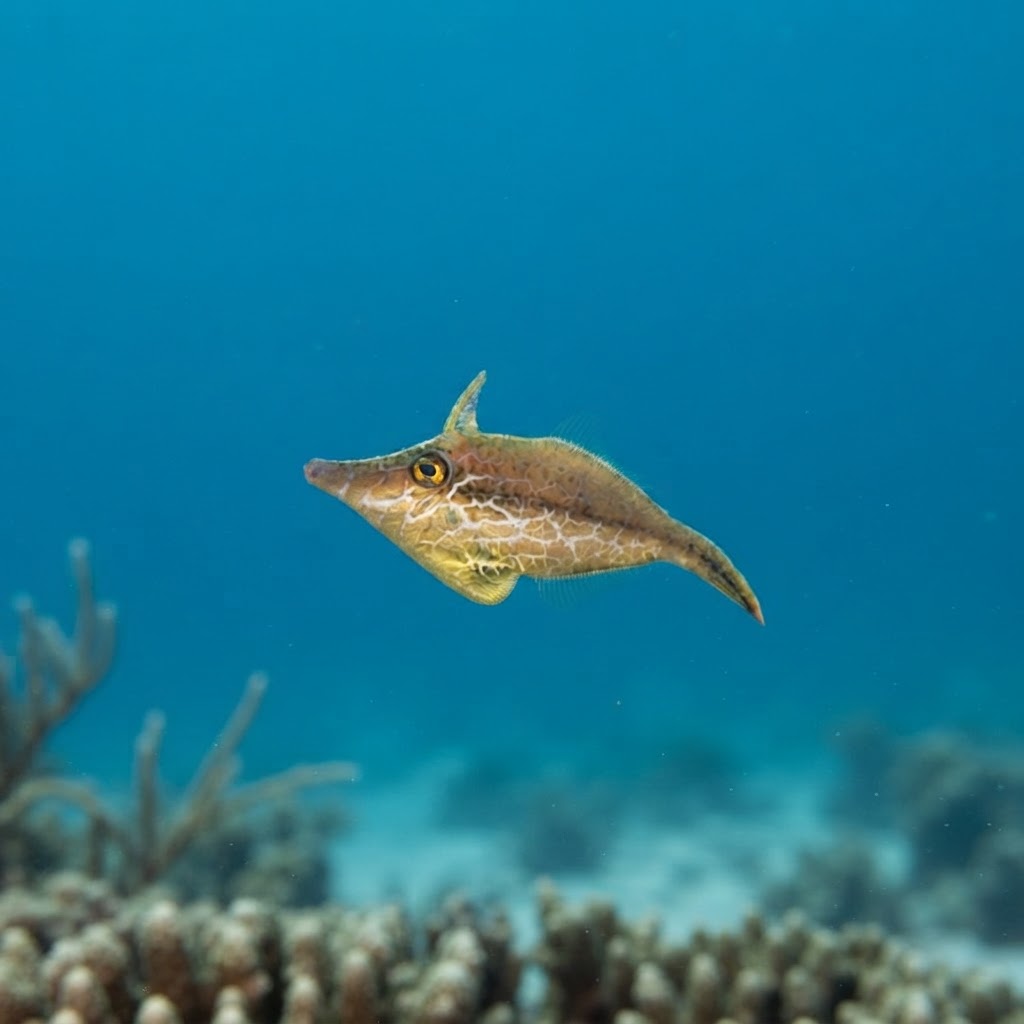
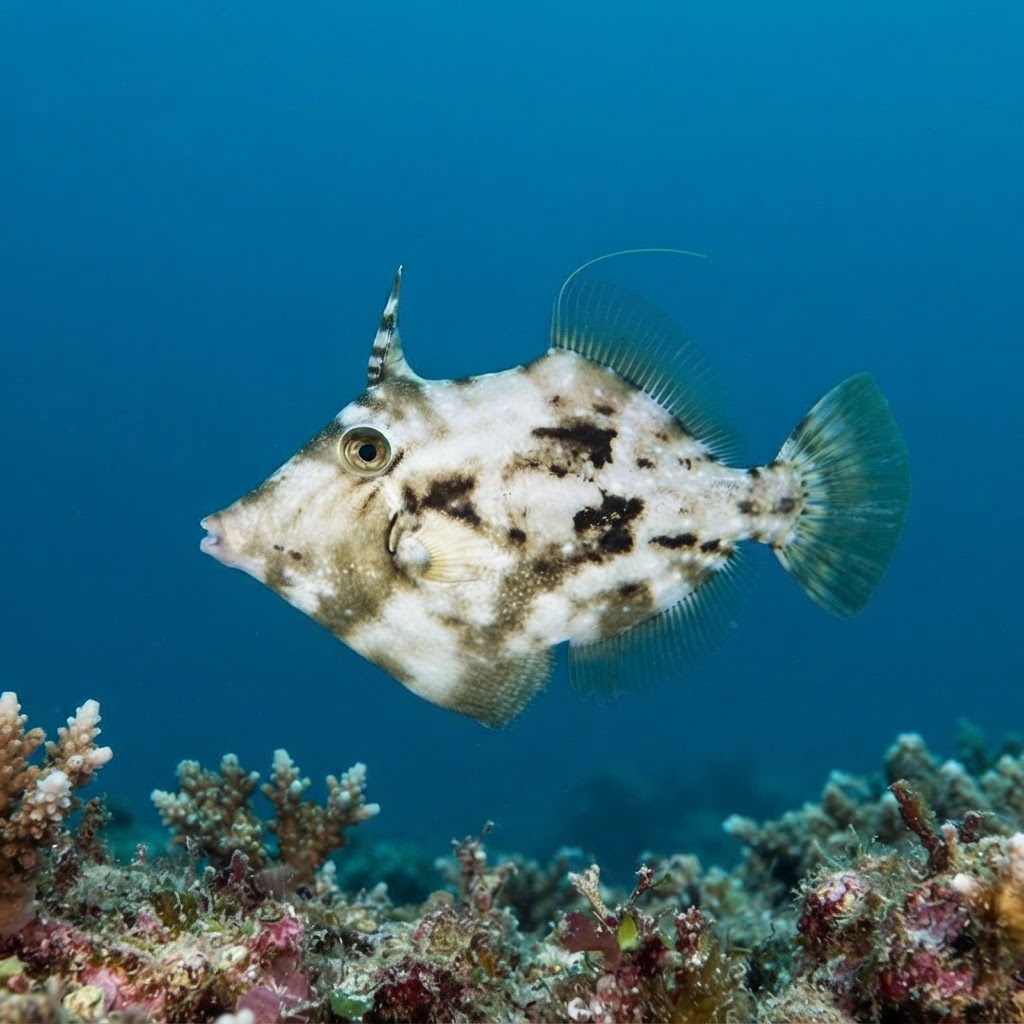
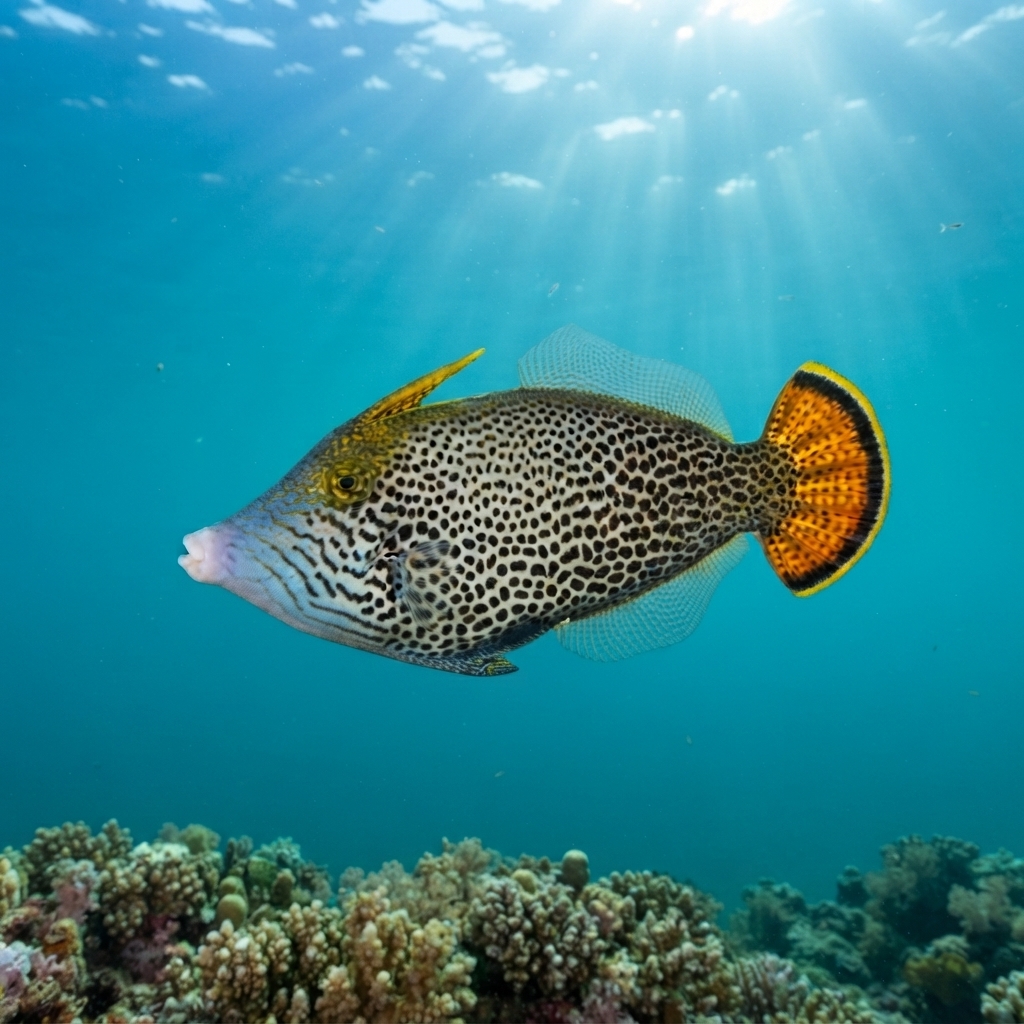
A small, deep-bodied fish only about 13 cm long, with a compressed, almost diamond-shaped profile that tapers to a fan-like tail. Look for an orange-brown to olive body scattered with dark speckles, and the single stiff spine sitting just above the eye that gives filefish their name. It swims with slow, deliberate fin strokes rather than tail-driven bursts, which makes the fanned tail easy to notice as it hovers near the reef.
Divers typically find it hovering close to rock and reef structure, using its rounded fins to hold position in a hover rather than darting about. It tends to sit low and still when approached, relying on its drab colouring to blend into the substrate rather than fleeing. Most sightings come from slow, close-focus looks along reef walls rather than open water.
Like other filefish, it can lock its dorsal spine upright and wedge itself into a crevice when threatened, making it very hard for a predator, or a diver's hand, to pull out.
No clear seasonal pattern shows up in the sightings, so treat this as a year-round possibility on Hawaiian reefs rather than something tied to a particular month.
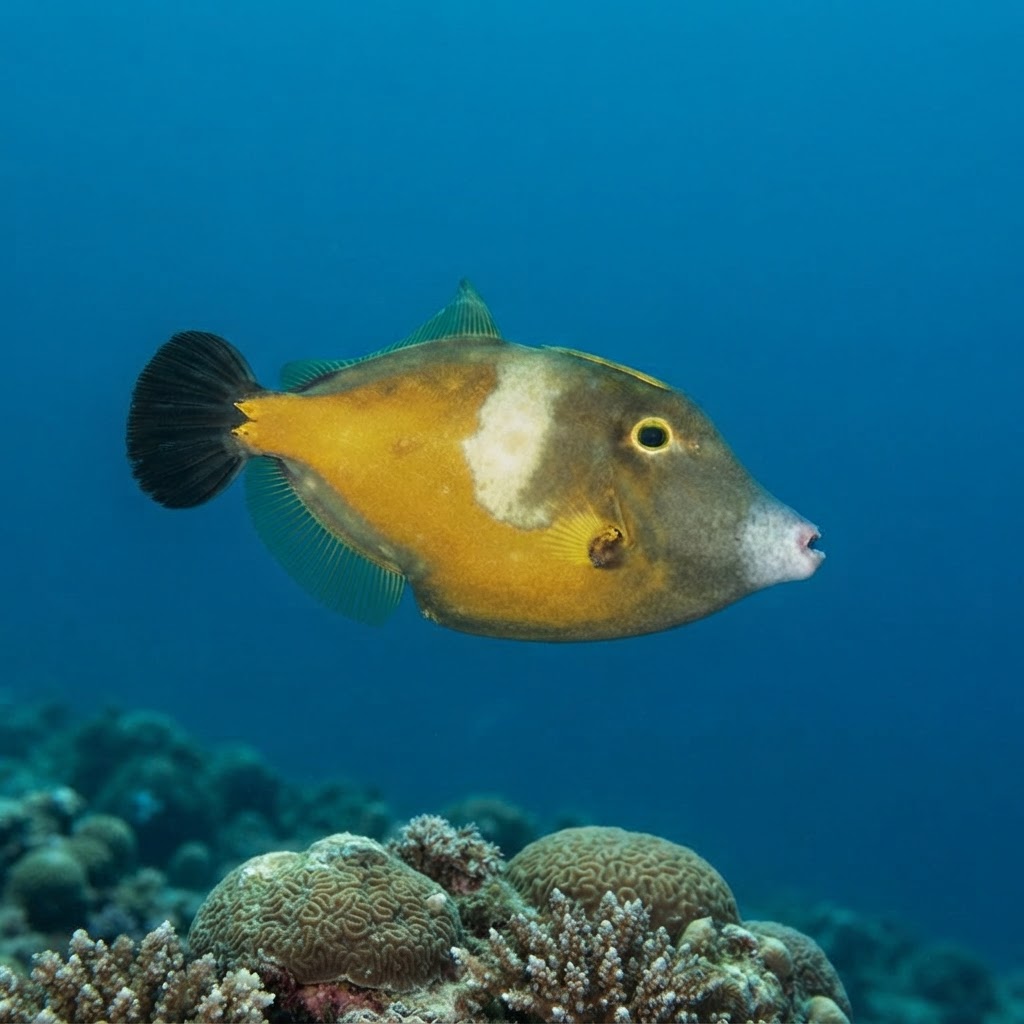
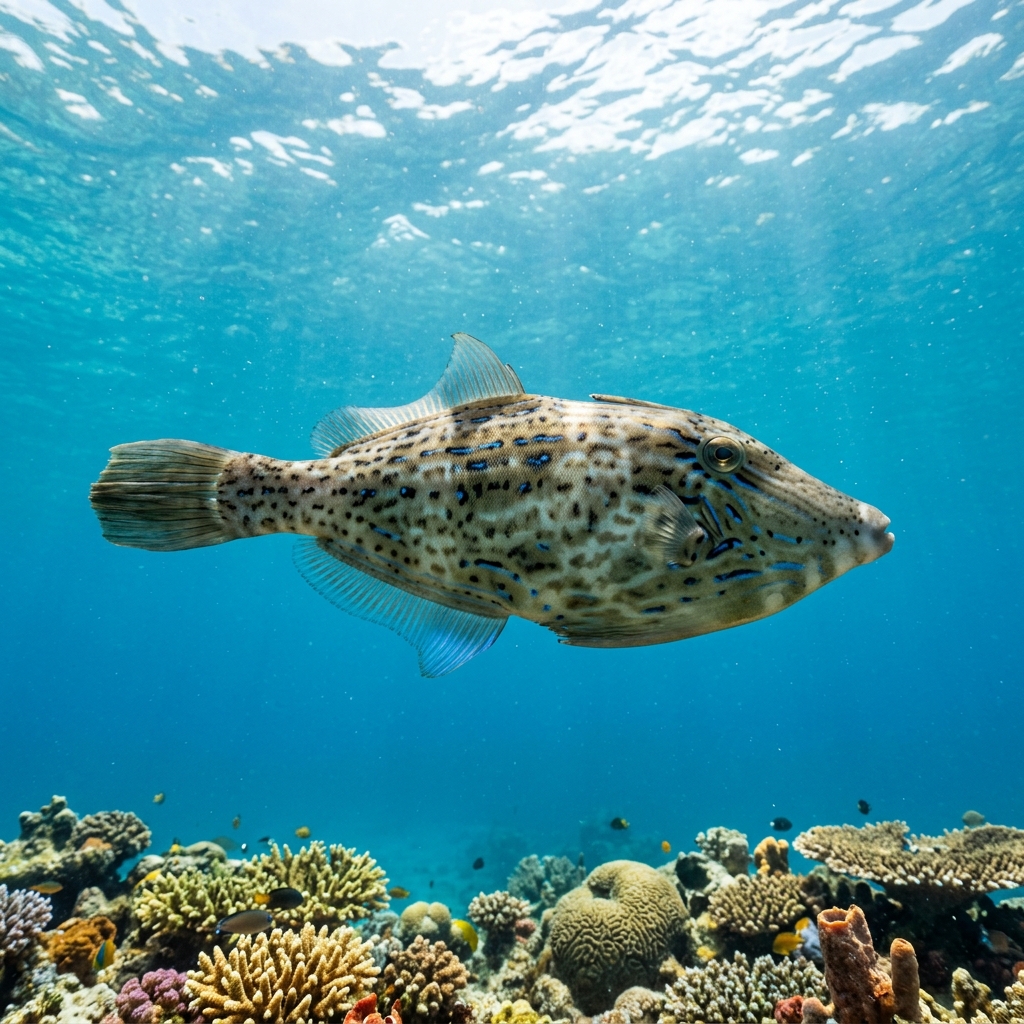
Reef neighbours a diver could mistake it for. Use the identification notes above to tell them apart.
This one's a Hawaii speciality, logged across sites in Hawaii and nowhere else in the current data. Sightings are spread thin, with most locations reporting it as a rare find and only a couple of sites seeing it with any regularity.
Mapping where Fantail Filefish is logged…
Sightings are concentrated in Hawaii, which is currently the only region logging this species with any regularity. Even there it's considered a rare find at most sites, with just a couple of locations reporting it more often.
There's no detected seasonal pattern, so it's best treated as a year-round possibility on Hawaiian reefs rather than a species tied to a specific month.
Look for a small, deep-bodied fish around 13 cm with an orange-brown speckled body and a compressed, fan-shaped tail. A single spine above the eye and slow, hovering movement near the reef are the key giveaways.
They stay small, typically reaching around 13 cm in length, making them one of the more modestly sized members of the filefish family.
No, they pose no danger to divers. They're small, retreat into crevices when disturbed, and rely on locking their dorsal spine rather than any threat to people.
They can raise and lock a stiff dorsal spine and jam themselves into a crevice, making it almost impossible to extract them once wedged in place, a classic filefish defence trick.
Site and sighting data is aggregated from diver logs, iNaturalist and GBIF. For taxonomy and conservation status:
Orangespotted Filefish
836 sites