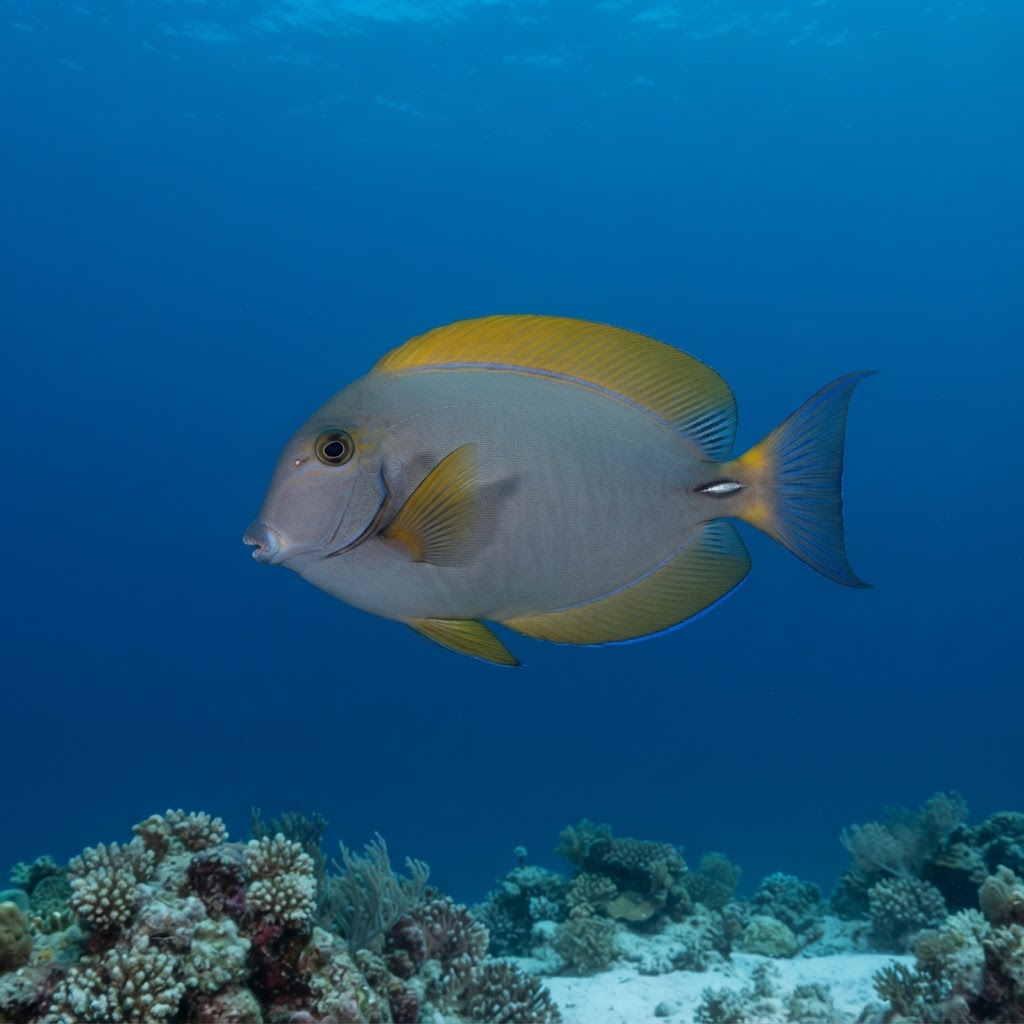
Acanthurus dussumieri
Spot the yellow eyestripe on this grey surgeonfish across KwaZulu-Natal, the Seychelles and Queensland reefs, year-round in warm water.
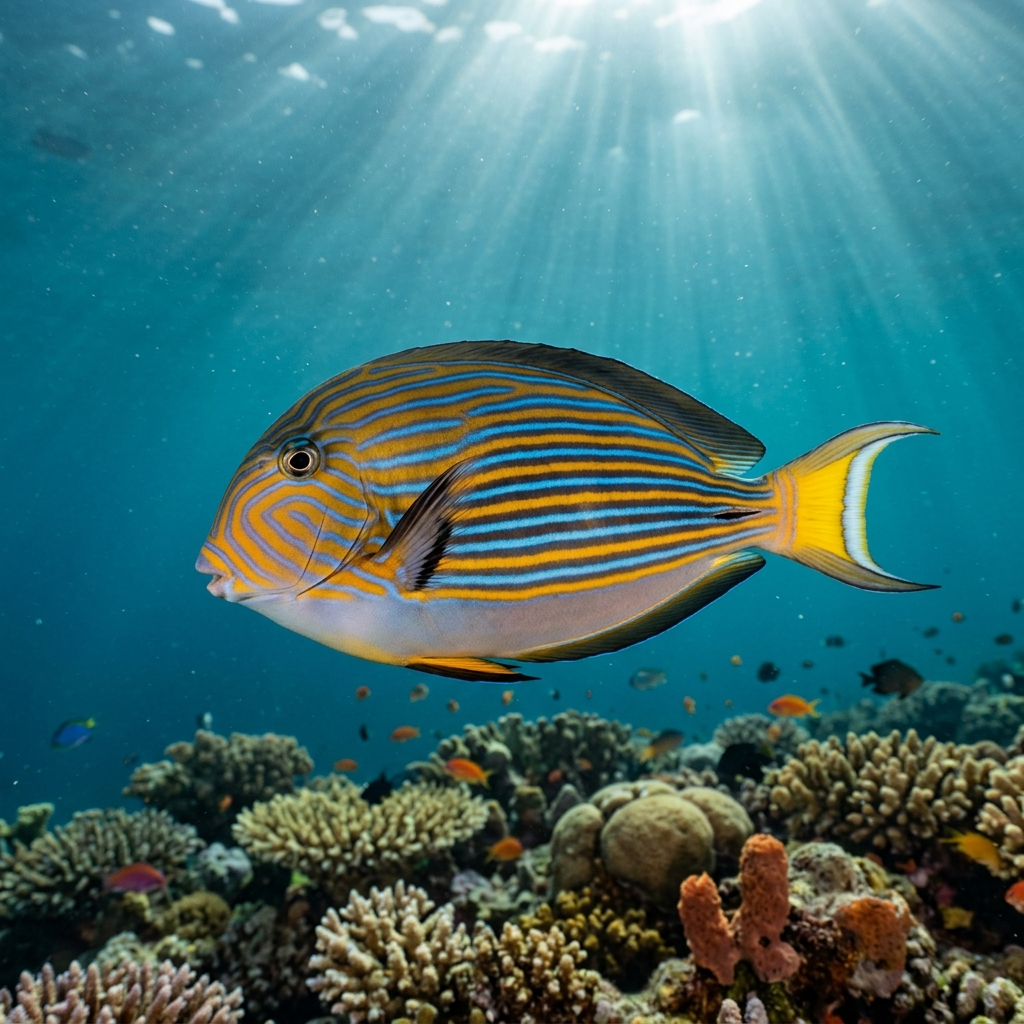
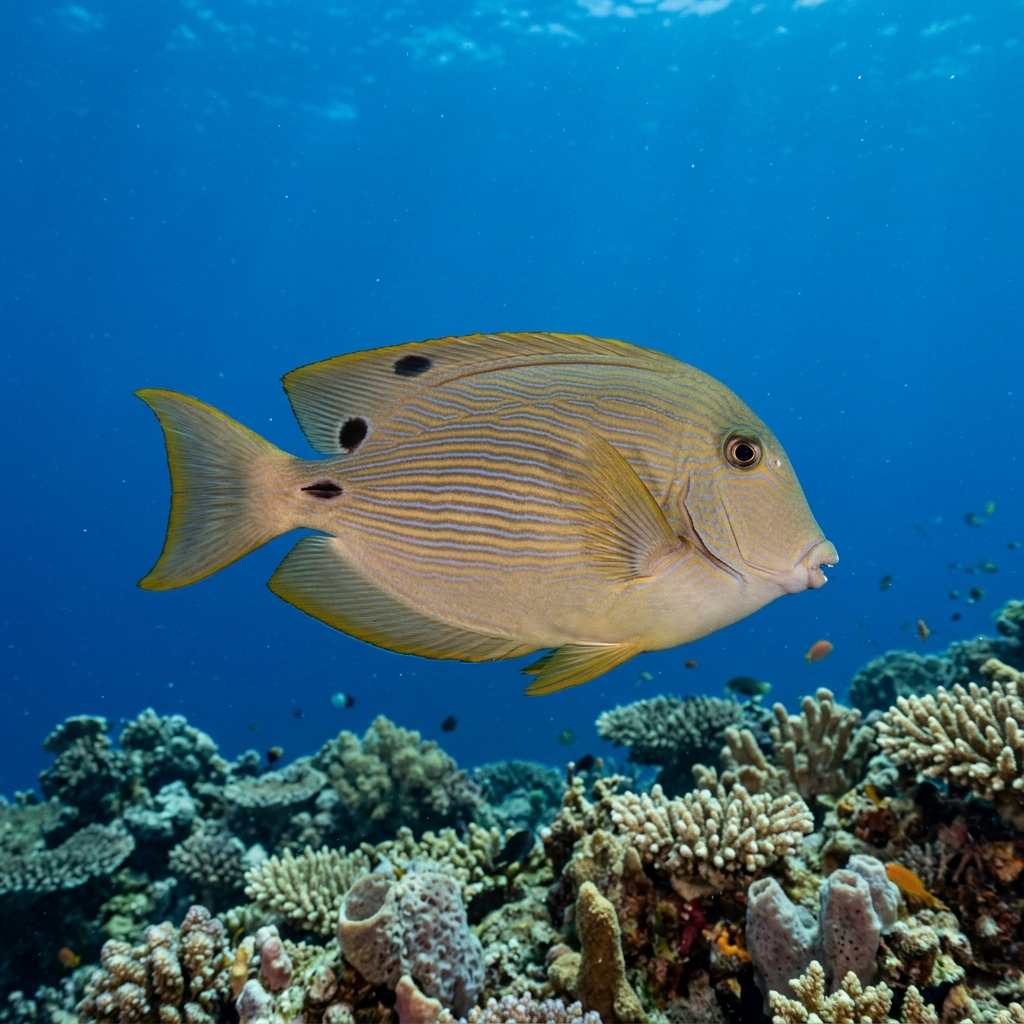
Grey to olive-brown body with fine pale speckling gives it a slightly dusty look next to brighter reef fish. The name-giving feature is a bold yellow to orange stripe running back from the eye, paired with a blue-black ring around the tail base and a yellow tail margin. At roughly 37 cm it sits on the larger end for surgeonfish, with the typical laterally flattened, oval profile and the razor-sharp spine at the base of the tail used in defence.
Usually seen cruising alone or in loose small groups over reef flats and rubble zones, grazing algae off rock and dead coral rather than schooling tightly like some tangs. It tends to keep a comfortable distance from divers, drifting off unhurried rather than bolting, and shows up across a wide depth range from shallow reef crests down well past recreational limits. Look for it in open, sunlit areas rather than tucked into crevices.
Like other surgeonfish it carries a scalpel-sharp spine folded into a groove near the tail, which it flicks out for defence rather than offence, so it's only a hazard if handled.
No clear seasonal pattern shows up in sighting data, and it tolerates a broad 20.3 to 28.9 C range, so it's a fair bet on reef dives at any time of year in these regions.
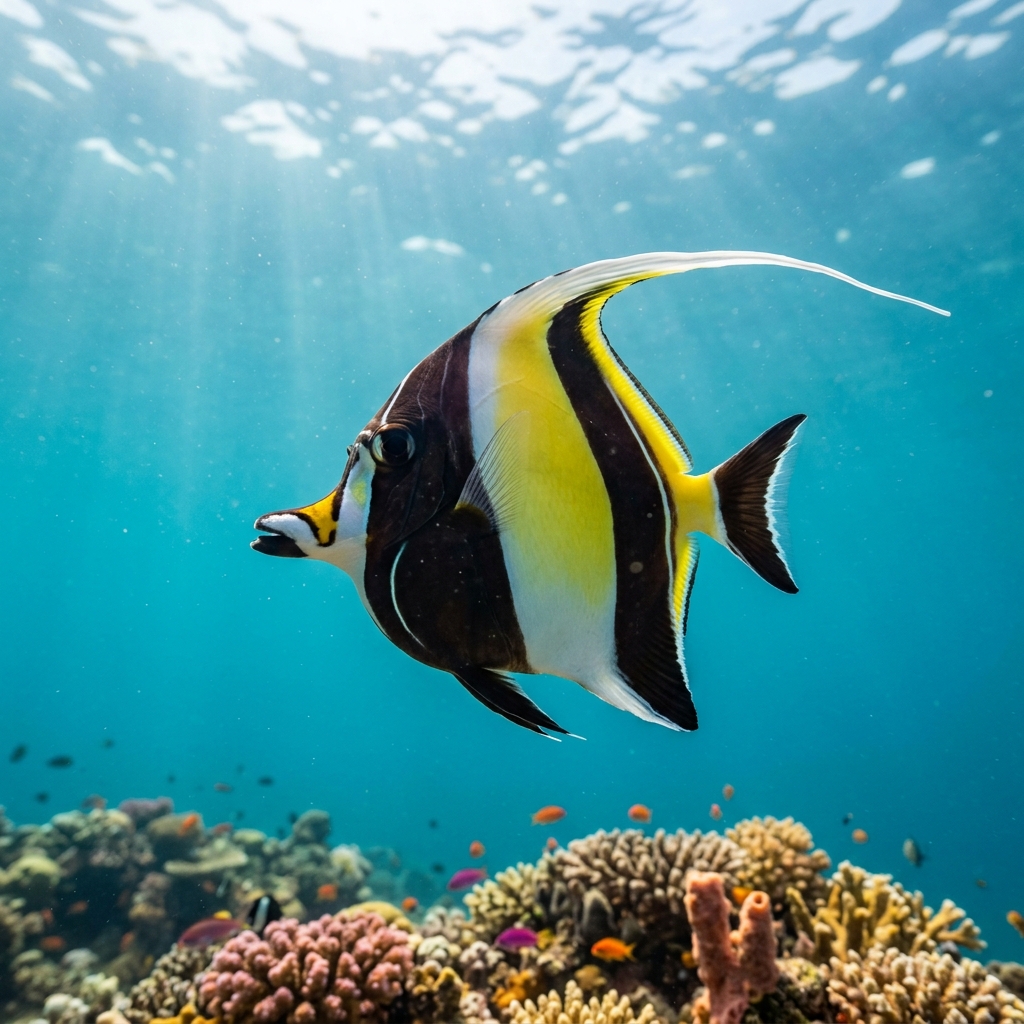
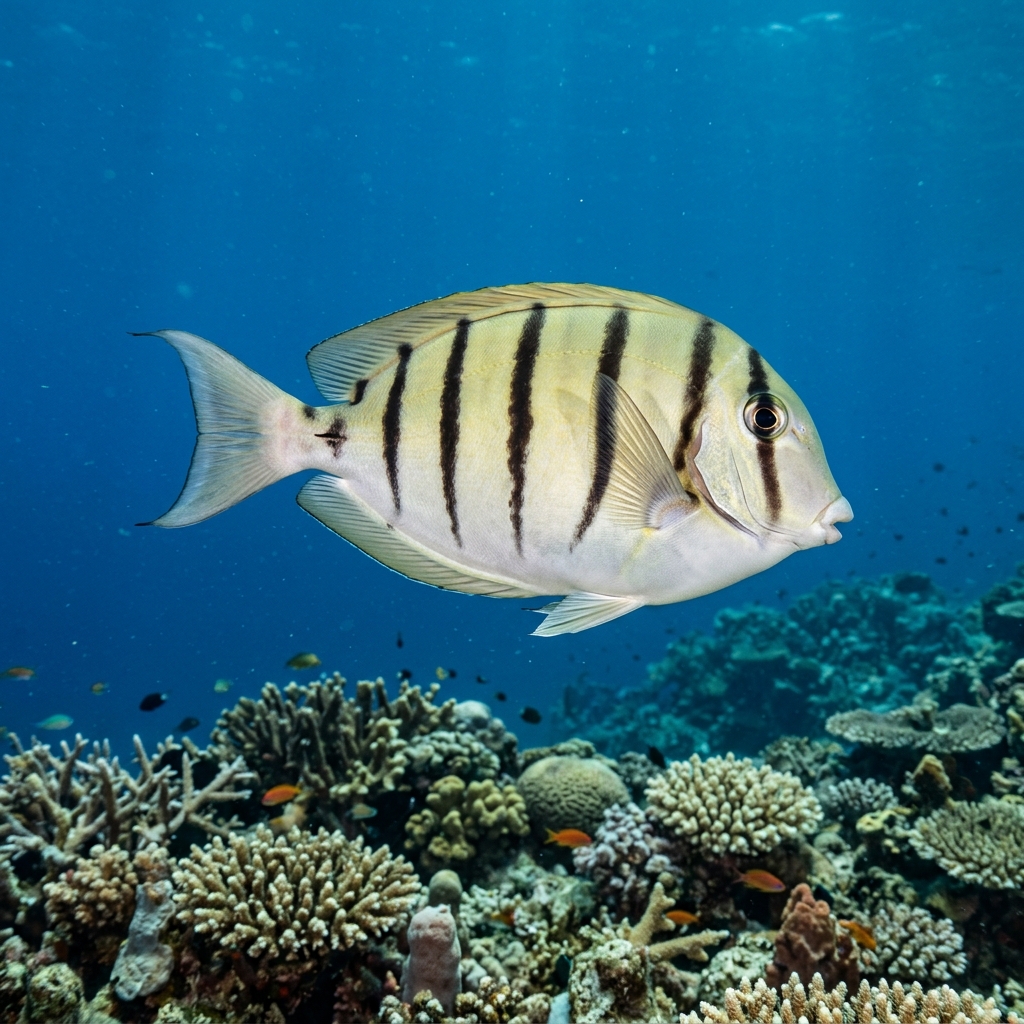
Reef neighbours a diver could mistake it for. Use the identification notes above to tell them apart.
Most reliably logged along KwaZulu-Natal in South Africa, through the Inner Islands of the Seychelles, and on reefs around Queensland and Western Australia. Also a regular find in Hawaii, Mozambique's Ponta do Ouro, Reunion's Saint-Paul coast, and New Caledonia, making it a widespread Indo-Pacific reef species rather than a regional specialty.
Mapping where Eyestripe Surgeonfish is logged…
Best chances are along KwaZulu-Natal in South Africa, the Inner Islands of the Seychelles, and Queensland and Western Australia. It also turns up regularly in Hawaii, Mozambique, and Reunion, reflecting a wide Indo-Pacific range.
There's no strong seasonal signal in the data, and it copes with water from about 20 to 29 C, so it's seen on reefs across most of the year in the regions it favours.
Look for a grey-brown, oval-bodied fish with a yellow to orange stripe running back from the eye, a blue-black ring at the base of the tail, and a yellow tail edge. At around 37 cm it's a mid-to-large surgeonfish, usually seen alone or loosely grouped over reef and rubble.
They reach around 37 cm in length, putting them among the larger surgeonfish species seen on Indo-Pacific reefs.
No, they're not considered dangerous. They carry a sharp defensive spine near the tail like other surgeonfish, but it's only a risk if the fish is grabbed or mishandled.
Site and sighting data is aggregated from diver logs, iNaturalist and GBIF. For taxonomy and conservation status:
Striped Surgeonfish
3,289 sites