Cirrhilabrus exquisitus
A tiny, colour-shifting reef wrasse best found on Maldives house reefs, especially the Central Atolls, in 26-29C water year-round.
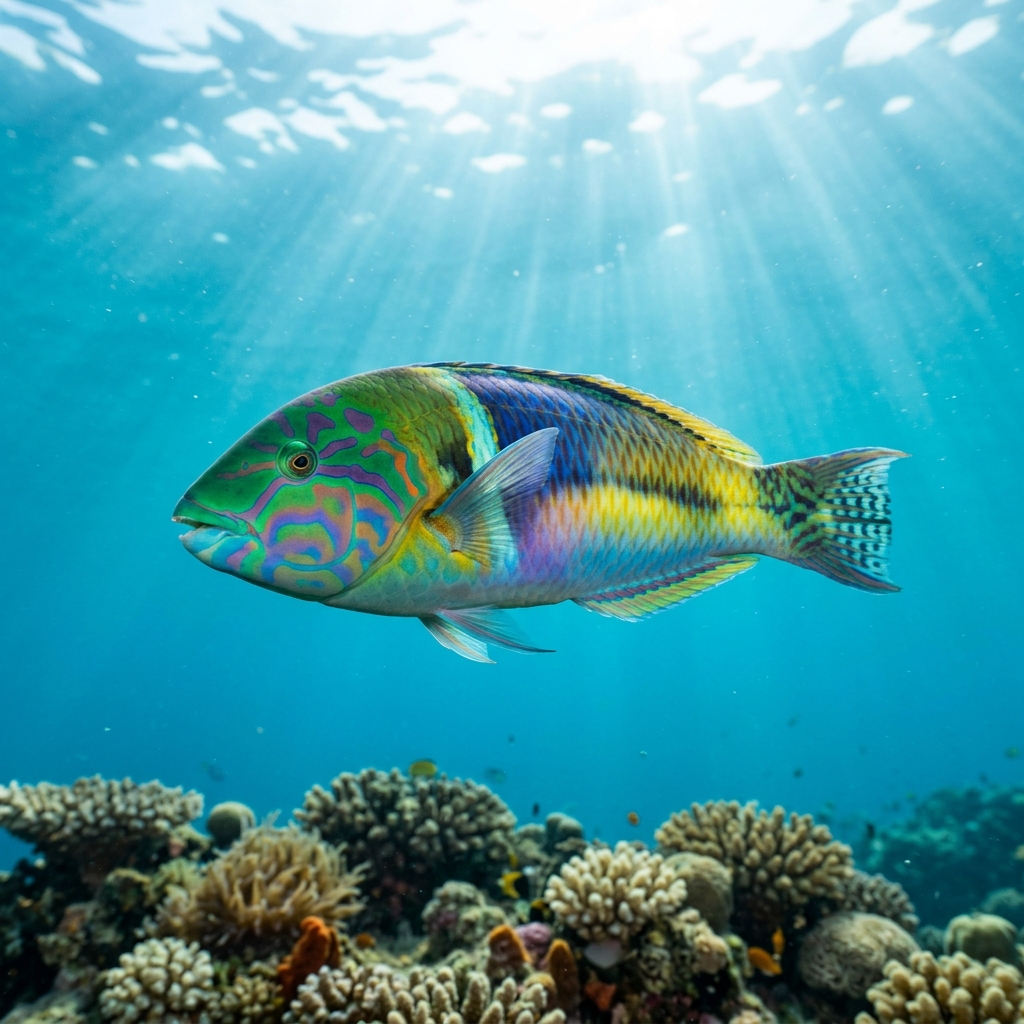
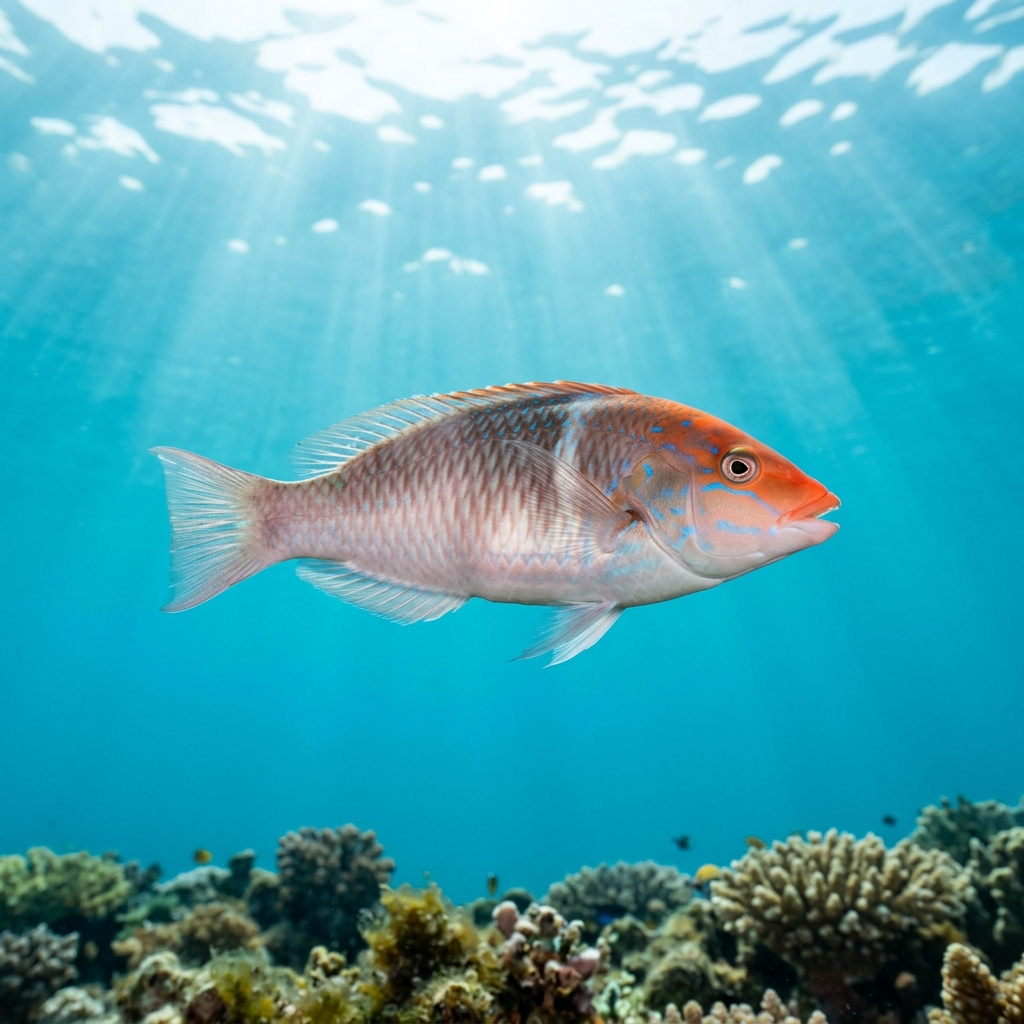
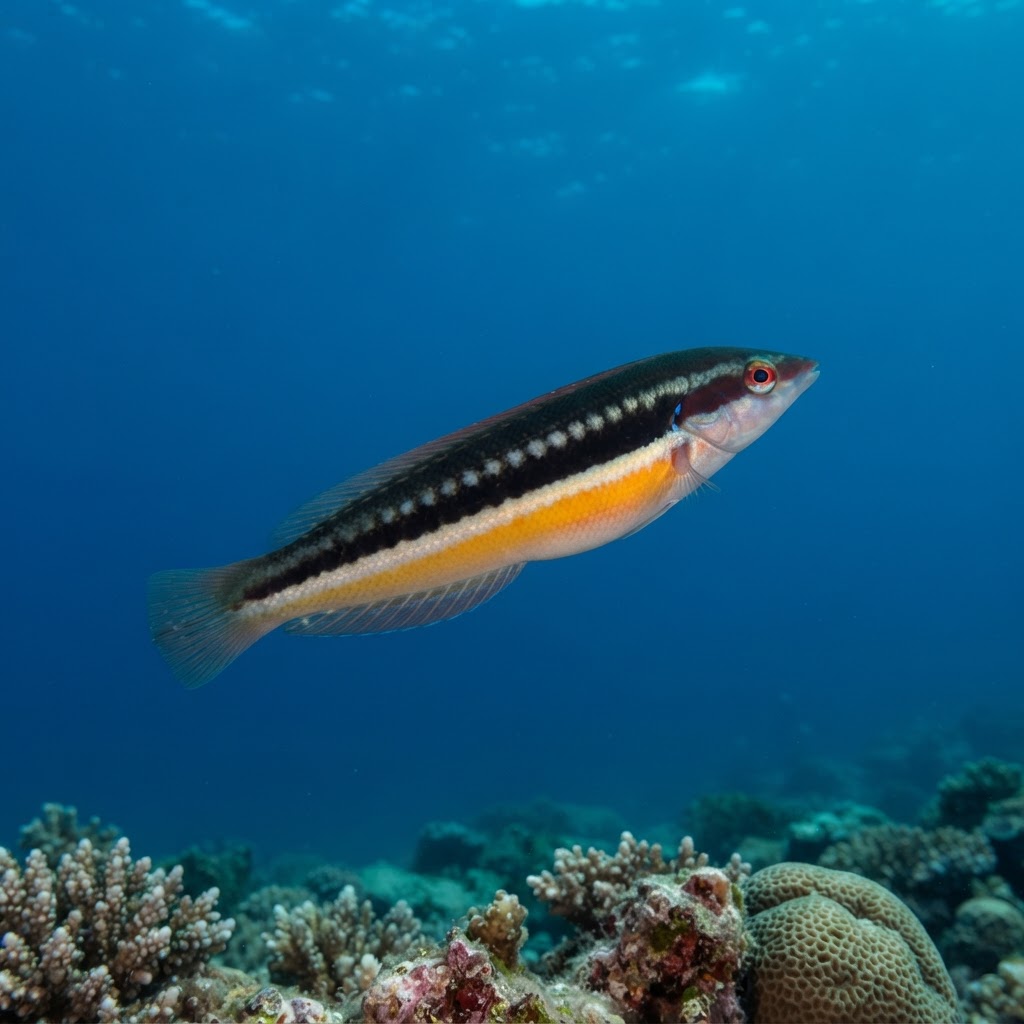
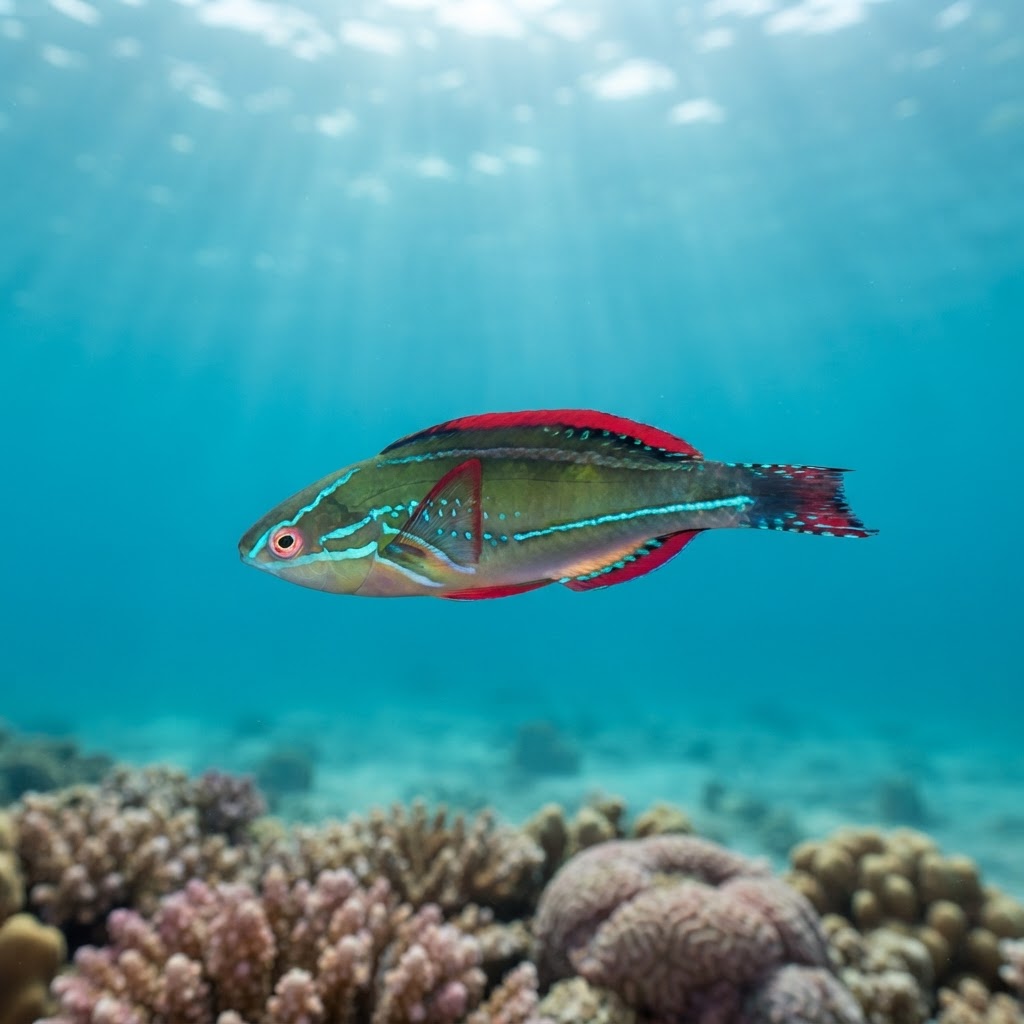
A small wrasse, rarely more than 8 cm, with a slender torpedo-shaped body that flashes violet, pink and blue depending on the light angle. Look for a yellow wash across the upper back and tail base against a lilac flank, plus a faint dark bar through the eye. Males in display colour show more saturated purple-blue tones than the duller females sharing the same patch of reef.
Expect to see it hovering just above coral rubble or low reef structure in small, loose groups, picking at plankton drifting past rather than digging into the substrate. It keeps a fairly steady distance from divers, ducking toward cover if approached quickly but generally holding its position if you stay still and let it come back into view. Most sightings are logged as uncommon rather than abundant, so it rewards divers who take the time to scan low reef edges rather than mid-water.
Like many fairy wrasses in the genus Cirrhilabrus, it lives in small harems where one dominant male fires up into brighter breeding colours to court females, a display worth slowing down for if you spot a cluster of them together.
No clear seasonal pattern shows up in sightings, and with a comfortable range of 26.3 to 29.3C it likely sits year-round on the reefs where it's found, so any month is a reasonable bet. Plan around the destination's general dive season rather than a wrasse-specific one.
Most reliably found in the Maldives, particularly across the Central Atolls, where it turns up on a large number of logged sites. Smaller but consistent populations are logged in Palau (Peleliu and the Rock Islands), French Polynesia's Tuamotu Islands, Fiji's Lomaiviti and Taveuni regions, and on reefs in Sulawesi, Indonesia.
Mapping where Exquisite Wrasse is logged…
The Maldives is by far the strongest region, especially the Central Atolls, with further sightings logged in Palau's Peleliu and Rock Islands, French Polynesia's Tuamotu Islands, and parts of Fiji and Indonesia.
There's no strong seasonal signal in the sightings, and its preferred water temperature of roughly 26 to 29C is present year-round on the reefs it favours, so it can be seen in most months.
Look for a small, slender wrasse around 8 cm with shifting violet-pink colouring, a yellow-tinged back and tail, and a faint dark eye bar, usually hovering low over the reef rather than swimming in open water.
They're a small reef wrasse, typically reaching about 8 cm in length, so a magnifying glance rather than a big fish encounter.
No, they pose no risk to divers and simply go about feeding on plankton near the reef, unbothered by a calm diver nearby.
They live in small harem groups where a single male in bright breeding colour courts several duller females, a classic fairy wrasse (Cirrhilabrus) social setup worth watching for on the reef.
Site and sighting data is aggregated from diver logs, iNaturalist and GBIF. For taxonomy and conservation status:
Bird Wrasse
3,632 sites