Apterichtus caecus
A burrowing eel most reliably logged in Murcia, Spain, in 16 to 21C water, and easy to miss unless you know where to look.
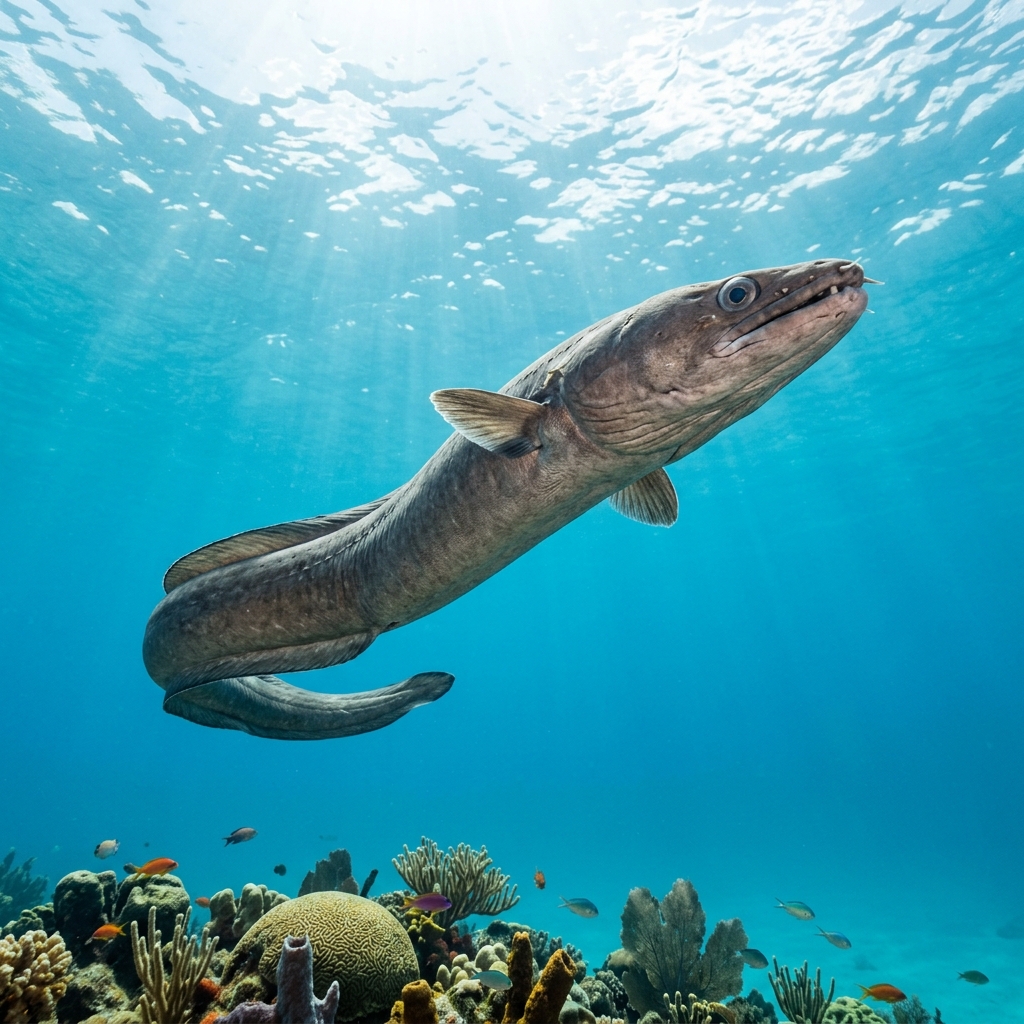
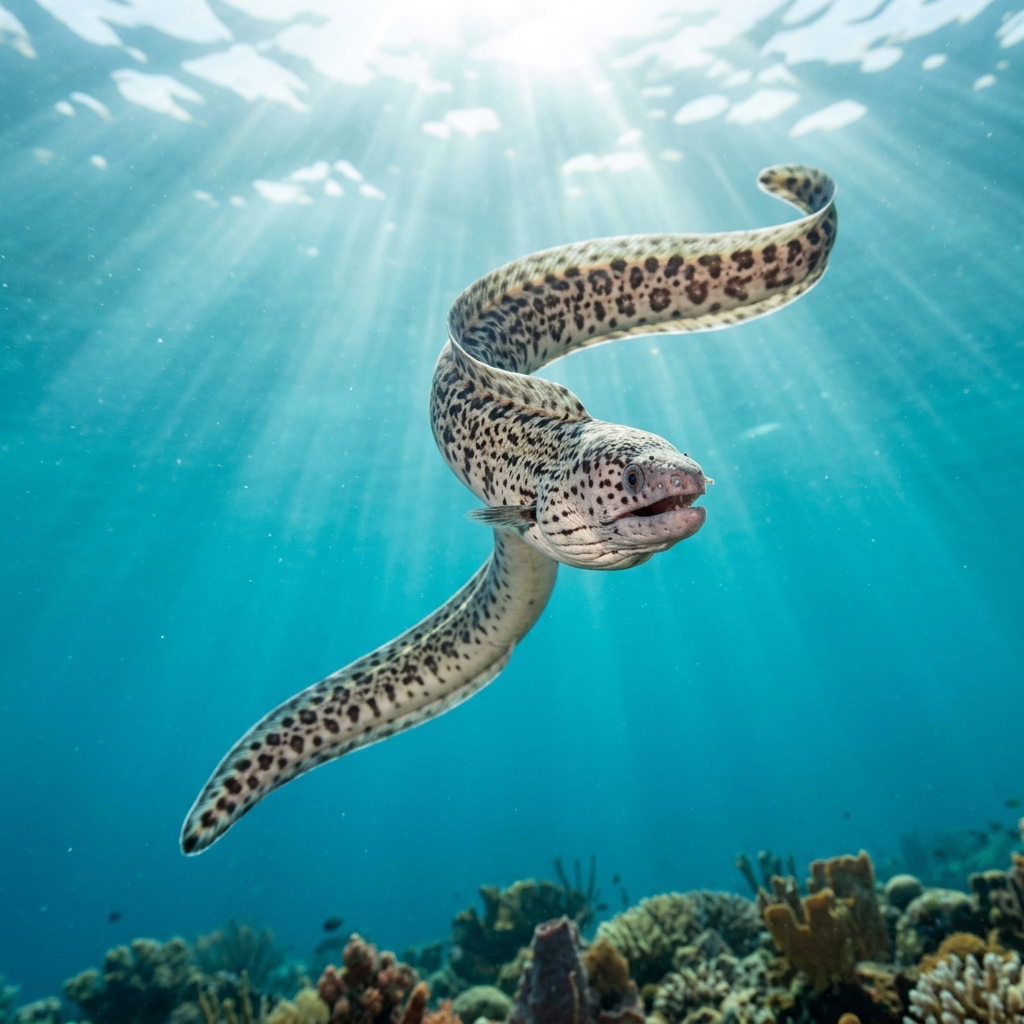
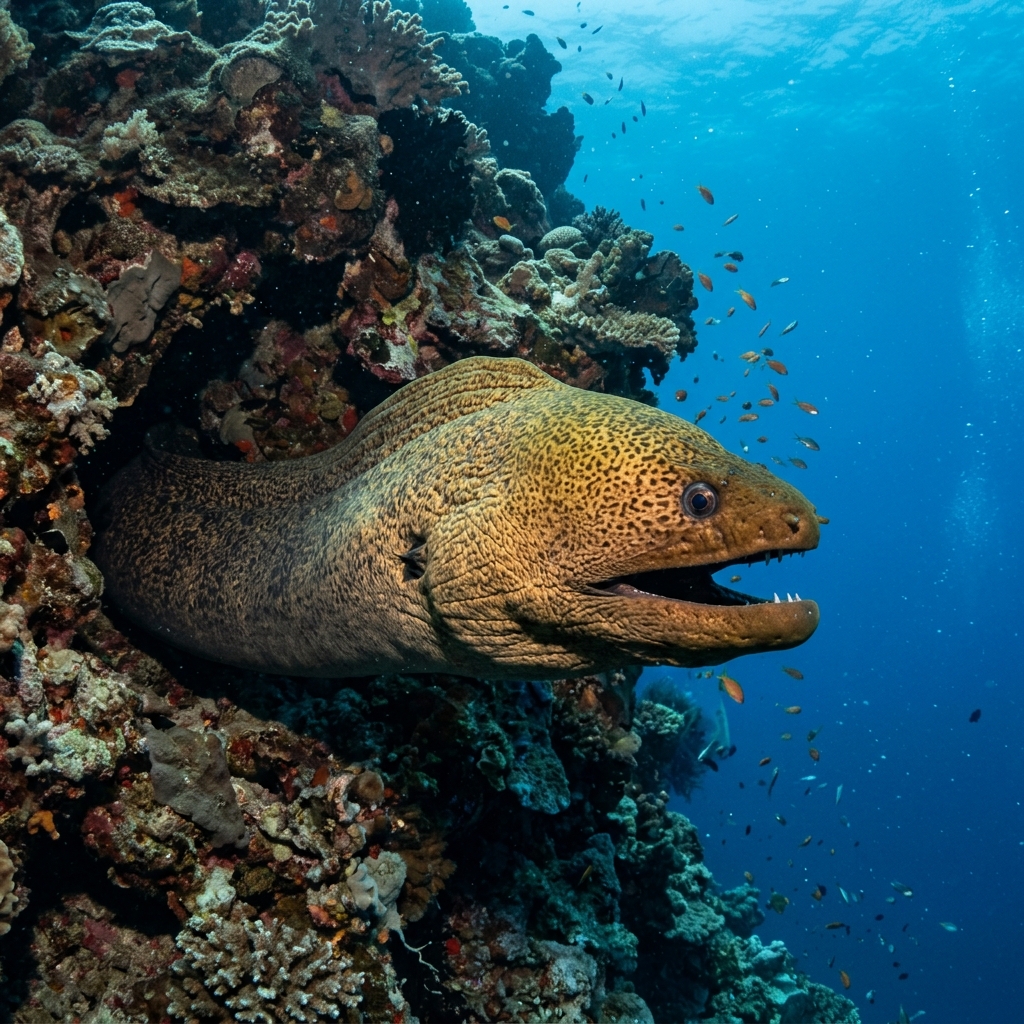
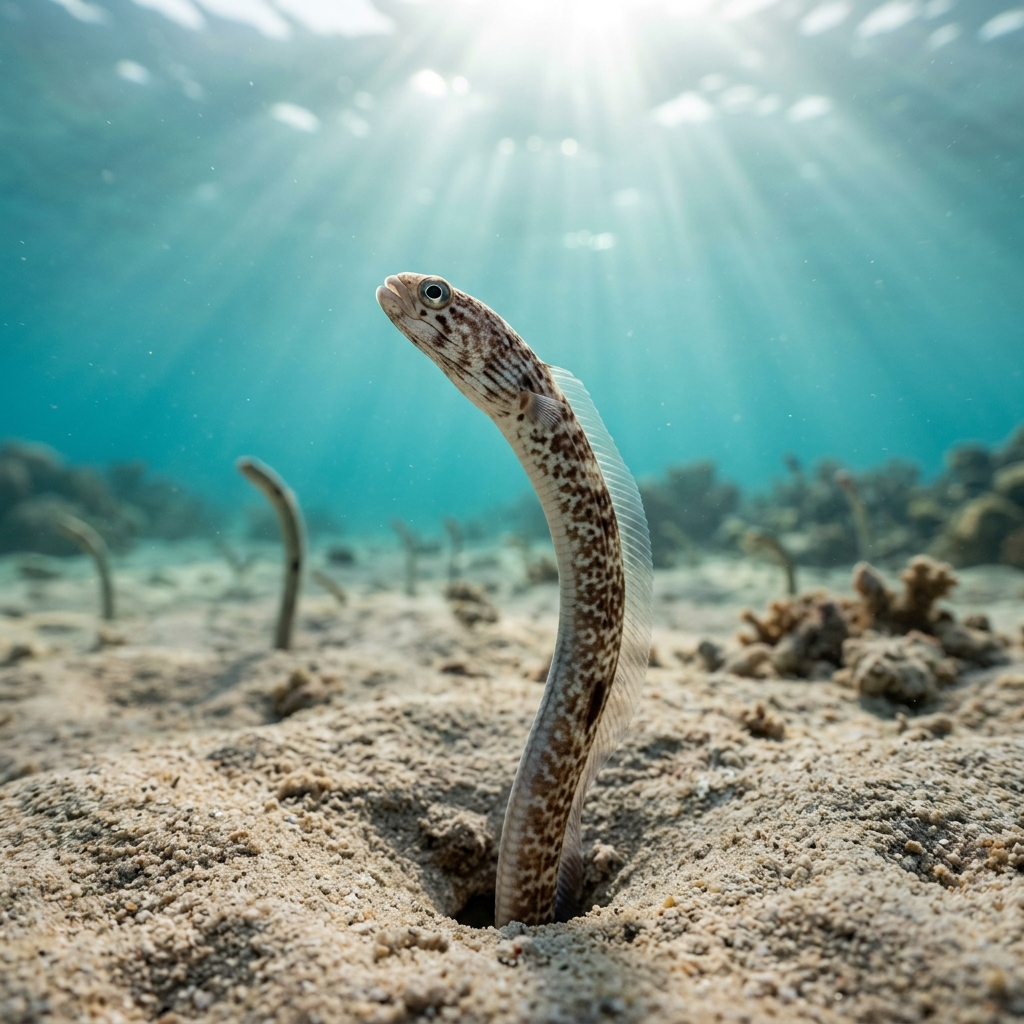
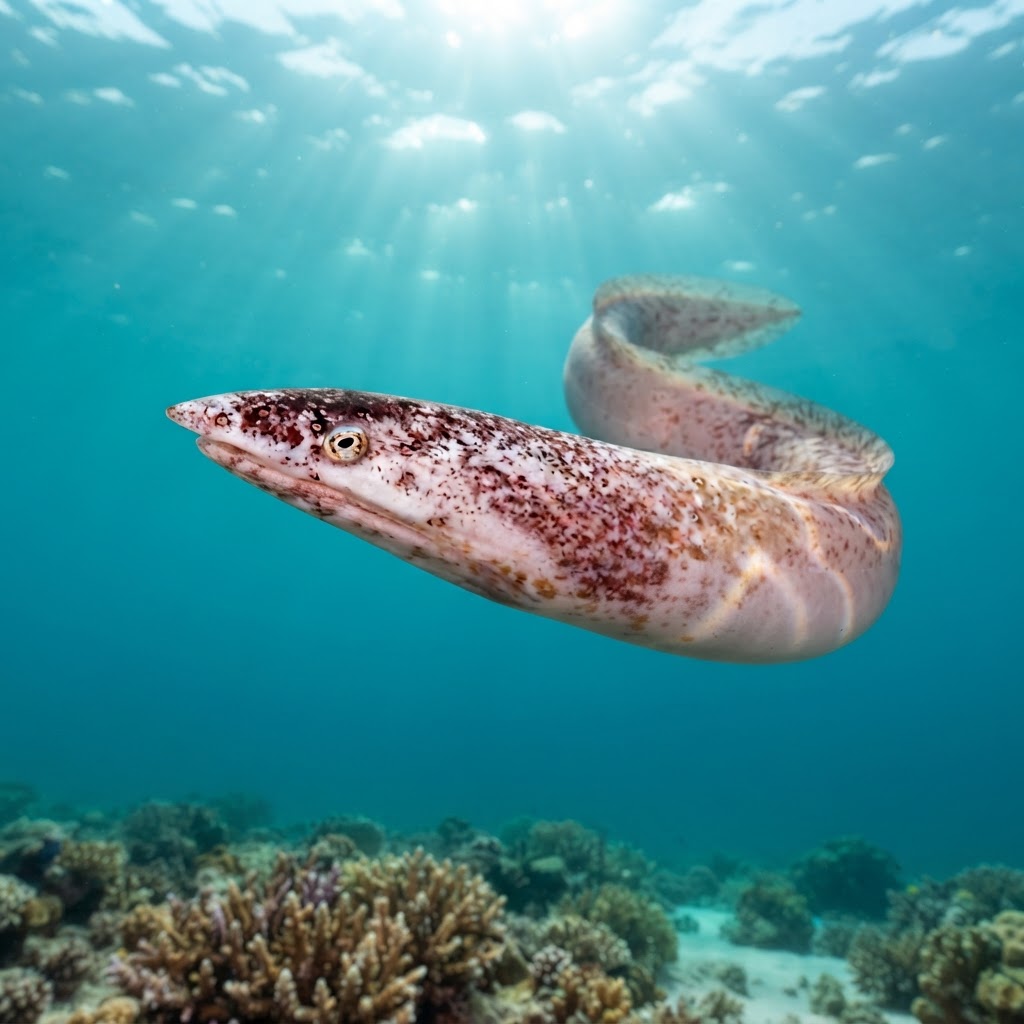
Slender, worm-like body around 42 cm long with a smooth, scaleless look and no visible dorsal, pectoral or tail fins, which is exactly what gives it away underwater. Colour runs pale tan to greyish-pink, often blending with the sand it burrows into. Look for just the head or a short length of body poking from a sandy or gravelly patch, since the rest usually stays buried.
Divers who spot this one are usually scanning sand and gravel patches closely, since it spends most of its time buried with just the head showing. It is not a fish that swims out to greet you: expect a still, half-hidden animal that you have to actively search for rather than something that crosses your path. Logged as uncommon at nearly all sites where it turns up, so patient, slow sand-patch searches pay off more than open-water cruising.
The complete absence of fins is the species' defining trait within the eel family, an adaptation that suits a life spent burrowing through sand and gravel rather than swimming in open water.
Sightings show no clear seasonal pattern, and the observed water temperature range of 16.1 to 21.0C spans much of the diving year in the western Mediterranean, so treat it as a year-round possibility rather than a seasonal target.
Most reliably logged in Murcia, Spain, which accounts for the bulk of recorded sightings, with a smaller number of records from the French Riviera and Provence in France. Outside these two regions there is not yet enough diver data to point to other reliable spots.
Mapping where European Finless Eel is logged…
The strongest records come from Murcia, Spain, with additional sightings along the French Riviera and Provence in France. It is a species you find by searching sandy and gravel bottoms rather than one tied to reef structure.
There is no detected seasonal pattern in sightings, and it tolerates a fairly wide temperature band of 16.1 to 21.0C, so it can turn up on dives across the year in the Mediterranean.
Look for a slender, pale, worm-like body with no visible fins at all, usually with just the head or a short section showing above sand or gravel. Its total lack of fins is the single clearest ID feature separating it from any moray or other eel-like fish.
They reach around 42 cm in length, but because most of the body stays buried in sediment, divers typically only see a short stretch of the head and neck.
Unlike almost every other eel, it has no dorsal, pectoral or tail fins at all, an adaptation for burrowing through sand rather than swimming freely. This finless body plan is what gives the species its name.
No, they pose no danger to divers. They are shy, buried sand-dwellers with no history of aggressive or defensive behaviour towards people underwater.
Site and sighting data is aggregated from diver logs, iNaturalist and GBIF. For taxonomy and conservation status:
Garden Eel
2,448 sites