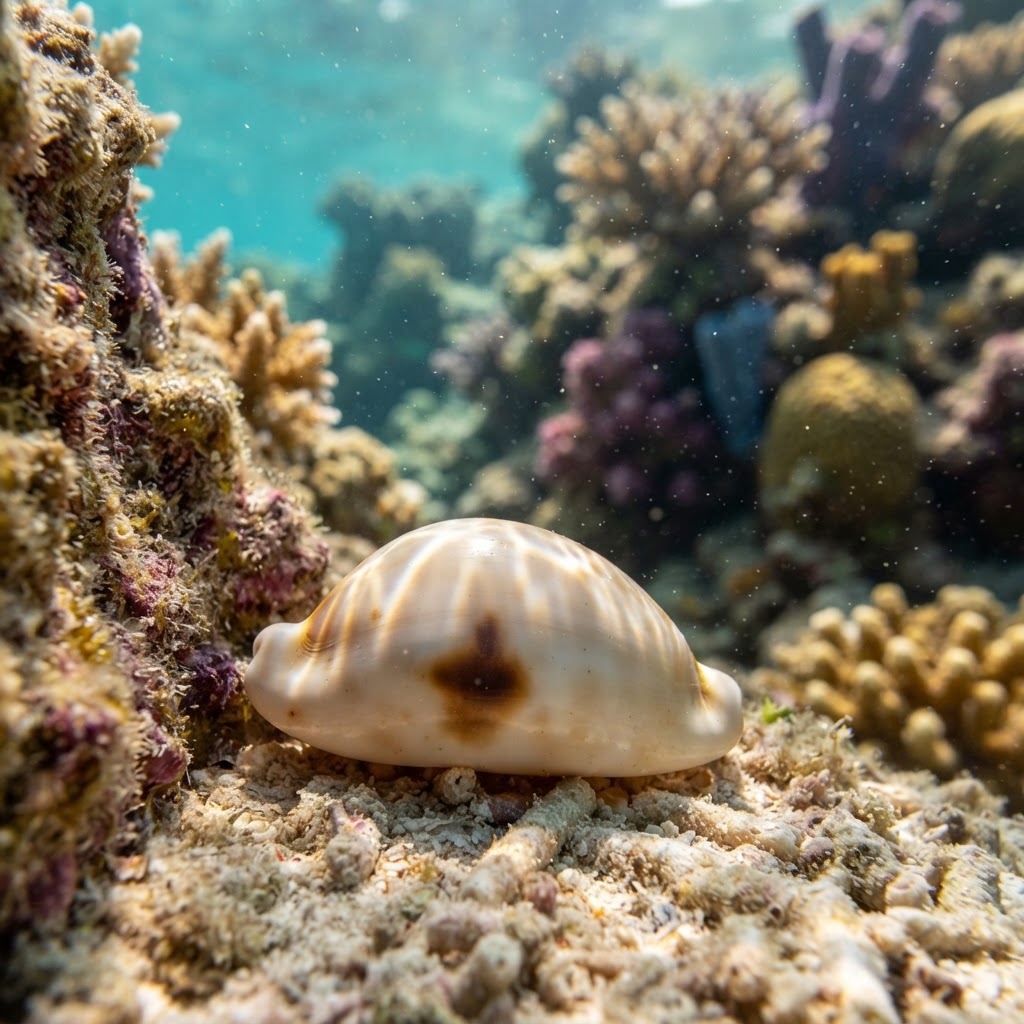
Naria erosa
A small, thick-shelled cowrie logged across Okinawa, Queensland and Bali reefs, usually tucked in crevices at dusk.
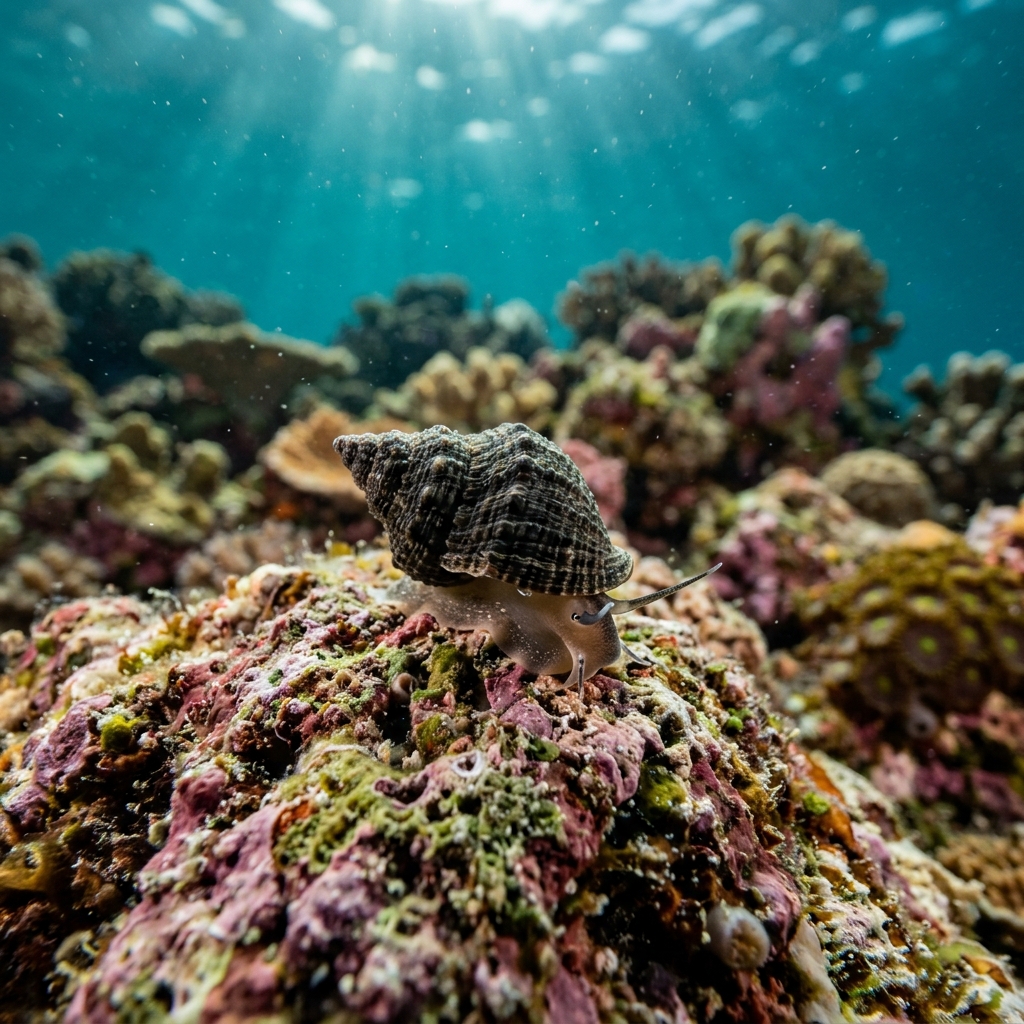
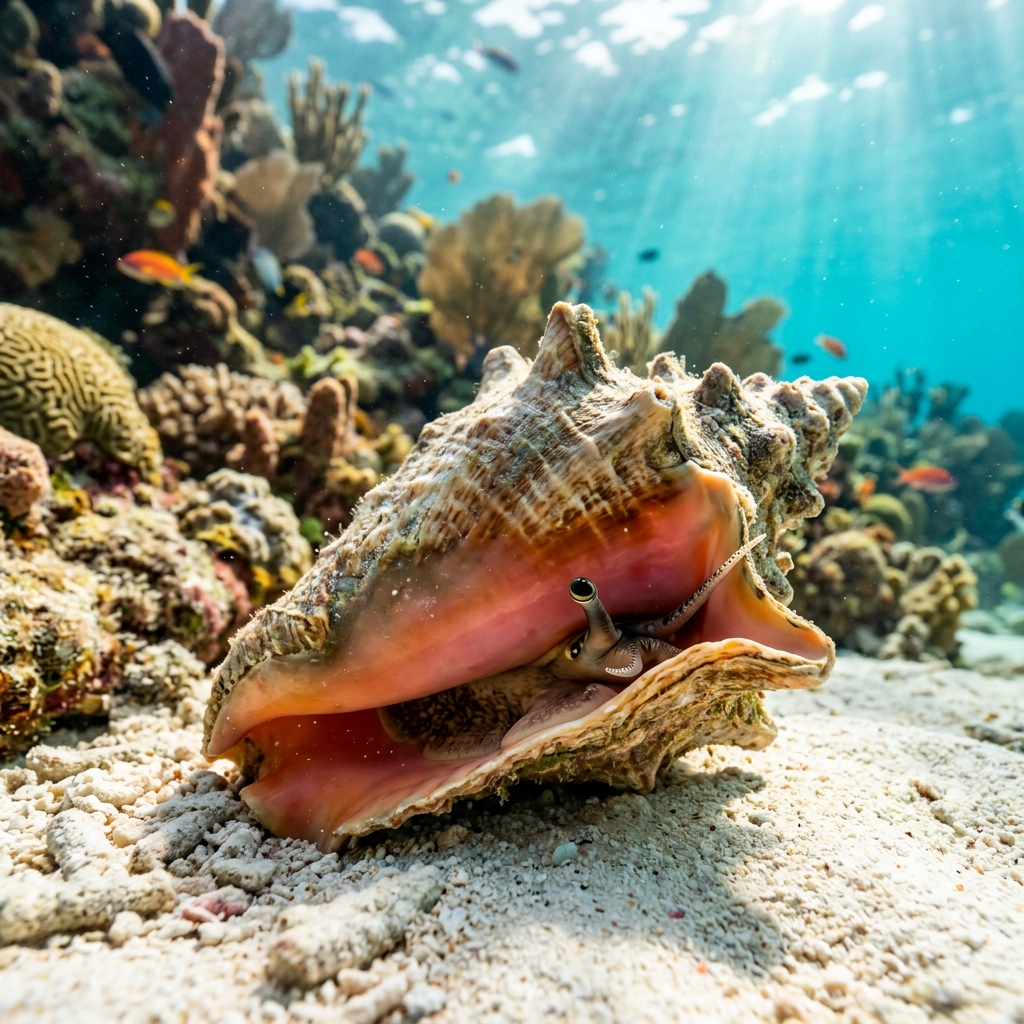
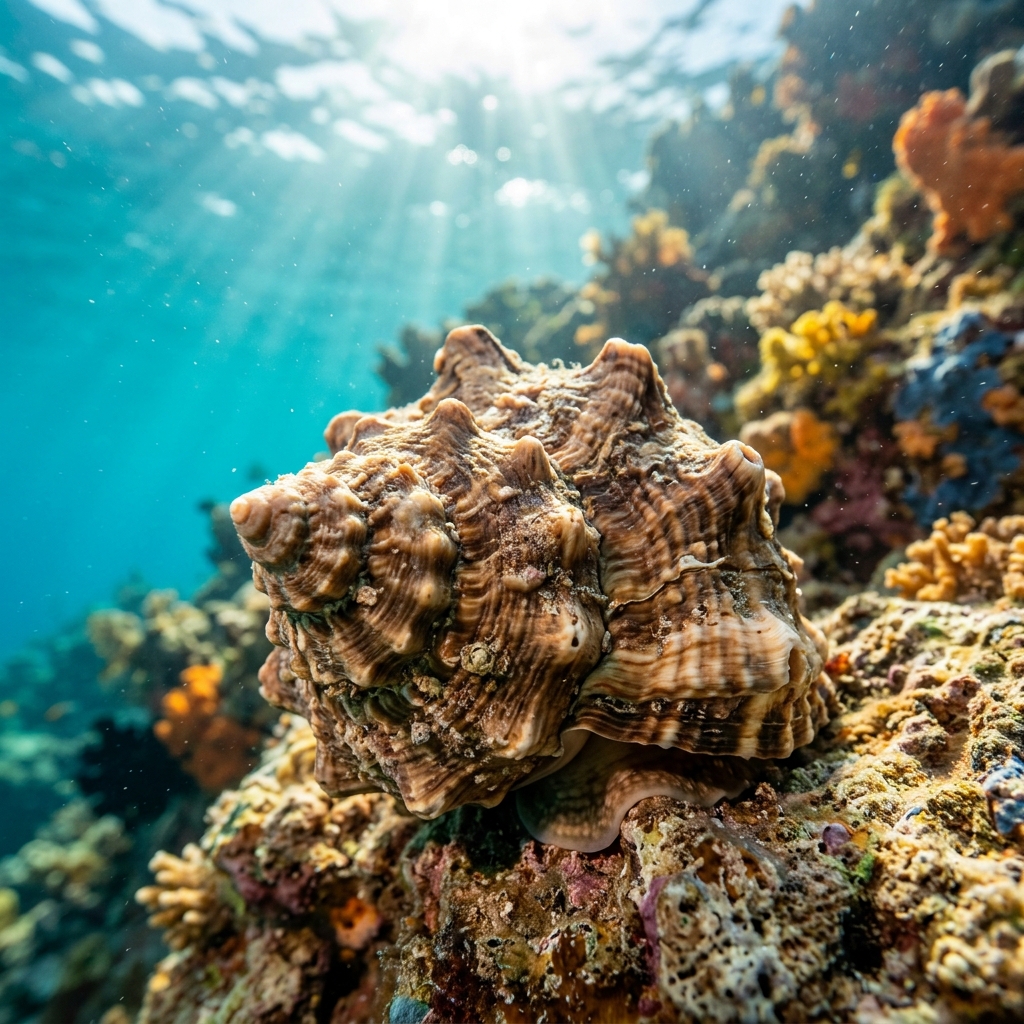
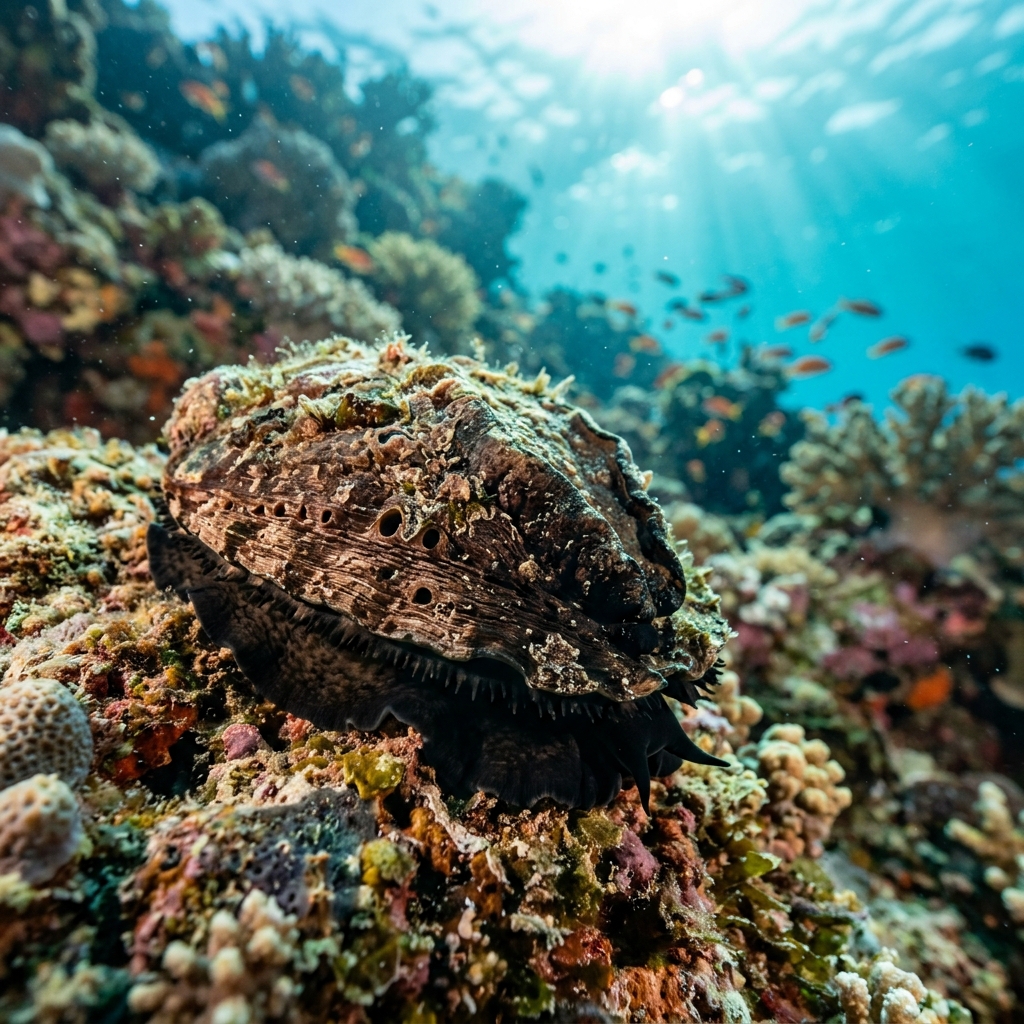
A small, oval shell around 4 cm long with a glossy, domed surface in mottled brown, grey or olive tones, often with a paler base. The shell has a thickened, slightly eroded-looking margin (hence the name) and a narrow ventral slit lined with fine teeth. Look for it wedged into crevices or under rubble rather than out in the open, since the fleshy mantle usually covers the shell when the animal is active and retracts when disturbed.
Divers mostly find this cowrie tucked into reef crevices, under coral rubble or on the underside of ledges, moving slowly across hard substrate when active. It is not a species that reacts to divers in any obvious way, being slow-moving and more interested in staying hidden than in bolting, so a careful look under overhangs and among rubble patches is usually what turns one up. Most logs describe it as uncommon rather than a guaranteed find, so treat any sighting as a nice bonus on a reef scan.
Like other cowries, it secretes a smooth, glossy shell coating from its mantle as it grows, which is why the shell looks polished rather than chalky even on older individuals.
No clear seasonal pattern shows up in the sightings, and it tolerates a wide range from about 19.6 to 29.6 C, so it is worth looking for year-round wherever it is found.
Most reliably logged around Okinawa and the Ryukyu Islands in Japan, and across Queensland and New South Wales in Australia. Smaller but consistent numbers turn up in Bali, Indonesia, and at Kwajalein Atoll in the Marshall Islands, with occasional sightings in Reunion and Hong Kong.
Mapping where Eroded Cowrie is logged…
It shows up most often around Okinawa and the Ryukyu Islands in Japan, and in Queensland and New South Wales in Australia. Smaller numbers are logged in Bali, Kwajalein Atoll in the Marshall Islands, Reunion and Hong Kong.
There is no strong seasonal signal in the sightings, and it has been recorded across a wide temperature range of roughly 19.6 to 29.6 C, so it can be looked for at any time of year.
Look for a small, glossy oval shell around 4 cm long in mottled brown or grey tones with a slightly thickened, worn-looking margin. It is usually found wedged into crevices or under rubble rather than sitting in the open.
It is a small species, typically reaching around 4 cm in shell length, so it is worth scanning crevices closely rather than expecting it to stand out from a distance.
No. It is a small, slow-moving snail with no sting or bite that poses any risk to divers.
Most divers who log it describe it as uncommon or rare rather than a sure thing, so finding one usually takes a deliberate search under ledges and among rubble.
Site and sighting data is aggregated from diver logs, iNaturalist and GBIF. For taxonomy and conservation status:
Triton Shell
2,297 sites