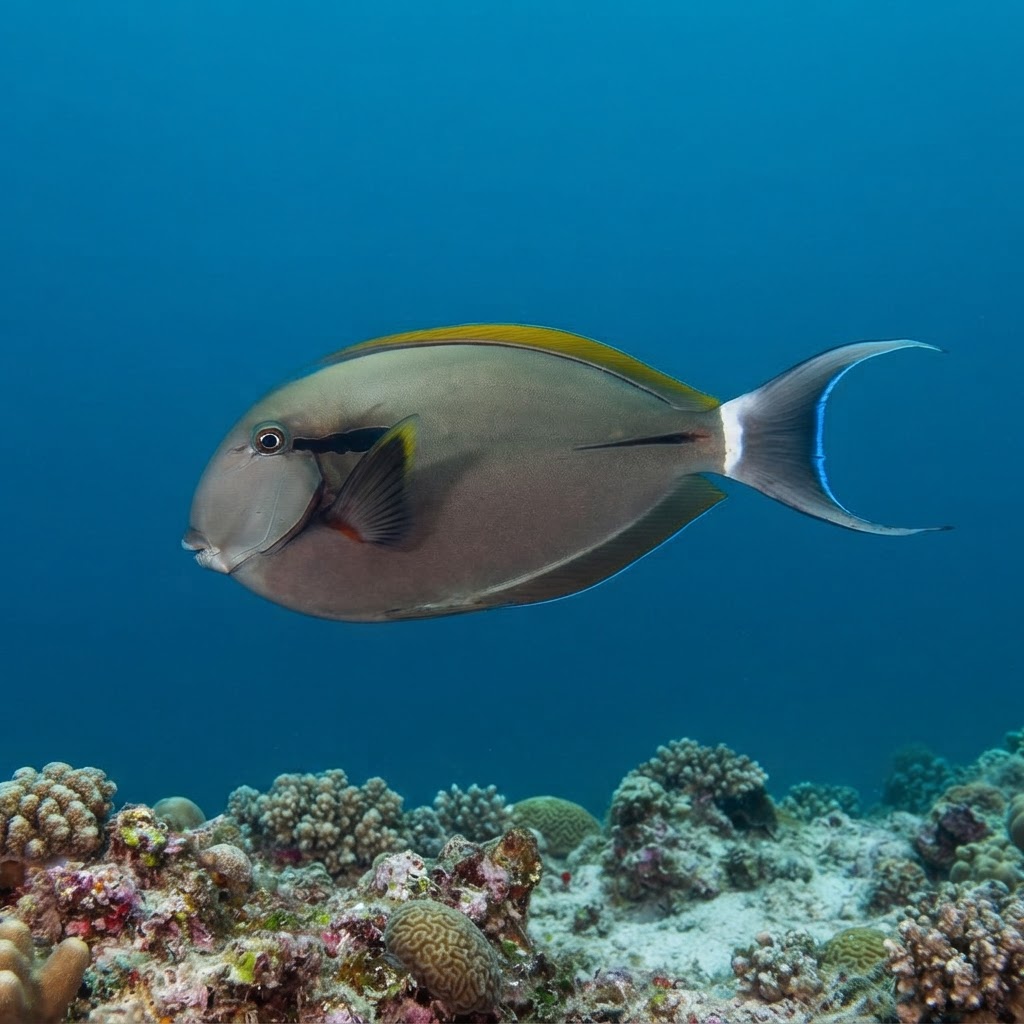
Acanthurus nigricauda
Uncommon but steady on Maldives reefs, this grey surgeonfish shows in warm 25-29C water year-round. Here's where to find it.
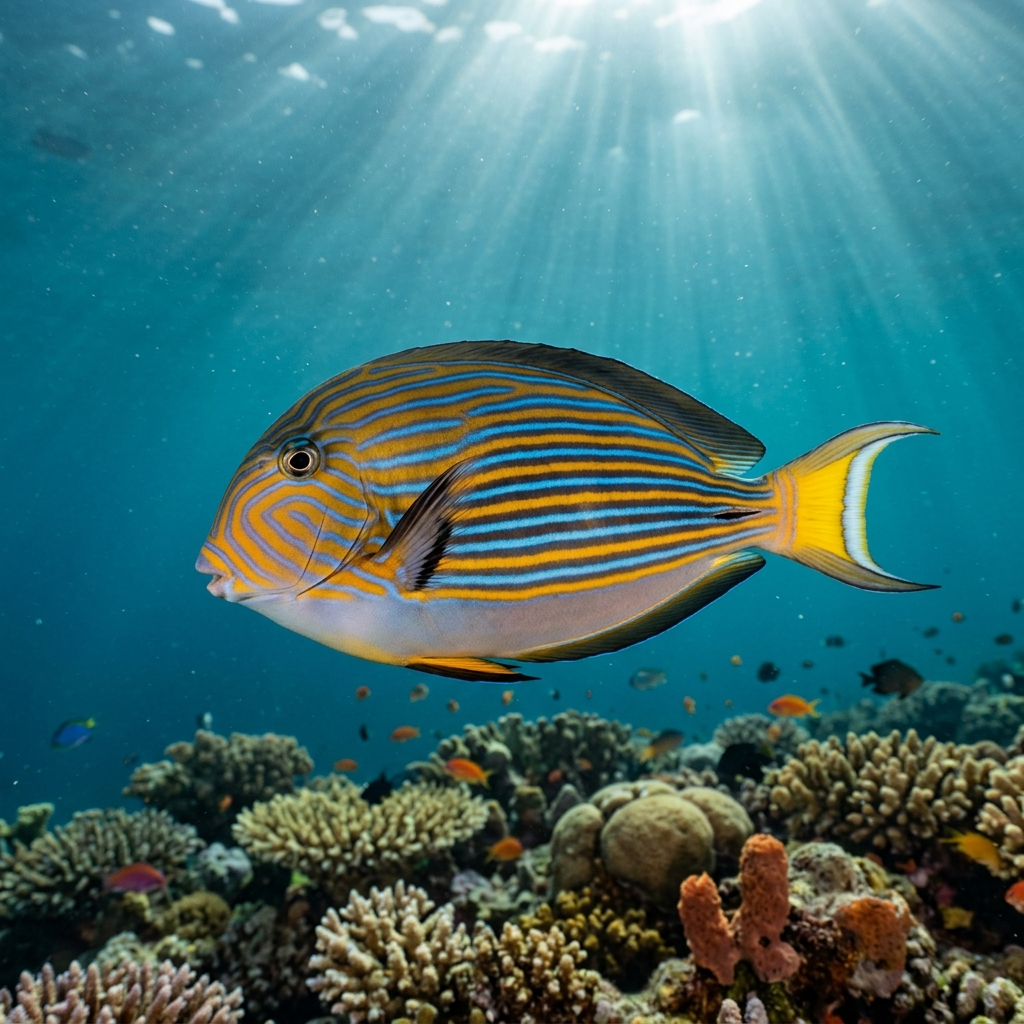
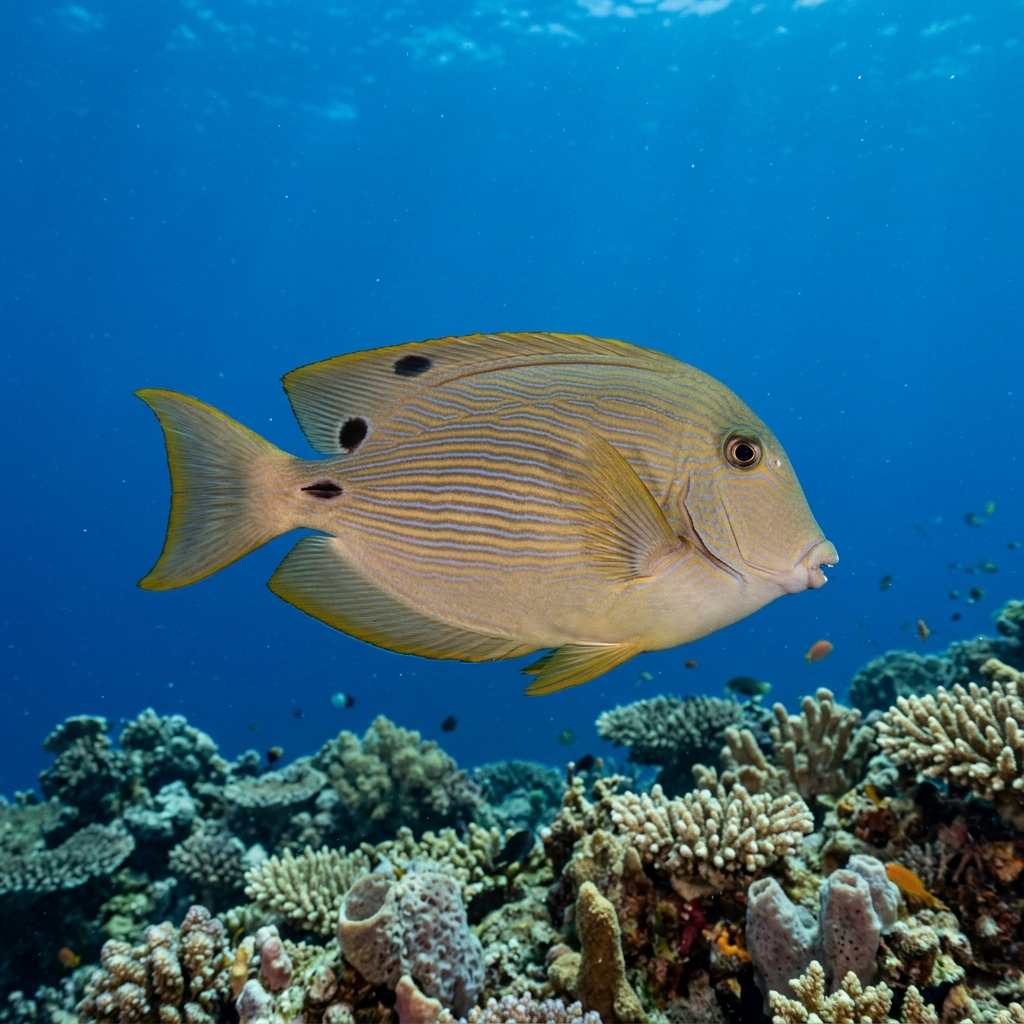
A stocky, grey-brown surgeonfish reaching around 31 cm, with a dark oval blotch near the base of the tail that gives it the 'epaulette' name. Look for a pale, slightly lighter patch on the upper shoulder just behind the head, and the small sharp spine (scalpel) folded at the base of the tail that all surgeonfish carry. It swims with the same flattened, disc-like body as its relatives, usually cruising close to the reef rather than out in open water.
Usually seen picking over algae and detritus on the reef flat or slope, often solo or in loose company with other surgeonfish rather than tight schools. It tends to hold a modest distance from divers, drifting off into the reef structure if approached too directly rather than bolting. Most sightings are in shallow to mid depths, in keeping with its 0 to 30 m range, during normal daylight reef dives.
Like other surgeonfish, it carries a razor-sharp, scalpel-like spine folded into a groove at the base of its tail, used purely in defence against other fish rather than against divers.
No clear seasonal pattern shows up in the sightings, and it sits comfortably in 25.3 to 29.3C water, so it's a year-round reef fish wherever it occurs rather than a seasonal visitor.
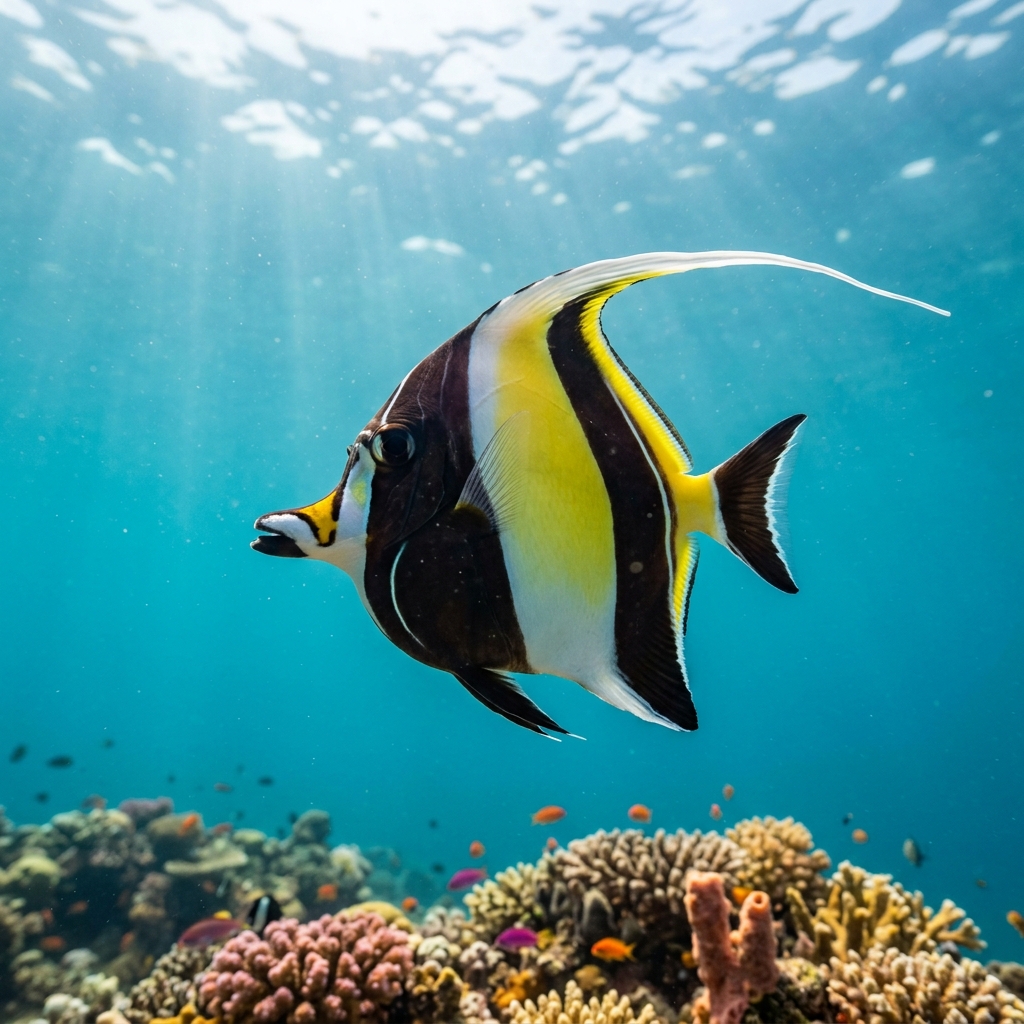
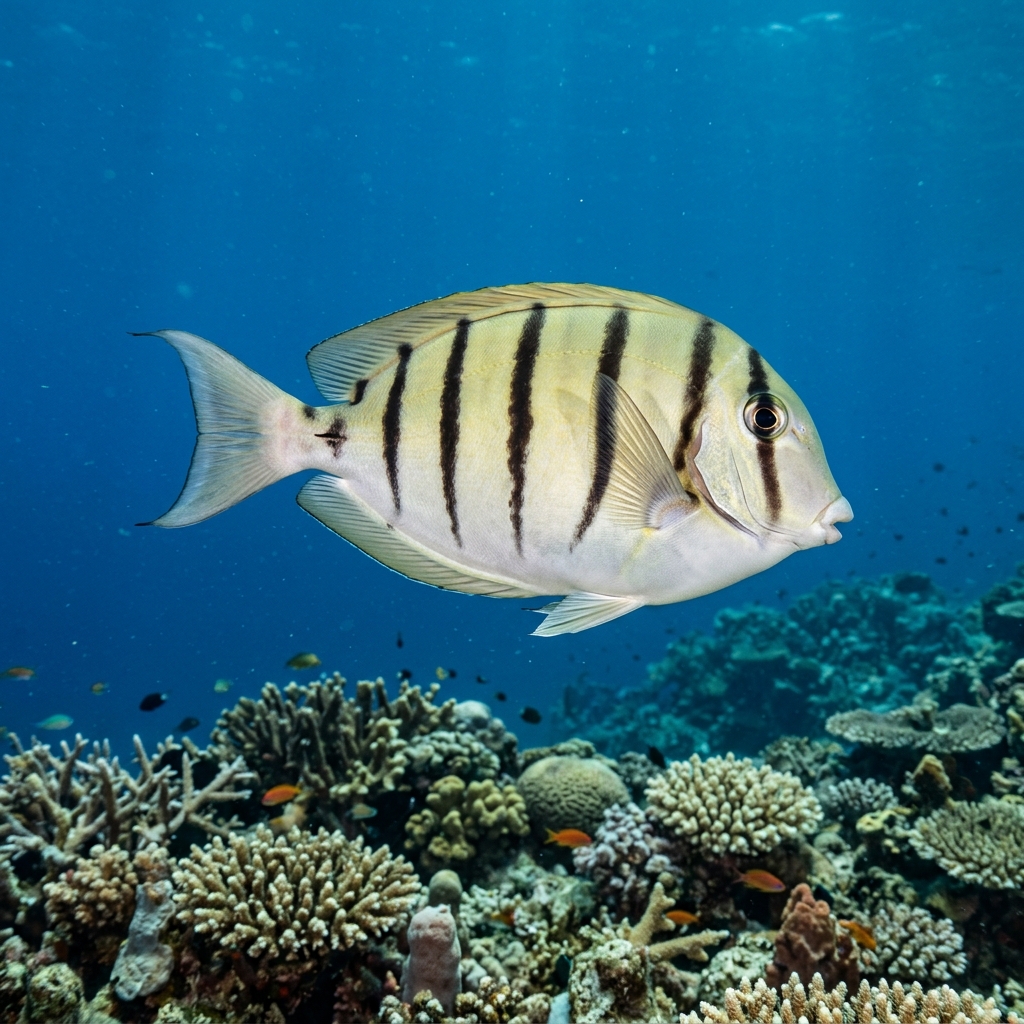
Reef neighbours a diver could mistake it for. Use the identification notes above to tell them apart.
Most reliably logged in the Maldives, especially across the Central Atolls, where it turns up far more often than anywhere else in the data. Beyond that stronghold, it has a solid presence in Indonesia (Nusa Tenggara and Bali), Thailand's Khao Lak, the Philippines' Visayas, Queensland in Australia, Reunion's Saint-Paul area, and Sabah in Malaysia.
Mapping where Epaulette Surgeonfish is logged…
Best odds are in the Maldives, particularly the Central Atolls, where it's logged far more often than anywhere else. It's also a regular find in Indonesia's Nusa Tenggara and Bali, Khao Lak in Thailand, and the Visayas in the Philippines.
There's no strong seasonal signal in the sightings, and its preferred water temperature of roughly 25 to 29C is available on tropical reefs all year, so any month is workable.
Check for a grey-brown, disc-shaped body around 31 cm long, a dark blotch at the base of the tail, and a paler patch on the upper shoulder. It's most often seen solo, close to the reef, grazing rather than schooling in open water.
They typically reach about 31 cm in length, a mid-sized surgeonfish that's easy to mistake for several relatives at a glance.
No, they pose no real threat to divers. Like all surgeonfish they have a sharp defensive spine near the tail, but it's used against other fish, not people, and there's no need to handle them.
Across the dive sites where it's recorded, sightings are most often described as uncommon rather than guaranteed, though a smaller number of sites report it as common or very common, notably in the Maldives.
Site and sighting data is aggregated from diver logs, iNaturalist and GBIF. For taxonomy and conservation status:
Striped Surgeonfish
3,289 sites