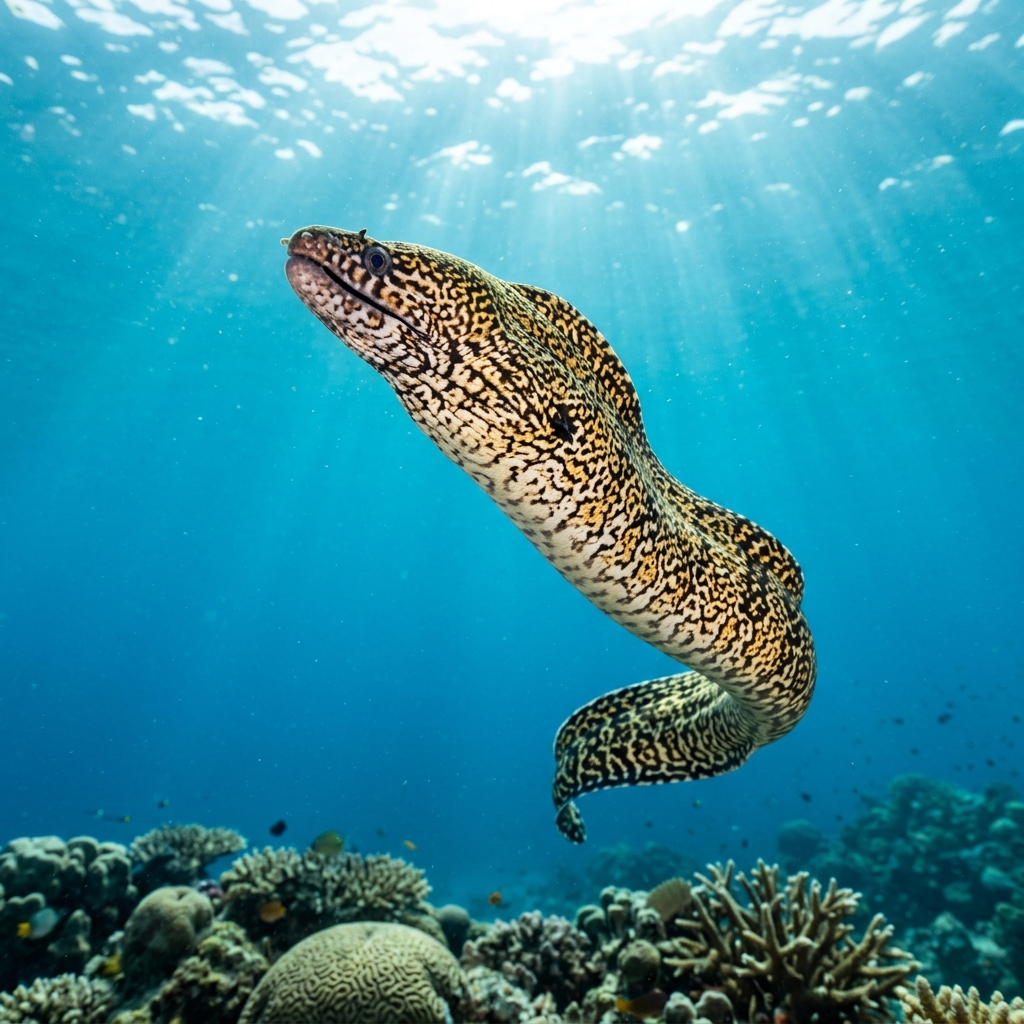
Enchelycore ramosa
Spot the Mosaic Moray in the cool, temperate waters of Northland and Auckland, New Zealand. Here's what to look for and when to dive.
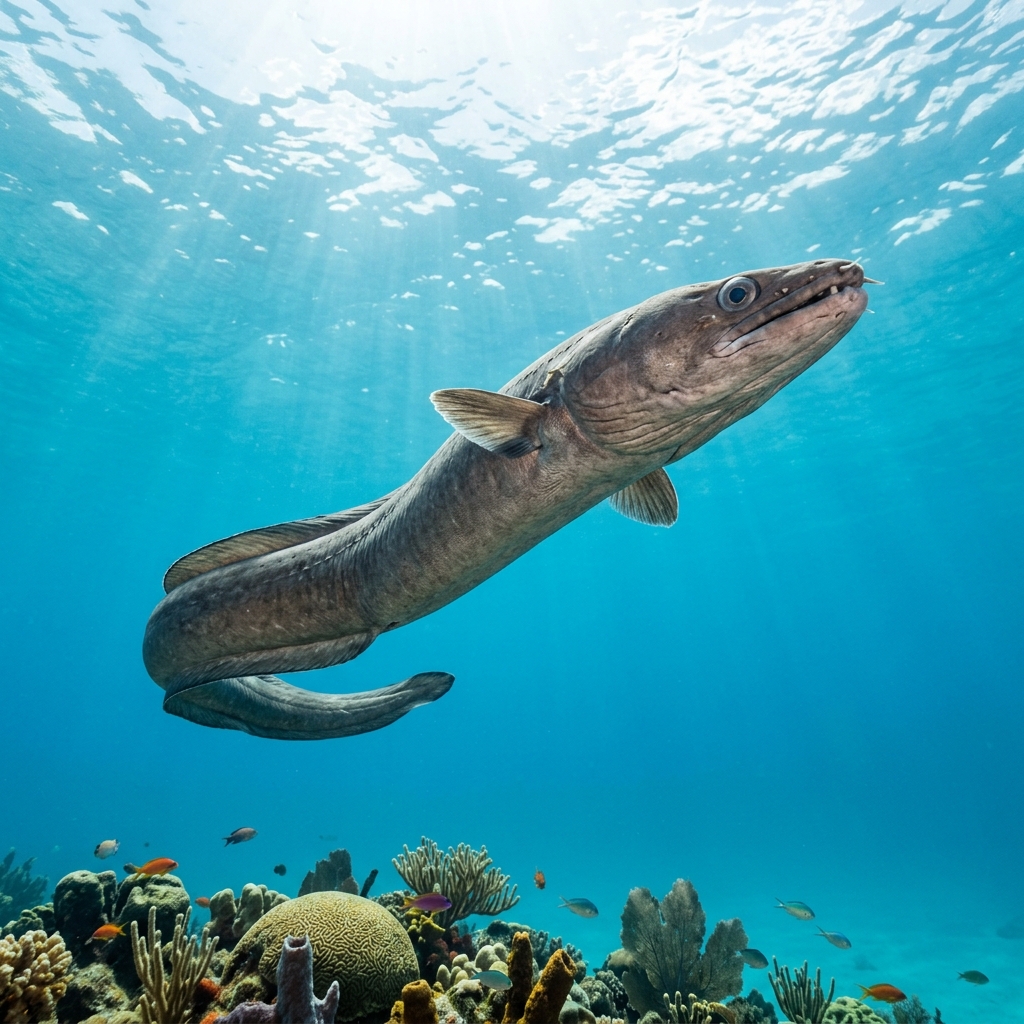
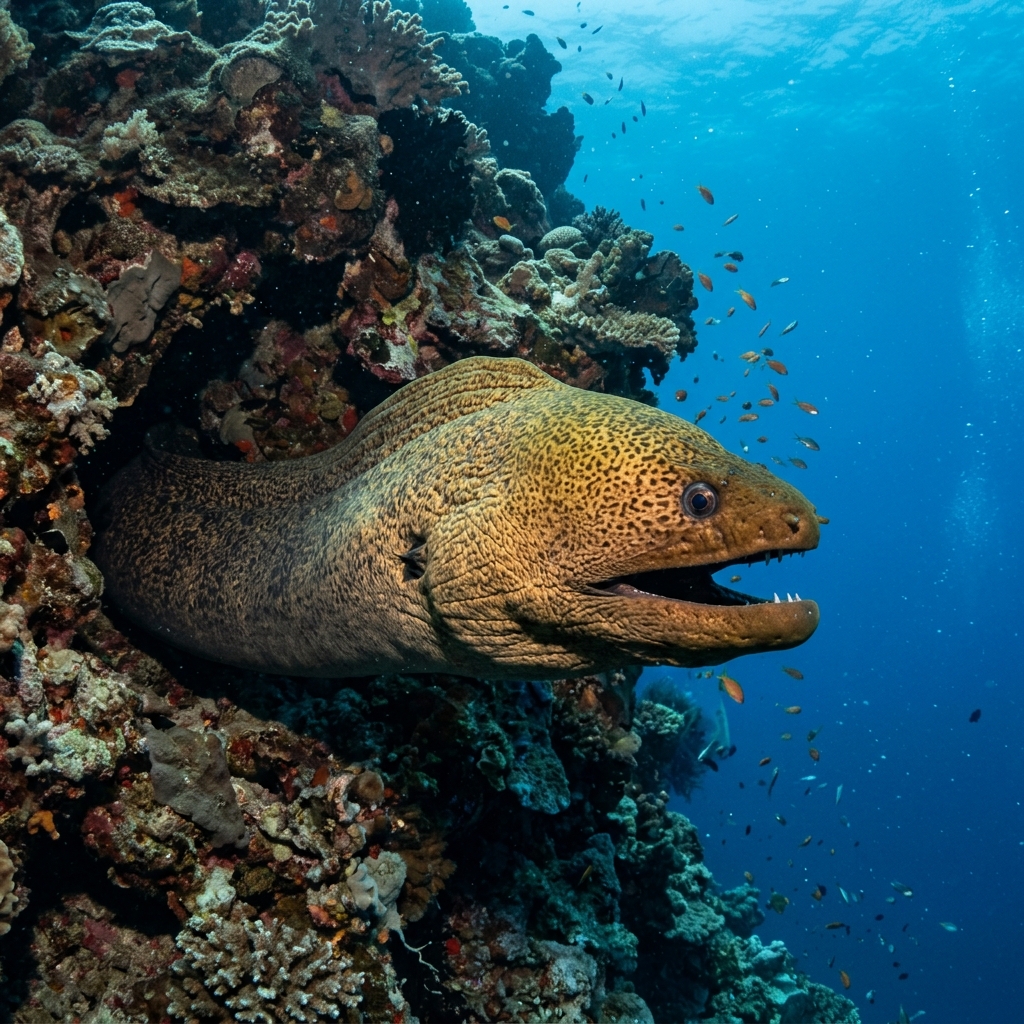
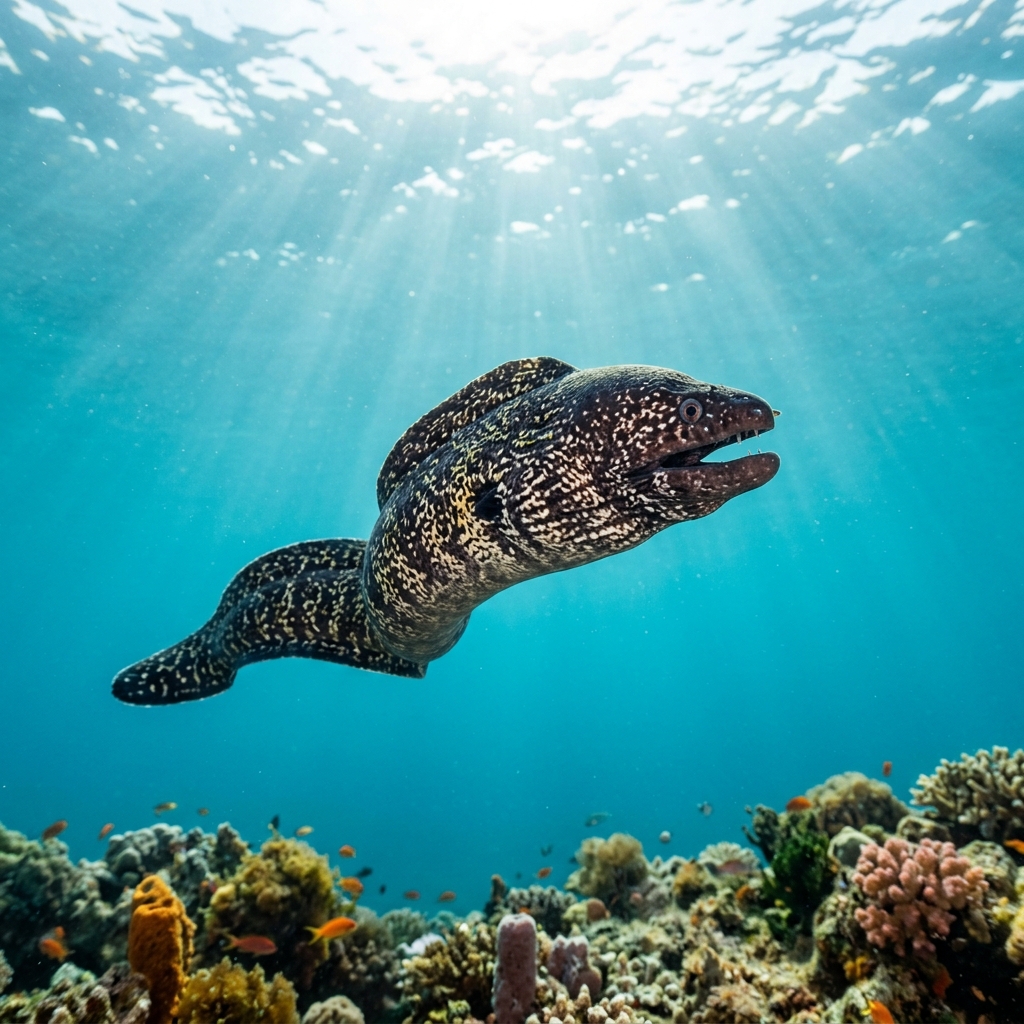
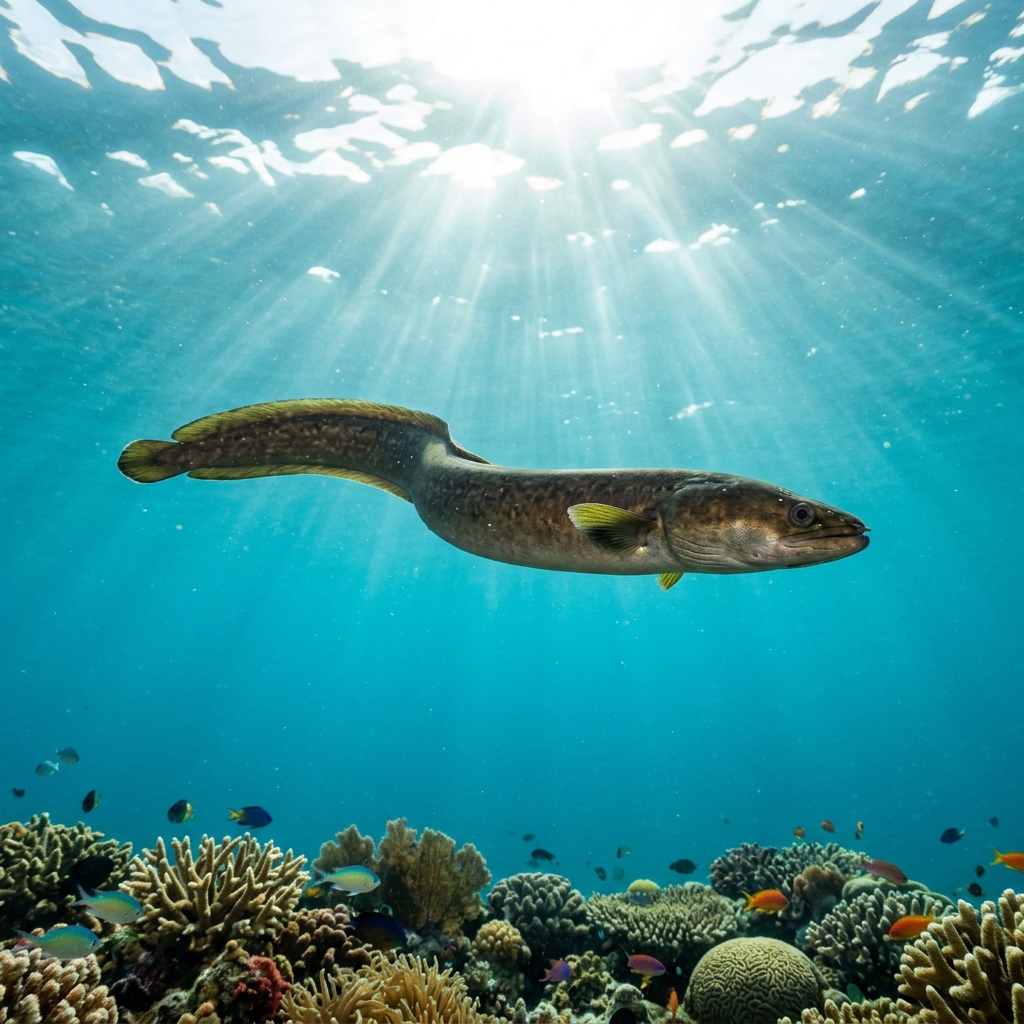
A heavily patterned moray with a bold mosaic (reticulated, net-like) pattern of brown and cream across the entire body, giving it a striking jigsaw appearance unlike any other eel in its range. The snout is distinctly elongated and narrow, with visible teeth even when the mouth is closed, a feature worth looking for when it peers out from a crack. In New Zealand's temperate reefs, there is no other moray with this combination of long snout and mosaic patterning, which makes it far easier to identify than most morays.
Like most morays, it spends most of its time wedged into rock crevices and reef ledges with just its head exposed, swaying gently as it breathes. Divers typically encounter it by looking carefully into gaps in rocky reefs rather than by spotting it in open water. It is not considered dangerous and generally remains calm when approached slowly and respectfully.
The Mosaic Moray is one of the few morays with a distinctly elongated, curved jaw that prevents the mouth from fully closing, those exposed teeth are not aggression, they are simply anatomy.
There is not enough monthly data to identify a peak season, so it should be treated as present year-round. It has been observed in water temperatures between roughly 15 and 21 °C, which fits New Zealand's temperate coastal conditions across all seasons.
Almost all logged sightings come from New Zealand, with the overwhelming majority concentrated across Northland and Auckland, temperate reef country with rocky reefs and kelp. A small number of sightings extend to New South Wales in Australia, suggesting it ranges into southern Australian waters, but New Zealand is clearly the place to look.
Mapping where Mosaic Moray is logged…
New Zealand is far and away the best place, with sightings spread across Northland and Auckland on temperate rocky reefs. A small number of records also exist from New South Wales, Australia. Outside those two countries, logged sightings are essentially absent.
There is no confirmed peak season based on available data, so it can realistically be encountered year-round in New Zealand. The species tolerates the cool temperate conditions typical of the region across all seasons, roughly 15 to 21 °C.
Look for the bold jigsaw-like mosaic of brown and cream covering the whole body, combined with a distinctly long, narrow snout. In New Zealand waters no other moray shares this combination, so if you see that reticulated patterning and a prominent narrow jaw, you have your ID.
No. The Mosaic Moray is not considered dangerous to divers. Its visible teeth are a result of jaw anatomy rather than aggression. Give it space, avoid putting hands into reef crevices, and it will generally ignore you.
Reliable size data for this species is limited. Morays in the same family can range from small to very large, but specific maximum length records for the Mosaic Moray are not well documented in diver observations to date.
Its jaw is elongated and curved in a way that means the mouth cannot fully close, leaving the teeth permanently exposed. This is normal anatomy for this species and not a threat display. The same trait is shared by some other members of its genus and is one of the features that separates it from more common morays.
Site and sighting data is aggregated from diver logs, iNaturalist and GBIF. For taxonomy and conservation status:
Garden Eel
2,448 sites