Sacoproteus smaragdinus
A 1cm bright green slug most reliably spotted around Mindanao in the Philippines, on reefs year-round from 13 to 30C.
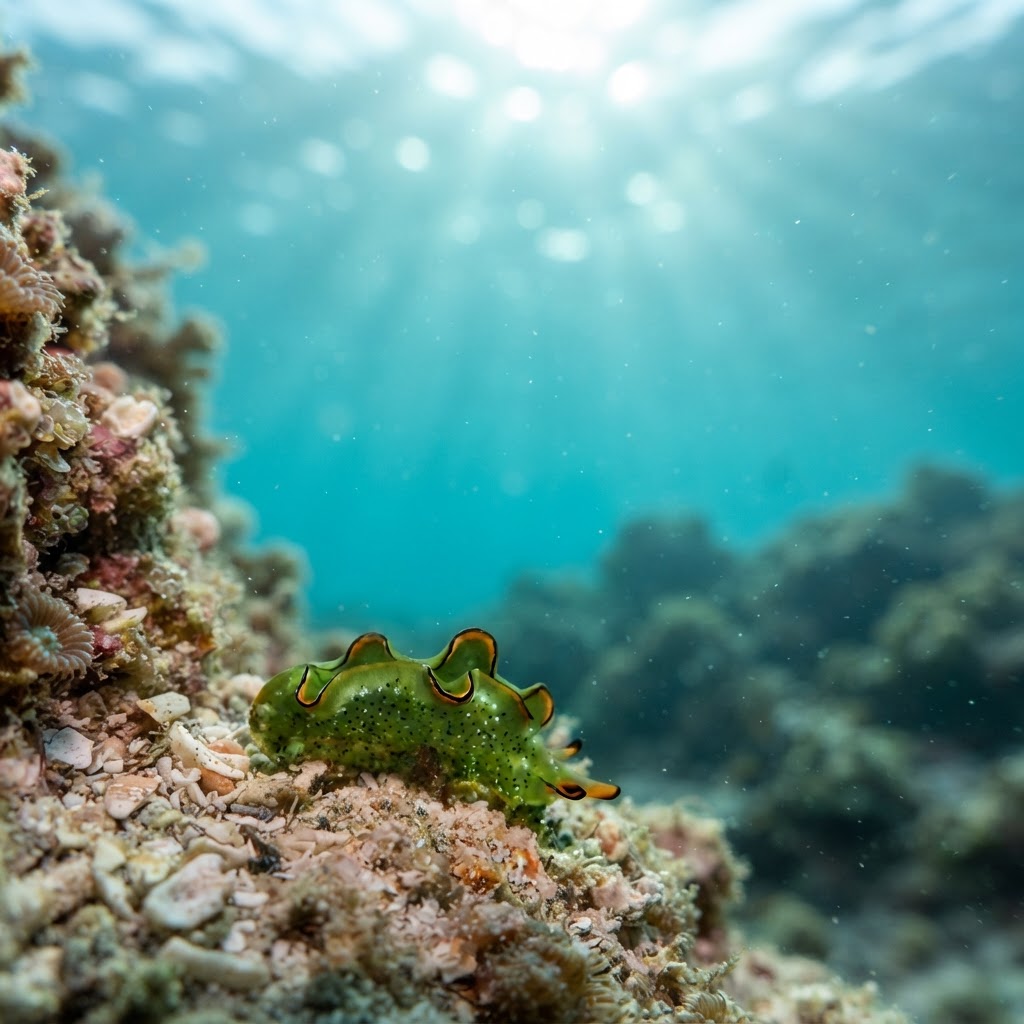
Barely a centimetre long, this slug is a slick, glossy emerald green from head to tail, easy to miss unless you're scanning close and slow. The body is smooth and elongated with no obvious frills or cerata (the finger-like projections some sea slugs carry), which helps separate it from bulkier lookalikes. Look for a uniform, almost lacquered green colour rather than patches or stripes.
Divers find it grazing slowly over algae-covered rock, rubble, or coral debris, usually on close macro-focused dives rather than open water cruising. It doesn't react to divers in any noticeable way, being far too small and slow to register a threat, so the main challenge is spotting it rather than approaching it.
Its green colour likely comes from chloroplasts it retains after feeding on algae, a trick called kleptoplasty that some sea slugs use to photosynthesise for a while after a meal.
No clear seasonal pattern shows up in the sightings, and its temperature range of 13.1 to 29.8C spans everything from cool temperate to warm tropical water, so this is a year-round find wherever it occurs.
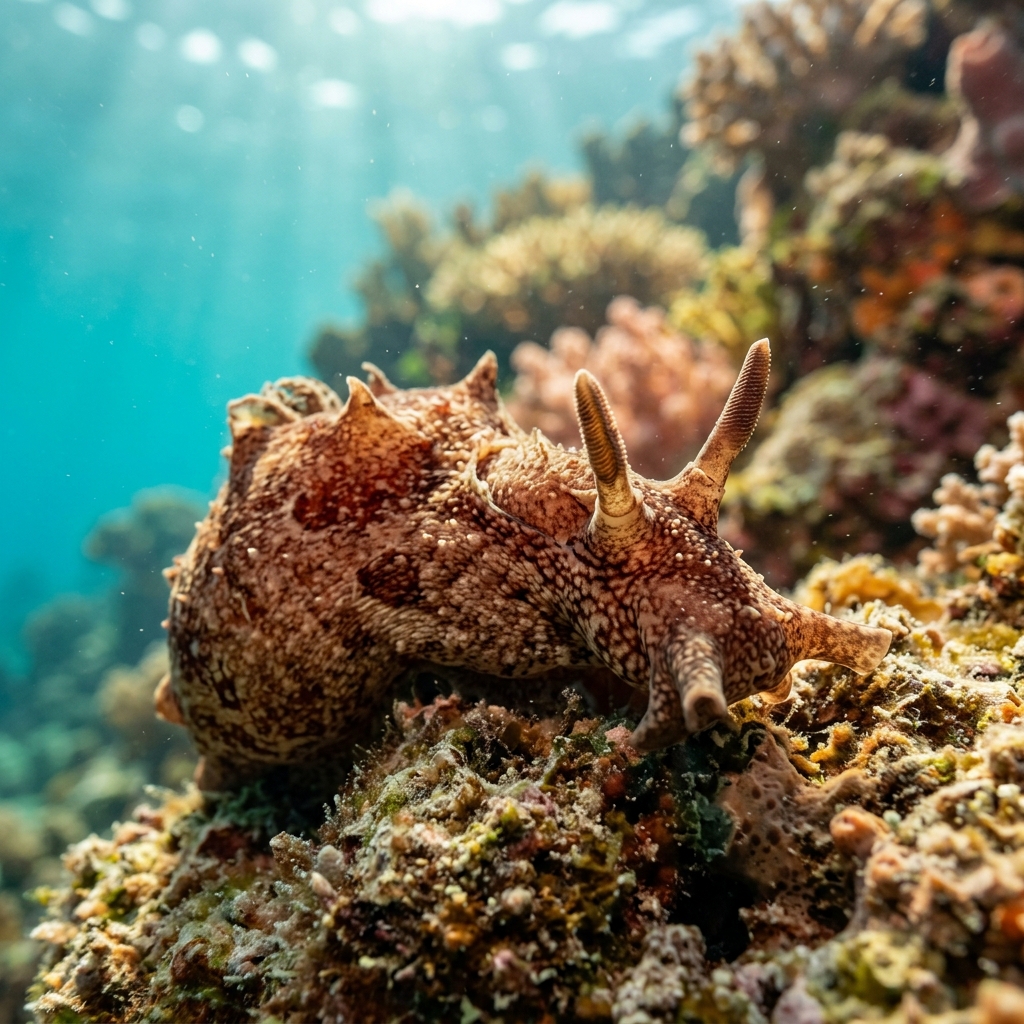
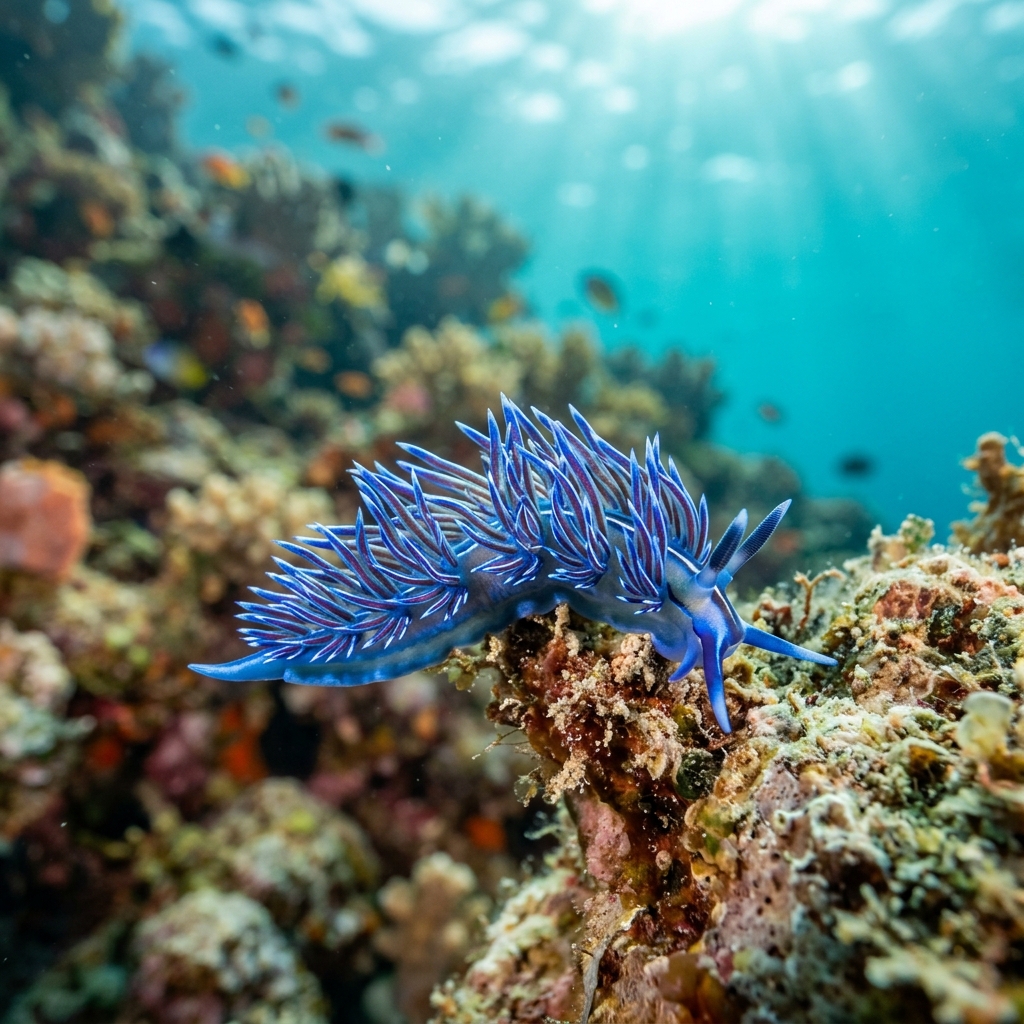
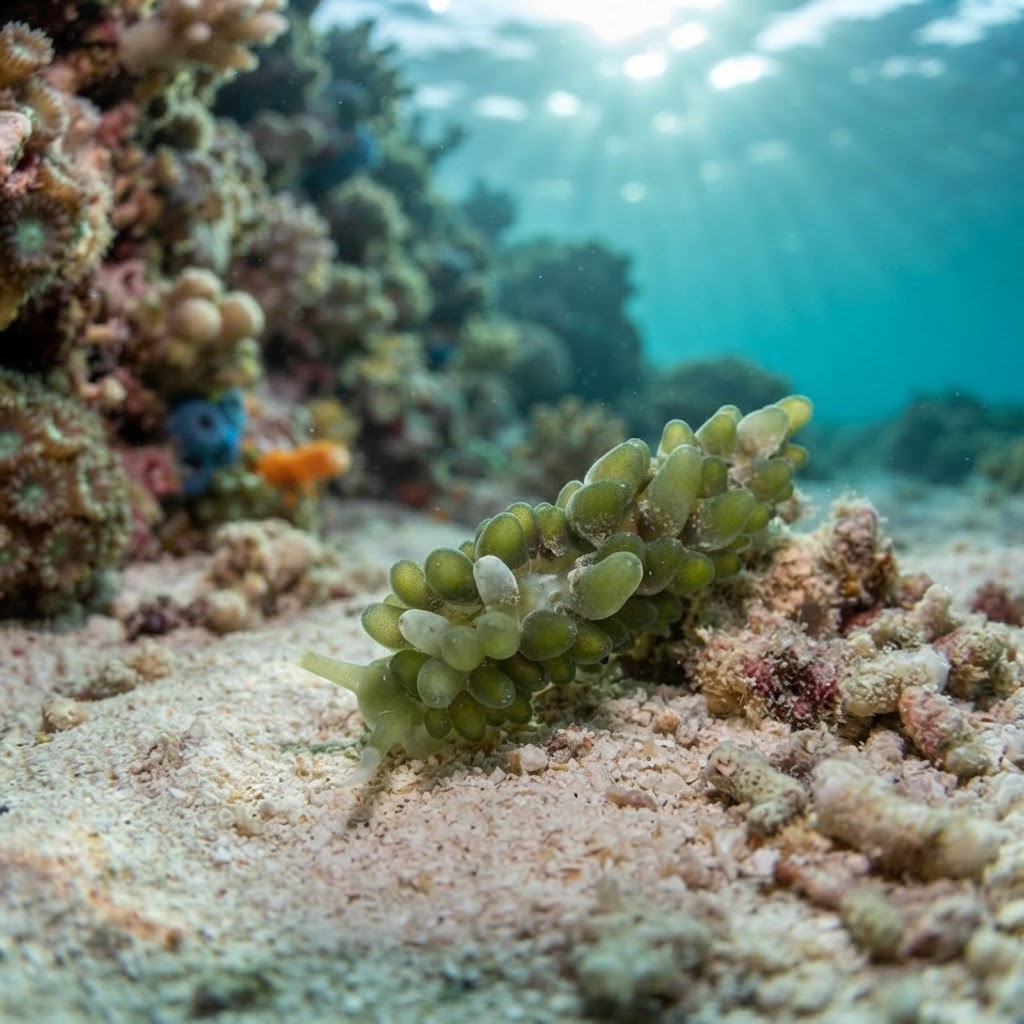
Reef neighbours a diver could mistake it for. Use the identification notes above to tell them apart.
Most consistently logged around Mindanao in the Philippines, which carries the bulk of confirmed sightings. Smaller numbers turn up at Xiaoliuqiu in Taiwan, plus single logged sites in North Island (New Zealand), Victoria (Australia), Bali (Indonesia), and Kwajalein Atoll (Marshall Islands), so it's worth a close look on muck and reef dives well beyond the Philippines too.
Mapping where Emerald Slug is logged…
Mindanao in the Philippines has the strongest run of sightings, with additional records from Xiaoliuqiu in Taiwan and single sites in New Zealand, Australia, Indonesia, and the Marshall Islands.
There's no detected season in the sighting data, and it turns up across a wide temperature range from 13 to nearly 30C, so it's a year-round possibility rather than a seasonal target.
Around 1cm long, making it one of the smaller sea slugs divers log, and easy to overlook without a slow, close search of the substrate.
Look for a tiny, glossy, uniformly emerald-green slug with a smooth elongated body and no obvious cerata or frilly projections. Its plain, solid colour without patterning is the key giveaway versus similarly sized green slugs.
No, it poses no risk to divers. It's tiny, slow-moving, and has no means of harming anyone who gets close for a photo.
Site and sighting data is aggregated from diver logs, iNaturalist and GBIF. For taxonomy and conservation status:
Light-spotted Aegires
3,168 sites