Anampses elegans
A rare find off North Island, New Zealand, in water from 20.5 to 29.2C. Here's how to spot Elegant Wrasse and where it's actually been logged.
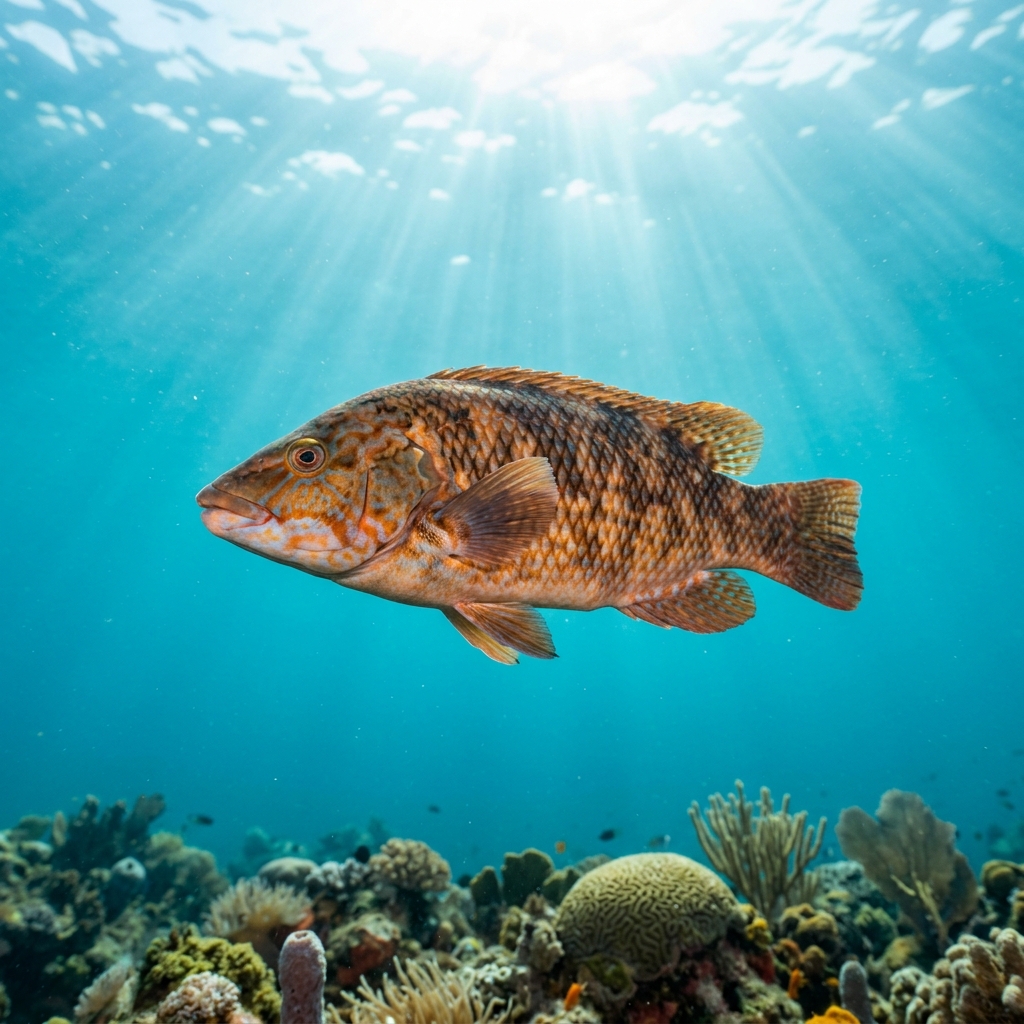
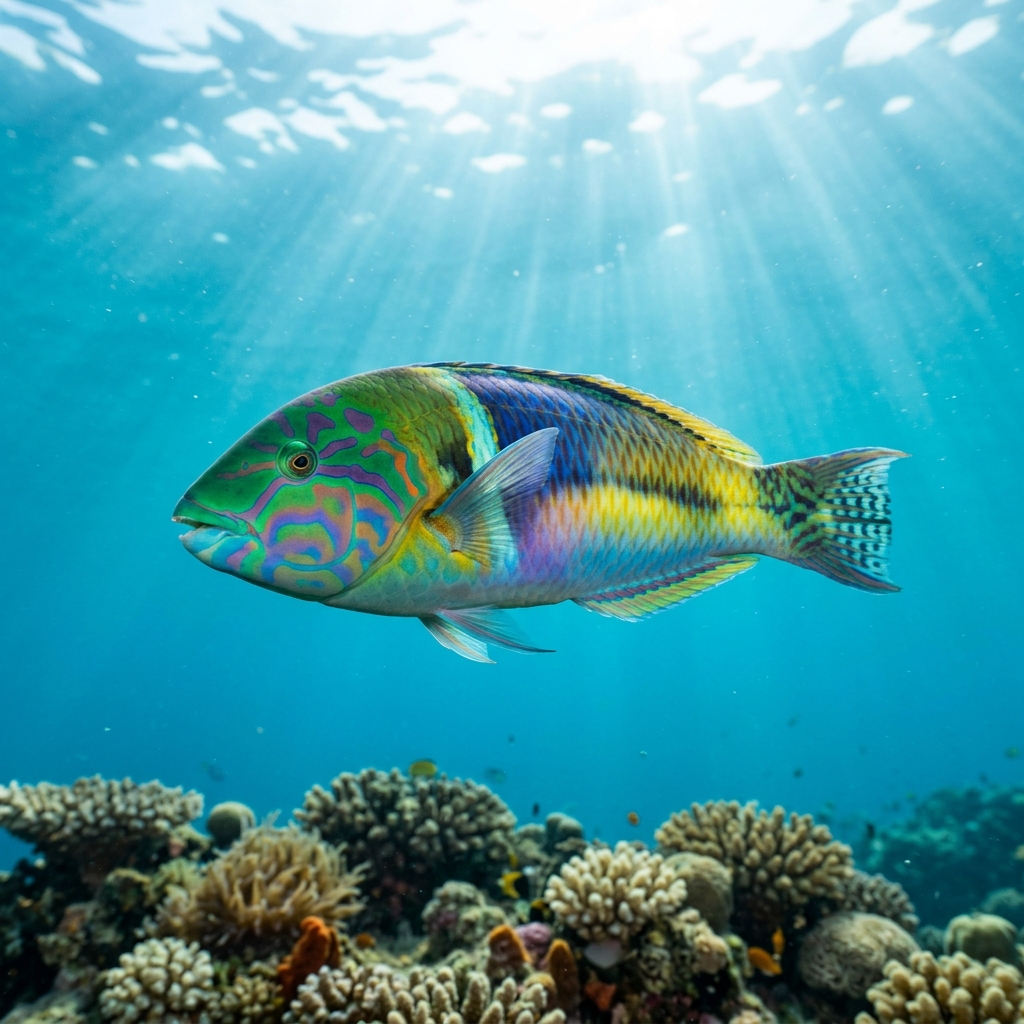
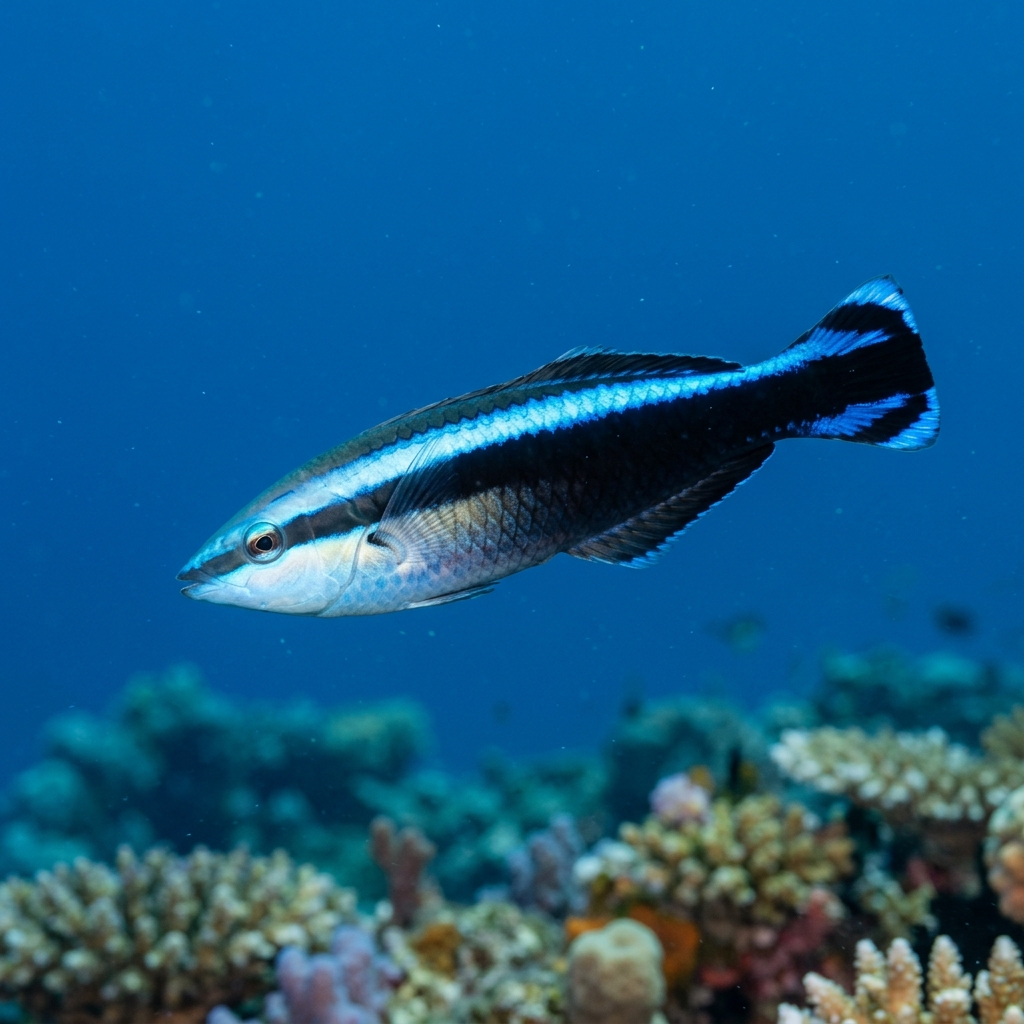
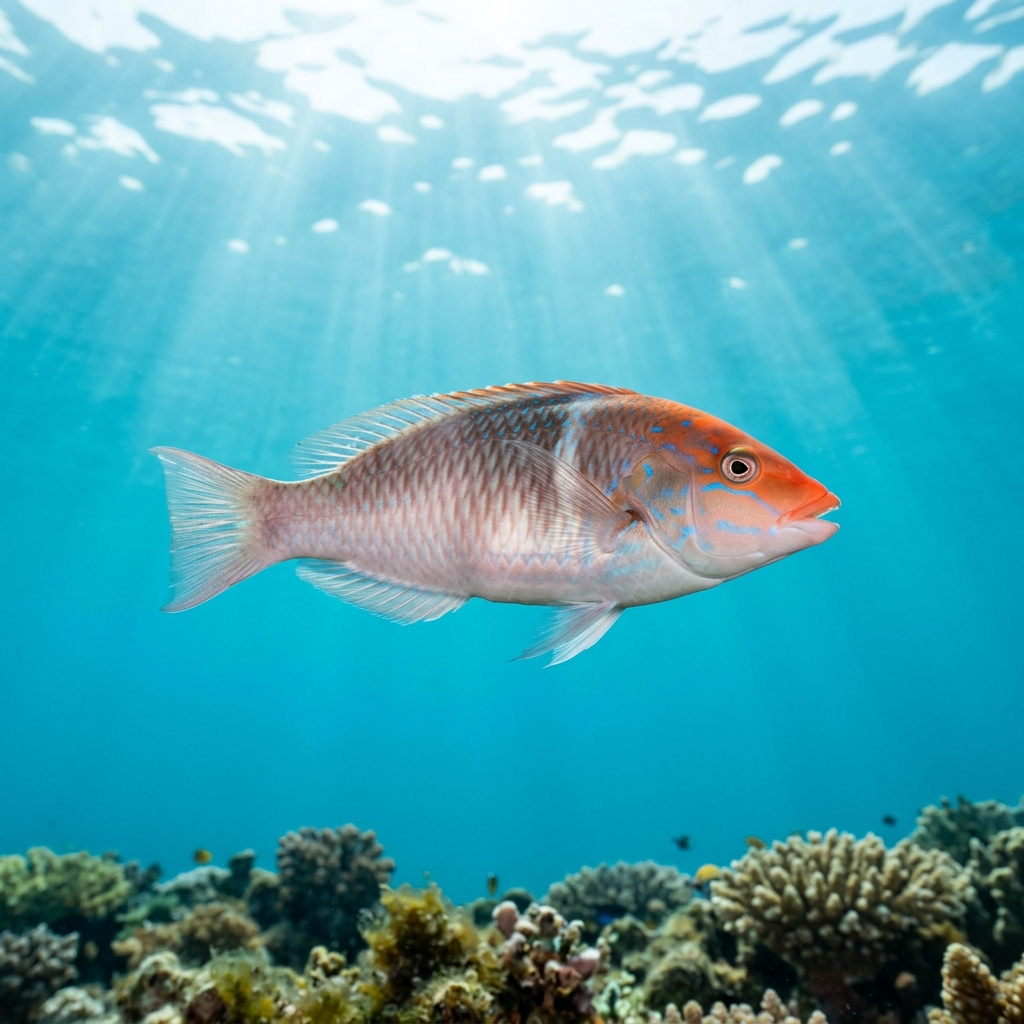
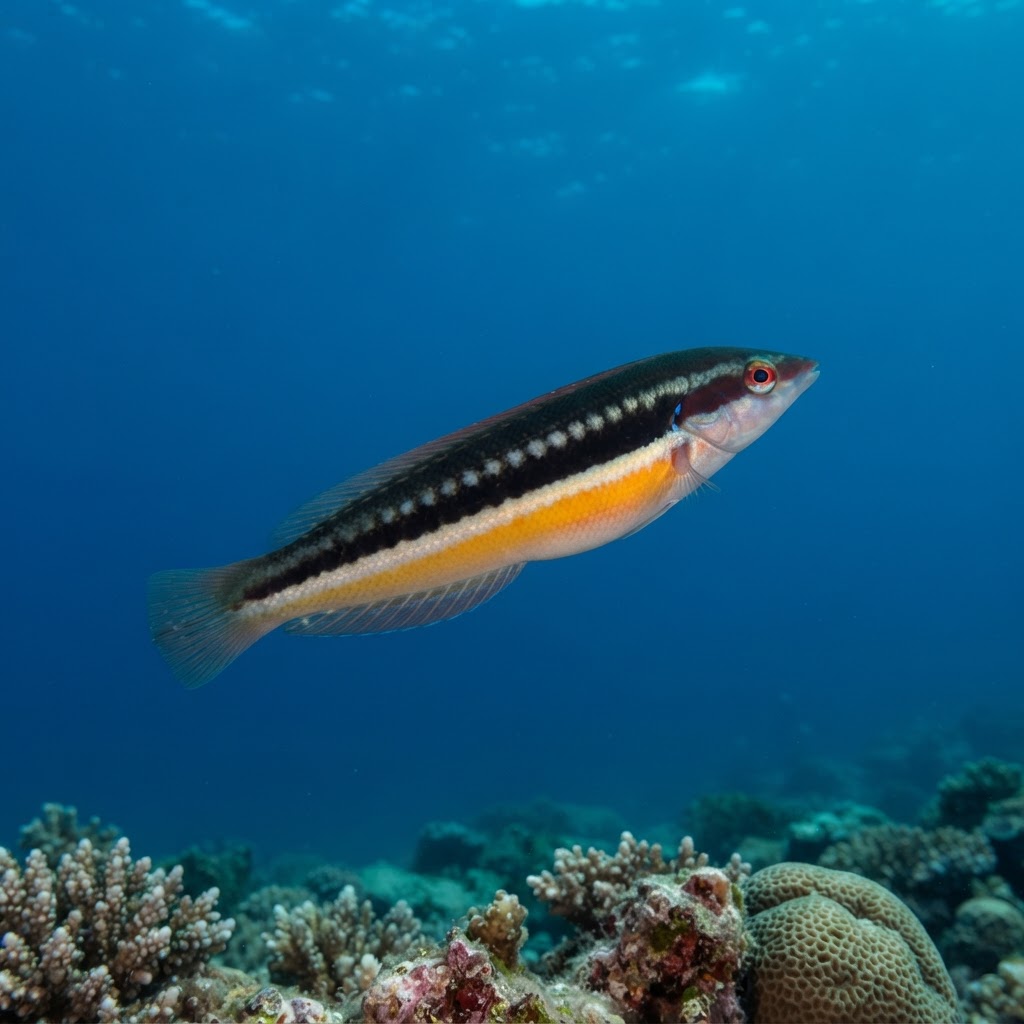
A slim, torpedo-shaped wrasse reaching about 20 cm, moving with the quick darting swim typical of the genus. Look for fine longitudinal striping along the body and a pointed snout used to pick at the reef surface. It rarely sits still long enough for a leisurely look, so most sightings are brief passes over rock and rubble ground rather than open water.
Divers report it moving over reef and rocky substrate, foraging along the bottom rather than schooling or holding station in the open. It tends to keep its distance and is easily missed among rubble and low reef structure, which likely explains why it's logged as rare at most sites where it does turn up. Expect brief, low-key encounters rather than curious or approachable behaviour.
Like other Anampses wrasses, it likely buries itself in sand at night and when startled, a defence habit typical of the genus that makes daytime sightings the only realistic way to see one.
Sightings sit year-round with no detected seasonal peak, matching a water-temperature niche that spans 20.5 to 29.2C. Divers in North Island and New South Wales waters can look for it in any month.
North Island, New Zealand is the strongest area for logged sightings, with New South Wales, Australia the other reliable region. Across both countries it stays a scarce find, so treat any dive here as a chance encounter rather than a guaranteed tick.
Mapping where Elegant Wrasse is logged…
The most reliable region is North Island, New Zealand, with additional sightings logged in New South Wales, Australia. Even there it's an uncommon to rare find, so sightings are opportunistic rather than predictable.
There's no clear seasonal pattern in the sighting data, and it's recorded across a wide temperature range of 20.5 to 29.2C. That points to a year-round presence rather than a specific season to target.
Look for a slender, striped wrasse around 20 cm long moving quickly over rocky or rubble-strewn reef. It has a pointed snout for picking food off the bottom and doesn't linger in open water, so a fast, low profile is the key clue.
They typically reach around 20 cm in length, putting them among the smaller wrasses divers encounter on temperate and subtropical reefs.
Yes, most sites where they've been logged report them as rare, with only one site logging common sightings. Spotting one is more a matter of luck than routine.
Site and sighting data is aggregated from diver logs, iNaturalist and GBIF. For taxonomy and conservation status:
Bird Wrasse
3,632 sites