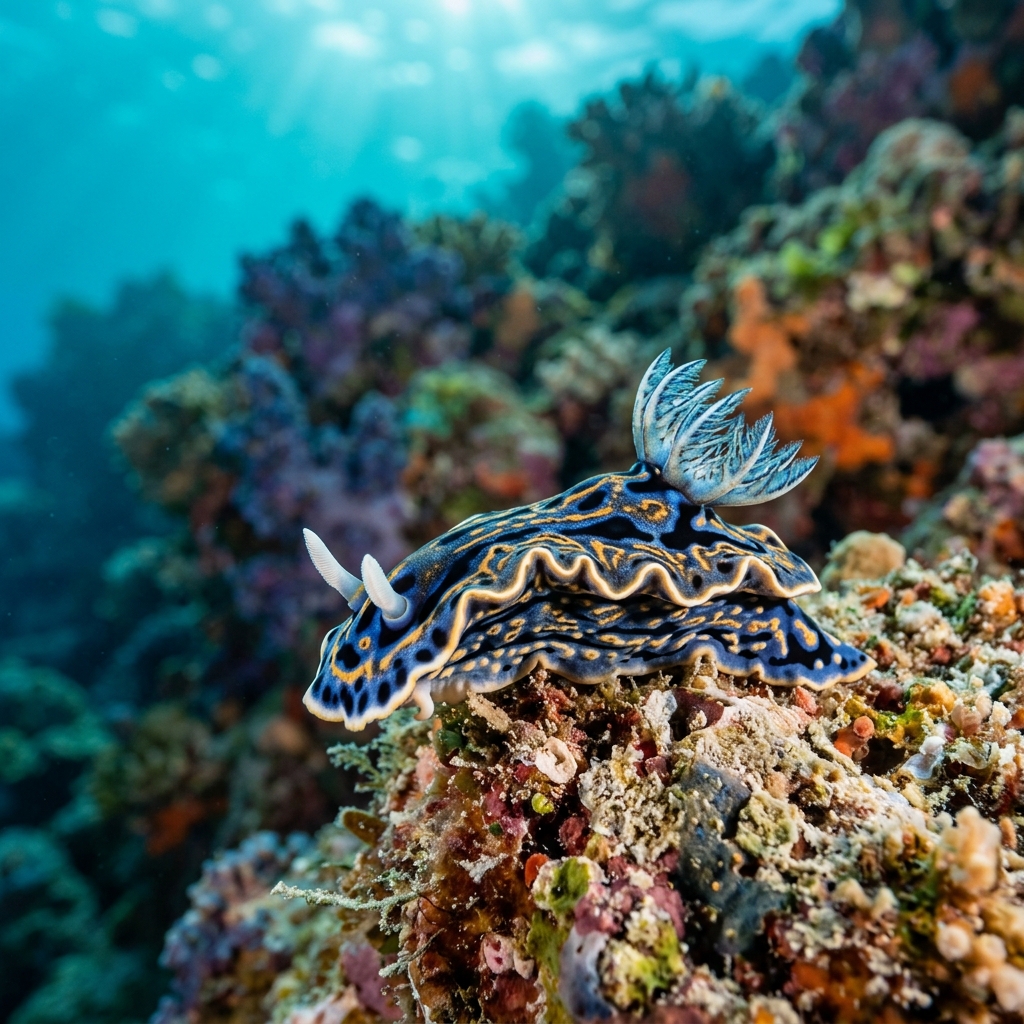
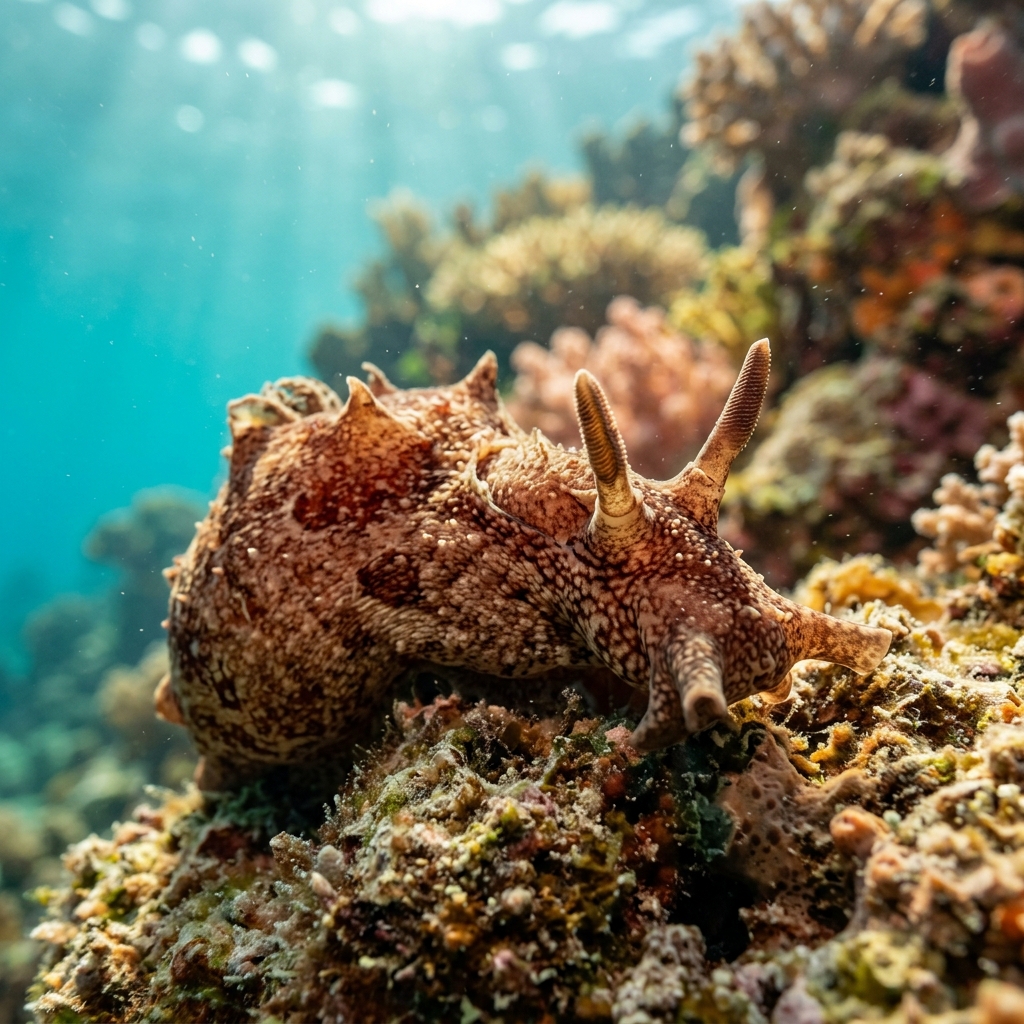
Phyllidia elegans
A pale-patterned reef nudibranch turning up across the Visayas and Sabah in warm 26-30C water, year-round if you know where to look.
A tiny, slow-moving slug no bigger than a thumbnail, with a firm, warty-looking back (the mantle) rather than a smooth one. Look for a pale grey to bluish-white body broken up by irregular black or dark grey blotches running down raised ridges, giving it a knobbly, tiled look rather than a striped one. It has no visible gills on top like many nudibranchs since its breathing structures sit underneath, tucked along the edge of the body, which is part of why Phyllidia species look so armoured compared to softer-bodied dorids.
Expect to find it parked on rubble, dead coral or the reef flat rather than out in open water, moving at the unhurried pace typical of nudibranchs as it grazes over the substrate. Divers most often log it as an uncommon but real find on a slow bottom-time scan rather than something that jumps out at you, so it rewards divers who slow down and check ledges and rubble patches closely. It shows no reaction to divers beyond continuing to browse, since it has no eyes to speak of and relies on chemical defences rather than fleeing.
Phyllidiids like this one feed on sponges and are thought to draw toxic compounds from that diet into their own tissue, which is likely why they can sit exposed on the reef in daylight without much cover and still avoid being eaten.
No clear seasonal pattern shows up in the data, and with a comfortable range of roughly 26 to 30C it has no real reason to disappear at any time of year on the tropical reefs it favours. Treat it as a year-round find rather than something to chase in a particular month.
Reef neighbours a diver could mistake it for. Use the identification notes above to tell them apart.
Most reliably found across the Philippines, especially the Visayas, Luzon, Palawan and Mindanao, and it turns up consistently through Sabah and Peninsular Malaysia's East Coast as well. Indonesia, particularly Sulawesi, and reefs around Queensland in Australia also produce steady sightings, with further records from Thailand, Cambodia, Micronesia and Vietnam.
Mapping where Elegant Phyllidia is logged…
It is most consistently logged across the Philippines, particularly the Visayas, Luzon and Palawan, and is also a reliable find in Sabah and Peninsular Malaysia's East Coast. Sulawesi in Indonesia and reefs off Queensland, Australia add further strongholds.
There's no detected season in the sighting data, and its 26 to 30C comfort range matches tropical reefs year-round, so it can turn up on any dive at the right sites.
Look for a small, firm-bodied slug around 3cm long with a knobbly, ridged back in pale grey-blue broken up by dark blotches. It moves slowly over rubble and dead coral rather than swimming, and lacks the smooth, brightly striped look of many other nudibranchs.
It stays small, typically around 3cm as an adult, so it's easy to swim past unless you're scanning rubble and reef flats closely.
No. It poses no threat to divers and simply grazes over the reef surface, relying on toxins in its body rather than any physical defence.
Like other Phyllidia species, it feeds on sponges and is thought to take on toxic compounds from that diet, which may explain why it can sit exposed on the reef without being bothered by predators.
Site and sighting data is aggregated from diver logs, iNaturalist and GBIF. For taxonomy and conservation status:
Light-spotted Aegires
3,168 sites