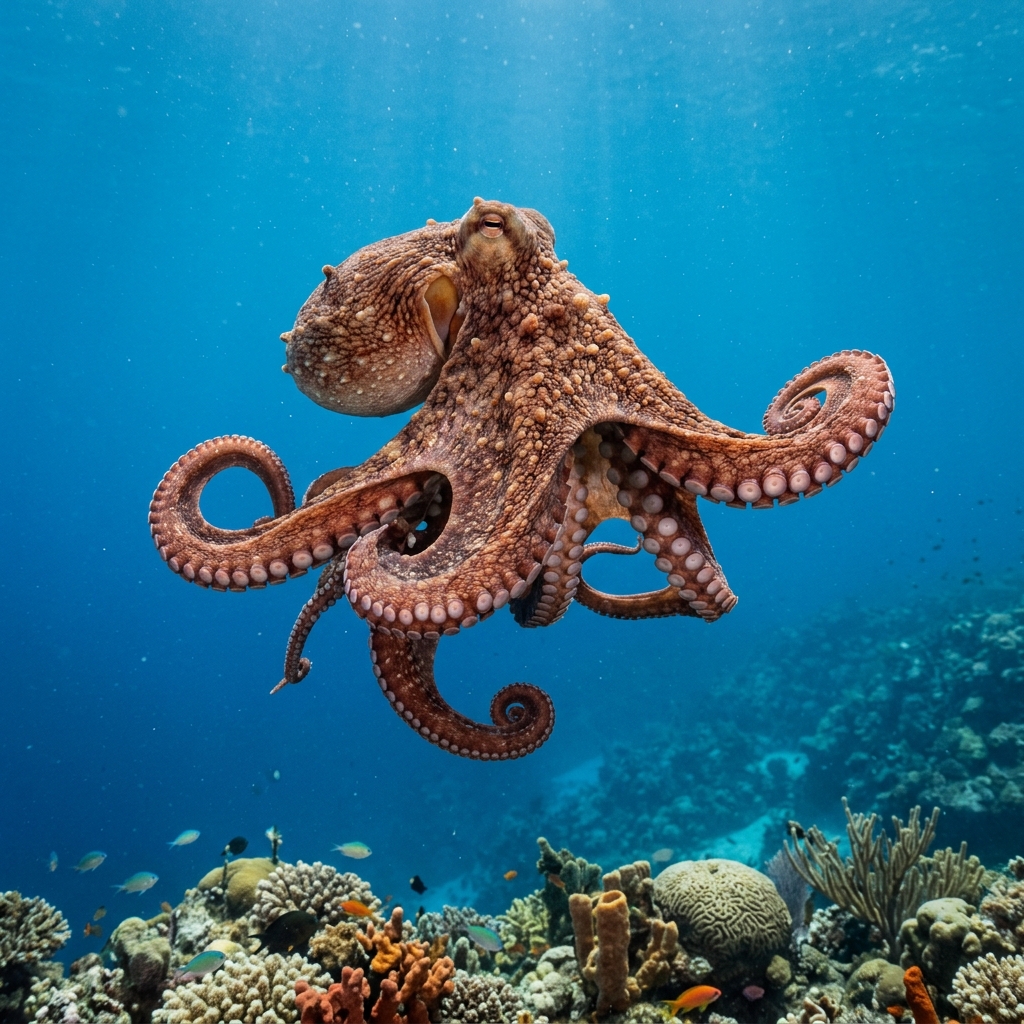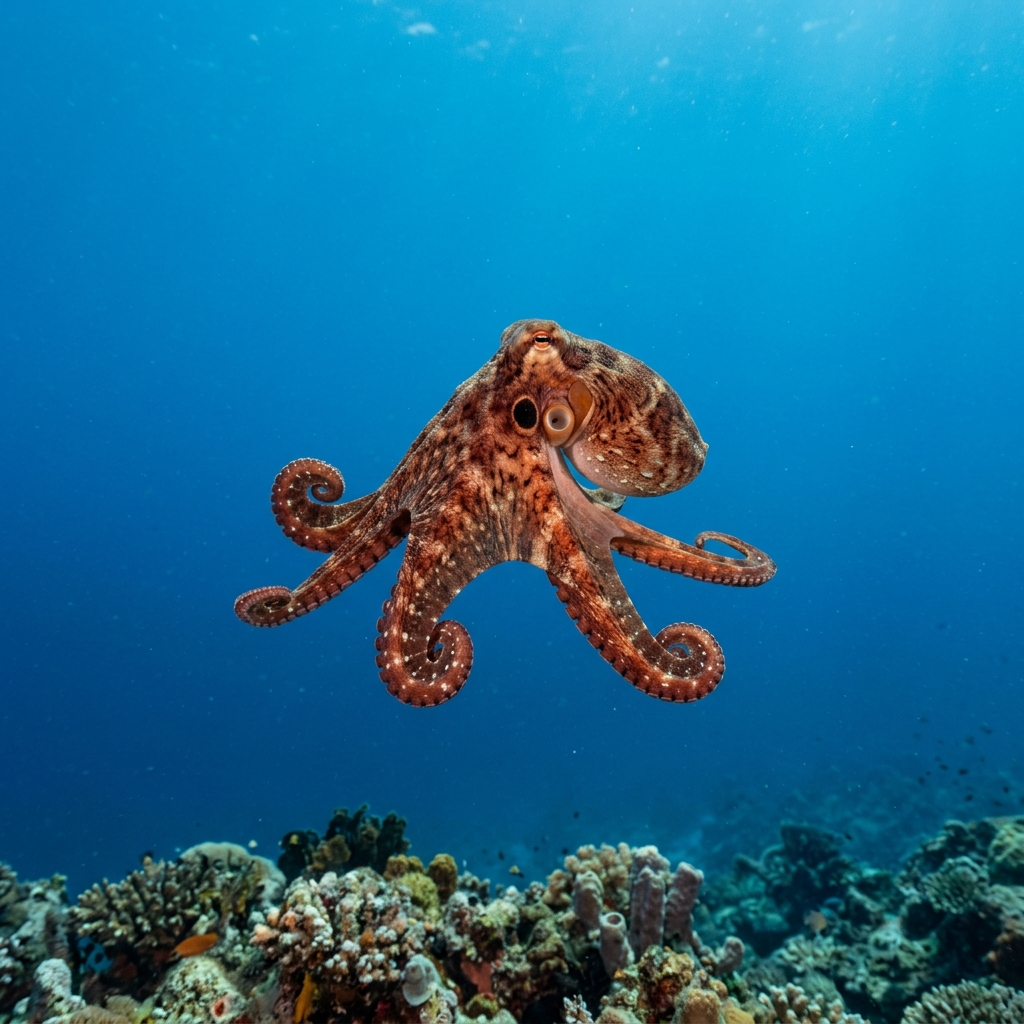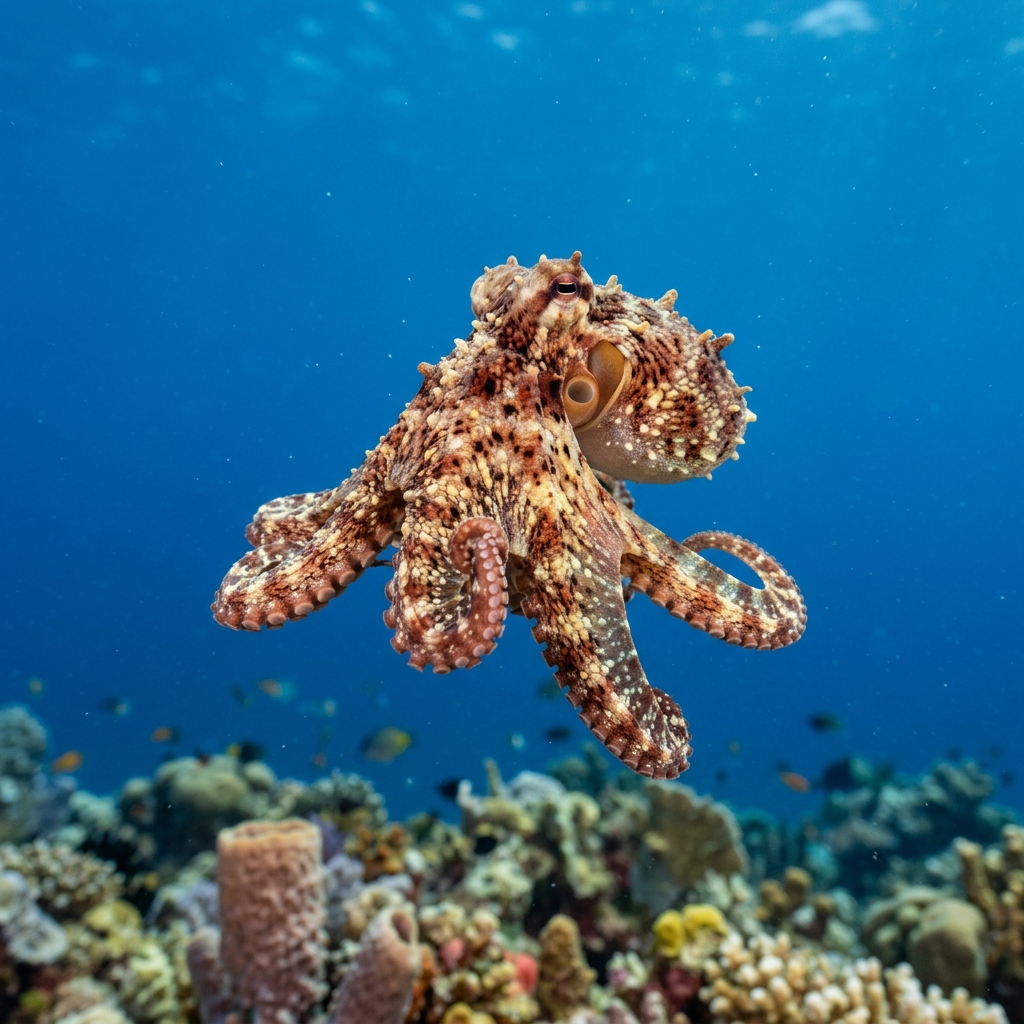
Eledone cirrhosa
Spot the curled octopus in Northern Ireland and South West England in cold 8-14 °C waters, mainly Apr, Jun. Here's where divers log it and how to ID it.
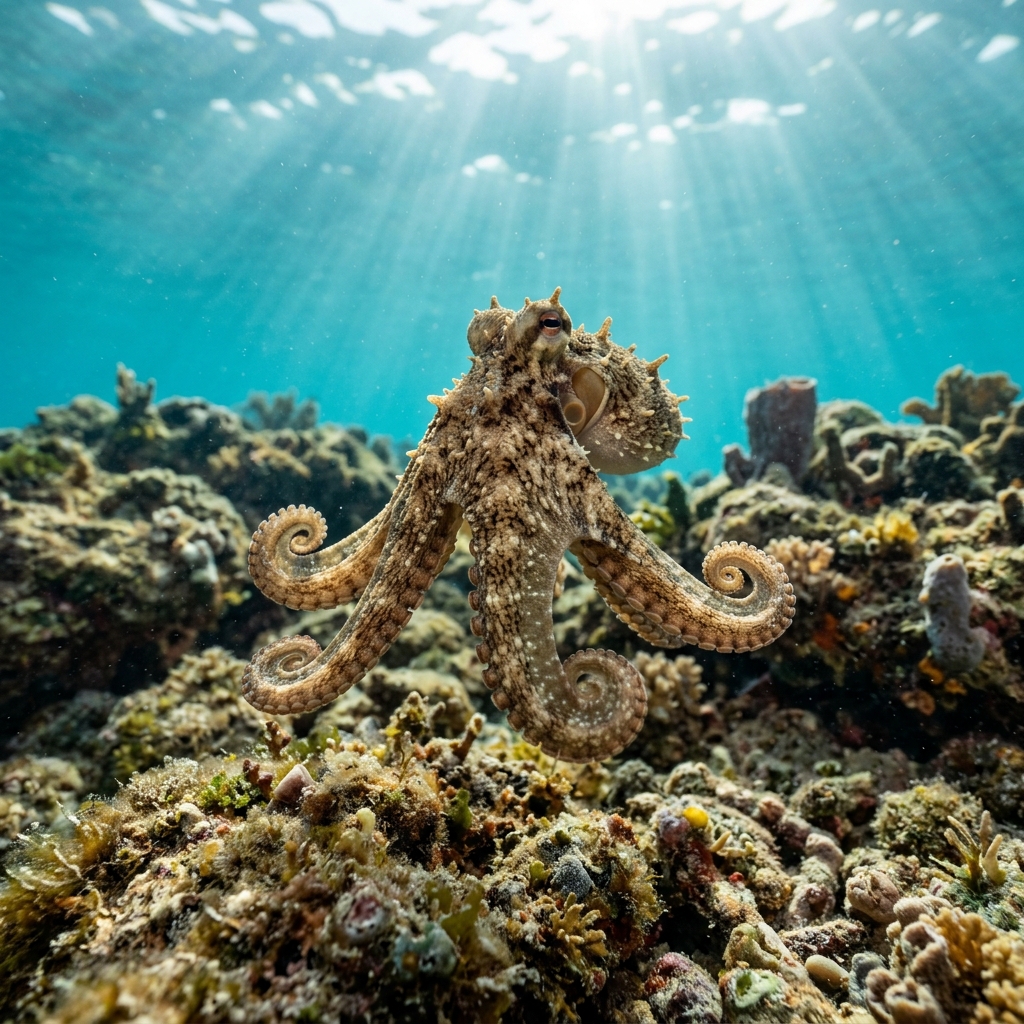
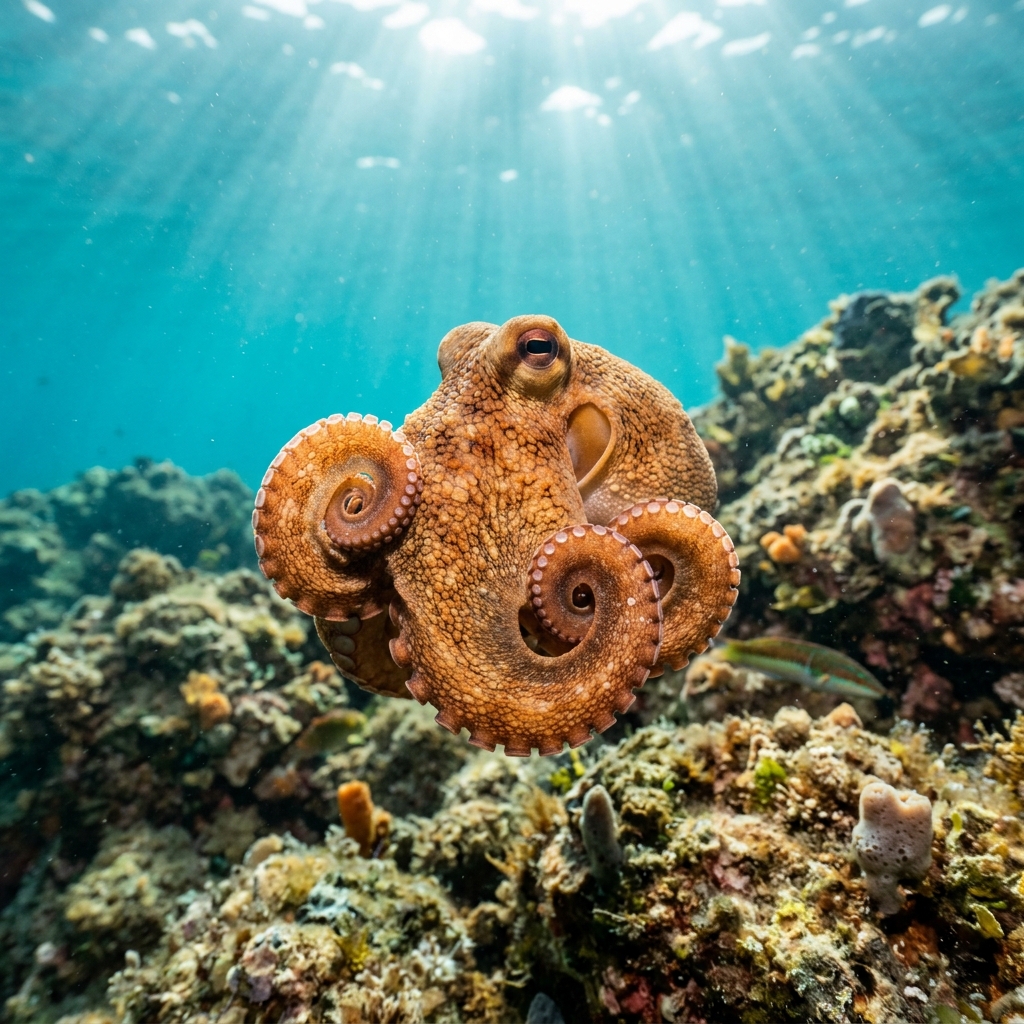
Look for the single row of suckers running along each arm, this is the key feature that separates the curled octopus from the common octopus, which carries two rows. Skin tone runs from reddish-orange to brown, heavily mottled, and it shifts colour rapidly when disturbed. Arms tend to curl tightly at the tips, giving the animal its name. It's a relatively compact octopus, typically encountered tucked into rocky crevices on cold-water reefs.
Divers usually encounter curled octopuses wedged into rock crevices or under boulders on sheltered reef walls, often with just the arm tips visible curling outward. When approached, they tend to pull further into cover rather than jet away, so slow, unhurried movement gives you the best look. They are most active hunters at dusk and into the night, so late afternoon dives in Northern Ireland or South West England improve your chances of seeing one actively moving across the reef.
Unlike most octopuses, the curled octopus has only one row of suckers per arm, a trait shared across the genus Eledone and useful both for scientists and for sharp-eyed divers wanting a confident ID without handling the animal.
Sightings in the Northern Hemisphere concentrate between April and June, which aligns with this species' preference for cold water in the 8-14 °C range typical of UK coastal seas in spring.
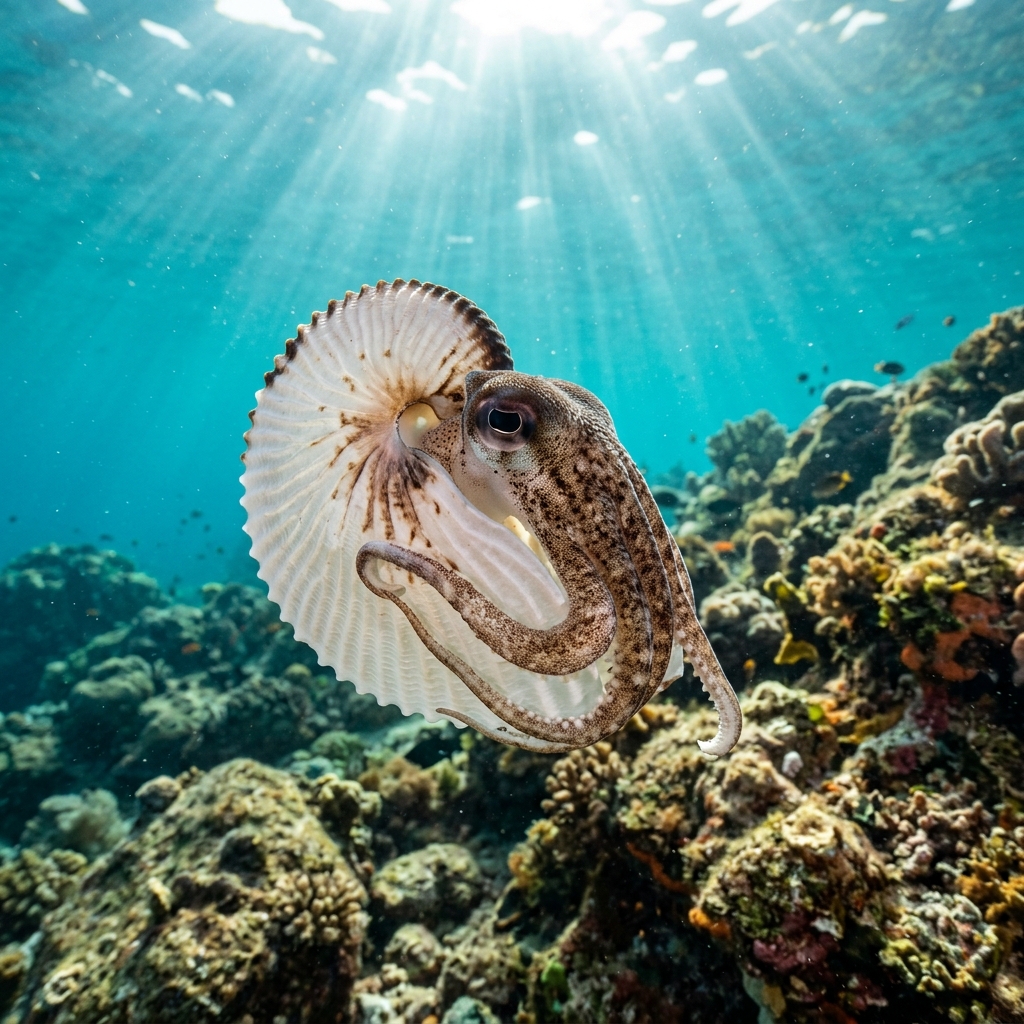
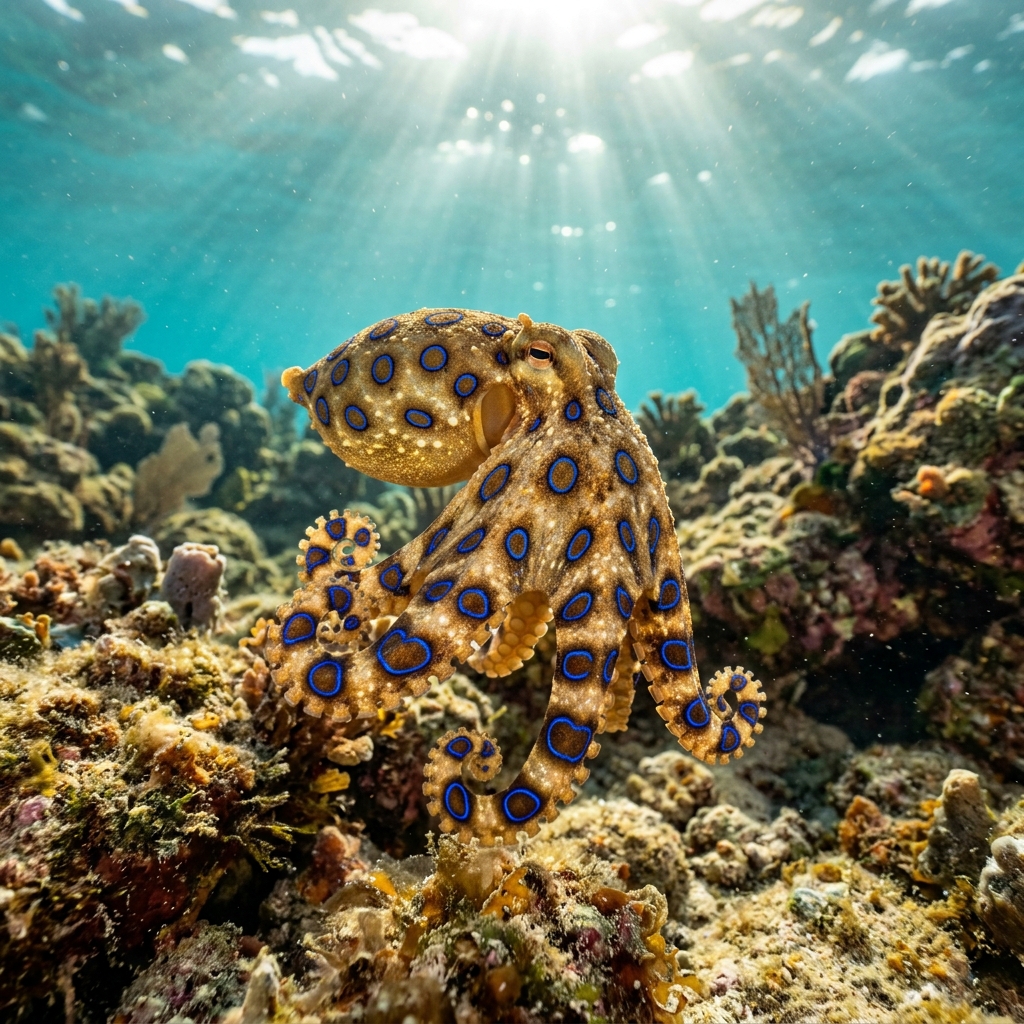
Reef neighbours a diver could mistake it for. Use the identification notes above to tell them apart.
Almost all logged sightings come from the United Kingdom, with Northern Ireland accounting for the majority of known sites. South West England and Wales also have a solid number of records, making the rocky reefs and kelp-covered walls of those coastlines the most reliable areas to search. Scotland's west coast and borders round out the known range, though sightings there are far fewer.
Mapping where Curled Octopus is logged…
Virtually all diver records come from the United Kingdom. Northern Ireland has the strongest concentration of logged sites, with South West England and Wales also well represented. Scotland's west coast has occasional sightings too. Cold, rocky reef habitats with plenty of crevices are the places to look.
Diver sightings concentrate in April through June based on UK observations. This spring window lines up with the species' cold-water preferences and possibly increased surface activity as water temperatures sit in their 8-14 °C comfort range.
The single row of suckers along each arm is the defining feature, most other octopus species have two rows. Arms that curl tightly at the tips and a reddish-brown mottled colouration also help. In UK waters, if you're looking at a small to medium octopus on a cold rocky reef, these arm details are what to check.
No. Curled octopuses pose no meaningful risk to divers. They're shy animals that retreat into crevices when approached. Like all cephalopods they can bite if handled, so the sensible rule is simply to observe and not grab them.
Its single row of suckers per arm sets it apart from most octopus species and places it in the genus Eledone, sometimes called 'lesser octopuses'. This arrangement is consistent across all individuals and is one of the few ID features you can confirm with a good photograph rather than having to handle the animal.
Site and sighting data is aggregated from diver logs, iNaturalist and GBIF. For taxonomy and conservation status:
Brazilian Reef Octopus
1,142 sites