Mauritia eglantina
Rare glossy cowrie logged mostly in Kwajalein Atoll, Marshall Islands, on warm reefs between 22 and 30C, year-round.
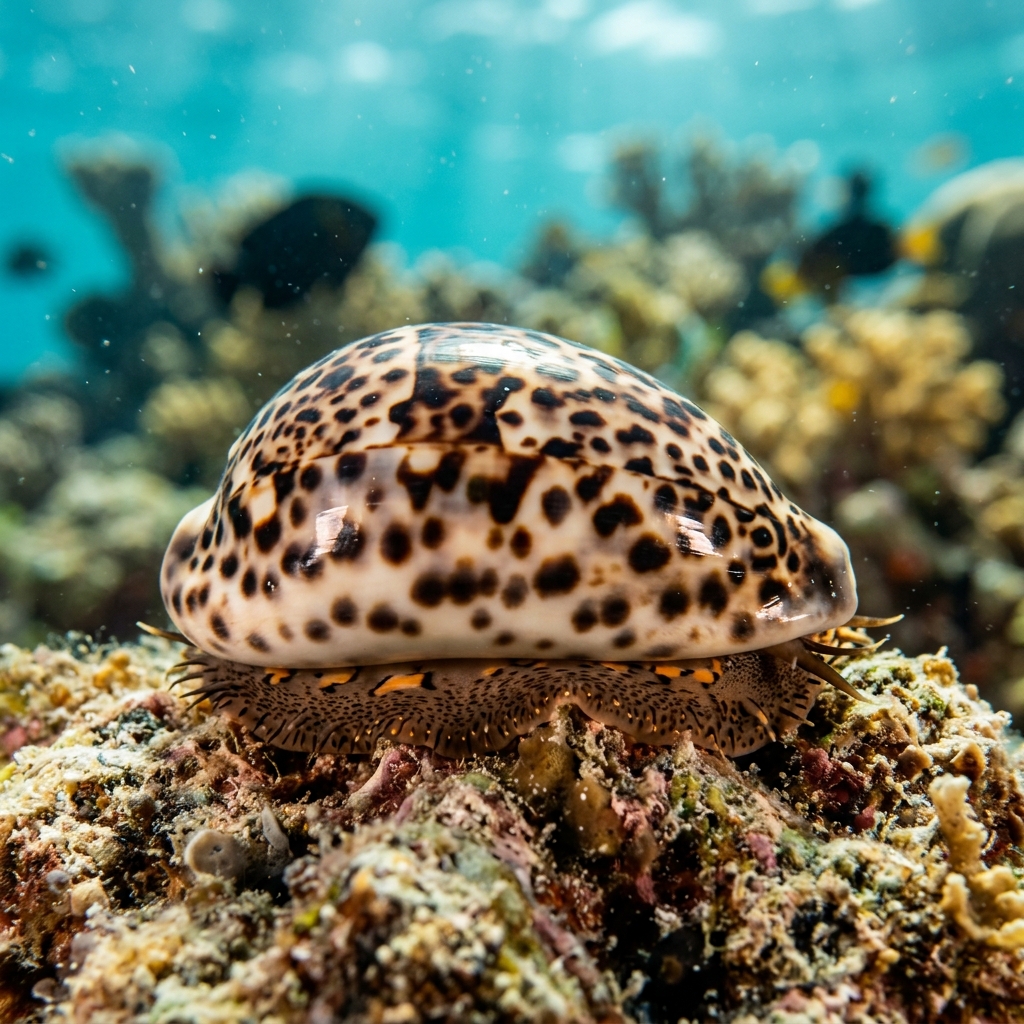
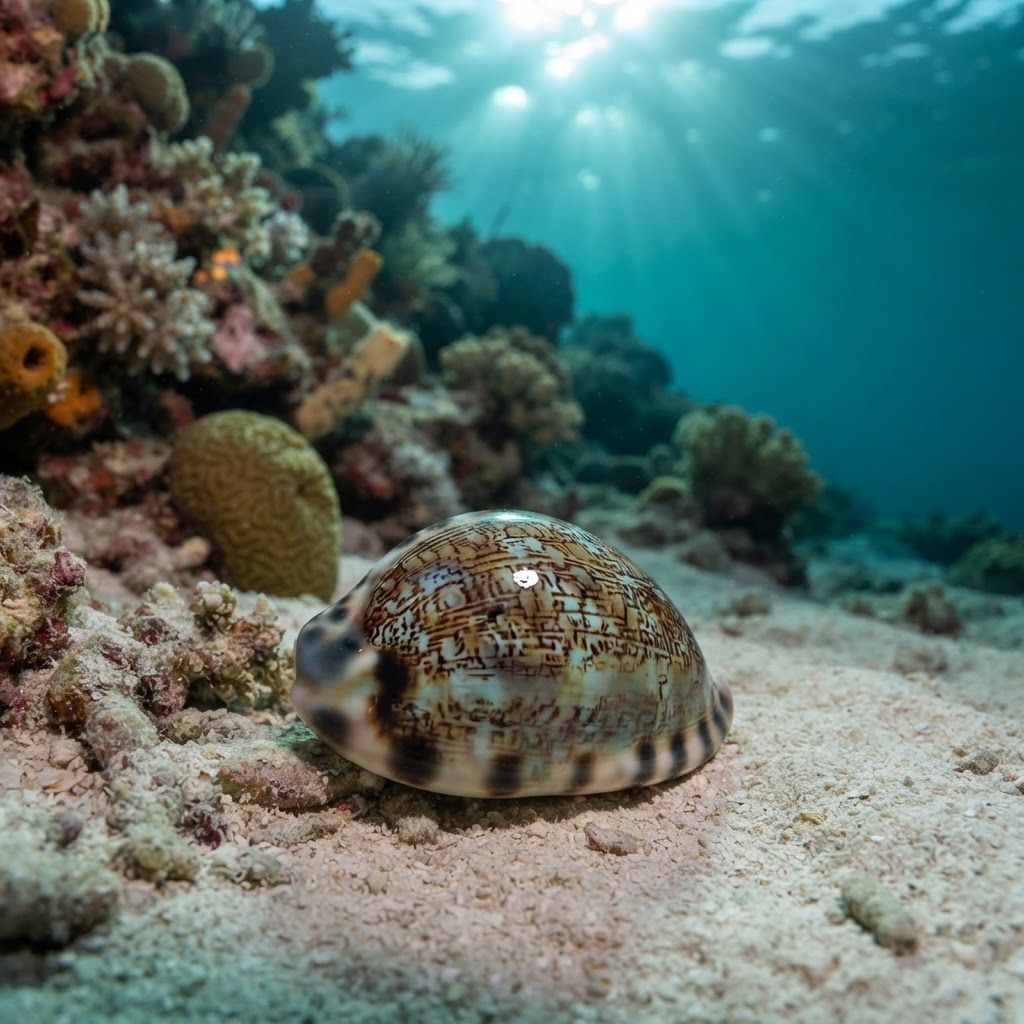
A glossy, oval-shelled snail with a smooth, domed shell patterned in mottled brown, tan and cream blotches over a paler background. Underwater it looks less like a typical spiral snail and more like a polished pebble tucked against coral rubble or reef rock. Its fleshy mantle, when extended, can partly cover the shell in a speckled skin that dulls the shine and makes it harder to spot at a glance. Size in the water is modest, easy to swim past unless you are scanning crevices closely.
Divers typically find it wedged into reef crevices, under coral ledges or among rubble by day, staying still and relying on its camouflaged mantle rather than movement to avoid attention. It is a slow-moving grazer that shows little reaction to a diver's presence, making it an easy subject for a close macro look once spotted. Night dives can improve the odds, as many cowries become more active after dark.
Cowries secrete a fleshy mantle that they draw up over the shell while alive, which is why a live specimen often looks duller and less glossy than an empty shell washed up on a beach.
Sightings show no clear seasonal pattern, and with a comfortable range of roughly 22 to 30C it turns up on tropical reefs at any time of year. Plan around site access and visibility rather than a particular month.
Most records come from Kwajalein Atoll in the Marshall Islands, which stands out as the strongest area for this cowrie by a wide margin, with additional sightings across reef sites in Queensland, Australia and a single logged encounter near Nouméa, New Caledonia. Anyone hunting this species should treat the Marshall Islands as the primary destination, with Queensland reefs as a secondary option.
Mapping where Eglantine Cowrie is logged…
The strongest sightings come from Kwajalein Atoll in the Marshall Islands, with additional records across reef sites in Queensland, Australia, and an occasional find near Nouméa, New Caledonia.
There is no strong seasonal pattern in the sighting data, and its comfortable temperature range of about 22 to 30C means it can be found on tropical reefs year-round.
Look for a small, glossy, oval shell with mottled brown, tan and cream patterning, often tucked into crevices or rubble. A live animal may look duller than expected because its fleshy mantle partly covers the shell while feeding or resting.
No, this species poses no danger to divers. It is a slow-moving, shell-bound snail that relies on camouflage rather than any defence against people.
It is logged as rare at most sites where divers have recorded it, with only a handful of locations reporting it as uncommon, so spotting one usually takes a deliberate search rather than a casual glance.
Site and sighting data is aggregated from diver logs, iNaturalist and GBIF. For taxonomy and conservation status:
Elysia Timida
573 sites