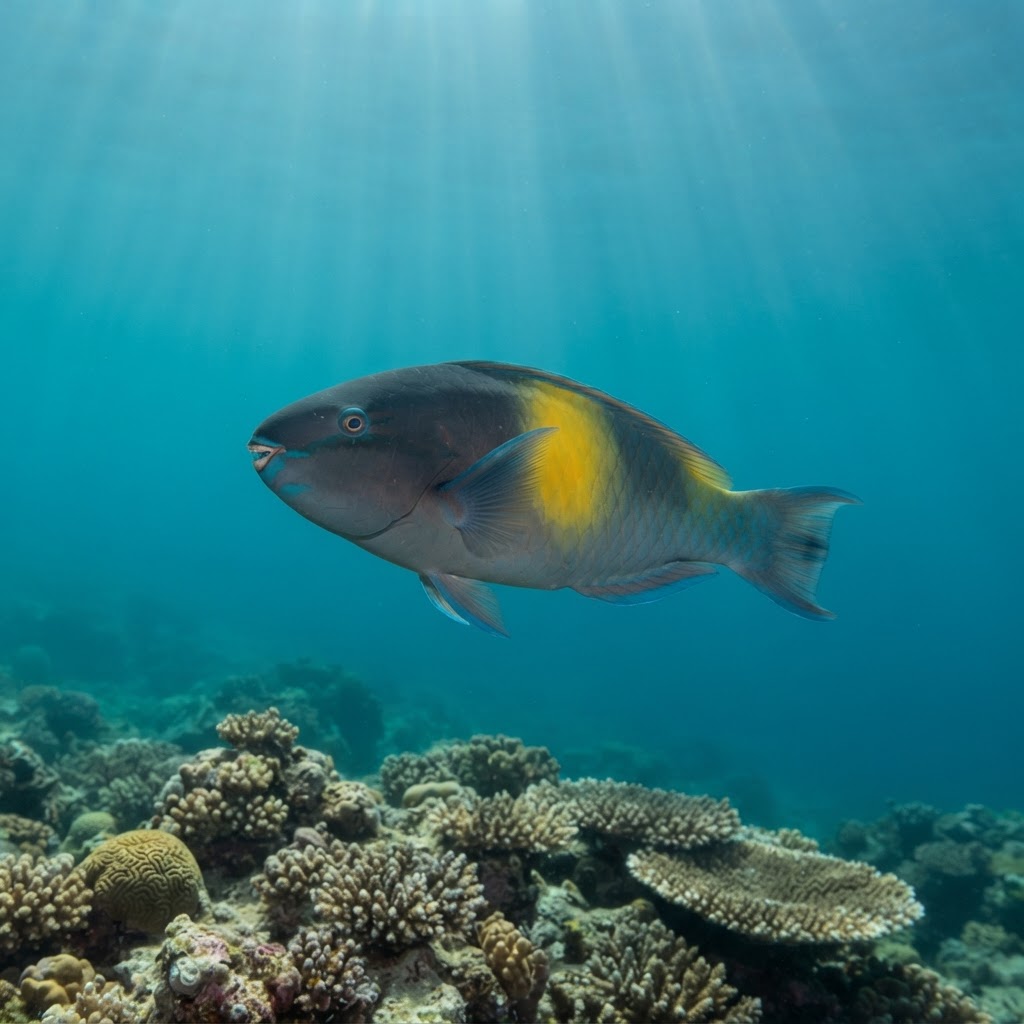
Scarus oviceps
A common reef sighting in Queensland and the Society Islands, this parrotfish grazes coral rubble in water around 25 to 29 C year-round.
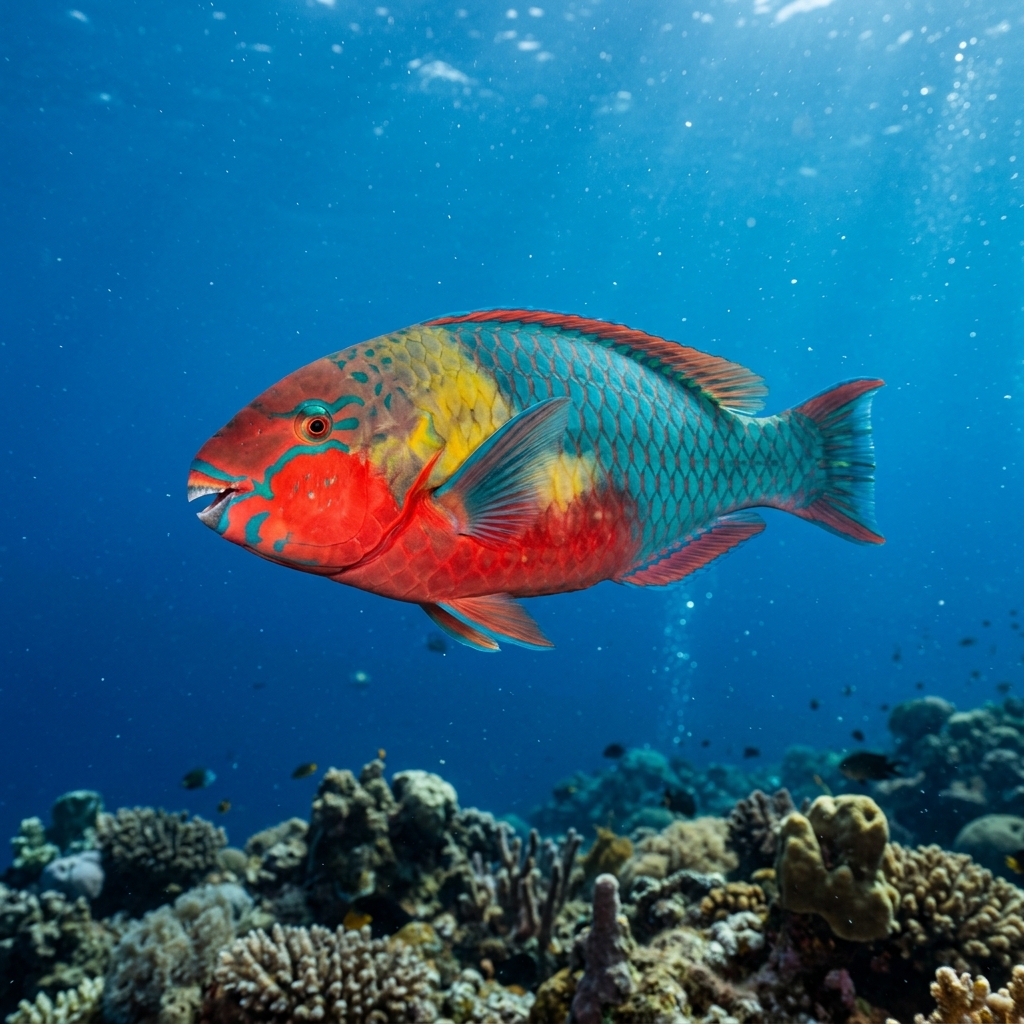
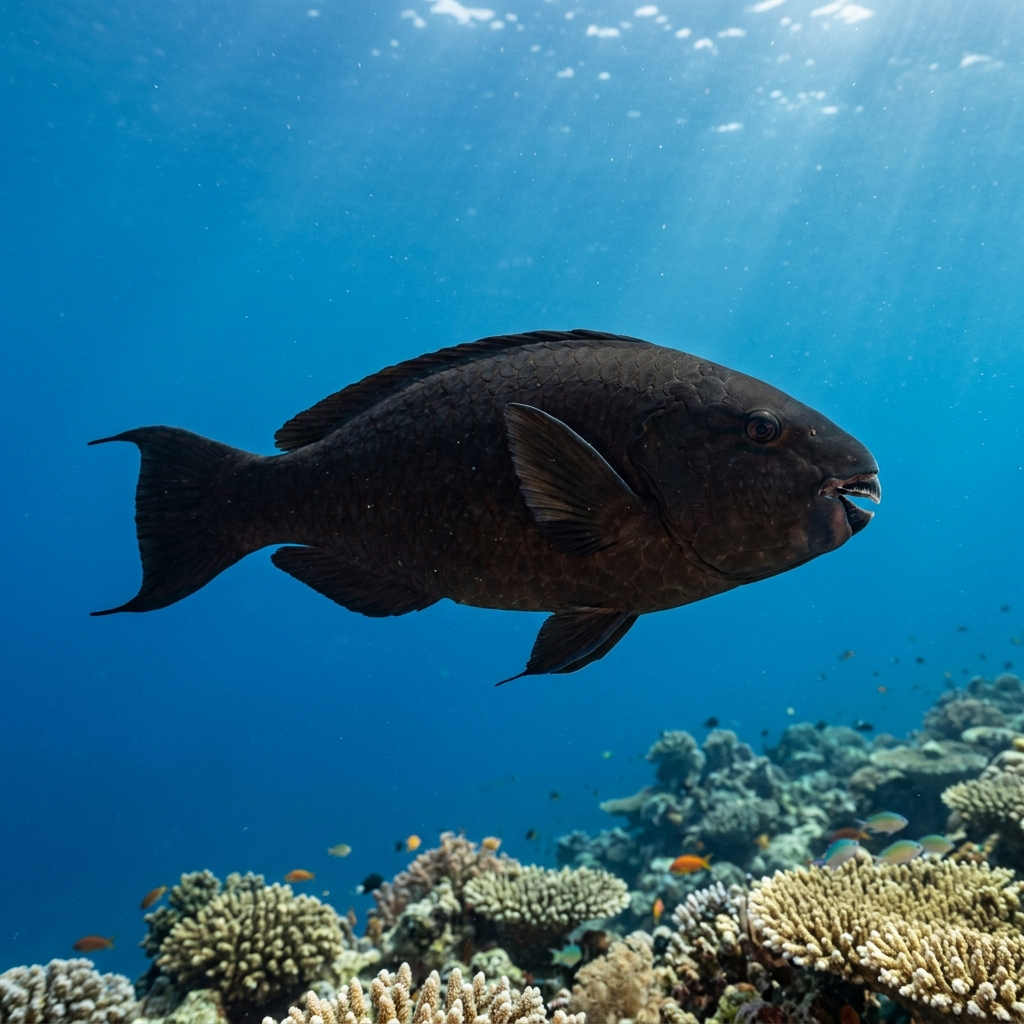
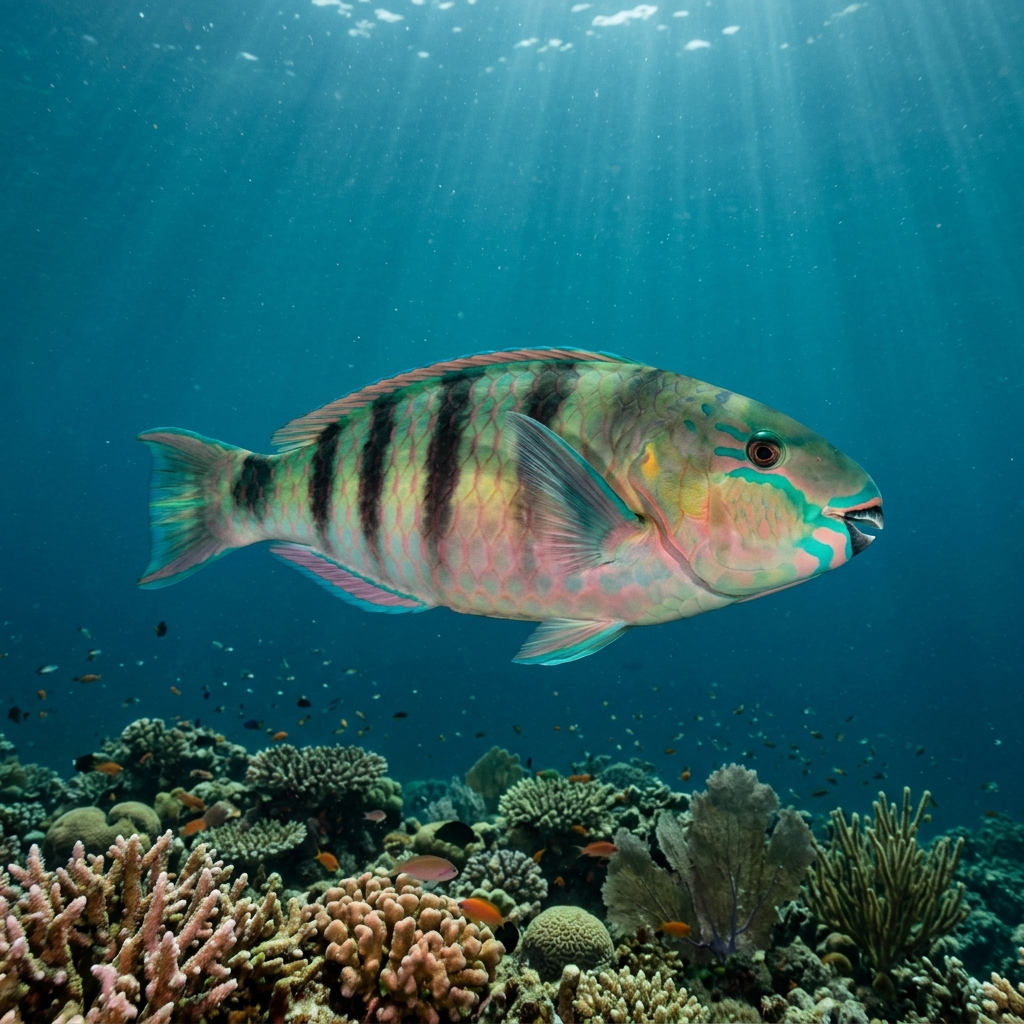
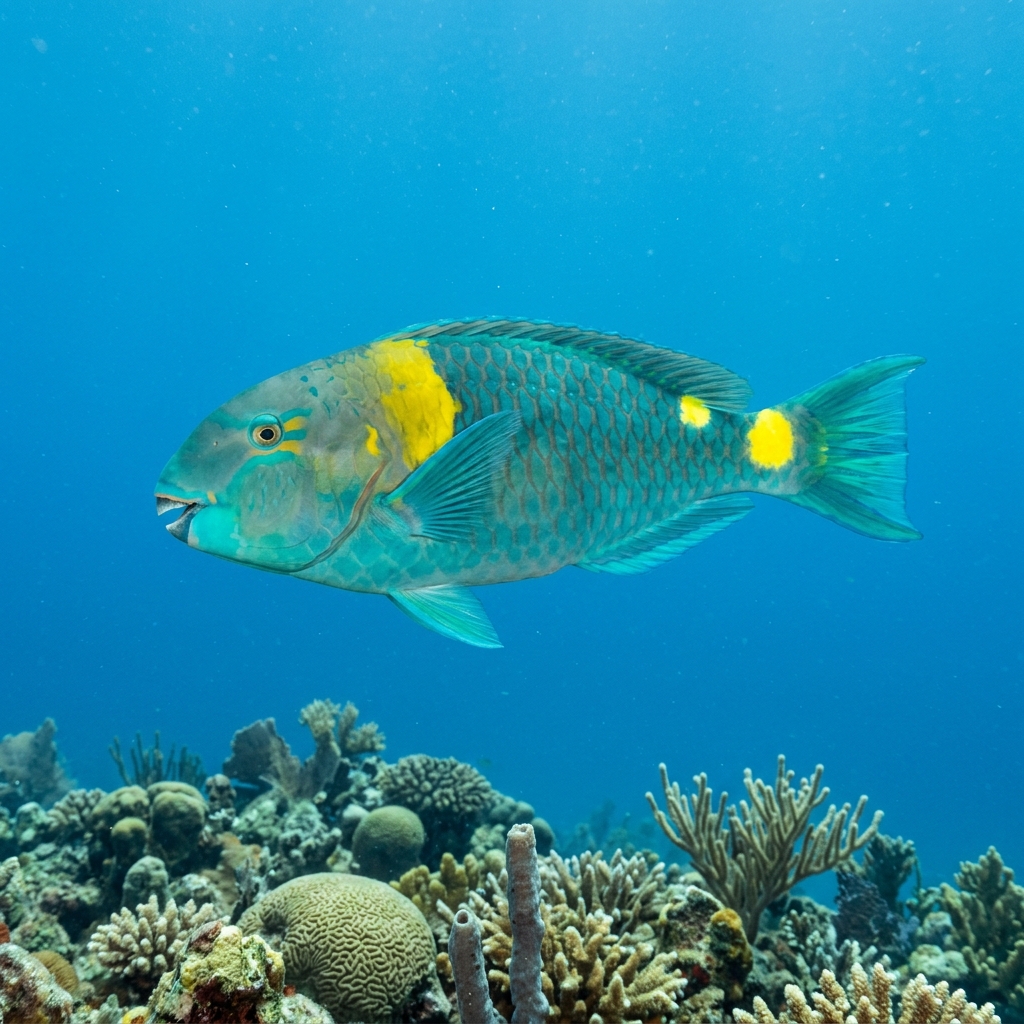
Grows to around 30 cm, with a chunky body and the steep, rounded forehead that gives this parrotfish its name. Adults show a mix of blue-green and pinkish tones across the body with lighter shading around the face, and like most parrotfish they swim with a distinctive rowing motion of the pectoral fins rather than a full-body swish. Look for the fused, beak-like teeth plates typical of the parrotfish group as it works over coral rubble and reef structure.
Divers typically find it grazing alone or in loose company over coral rubble and reef flats, scraping algae from dead coral in the shallower part of the reef down to about 20 m. It tends to keep working the substrate rather than react much to divers, making it an easy, unhurried fish to watch and photograph at close range. Most sightings come from open reef areas rather than caves or walls, fitting its reef-associated, herbivorous lifestyle.
Like other parrotfish, it scrapes algae off coral skeleton with fused beak-like teeth and passes the ground-up coral material through its gut, meaning every fish on the reef is quietly contributing to the sand that ends up on nearby beaches.
No clear seasonal pattern shows up in the sightings, and with a comfortable range of 25 to 29.3 C this is a year-round reef fish rather than a seasonal target.
Most reliably logged on reefs in Queensland, Australia and across the Society Islands in French Polynesia, with strong numbers also coming out of Raja Ampat in Indonesia. Smaller but consistent sightings turn up on Peninsular Malaysia's east coast, around Efate in Vanuatu, and off Nouméa in New Caledonia.
Mapping where Egghead Parrotfish is logged…
Queensland in Australia and the Society Islands in French Polynesia are the strongest areas for sightings, with Raja Ampat in Indonesia also producing regular records. Smaller numbers come from Malaysia's east coast, Vanuatu, and New Caledonia.
There is no strong seasonal pattern in the sightings, and it lives comfortably in water from 25 to 29.3 C, so it is present on tropical reefs throughout the year.
Look for a mid-sized parrotfish around 30 cm with a noticeably steep, rounded forehead, a blue-green body with pinkish highlights, and a fused beak-like mouth used for scraping algae off coral. It swims with the rowing pectoral-fin stroke typical of parrotfish rather than a full body undulation.
They typically reach around 30 cm in length, a fairly average size for a reef-associated parrotfish.
No, they pose no danger to divers. They are herbivorous grazers that spend their time working over coral rubble and generally ignore divers watching nearby.
Like other parrotfish, it scrapes algae from dead coral with fused, beak-like teeth, and the ground-up coral it swallows passes through as fine sediment, contributing to the sand found on nearby reef beaches.
Site and sighting data is aggregated from diver logs, iNaturalist and GBIF. For taxonomy and conservation status:
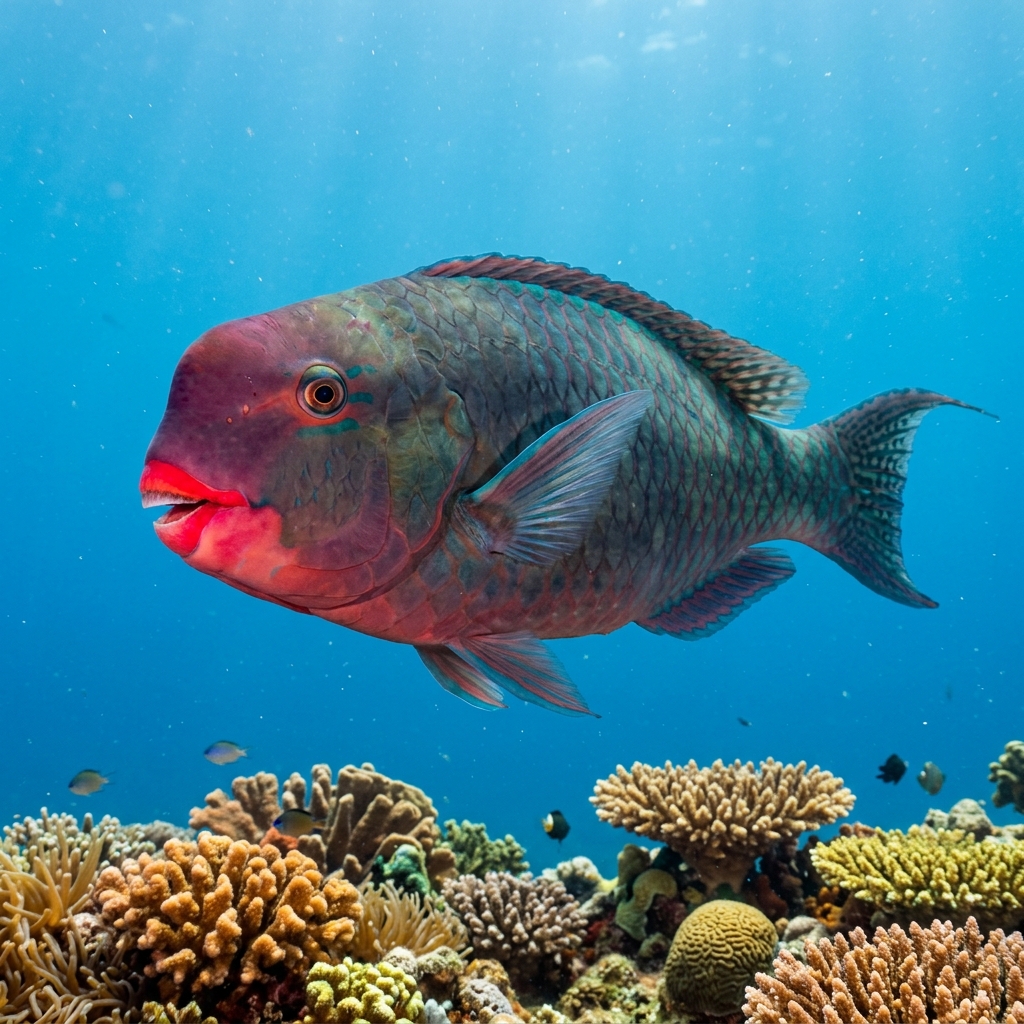
Redlip Parrotfish
2,789 sites