Cancridae spp.
Spot edible crabs on dives across the Pacific Coast, Zeeland, and Brittany. Active in cold water from 6-16 °C, present year-round with no peak season.
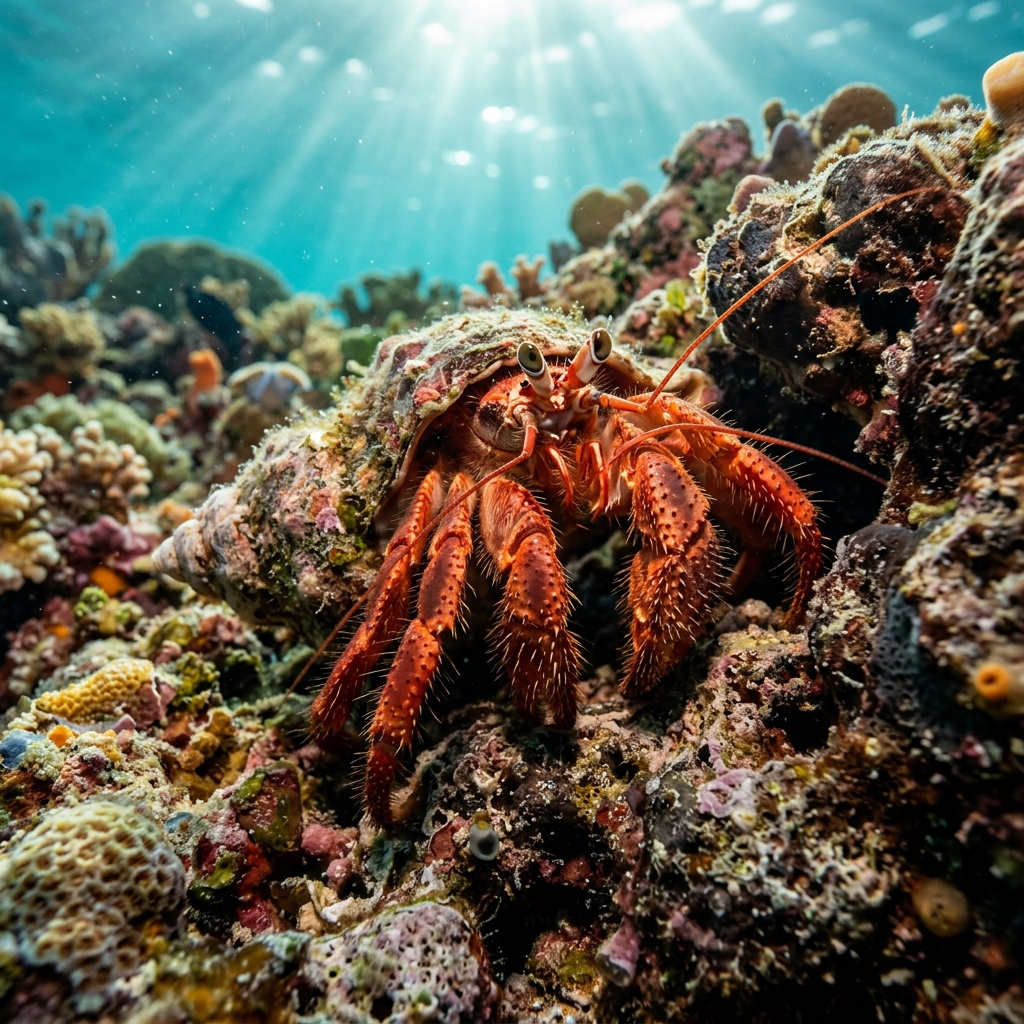
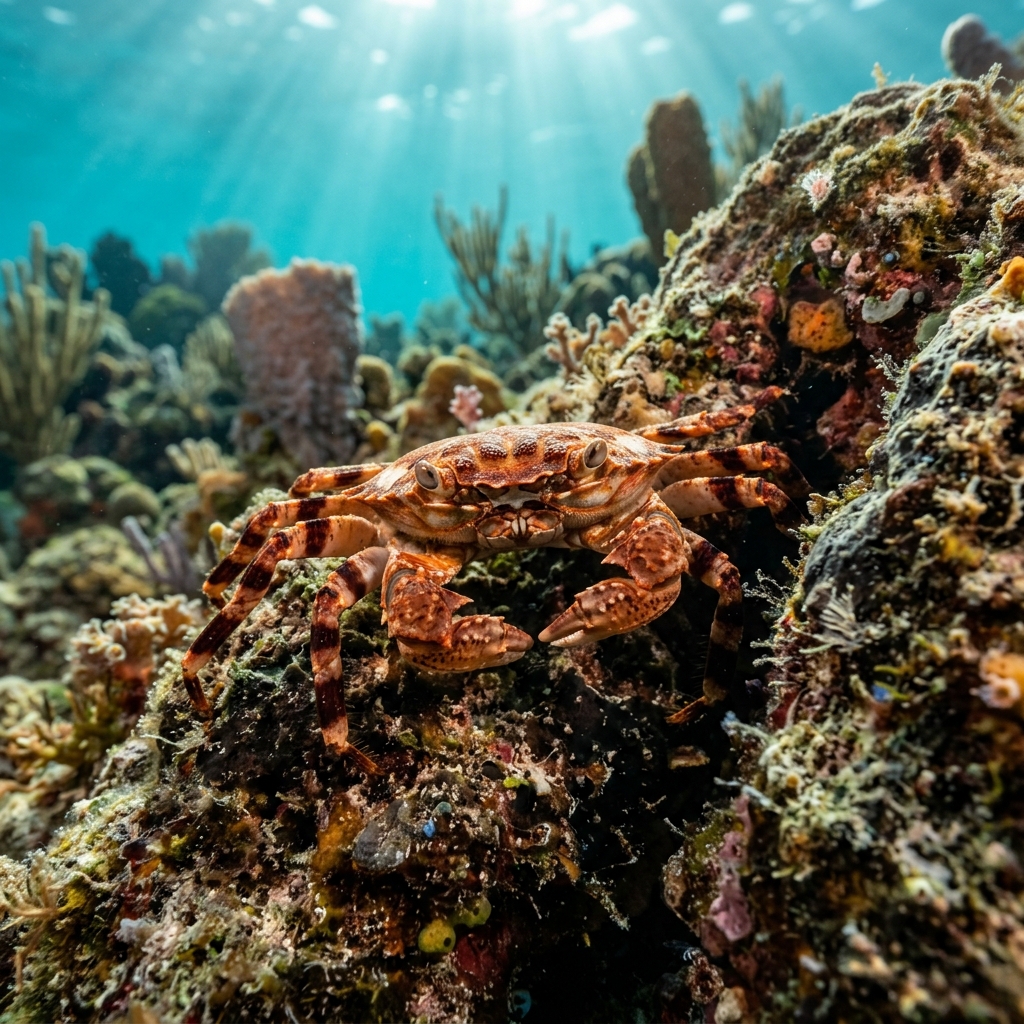
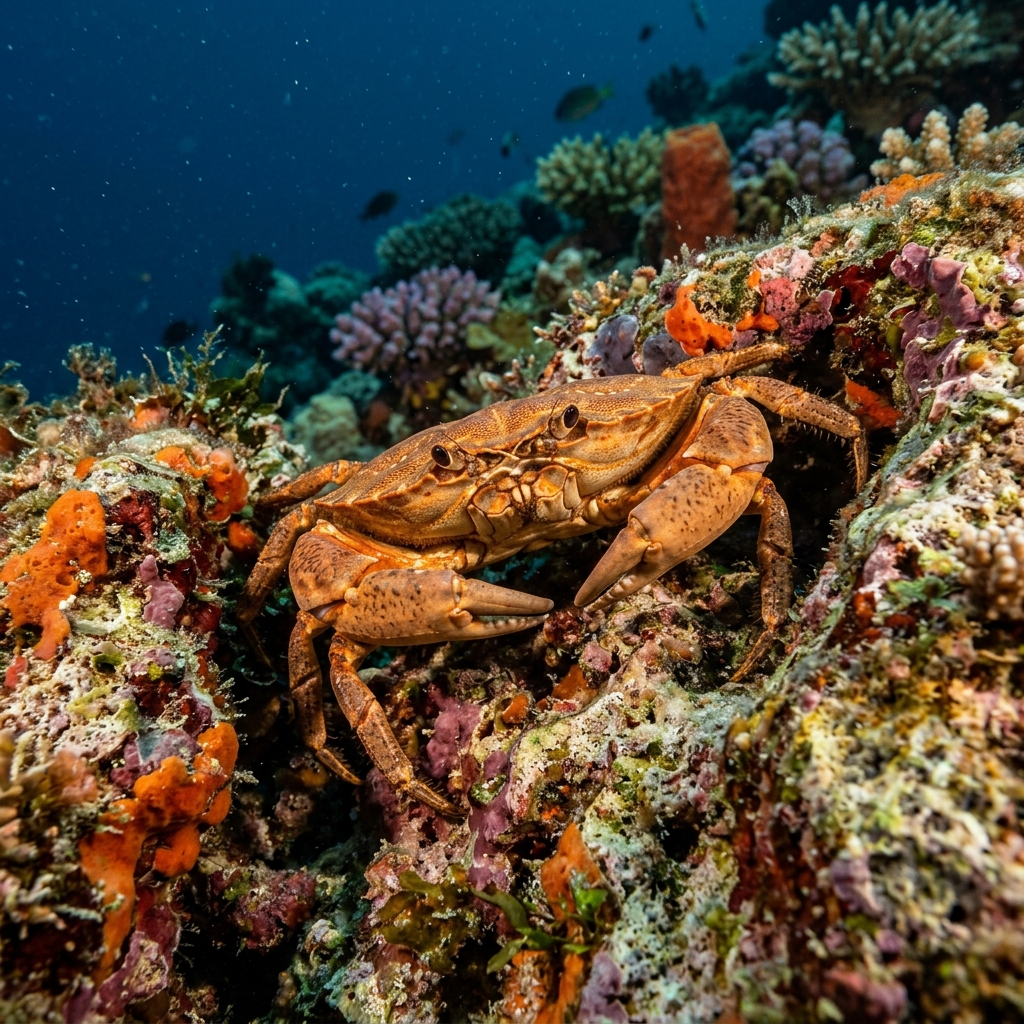
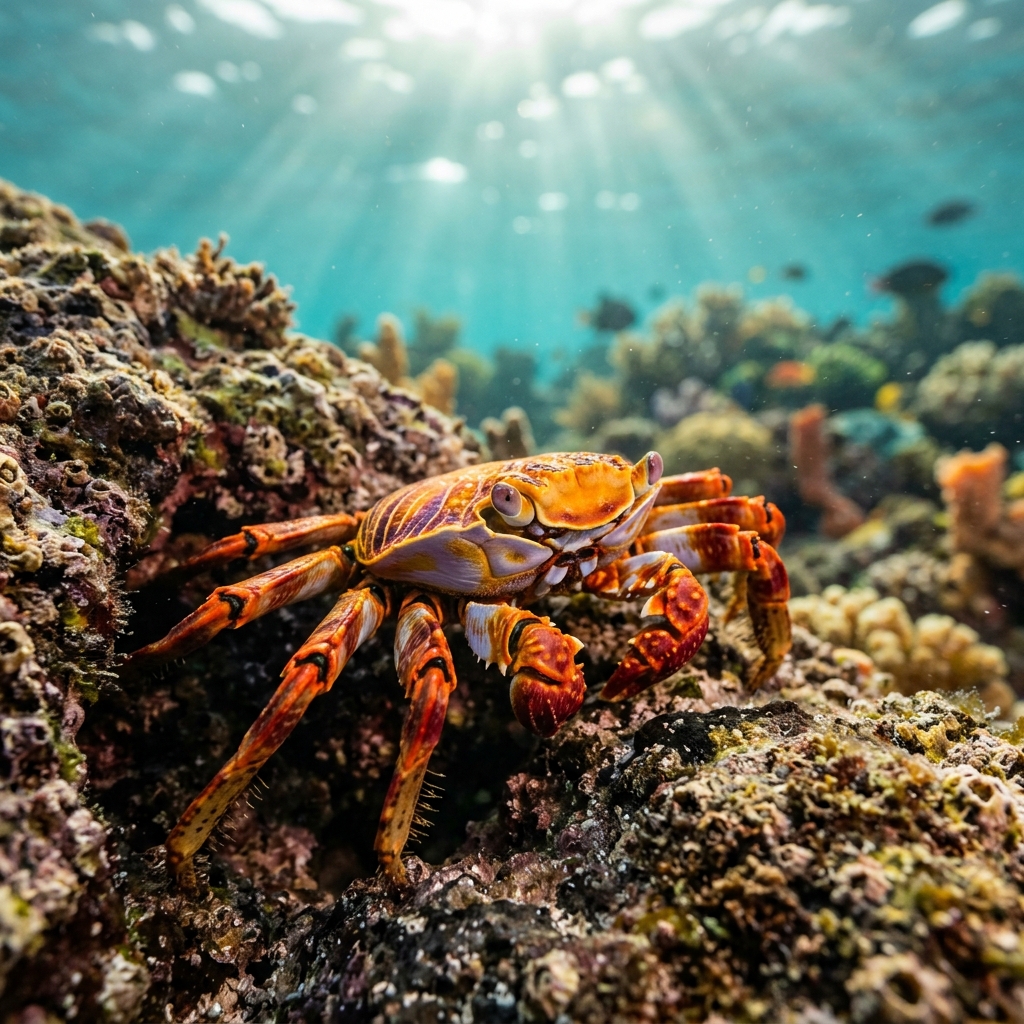
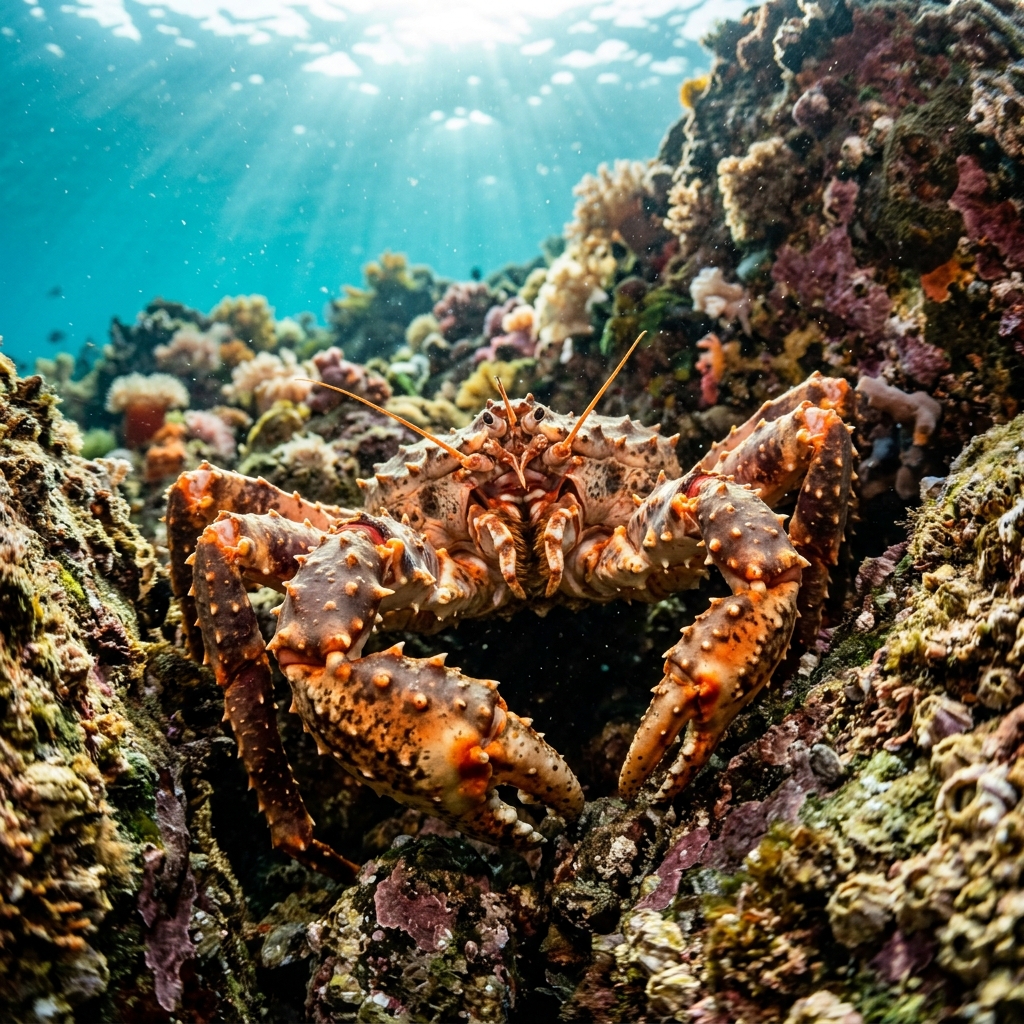
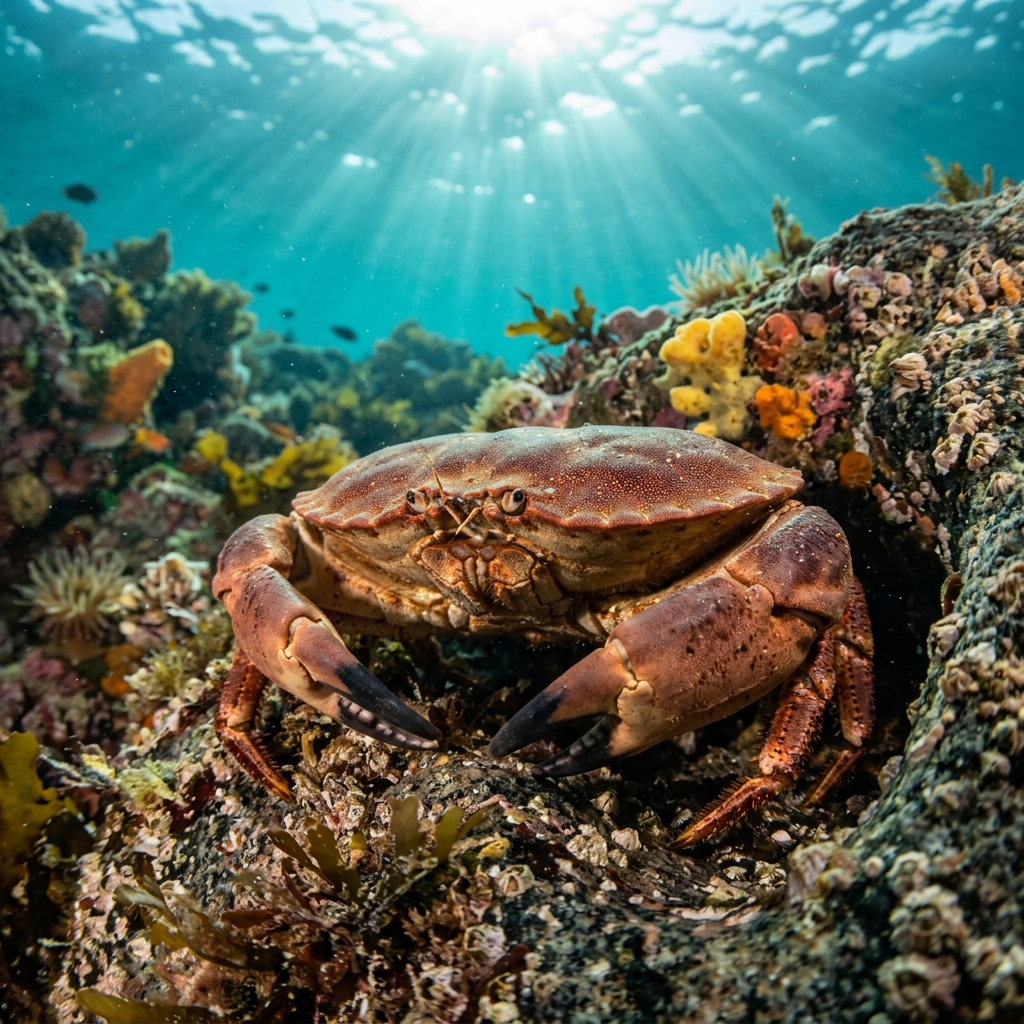
A broad, oval shell with a distinctively crimped or 'pie-crust' edge is the key feature to look for underwater. Colouring is typically reddish-brown to brick-orange on top, cream or pale yellow underneath, with robust black-tipped claws that stand out clearly against rocky substrate. These are substantial crabs, the shell can span a plate-sized width, so you won't mistake them for a smaller shore crab. Males carry a narrow pointed abdomen tucked tight beneath the shell, while females have a noticeably broad, rounded flap.
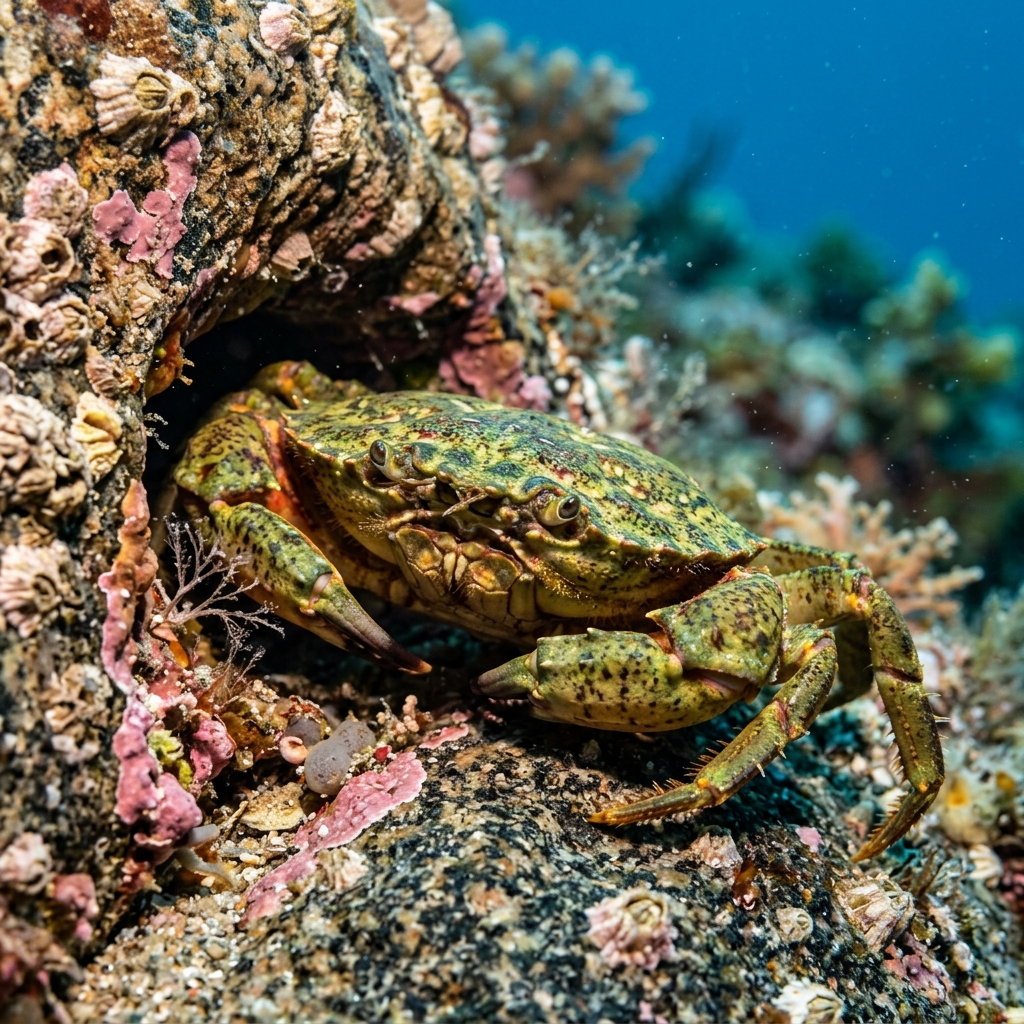
Most encounters are on rocky or mixed-substrate seabeds, where these crabs tuck into crevices or sit half-buried under ledges during daylight hours. When approached, they tend to freeze or back slowly into cover rather than flee; a patient diver can get close without drama. Larger individuals often sit in the open near the base of rocks, occasionally adopting a defensive posture with claws raised if they feel cornered.
Females of this family can carry hundreds of thousands of eggs tucked beneath their broad abdominal flap for several months, an extended brooding period that helps explain why healthy populations persist across heavily dived rocky reefs.
Sightings are recorded year-round with no concentrated season, which fits the species' preference for cold temperate water, observed between roughly 6 and 16 °C. If you're diving in any of the top regions, any month is a reasonable bet.
Most commonly logged along the Pacific Coast of the United States and the British Columbia coast in Canada, where rocky subtidal reefs hold strong populations. In Europe, Zeeland in the Netherlands, Brittany and Normandy in France, and the waters around the United Kingdom, particularly Northern Ireland, Scotland, and South West England, are reliable areas. Portugal, Sweden, and Ireland also contribute regular sightings.
Mapping where Rock Crab is logged…
Strong sightings are logged on rocky reefs along the Pacific Coast of the United States and the British Columbia coast in Canada. European hotspots include Zeeland in the Netherlands, Brittany and Normandy in France, and multiple regions around the United Kingdom including Northern Ireland and Scotland. Portugal, Sweden, and Ireland also record regular encounters.
They are present year-round across the sites where they are logged, with no concentrated peak season. They thrive in cold temperate water, roughly 6 to 16 °C, so any season is viable in northern Atlantic and northeast Pacific dive destinations.
Look for the distinctive crimped or pie-crust edge running around a broad, oval reddish-brown shell. The robust claws have black tips that contrast sharply against rocky substrate. Size helps too, adults are considerably larger than most other crabs sharing the same habitat.
No. They pose no real danger to divers. If approached closely or handled, they may raise their claws in a defensive display, and a large individual has claws capable of a firm pinch, but they will not pursue a diver and are straightforward to observe safely.
Members of this family can reach shell widths of around 25 cm in mature adults, making them among the largest crabs a diver is likely to encounter on temperate rocky reefs. Most individuals seen underwater are smaller, but a fully grown adult is noticeably impressive in scale.
Flip your attention to the underside of the shell if the crab gives you the angle. Males have a narrow, pointed abdominal flap; females carry a broad, rounded flap that is clearly wider. This difference is visible without handling the animal if it moves or is positioned on a slope.
Site and sighting data is aggregated from diver logs, iNaturalist and GBIF. For taxonomy and conservation status:
European Green Crab
2,469 sites