Echeneis naucrates
Spot live sharksucker in the Visayas, Yucatán, or Seychelles. Look for that long flat head and bold stripe. Best chances in Sep, Nov in northern latitudes.
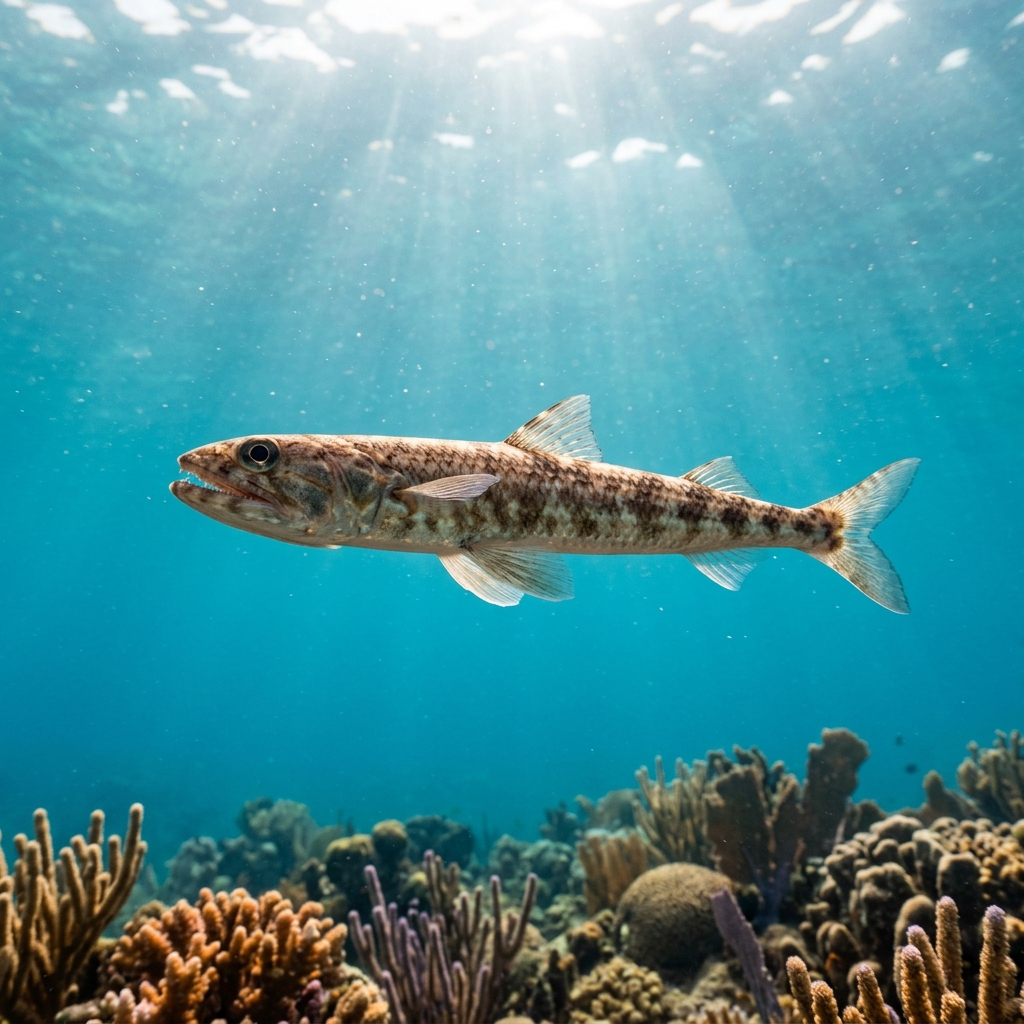
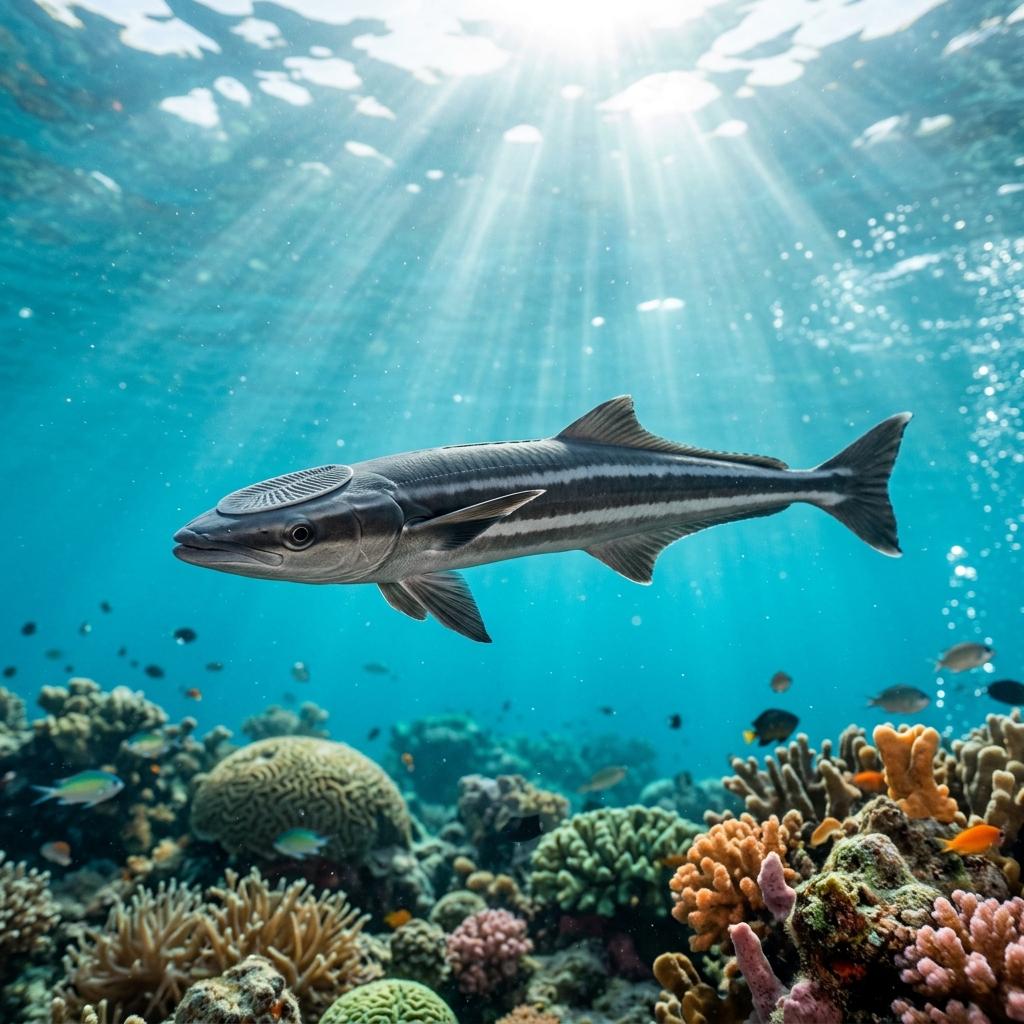
A long, slender fish with a distinctively flat, oval disc on top of its head, this is the suction organ (a modified first dorsal fin) it uses to attach to larger animals. The body is pale grey or white with a broad, dark lateral stripe running from snout to tail, edged by a thinner white stripe on each side. In the water it often appears torpedo-shaped and can reach around a metre in length, making it larger than most reef fish you might initially mistake it for. When free-swimming rather than attached to a host, that striped pattern and the flat-topped head are the two features to key on.
You will most often encounter a live sharksucker attached to a large host, a shark, ray, turtle, or even a large grouper, hitching a free ride and feeding on scraps and parasites. Occasionally one will cruise independently around a cleaning station or patrol mid-water near the reef slope. Free-swimming individuals sometimes approach divers with apparent curiosity, and a few have been known to briefly attempt to attach to a diver's tank or limb.
The suction disc on its head is not a true sucker but a series of ridged lamellae (plate-like ridges) that create negative pressure, the fish can release at will, meaning it is a voluntary hitchhiker rather than a true parasite.
In Northern Hemisphere destinations like the Philippines and Egypt, sightings concentrate between September and November. In Southern Hemisphere sites such as Australia, the better window runs from February through July.
Most commonly logged across the Indo-Pacific and Caribbean, with the strongest showing in the Philippines, particularly the Visayas, followed by Mexico's Yucatán Peninsula, Australia, and Malaysia. Egypt's Marsa Alam and the Seychelles (Praslin and La Digue) represent reliable Indian Ocean hotspots, and it also turns up regularly in Sulawesi and around Grand Cayman.
Mapping where Live Sharksucker is logged…
Strong populations are logged across the Philippines (especially the Visayas), Mexico's Yucatán Peninsula, Australia, Malaysia, and Indonesia. Indian Ocean divers find them reliably around Marsa Alam in Egypt and the Seychelles. The Cayman Islands are a good Caribbean option.
In northern destinations like the Philippines and the Red Sea, September through November sees the most sightings. If you're diving in Australia or other Southern Hemisphere locations, February to July is the window to aim for.
Look for a long pale fish with a bold dark stripe running the full length of its body and a noticeably flat, disc-covered top to its head. When attached to a host animal, only the striped rear half may be visible. That combination of stripe and flat head makes it unmistakable once you know what to look for.
They commonly reach around one metre in length, which makes them surprisingly large compared with typical reef fish. In the water they look slender and elongated, so their actual size can catch divers off guard.
It uses the suction disc on its head to hitch rides on sharks, rays, turtles, and large bony fish. This saves energy on swimming, provides access to food scraps from the host's meals, and may offer some protection from predators. It can detach and reattach at will.
No, live sharksuckers pose no threat to divers. The only curiosity is that a free-swimming individual may occasionally attempt to briefly attach to a diver's tank or bare skin, which is harmless but can come as a surprise.
Site and sighting data is aggregated from diver logs, iNaturalist and GBIF. For taxonomy and conservation status:
Soldierfish
3,612 sites