Aspasmogaster costata
A tiny 4cm clingfish logged on New South Wales reefs, holding fast to rock in 17.5-23.5C water year-round.
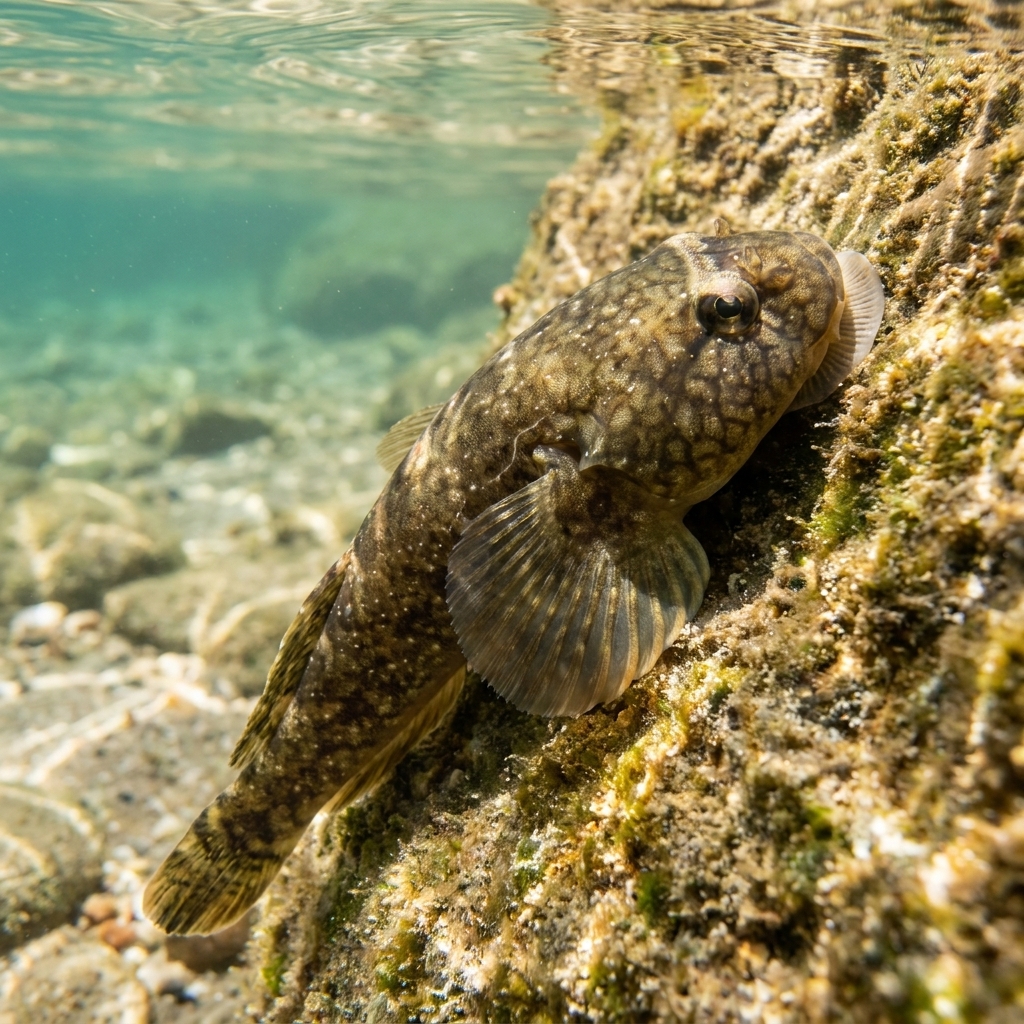
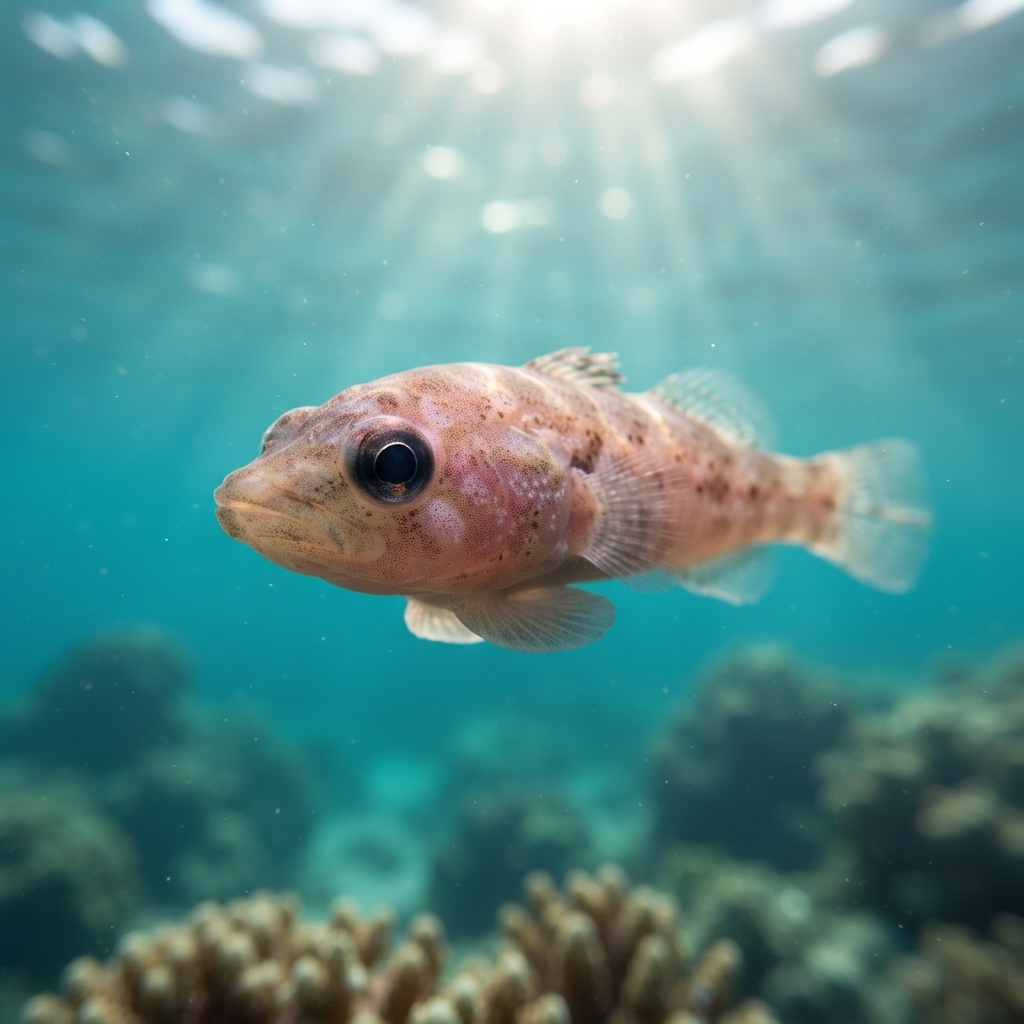
Tops out at around 4 cm, so this is a fish you find by looking closely at rock surfaces rather than spotting from a distance. It has the classic clingfish shape: a flattened, tapering body with a broad head and a sucking disc on its underside formed from modified pelvic fins, which it uses to hold fast to rock in current. Colouring runs mottled and drab to blend with the reef surface it is stuck to, so scan slowly rather than swim past.
Look for it clamped to the underside of rocks or wedged into crevices, using its sucking disc to stay put against surge rather than swimming freely in open water. It is logged as uncommon even at its one known site, so finding one takes deliberate searching along rock faces rather than casual reef cruising. Like other clingfish, it likely stays still and relies on its grip and camouflage rather than fleeing when divers approach.
The sucking disc that gives clingfish their name is not a suction cup in the way an octopus arm works, but a specialised pelvic fin structure strong enough to anchor a fish this small against surging temperate water.
There is not enough seasonal data to pin down a season, so treat it as a year-round possibility. Its observed temperature range of 17.5 to 23.5C matches typical temperate NSW conditions across most of the year, so timing your dive around water temperature rather than calendar month is the more useful approach.
The only confirmed sighting data for this species comes from New South Wales, Australia, which is currently the sole logged location for divers wanting to find it. If you are diving temperate NSW rocky reefs, this is where to focus your search rather than tropical Australian sites.
Mapping where Eastern Clingfish is logged…
The only confirmed diver sightings come from New South Wales, Australia, on temperate rocky reef. There is not yet data from other regions, so NSW is the place to focus a search.
There is no clear seasonal pattern in the sighting data, so it is treated as a year-round find. It has been observed in water from 17.5 to 23.5C, a range NSW reefs sit within for much of the year.
Look for a small, flattened fish around 4 cm long clamped to rock rather than swimming in open water. Its mottled colouring blends into the reef surface, and it uses a sucking disc on its underside to hold on against current.
They are a small species, reaching roughly 4 cm in length, which makes them easy to miss unless you are searching rock surfaces closely.
No, they pose no risk to divers. They are a tiny, rock-clinging fish with no venom or aggressive behaviour recorded.
Their pelvic fins are modified into a sucking disc strong enough to keep a small fish anchored to rock even in surging water, letting them hold position without swimming.
Site and sighting data is aggregated from diver logs, iNaturalist and GBIF. For taxonomy and conservation status:
Soldierfish
3,612 sites