Cochleoceps orientalis
A 3cm reef dweller found on sponges and ascidians across New South Wales, in 16.4-23.3C water, year-round.
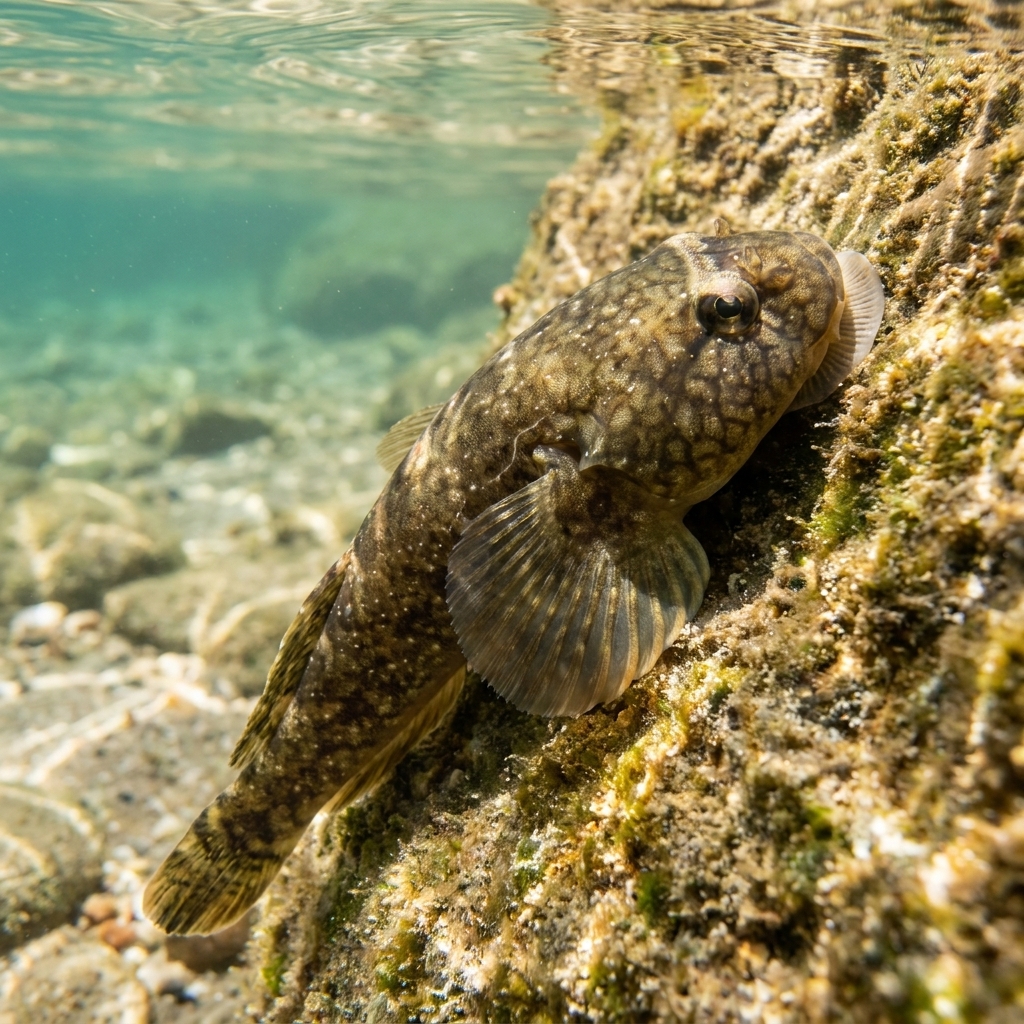
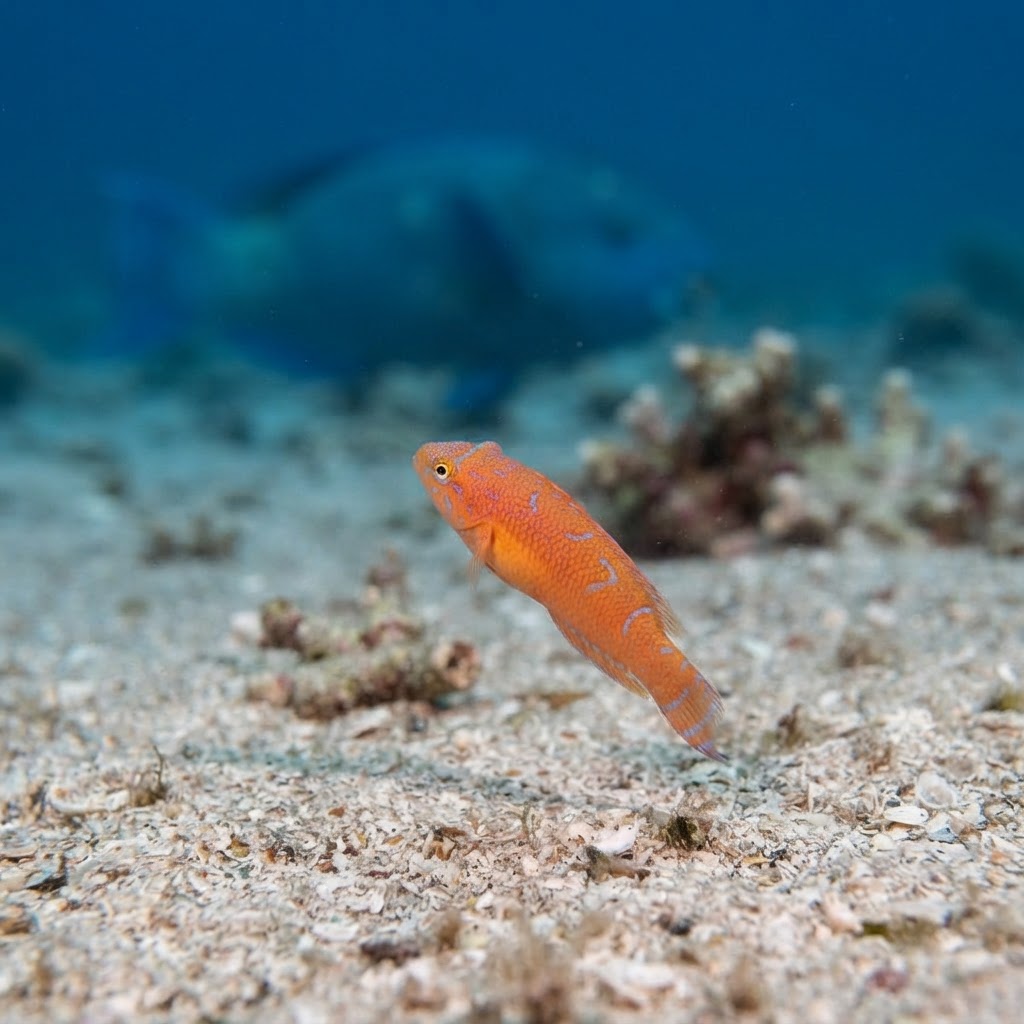
Barely 3 cm long, this clingfish has a stubby, tadpole-shaped body with a flattened head and a suction disc formed from fused pelvic fins that lets it grip smooth surfaces without drifting off in the current. Colouring runs through mottled greens, yellows and browns that match the sponges and ascidians it sits on, often with faint darker blotching along the back. It has no dorsal spines and a rounded tail, giving it a soft, almost slug-like outline rather than a typical fish silhouette.
Look for it sitting motionless on a sponge or ascidian rather than swimming in open water, using its sucker disc to stay locked in place even in surge or current. It is a slow, low-key subject that will not bolt the moment you approach, which makes it a good target for patient macro divers working slowly over sponge-covered rock and reef walls. Most sightings come from divers scanning encrusting growth closely rather than spotting it from a distance.
Its sucker disc is not a set of true pelvic fins in the usual sense but a modified structure that lets it cling to surfaces so effectively that a strong current or wave surge barely dislodges it, letting it sit put on exposed sponges where other small fish would get swept off.
There is no detected seasonal pattern in sightings, so treat it as a year-round find on NSW reefs. Its observed range of 16.4 to 23.3C spans the region's cooler and warmer months alike, which likely explains why it shows up consistently rather than in a narrow window.
Every logged sighting in the data comes from Australia, with New South Wales the clear stronghold for this species. Divers looking for it should focus on temperate rocky reefs and sponge gardens along the NSW coast, where it turns up perched on sponges, ascidians and other encrusting life rather than out in open water.
Mapping where Eastern Cleaner-clingfish is logged…
Sightings are concentrated in New South Wales, Australia, where it turns up on sponges and ascidians across temperate rocky reefs. It has not been logged elsewhere in the diver observation data.
There is no strong seasonal pattern, so it is considered a year-round sighting in NSW waters. It has been observed across a temperature range of roughly 16.4 to 23.3C, spanning both cooler and warmer months.
Look for a tiny, 3 cm fish with a soft, tadpole-like body, mottled green and brown colouring, and no visible spiny fins. It is almost always found clinging motionless to a sponge or ascidian rather than swimming freely.
They stay tiny, reaching only around 3 cm in length, so most divers need to look closely at sponges and ascidians to spot one at all.
Its pelvic fins are fused into a sucker disc, letting it grip smooth or encrusted surfaces so firmly that wave surge and current barely move it, which is how it stays put on exposed sponge growth.
No, they pose no risk to divers. They are small, sedentary and simply cling to sponges and ascidians, completely unbothered by a diver's presence.
Site and sighting data is aggregated from diver logs, iNaturalist and GBIF. For taxonomy and conservation status:
Soldierfish
3,612 sites