Synodus similis
Rare, ground-dwelling lizardfish logged across North Island, New Zealand dive sites in 21 to 26 C water, year-round.
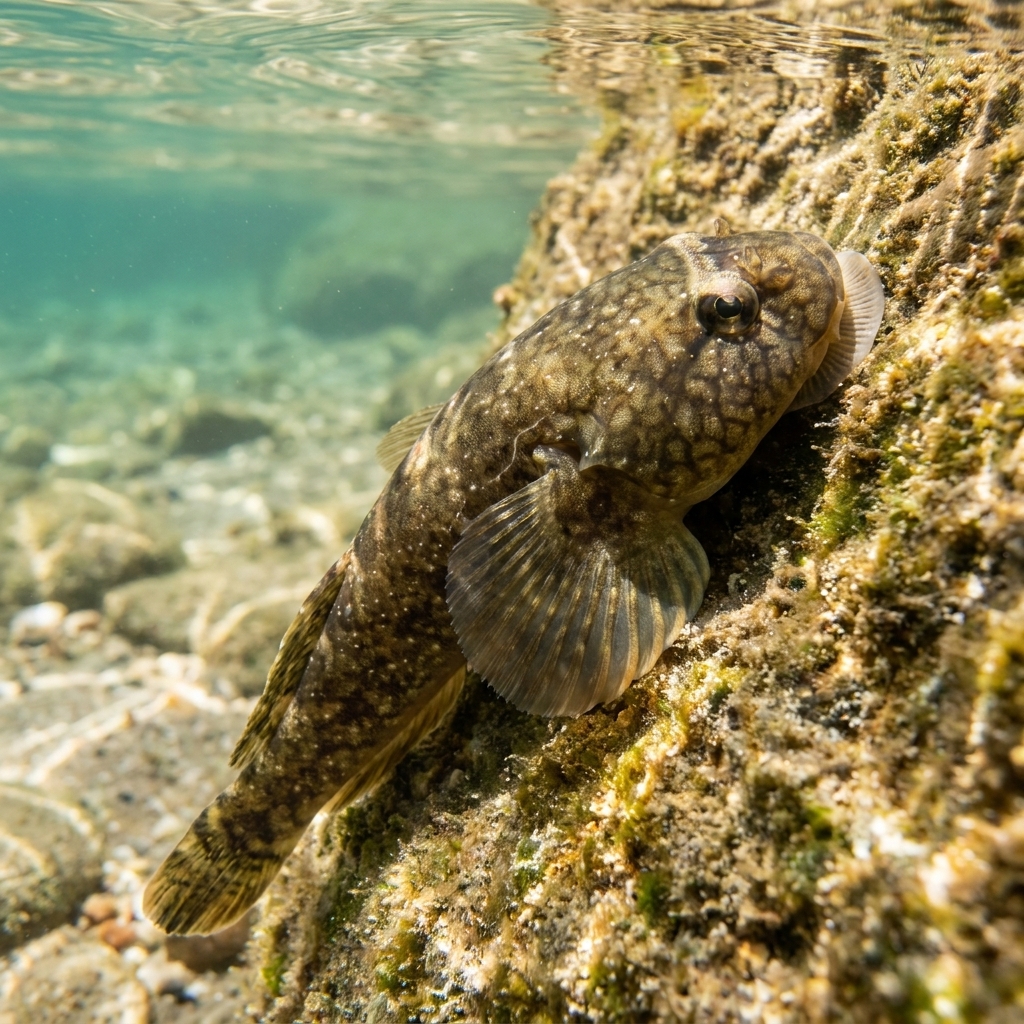
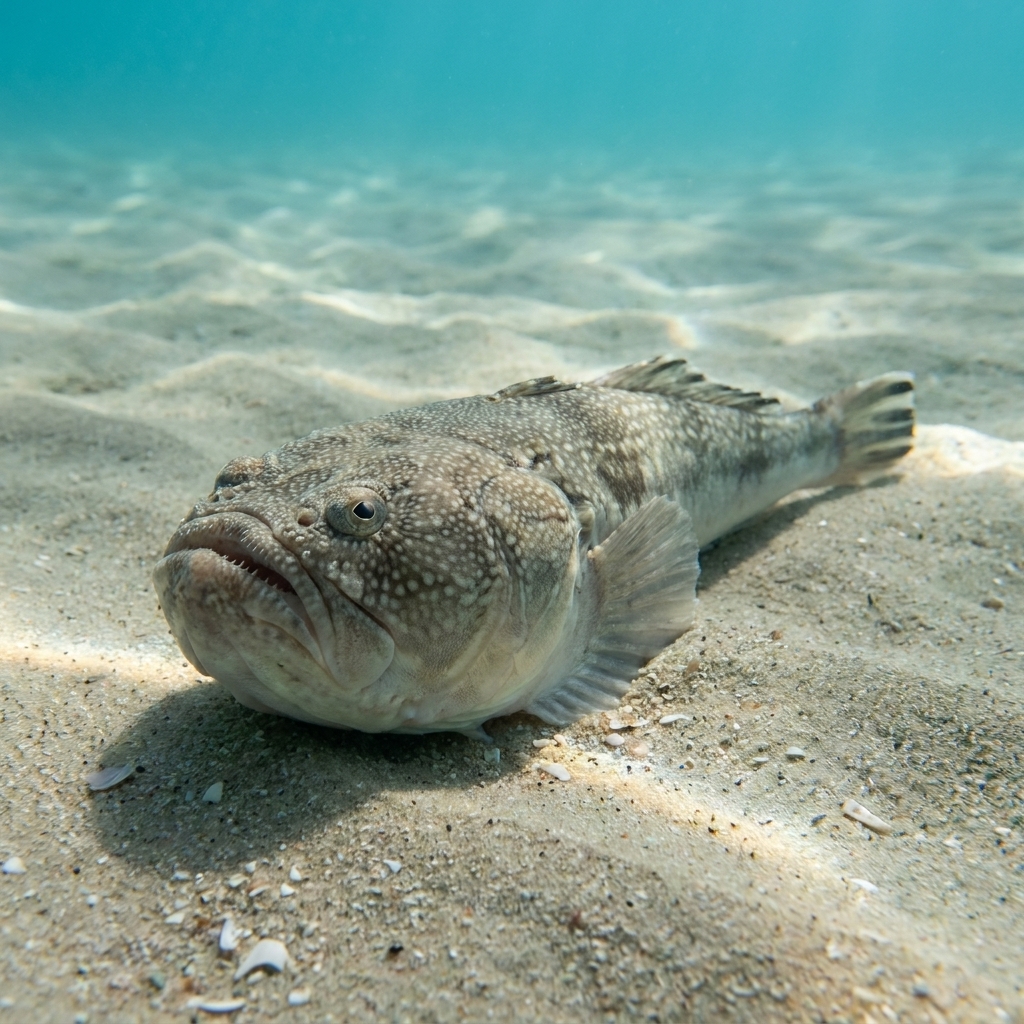
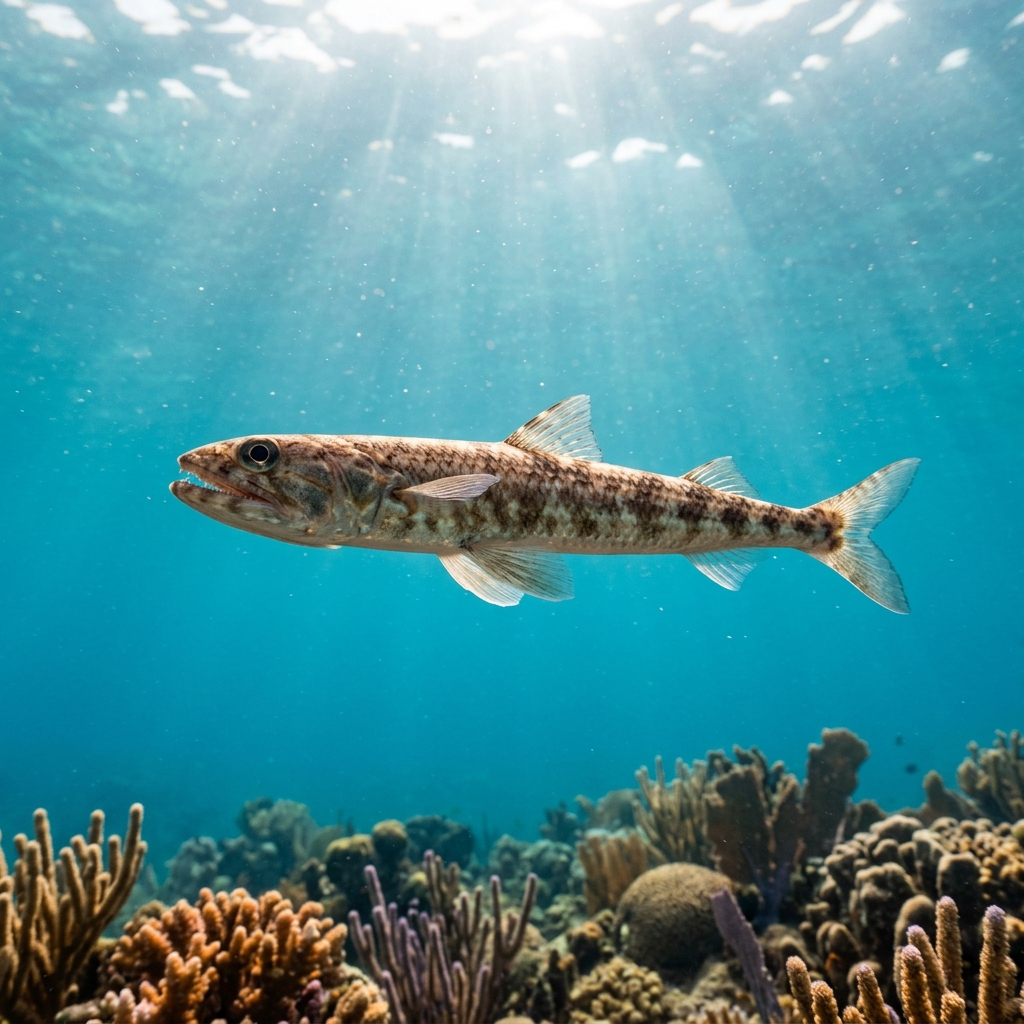
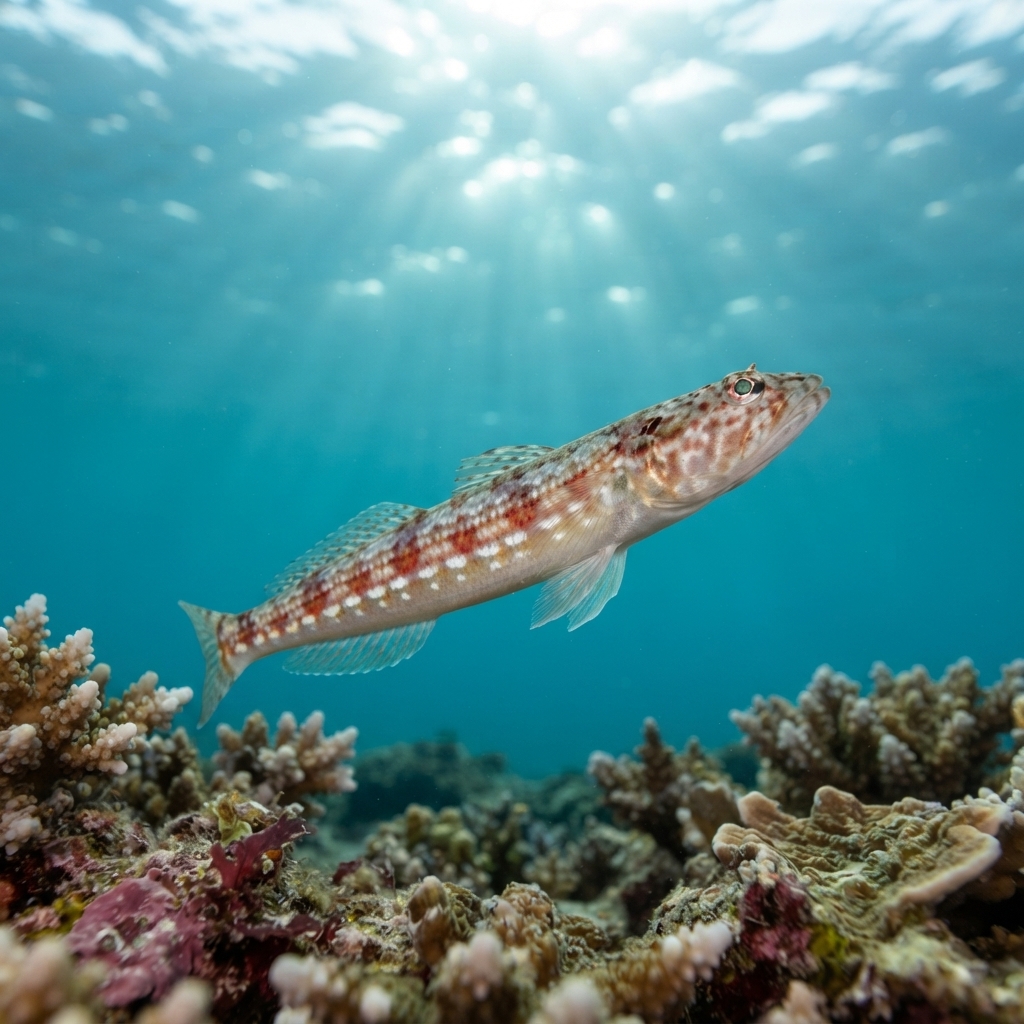
A slim, torpedo-shaped little fish, around 13 cm, that props itself up on its lower fins like a resting lizard on a rock. Mottled brown and sandy tones break up its outline against the seafloor, and the giveaway is a dark spot near the gill cover (the ear-spot) that separates it from plainer lizardfish. It sits dead still on sand, rubble or low reef rather than swimming in open water, with an upturned mouth full of small teeth.
Expect to find it parked motionless on sand or low rubble patches, propped on its pelvic fins in classic lizardfish style, waiting for small prey to pass rather than actively hunting. It relies on staying still and blending in, so divers often swim right past it, and it tends to hold its position rather than bolt unless approached closely. Look low, close to the substrate, rather than up in the water column.
Like other lizardfish, it's an ambush predator: that upturned mouth and forward-set eyes are built for a sudden lunge at passing small fish rather than active chasing.
Sightings don't show a clear seasonal pattern, and with a water-temperature niche of roughly 21 to 26 C it seems to turn up across the warmer part of the year rather than in a tight window. Treat it as a year-round possibility on North Island dives rather than a seasonal target.
Every logged sighting so far comes from New Zealand, concentrated on North Island dive sites, making it the go-to region for divers hoping to tick this one off. It's not reported elsewhere in the data, so North Island, New Zealand is currently the place to look.
Mapping where Ear-spot Lizardfish is logged…
Currently, sightings are concentrated on North Island, New Zealand dive sites. It hasn't been logged elsewhere in diver records, so that's the reliable region to search.
There's no strong seasonal pattern in the sightings, and it's found across a fairly wide temperature range of 21 to 26 C, so it's best treated as a year-round possibility rather than a seasonal event.
Look for a small, slender, mottled brown fish propped on the sand or rubble rather than swimming, with a dark ear-spot near the gill cover as the key marking. It rarely moves unless disturbed, so scanning low over the bottom is the trick to spotting one.
They're small, reaching around 13 cm, so they're easy to overlook against sand or rubble unless you're looking closely at the bottom.
Yes, current logs mark it as a rare find even at the sites where it has been recorded, so spotting one is a bit of a reward for careful bottom-scanning divers.
Site and sighting data is aggregated from diver logs, iNaturalist and GBIF. For taxonomy and conservation status:
Soldierfish
3,612 sites