Halichoeres marginatus
A small, quick-moving wrasse logged at reef sites across Egypt, Seychelles and Oman, usually uncommon but worth learning to spot.
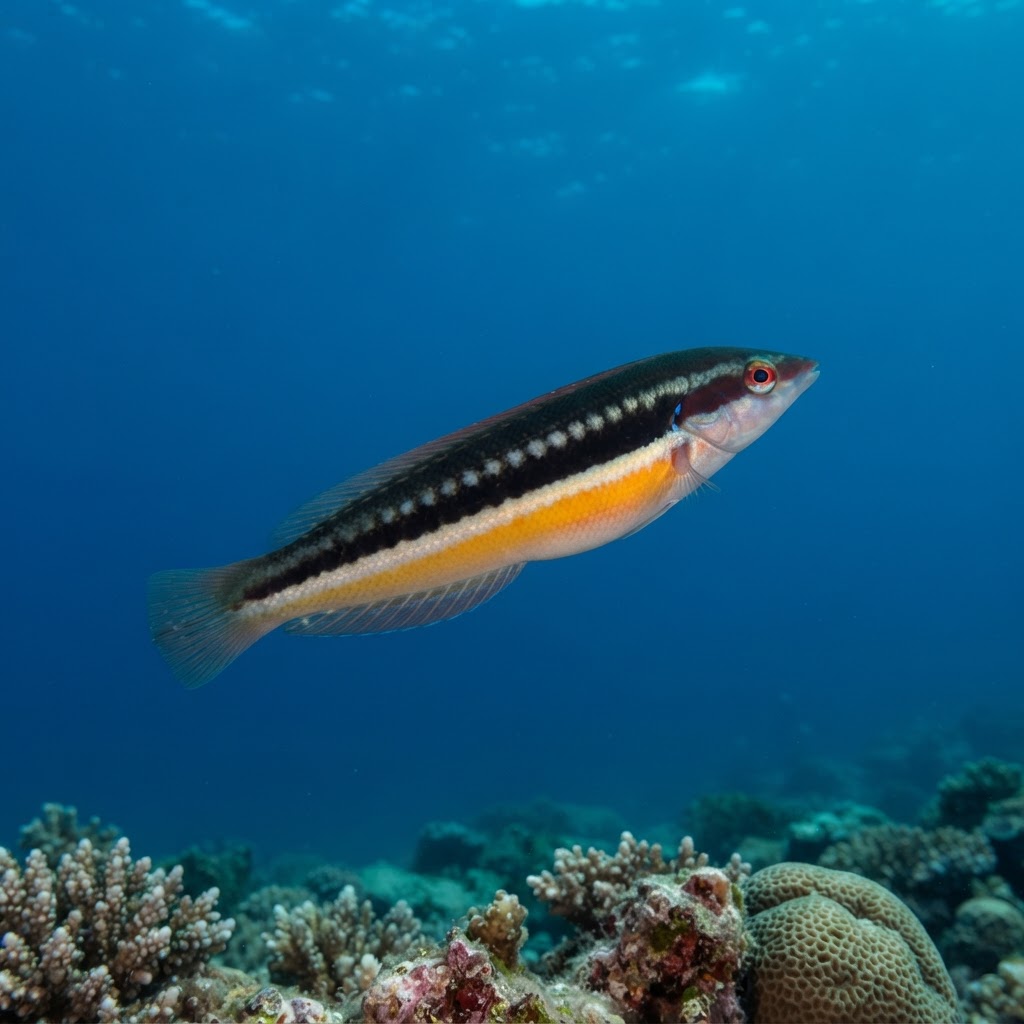
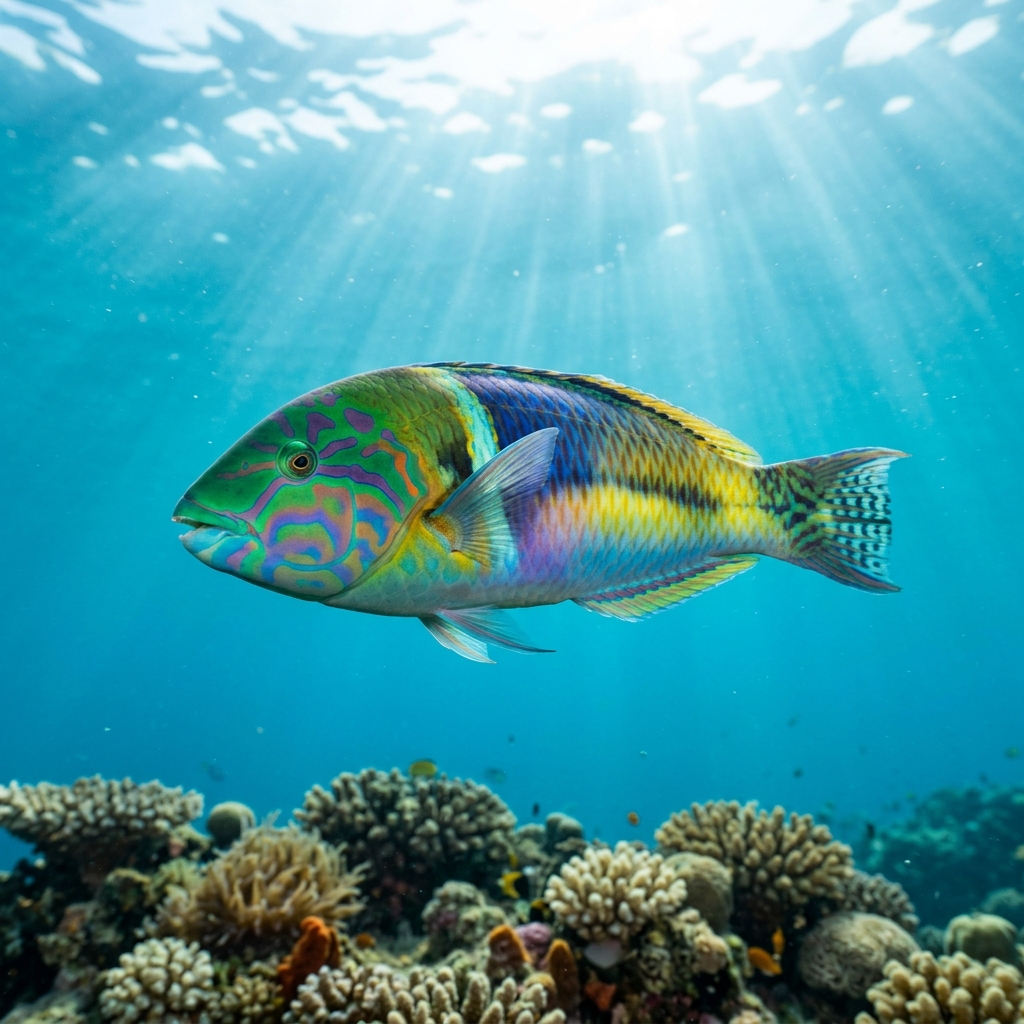
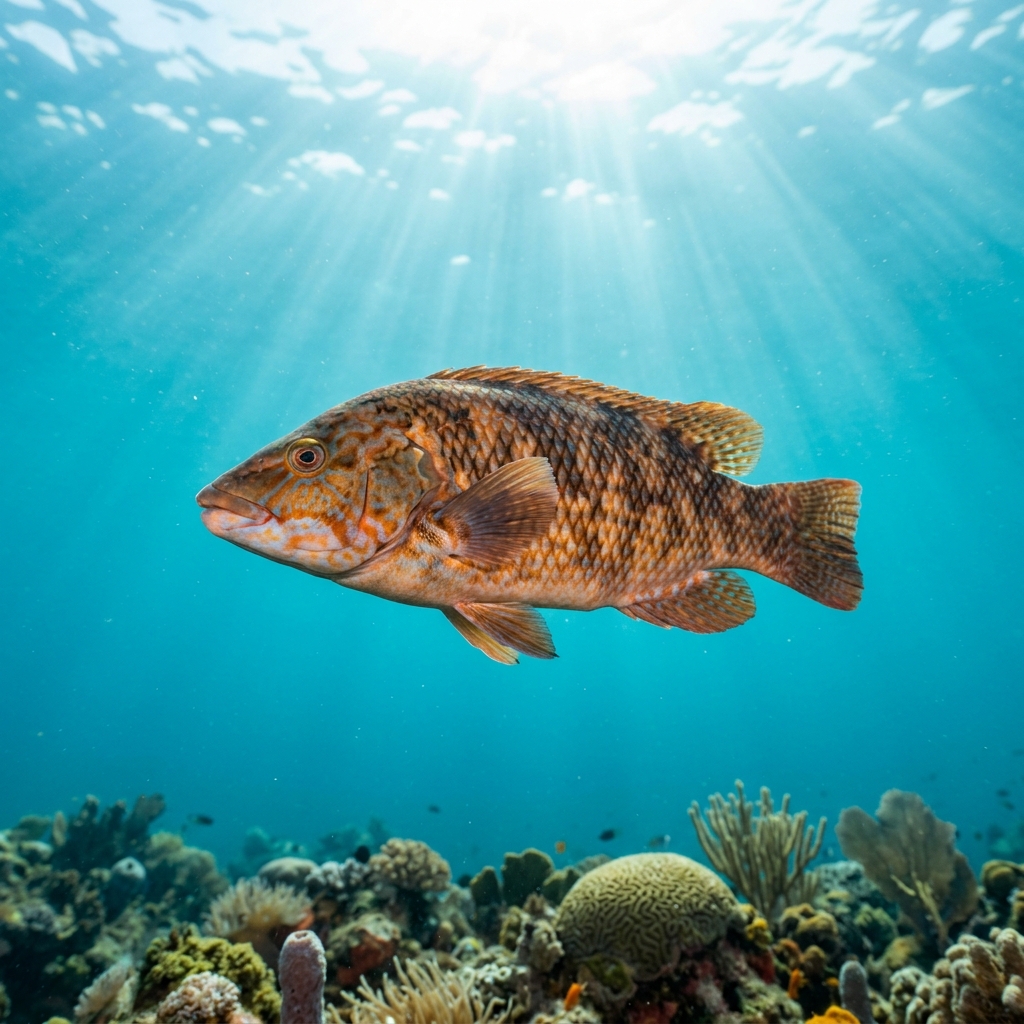
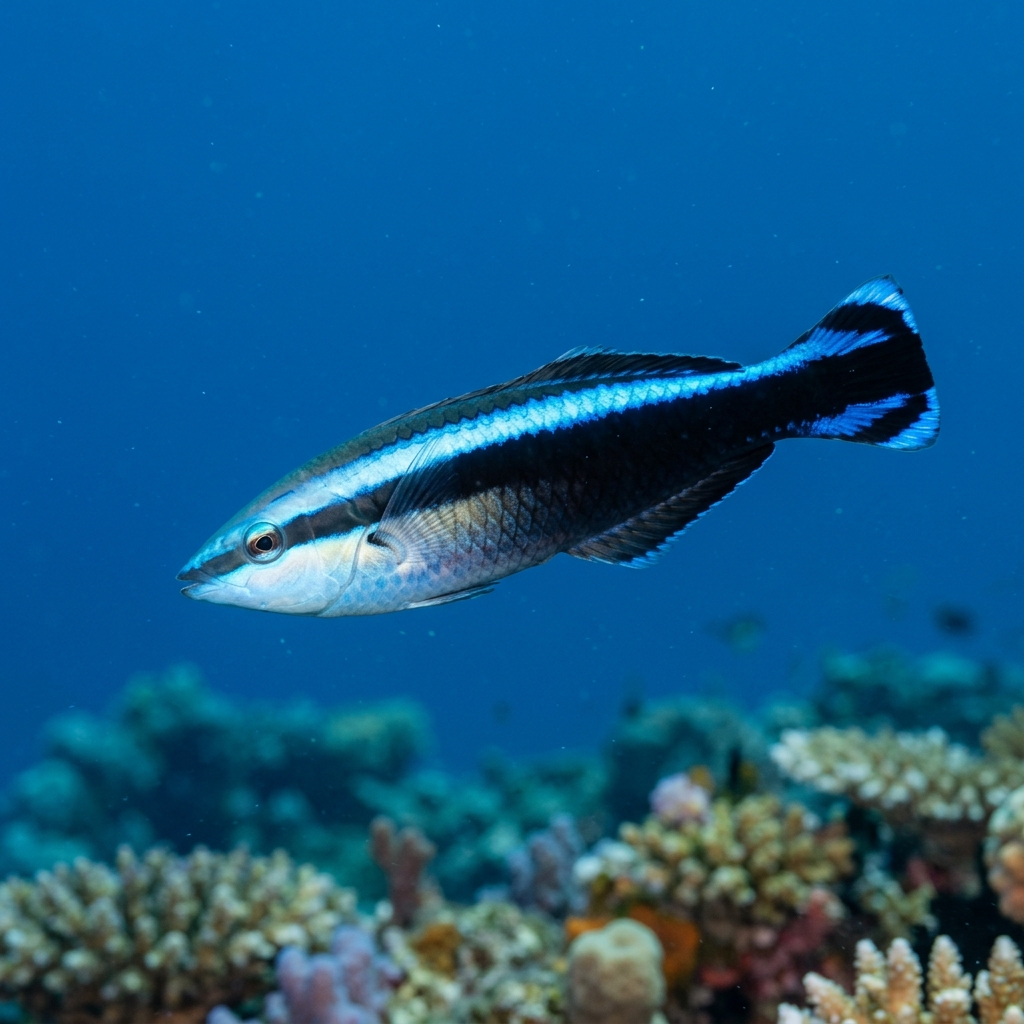
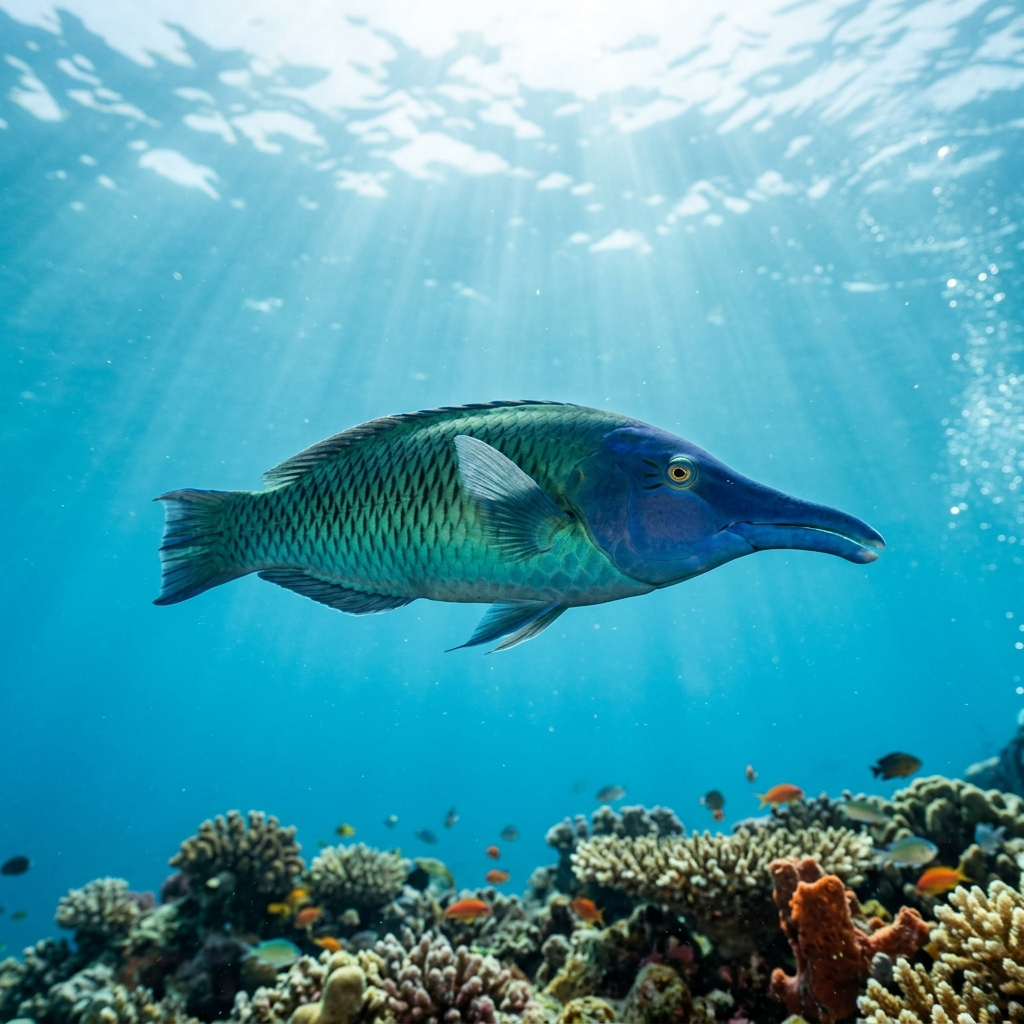
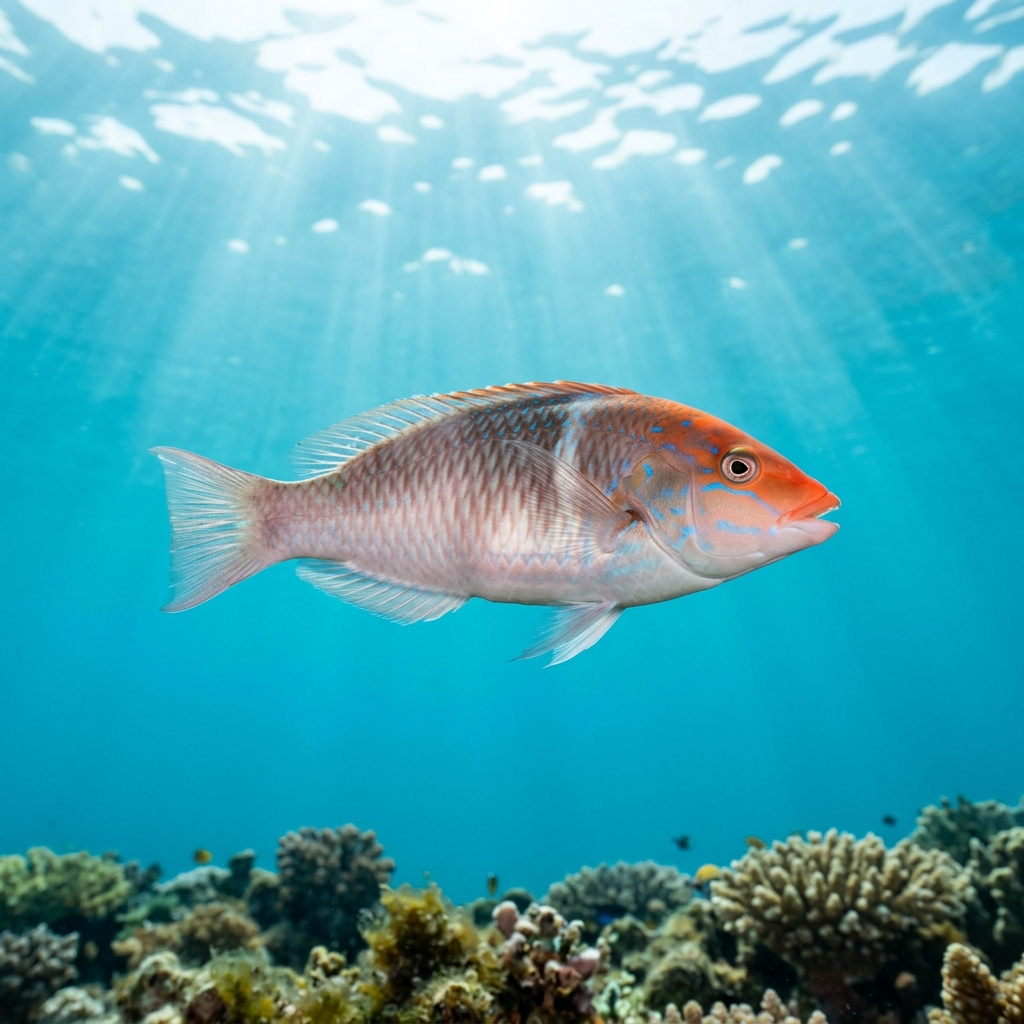
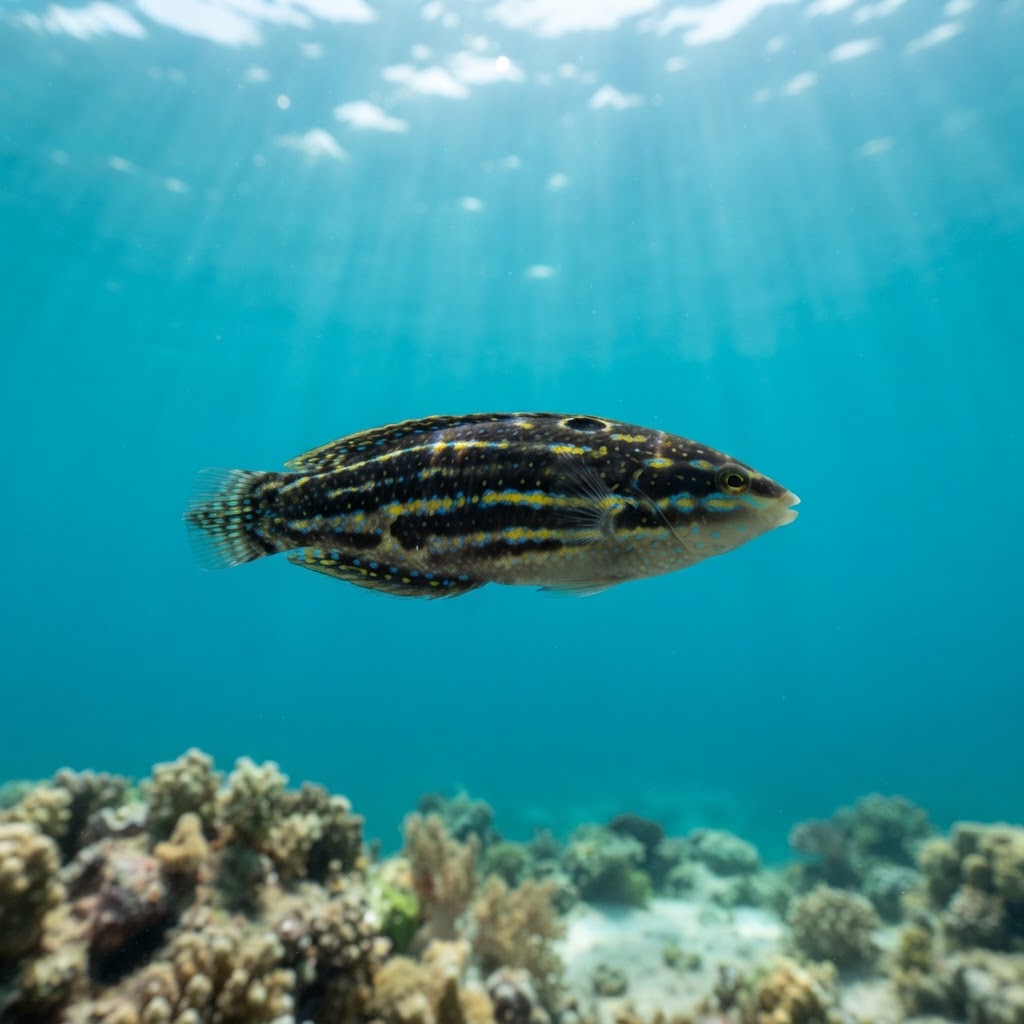
A small, slim-bodied wrasse around 13 cm, typically greenish to olive with a series of darker diagonal bars or blotches along the flanks that give it a mottled, dusky look. It swims with the quick, darting wrasse motion low over the reef rather than out in open water. Look for a pale or whitish underside contrasting with the darker upper body, which helps separate it from the reef's brighter wrasse species at a glance.
Divers typically find it picking around low reef structure and rubble patches, darting between crevices rather than holding still for a photo. It is not shy exactly, but it keeps a working distance from divers and carries on foraging along the substrate. Most sightings are logged as uncommon rather than common, so it rewards divers who scan low reef edges instead of the open water column.
Like many Halichoeres wrasses, it buries itself in sand at night and when startled, a defence trick that catches divers off guard the first time they see a fish seemingly vanish into the seabed.
Comfortable in water from 25 to 29.3 C, so present on these reefs year-round with no clear seasonal peak in the sighting data, meaning any month suits a look for it.
Reef neighbours a diver could mistake it for. Use the identification notes above to tell them apart.
Most reliably logged in the Seychelles Inner Islands and across Egypt's Red Sea, especially Marsa Alam and the Deep South and South Sinai, with strong numbers also in Oman around the Daymaniyat Islands and Muscat. Smaller but consistent counts come from Eilat in Israel, Aqaba in Jordan, Reunion and Mauritius' Flic-en-Flac, giving it a wide but patchy Indian Ocean and Red Sea spread.
Mapping where Dusky Wrasse is logged…
It turns up widely across the Seychelles Inner Islands, Egypt's Red Sea coast around Marsa Alam and South Sinai, and Oman's Daymaniyat Islands and Muscat coast. Smaller but steady numbers are also logged in Eilat, Aqaba, Reunion and Mauritius.
There is no strong seasonal pattern in the sighting data, and it favours water between 25 and 29.3 C, so it is a reasonable year-round sighting on the reefs where it occurs.
Look for a small, slim wrasse about 13 cm long with an olive to greenish body marked by darker diagonal bars, moving in quick darts low over the reef. Its underside is noticeably paler than its back.
They reach around 13 cm, making them one of the smaller wrasses you will spot picking over reef rubble rather than swimming in open water.
No, they pose no danger to divers. They are small reef fish that keep their distance and pose no threat during a dive.
Like other Halichoeres wrasses, it can bury itself in sand when threatened or at night, disappearing from view almost instantly, which surprises divers who see it happen for the first time.
Site and sighting data is aggregated from diver logs, iNaturalist and GBIF. For taxonomy and conservation status:
Bird Wrasse
3,632 sites