Siganus luridus
An oval, olive-grey grazer common on Red Sea and Mediterranean reefs, from South Sinai to the Ionian Islands, in 25-29C water year-round.
Safety warning
The dorsal and anal fin spines carry venom glands and a sting from an accidental brush or grab can cause sharp, lasting pain and swelling. It isn't aggressive and won't chase divers, so the simple rule is: admire it, don't handle it, and be mindful of it if reaching into rocky crevices where it grazes.
If you're stung
Venomous fin spinesGeneral first-aid guidance, not a substitute for professional medical care. In an emergency, call your local emergency number.
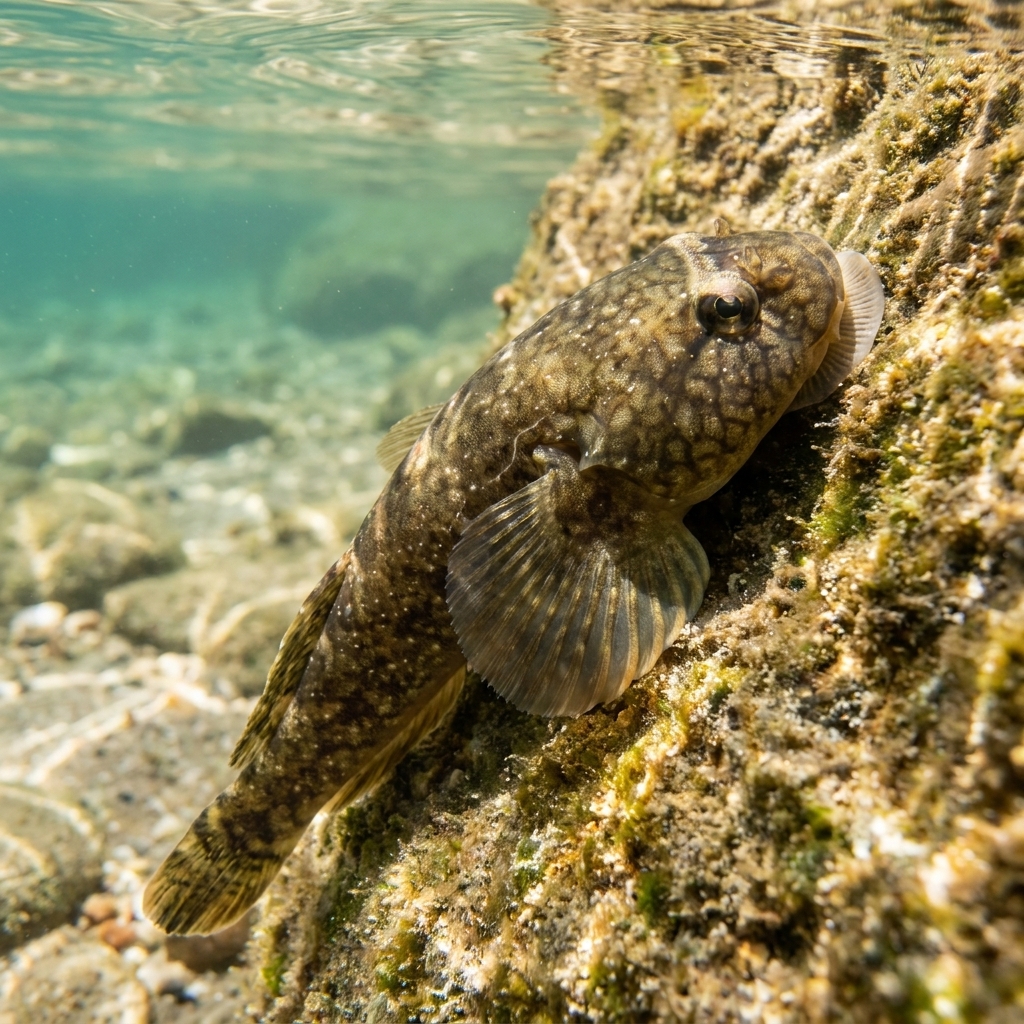
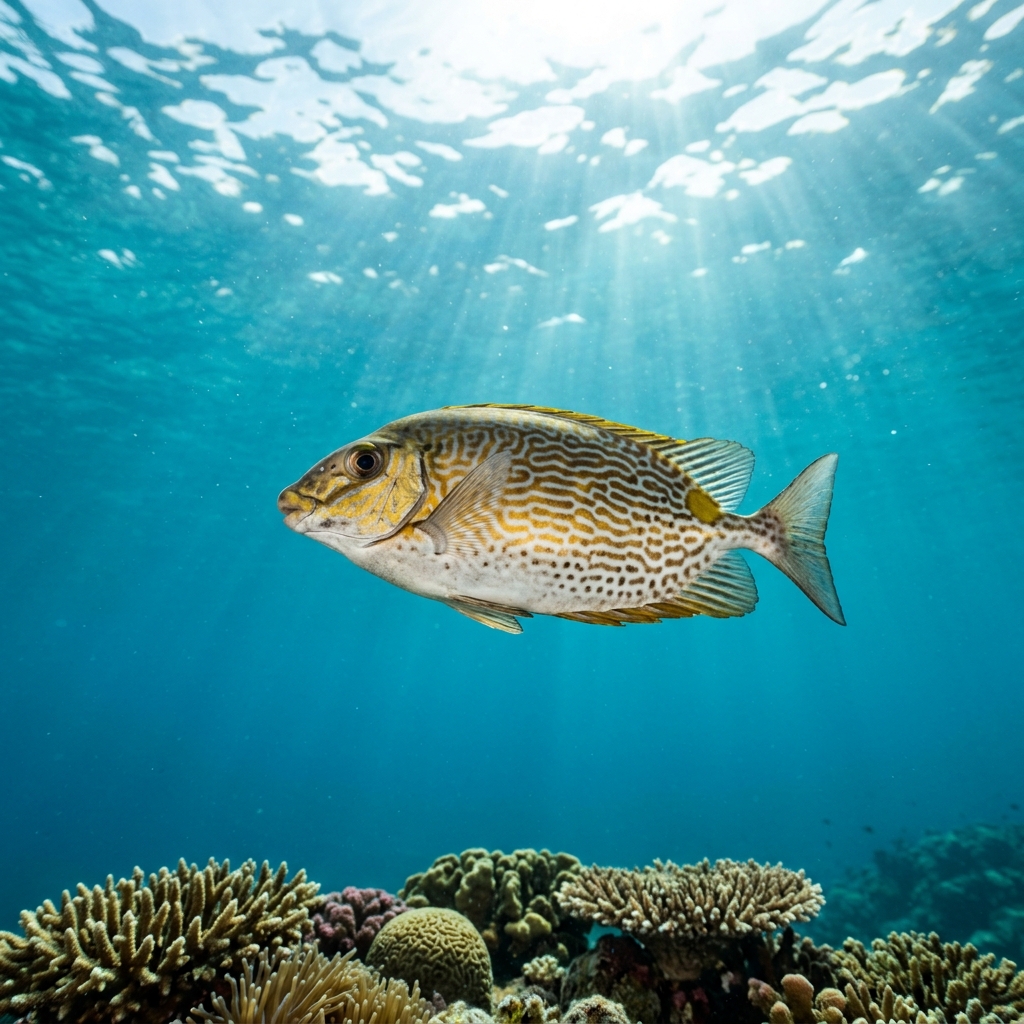
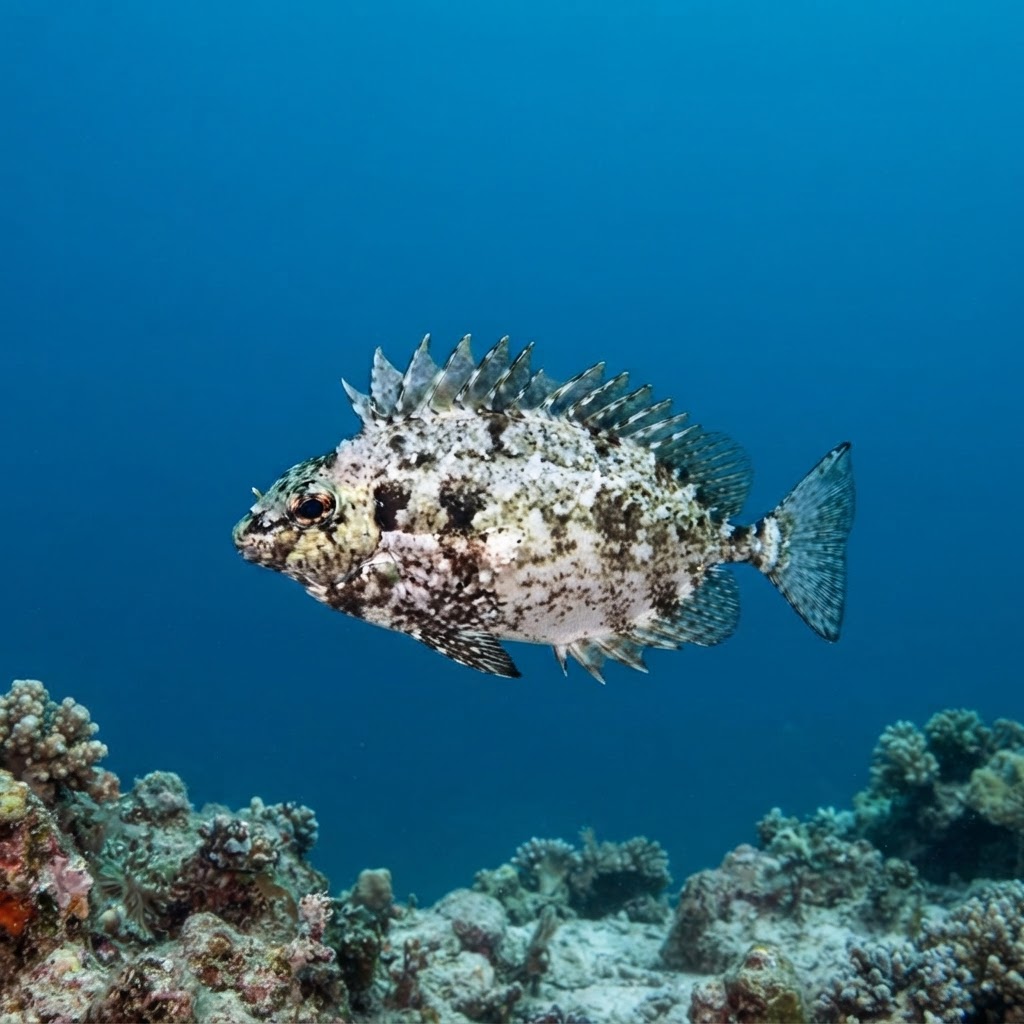
Look for an oval, laterally compressed body around 21 cm long, olive-grey to brownish with faint mottling that can darken or pale depending on mood and background. The snout is pointed and the dorsal fin carries venomous spines that sit low and rigid along the back, a useful cue for keeping hands away. It often swims in loose pairs or small groups low over rock and reef, browsing rather than schooling in the open water.
Usually seen picking over algae-covered rock and reef flats, often in pairs, moving steadily rather than darting, which makes it an easy fish to approach slowly for a photo. It tends to hold its ground rather than bolt when divers get close, though it will flare its dorsal spines if it feels cornered. Most sightings are during the day on shallower reef sections rather than deep drop-offs.
Native to the Mediterranean's eastern basin and the Red Sea, it's one of the herbivorous spinefoots whose grazing helps keep algae in check on rocky and reef habitats, a role increasingly notable as it has spread west through the Mediterranean via the Suez Canal.
No clear seasonal peak shows up in the sightings, and with a comfortable range of roughly 25 to 29C it's present on these reefs across the year, so any season works for a dive trip built around it.
Most reliably logged in the Egyptian Red Sea, especially South Sinai and the Red Sea Riviera, and across the Mediterranean in Greece's Ionian Islands and Crete. Strong populations also turn up in Turkey's Antalya and Turquoise Coast regions and around Cyprus, particularly Paphos and Ayia Napa & Protaras, with smaller numbers reported from Israel, Italy, and Jordan.
Mapping where Dusky Spinefoot is logged…
It's most commonly logged in Egypt's South Sinai and Red Sea Riviera, and across Greece in the Ionian Islands and Crete. Turkey's Antalya and Turquoise Coast, plus Cyprus's Paphos and Ayia Napa & Protaras areas, are also reliable spots.
There's no strong seasonal pattern in the sightings, and it tolerates water from about 25 to 29C, so divers report it on these reefs throughout the year rather than in one particular season.
They carry venomous dorsal and anal spines that can deliver a painful sting if handled or accidentally brushed, but they don't act aggressively toward divers. Keep hands clear of rocky crevices where they graze and you won't have an issue.
Look for an oval, flattened body about 21 cm long, olive-grey with faint mottling, a pointed snout, and stiff dorsal spines running along the back. It's usually seen grazing low over rock or reef alone or in loose pairs.
They typically reach around 21 cm in length, a modest reef-associated size that keeps them low-profile grazers rather than a fish you'll spot from a distance.
It's a herbivore that has expanded well beyond its native Red Sea and eastern Mediterranean range by moving through the Suez Canal, now grazing algae on reefs across much of the Mediterranean.
Site and sighting data is aggregated from diver logs, iNaturalist and GBIF. For taxonomy and conservation status:
Soldierfish
3,612 sites