Siganus fuscescens
Olive-grey and speckled, dusky rabbitfish turn up on reefs from Queensland to Palawan year-round in 22.6-29C water.
Safety warning
Dorsal, anal and pelvic fin spines carry venom glands and can deliver a painful sting if you grab or corner the fish, or brush against it while it is resting in a reef crevice. Keep hands off and give it room to move away; a sting is rarely serious but is intensely painful and warrants first aid and, if pain persists or spreads, medical attention.
If you're stung
Venomous fin spinesGeneral first-aid guidance, not a substitute for professional medical care. In an emergency, call your local emergency number.
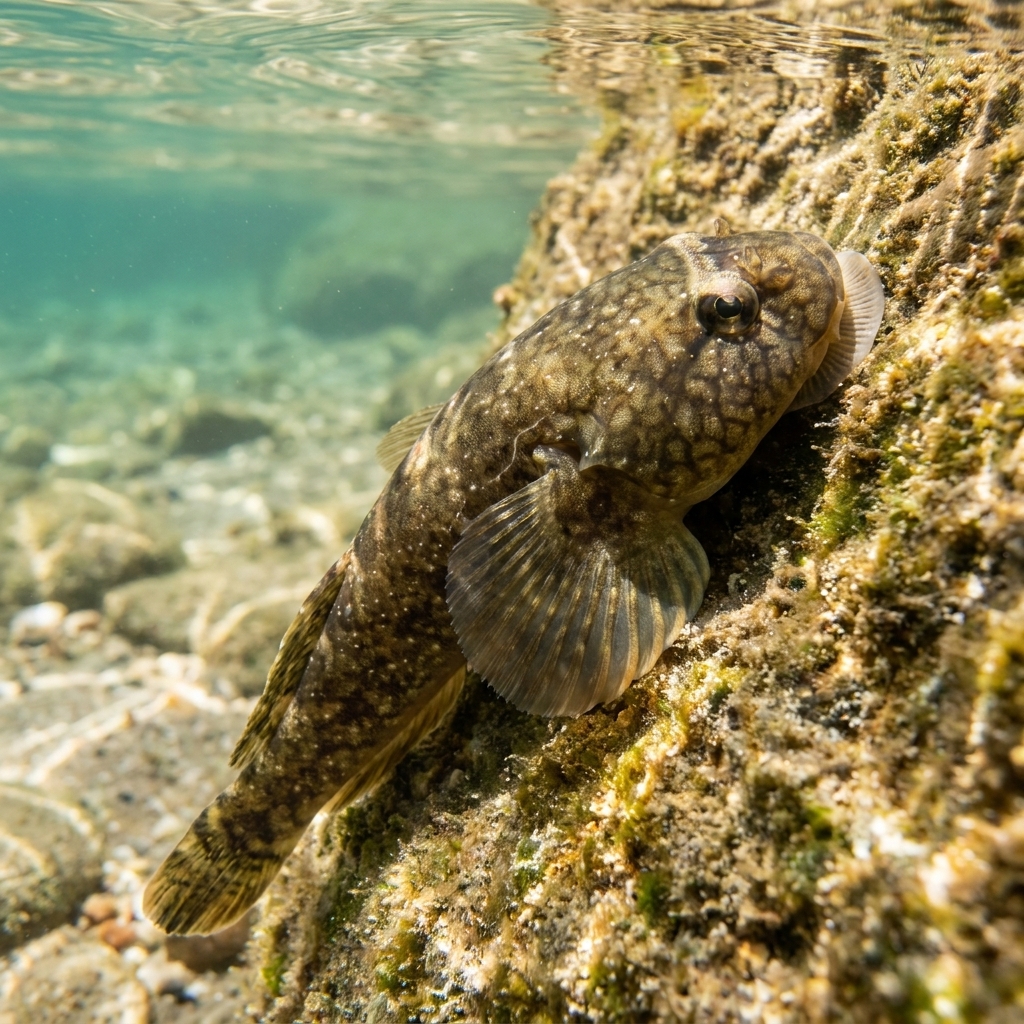
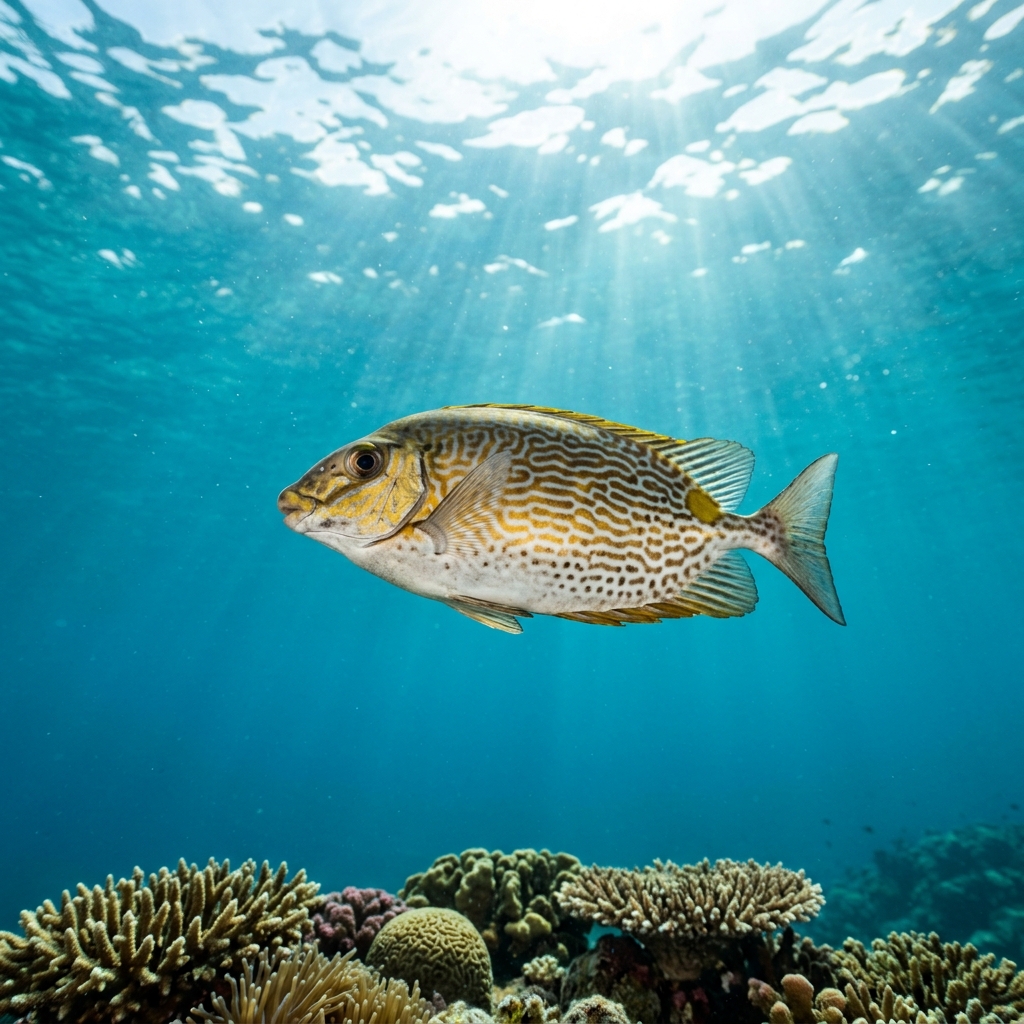
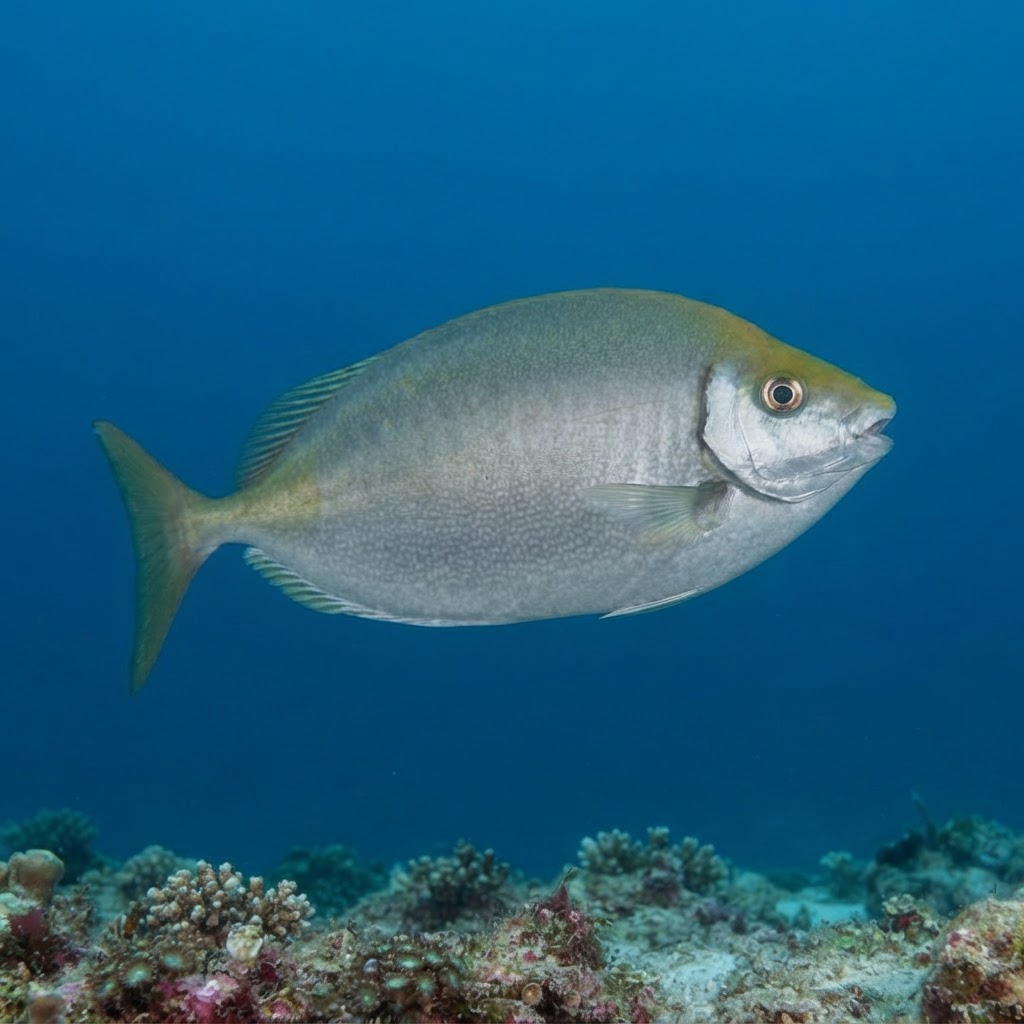
Look for an oval, laterally flattened body around 28 cm long, olive-grey to brownish with a fine speckled or mottled pattern that can shift in intensity depending on mood and background. There is no bold single blotch or stripe to key on, which is part of the challenge; instead divers learn the shape, the slightly pointed snout, and the way the dorsal and anal fins carry sharp venomous spines folded flat until the fish feels threatened. It moves in a slow, deliberate glide close to the reef, often alone or in loose pairs rather than tight schools.
Expect to find it browsing algae over reef flats and rubble patches, often tucked close to structure where it can dart for cover if approached too fast. It is usually logged as uncommon rather than schooling in numbers, so a sighting tends to be a single fish or a loose pair grazing rather than a crowd. It is not particularly shy but keeps a sensible distance, drifting off along the reef rather than bolting.
Like other rabbitfish, it can change its mottled pattern in intensity within seconds, which is thought to help it blend against different reef backgrounds as it moves and feeds.
No clear seasonal pattern shows up in the data, and its comfort range of 22.6 to 29 C covers most tropical and subtropical reef conditions year-round, so any month is a reasonable bet at these sites.
Most reliably logged on Australian reefs, especially Queensland and Western Australia, with further sightings in New South Wales. Outside Australia it shows up in Palawan in the Philippines, Sai Kung in Hong Kong, Sabah in Malaysia, Nusa Tenggara in Indonesia, and around Nouméa in New Caledonia, though usually in smaller numbers.
Mapping where Dusky Rabbitfish is logged…
Australian reefs are the strongest bet, particularly Queensland and Western Australia, with New South Wales also producing sightings. Elsewhere it turns up in Palawan in the Philippines, Sai Kung in Hong Kong, Sabah in Malaysia, and parts of Indonesia and New Caledonia.
There is no strong season in the sighting data, and its 22.6 to 29 C comfort range fits tropical and subtropical reefs all year, so divers log it across the calendar rather than in one particular window.
Yes, but only if handled or cornered. The dorsal, anal and pelvic spines are venomous and can cause a sharp, painful sting; leave the fish alone and it will simply swim off.
Look for an oval, flattened body around 28 cm with an olive-grey to brownish speckled pattern and no single bold marking. It moves slowly near the reef, alone or in loose pairs, with sharp fin spines visible along the back.
They typically reach around 28 cm in length, a modest reef fish size that keeps them close to cover on reef flats and rubble areas rather than out in open water.
Their mottled body pattern can shift in intensity within moments, a camouflage trick that helps them blend into changing reef backgrounds as they graze on algae.
Site and sighting data is aggregated from diver logs, iNaturalist and GBIF. For taxonomy and conservation status:
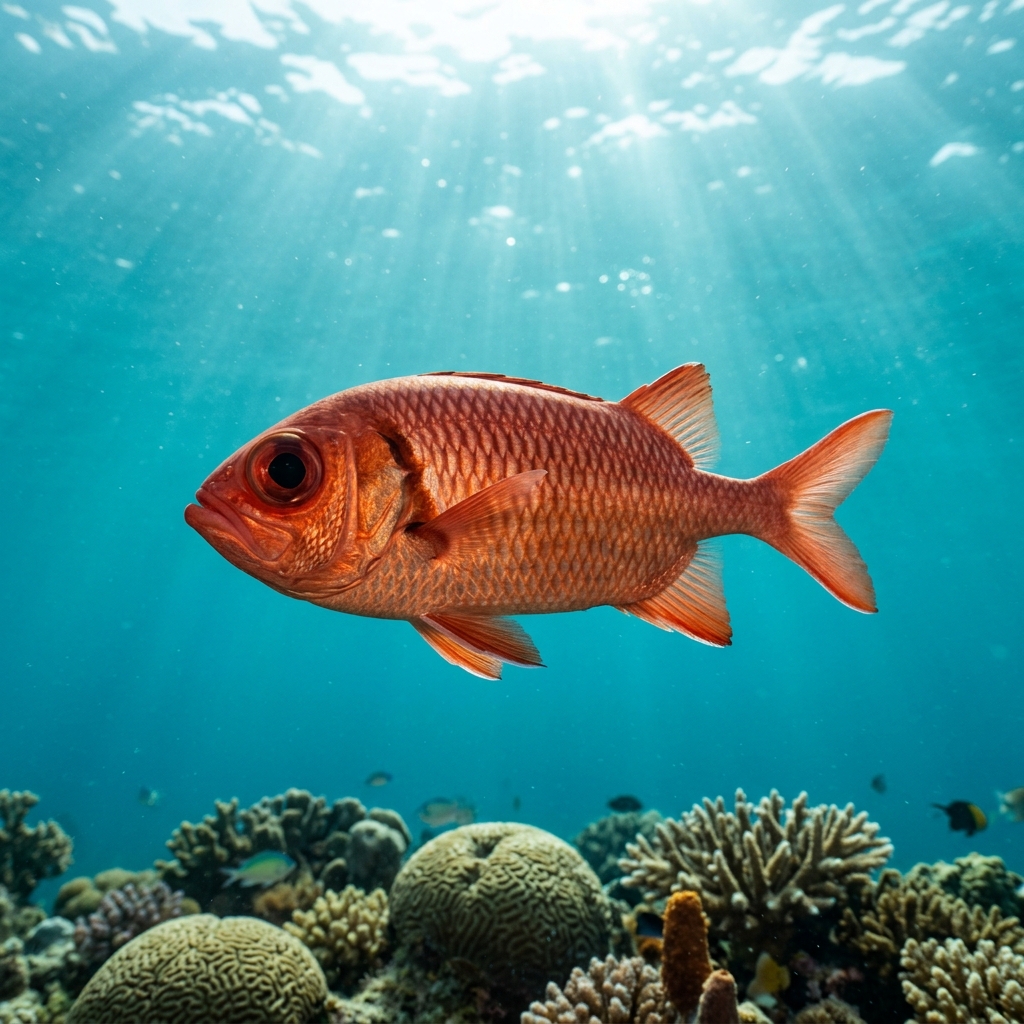
Soldierfish
3,612 sites