Hyporhamphus melanochir
Slender surface-dwelling garfish logged year-round across South Australia in 14 to 22 C water, most reliably around Adelaide's dive sites.
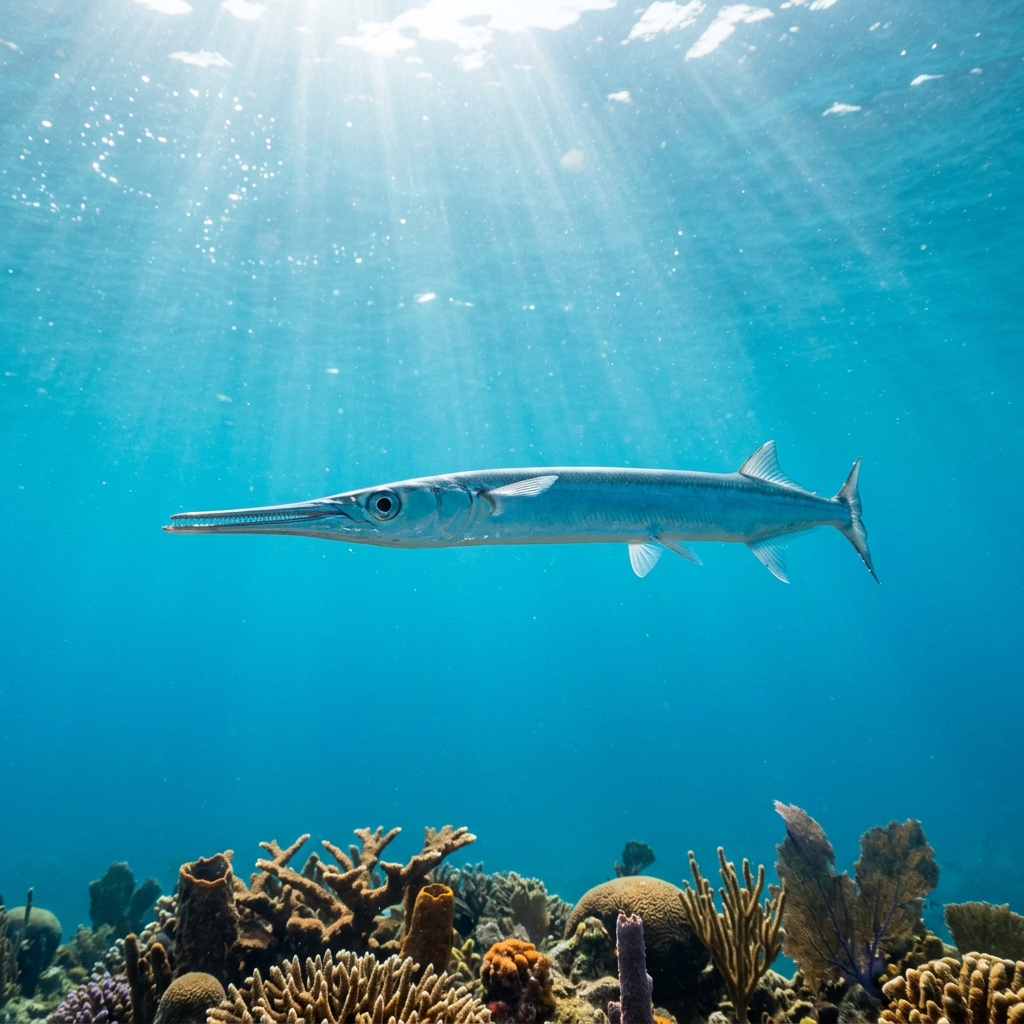
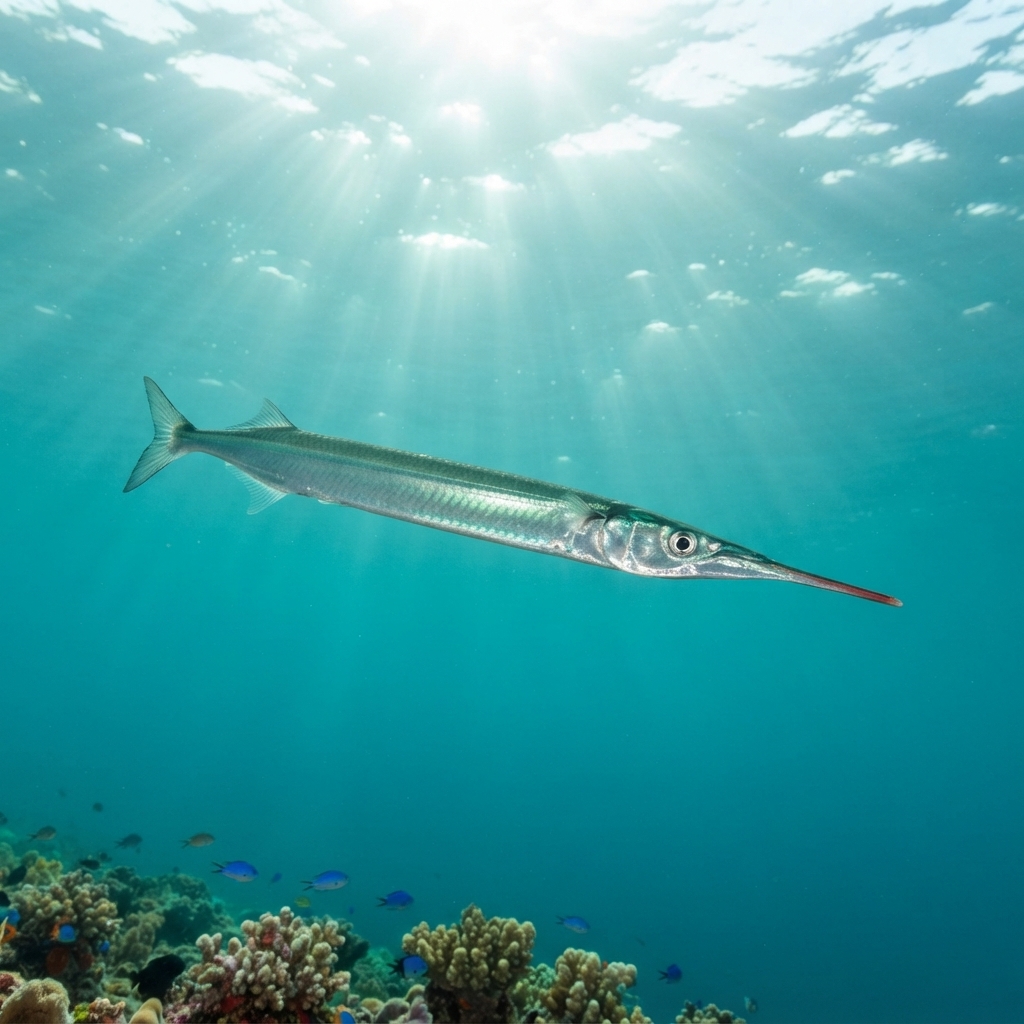
Grows to around 36 cm and is instantly recognisable by its long, needle-like lower jaw that projects well past the upper one, a classic halfbeak profile. Body is slim and silvery with a faint blue-green sheen along the back, built for cruising just under the surface rather than down on the reef. Look for it in loose groups hovering near the surface layer over sand or weed rather than tucked into structure.
Divers typically spot it hanging in loose, mobile groups just under the surface, often over sand, weed beds or around jetty structure rather than deep on reef. It is a skittish, fast-moving fish that will dart off if approached too directly, so most sightings are brief glimpses of a silver flash near the surface. Best picked up by looking up and out rather than down at the substrate.
That elongated lower jaw is a larval holdover in many halfbeaks and is used to detect food and predators at the surface, not for feeding directly, which is why you will see it cruising open water rather than picking at the bottom.
Sightings show no clear seasonal pattern, and with a comfortable range of roughly 14.3 to 22.3 C it turns up across the temperate diving calendar in South Australia and Victoria year-round.
Almost all logged sightings come from South Australia, particularly around sites in the Adelaide region, with a smaller scatter of records across Victoria. It is an Australian speciality on this data, so if you are diving temperate South Australian sites over sand, seagrass or jetty pilings, keep an eye on the surface layer.
Mapping where Dusky Garfish is logged…
They are most reliably logged in South Australia, especially around the Adelaide region, with additional sightings from Victoria. Look for them over sand or seagrass and near jetties rather than on deep reef.
There is no strong seasonal pattern in the sightings data, and they tolerate a wide temperate range of about 14 to 22 C, so they can turn up on South Australian dives at any time of year.
Look for a slim, silvery fish around 36 cm long with a long, needle-like lower jaw that extends well past the upper jaw. It usually swims in loose groups just under the surface rather than near the bottom.
They typically reach about 36 cm in length, with a slender, elongated body built for fast surface swimming rather than bulk.
No, they pose no danger to divers. They are shy, fast-swimming fish that tend to move away from divers rather than approach.
Their extended lower jaw is a feature carried over from the larval stage in many halfbeaks, used to sense the surface environment rather than to grab prey, which explains why they cruise open water instead of foraging on the reef.
Site and sighting data is aggregated from diver logs, iNaturalist and GBIF. For taxonomy and conservation status:
Butterfish
1,423 sites