Platycephalus fuscus
Common on 52 sites in New South Wales and Queensland, this flathead lies half-buried in sand in 19-27C water, spottable year-round.
Safety warning
The real hazard is not a bite but the sharp, venomous spines on its gill covers and dorsal fin, which can cause a painful puncture wound if you put a hand or knee down on a buried fish you did not see. Watch where you place your hands when settling on sand or silt, and give any flathead-shaped shadow in the sediment a wide berth rather than trying to touch it.
If you're stung
Venomous spinesGeneral first-aid guidance, not a substitute for professional medical care. In an emergency, call your local emergency number.
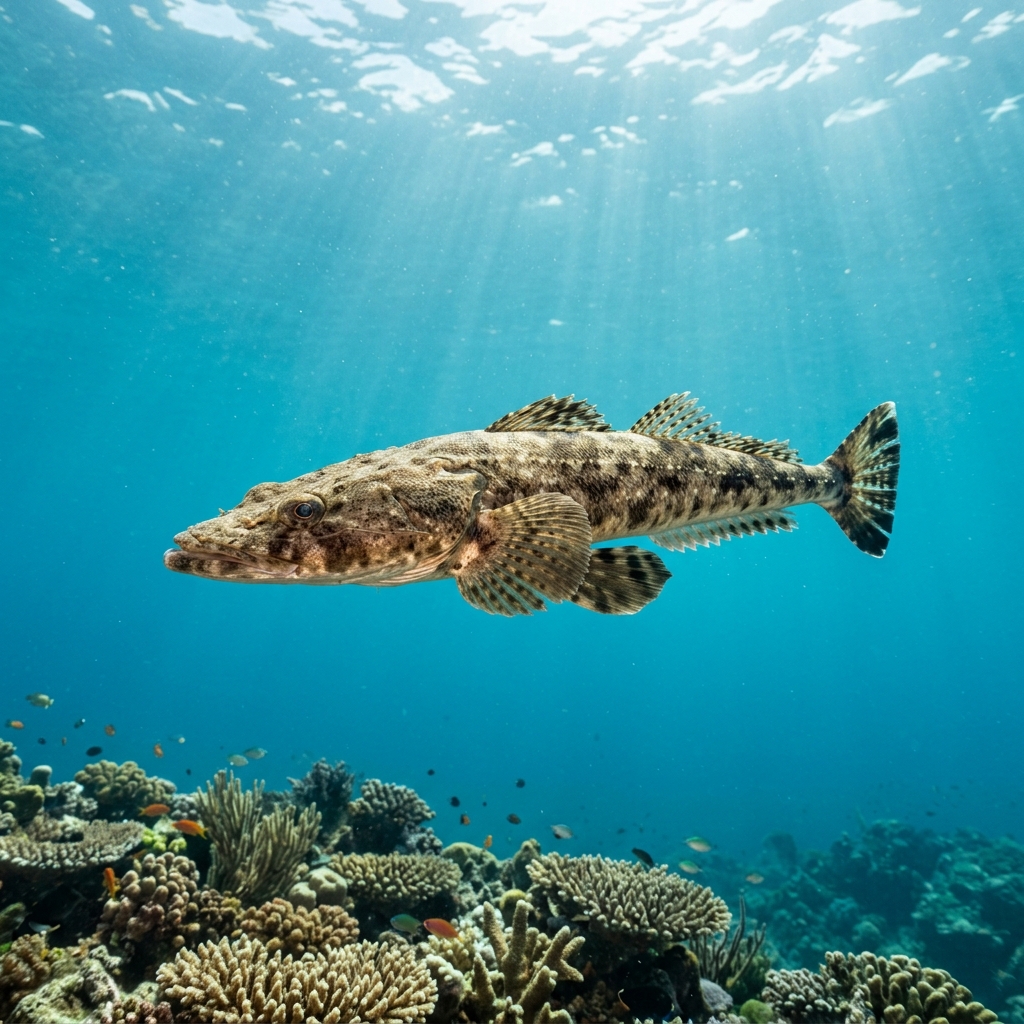
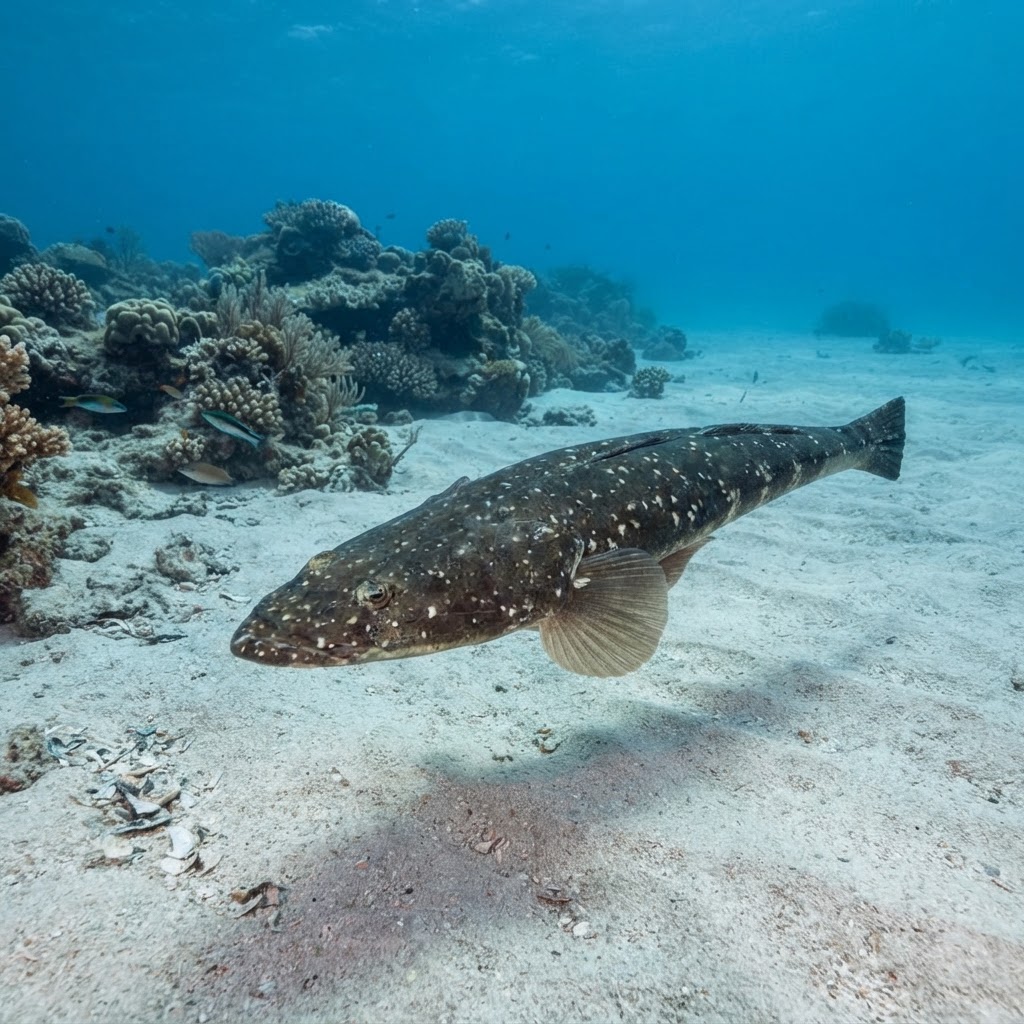
Look for a long, flattened body lying almost invisible against sand or silt, with a broad, depressed head and eyes set high so it can watch you while staying buried. Colouring runs mottled brown to sandy grey with darker blotches down the back, breaking up its outline against the seabed. It can reach 84 cm, so larger individuals have a noticeably elongated, wedge-shaped profile rather than the rounder look of a typical reef fish.
Expect to see it lying motionless, half-buried in sand or mud, often on the fringes of estuaries, sandflats and sheltered bays rather than out on open reef. It relies on camouflage rather than fleeing, so a slow approach usually lets you get close before it flicks off in a burst of sediment. Most sightings happen in the shallower half of its 0-30 m range, where sand patches near seagrass or reef edges give it both cover and a feeding ambush point.
It is an ambush predator that buries itself with only its eyes exposed, waiting for small fish and crustaceans to wander close before lunging up from the sand.
Sighting data shows no strong seasonal pattern, so treat this as a year-round find. Its observed range of 19.1 to 27.1C covers the water temperature swing across the seasons in New South Wales and Queensland, so it stays active on the sand through both cooler and warmer months.
Almost every logged sighting comes from Australia, with New South Wales the clear stronghold and Queensland a secondary spot. Divers most commonly find them on sand and estuary-adjacent sites in New South Wales, where sightings are logged as common at over half the sites they turn up at.
Mapping where Dusky Flathead is logged…
New South Wales is by far the strongest region for sightings, with Queensland a secondary option. Look for sand and estuary-edge dive sites rather than open coral reef.
There is no strong season in the sighting data, so they are logged year-round. Water temperatures at the sites they are seen in range from about 19 to 27C across the year.
They will not attack, but their gill and dorsal spines are venomous and cause a sharp, painful wound if you kneel or grab where one is buried. Watch your hand and knee placement on sandy bottoms.
Look for a flattened, elongated body lying camouflaged in sand, with a wide flat head, high-set eyes, and mottled brown blotching along the back. Only the eyes and outline may show above the sediment.
They can grow to around 84 cm, making them one of the larger demersal fish you will find lying on sand in southeast Australian estuaries and bays.
They are ambush hunters that bury themselves in sand with only their eyes showing, staying motionless until prey or a diver gets close, then bursting out in a cloud of sediment.
Site and sighting data is aggregated from diver logs, iNaturalist and GBIF. For taxonomy and conservation status:
Madeira Rockfish
2,773 sites