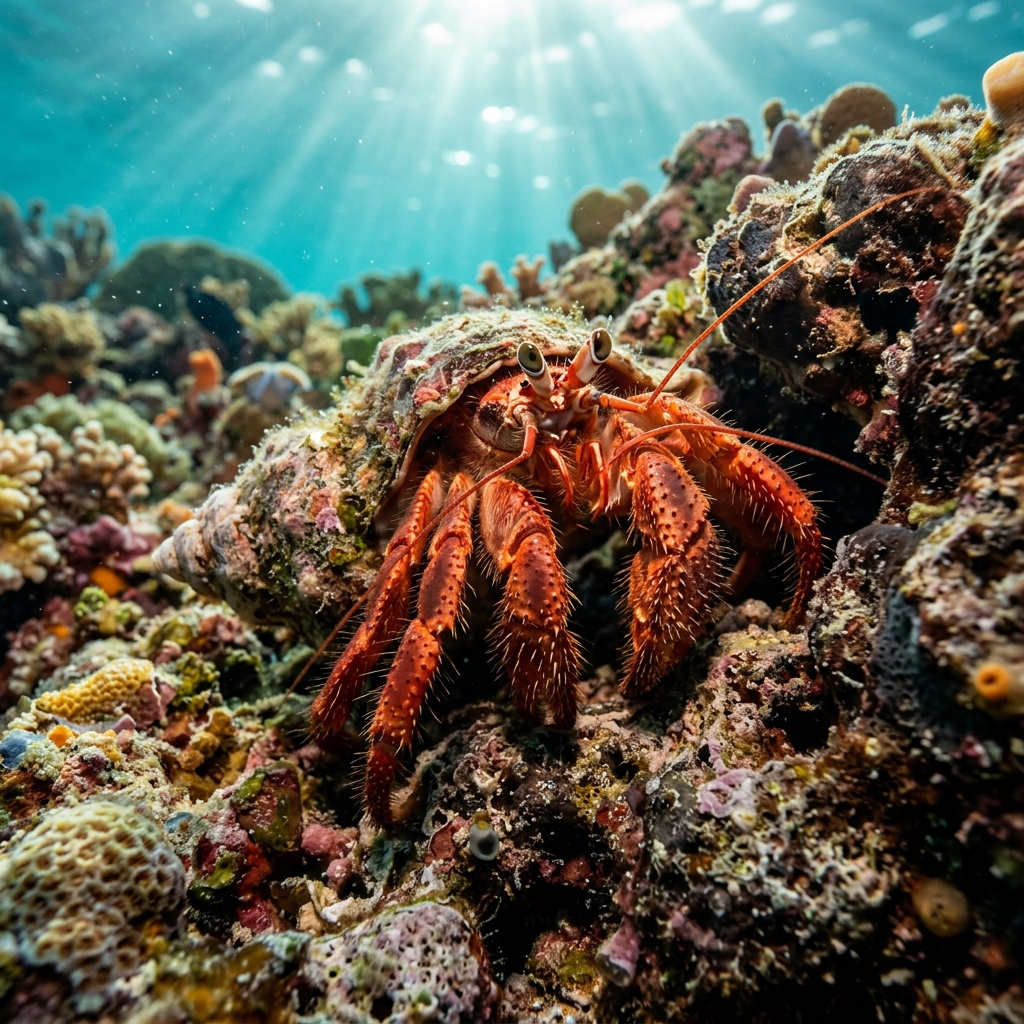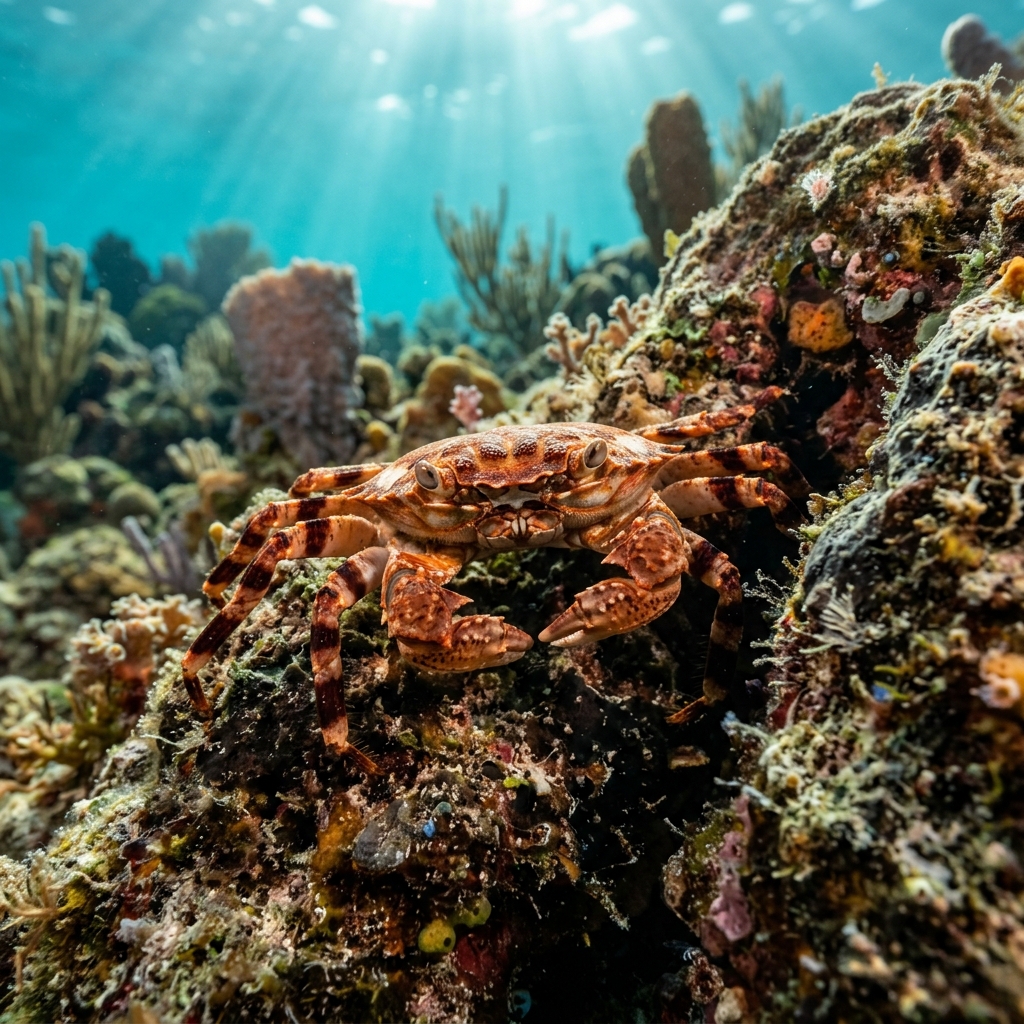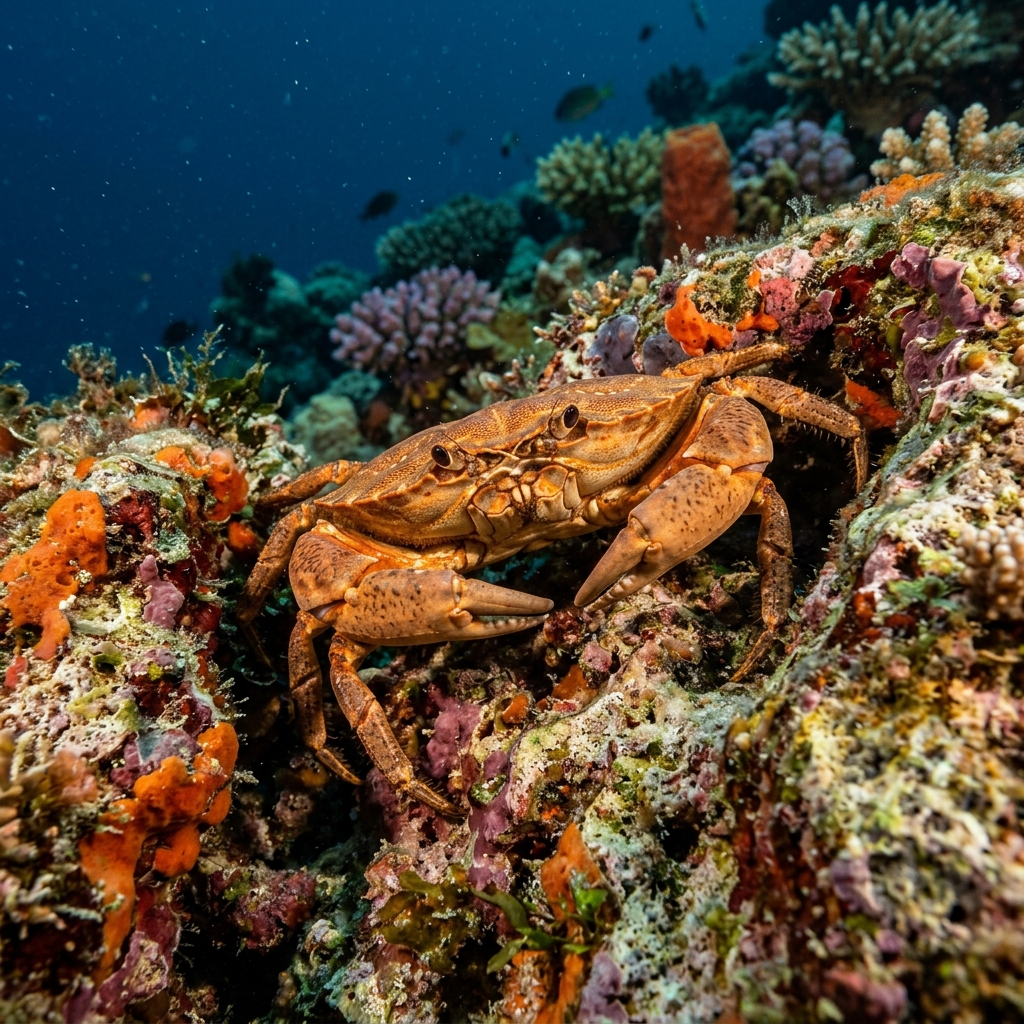
Metacarcinus magister
Find Dungeness Crab on silty seafloors from British Columbia to the Pacific Northwest, in cold water 7.8 to 13.8 C, year-round.
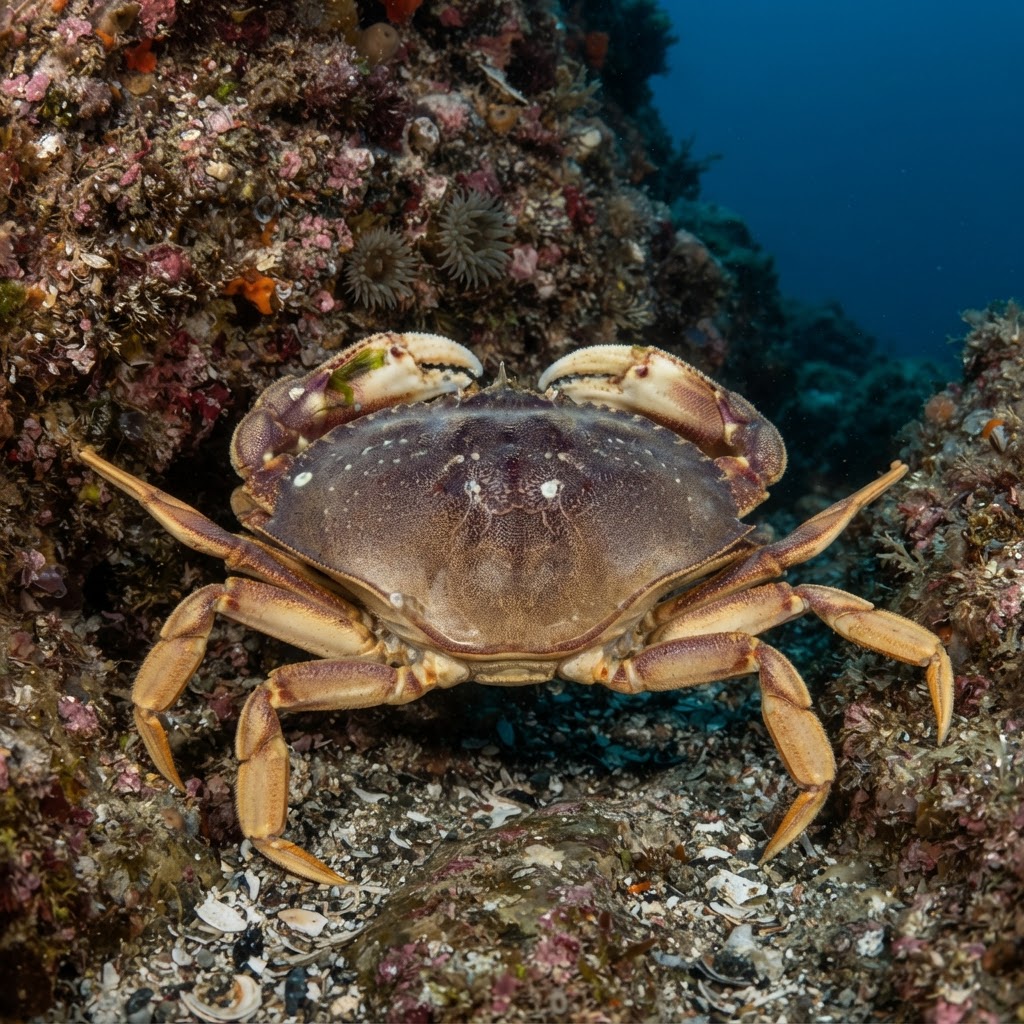
Broad, oval shell up to about 15 cm across, coloured purplish-brown to reddish on top with a pale, almost yellowish underside. The claw tips are noticeably white to pale cream, a good field mark when the rest of the crab is half-buried in sand or silt. Ten small, saw-toothed points run along each side of the shell edge, and the walking legs are relatively short and stout compared to swimming crabs.
Expect to find it parked on sand, mud or silty bottoms, often partly buried with just the eyes and claw tips showing. It's generally unbothered by divers, more likely to hunker down or shuffle sideways than flee, and most sightings are a single crab logged as uncommon to common rather than in groups.
Adults moult their entire shell to grow, and mating happens right after a female's moult while her new shell is still soft, a vulnerable window that ties her reproductive cycle directly to the moulting calendar.
No clear seasonal pattern shows up in sightings, so treat it as a year-round find. It sits comfortably in the 7.8 to 13.8 C range typical of Pacific Northwest and British Columbia waters, which stays cold enough to keep it active through most of the year.
Most reliably logged in the Pacific Northwest of the United States and in British Columbia, Canada, with the two regions between them accounting for the bulk of sightings. Smaller numbers turn up further north in Alaska and south into California, so it's a cold-water Pacific coast species from Alaska down through California.
Mapping where Dungeness Crab is logged…
The strongest sightings come from the Pacific Northwest in the United States and British Columbia in Canada, with fewer logged in Alaska and California. It favours sandy or muddy benthic zones close to shore, including estuaries.
There's no strong seasonal pattern in sightings, so it's considered a year-round find in the cold coastal waters it lives in, roughly 7.8 to 13.8 C.
Look for a broad, oval, purplish-brown to reddish shell up to about 15 cm across with pale, white-tipped claws. It usually sits on or half-buried in sand or mud rather than swimming or climbing structure.
They typically reach around 15 cm across the shell, making them one of the larger benthic crabs a diver will encounter on Pacific Northwest and British Columbia dive sites.
No, they pose no danger to divers. They tend to hold still or retreat into the sediment rather than react aggressively when approached.
Mating occurs right after the female moults, while her shell is still soft, tying reproduction directly to her growth cycle. Outside of that window she's protected by a hard shell like any other crab.
Site and sighting data is aggregated from diver logs, iNaturalist and GBIF. For taxonomy and conservation status:
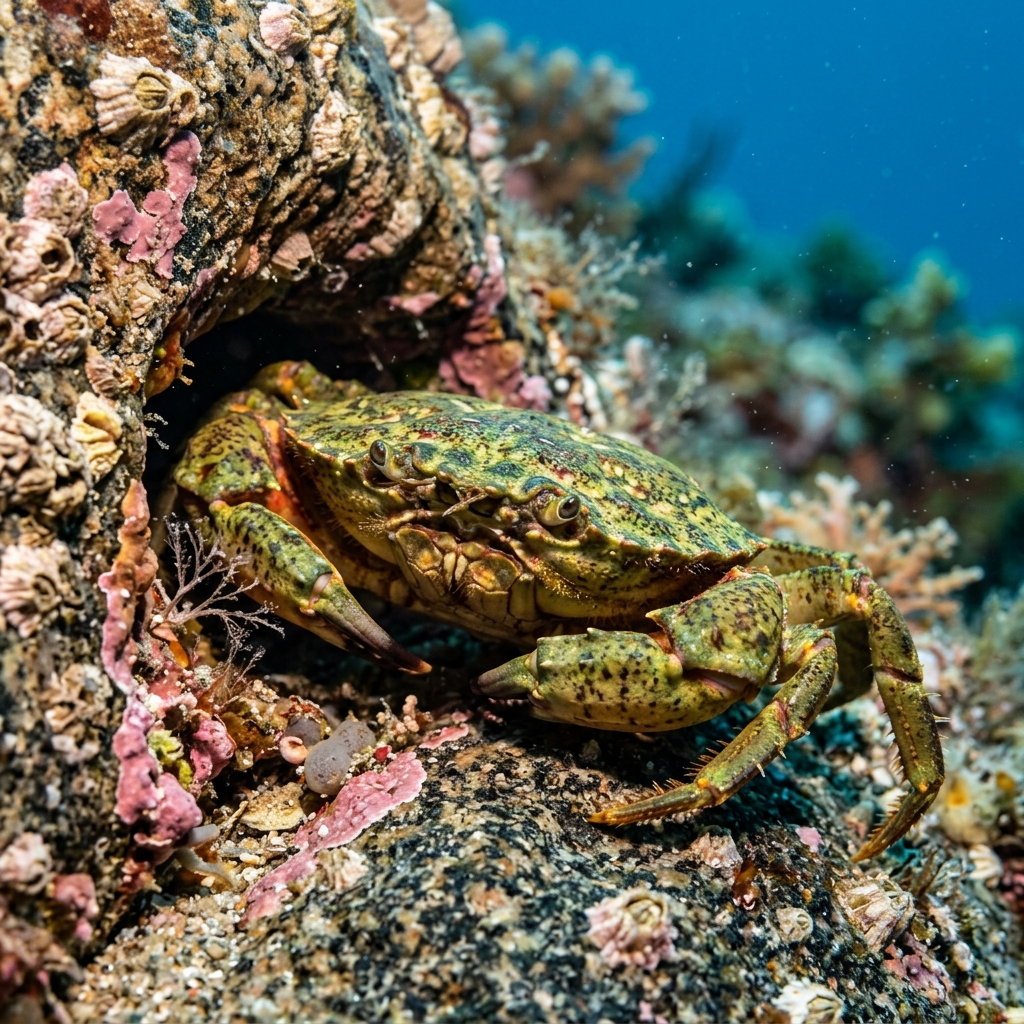
European Green Crab
2,469 sites