Dunckerocampus pessuliferus
Spot the Yellowbanded Pipefish in Western Australia, the Philippines, and the Egyptian Red Sea. Rare but real, in warm 26-29 °C reef waters.
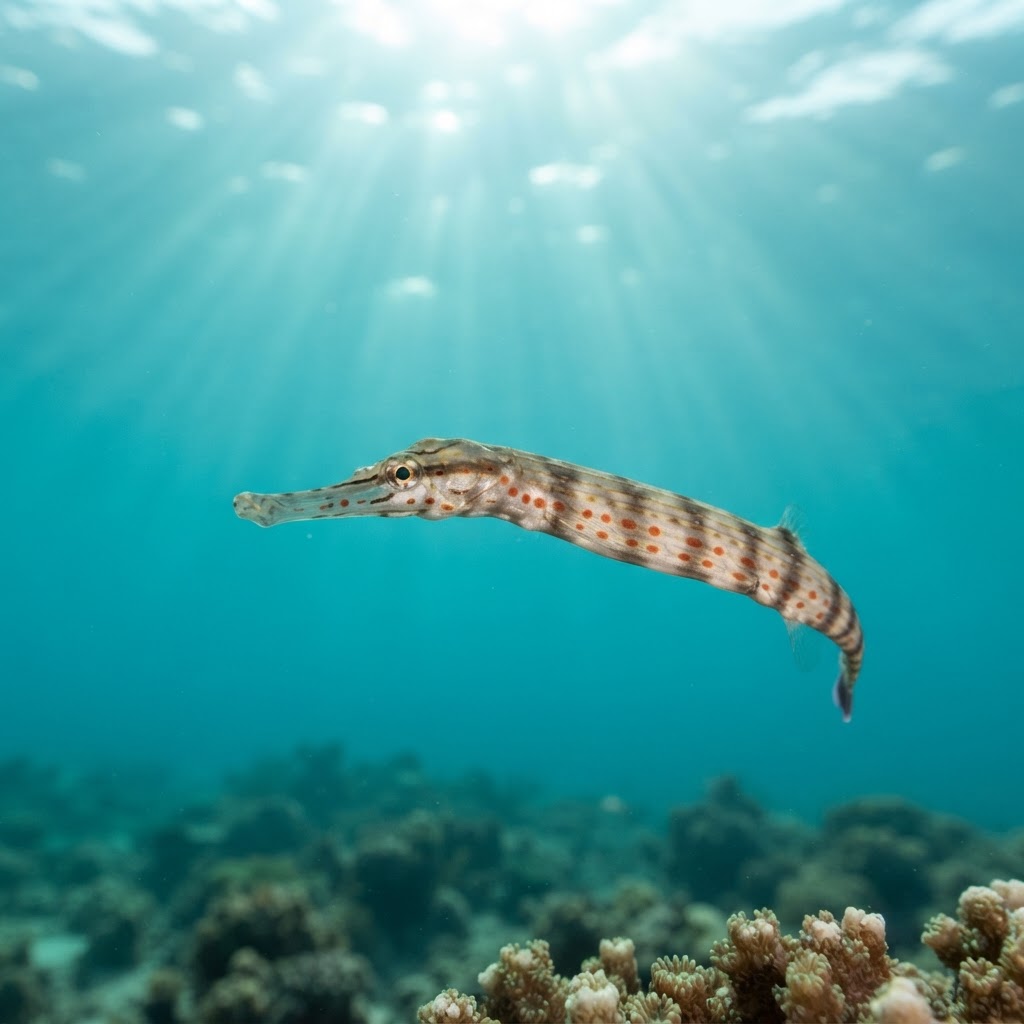
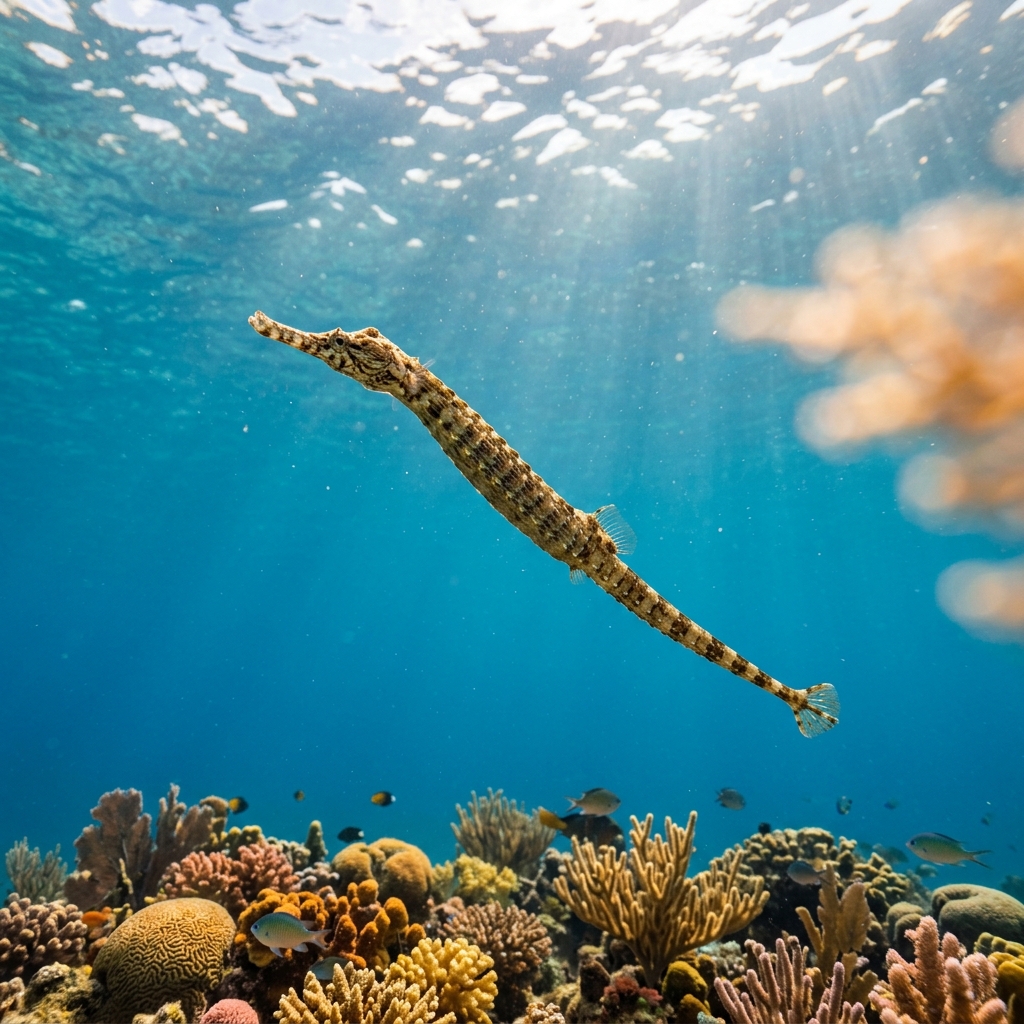
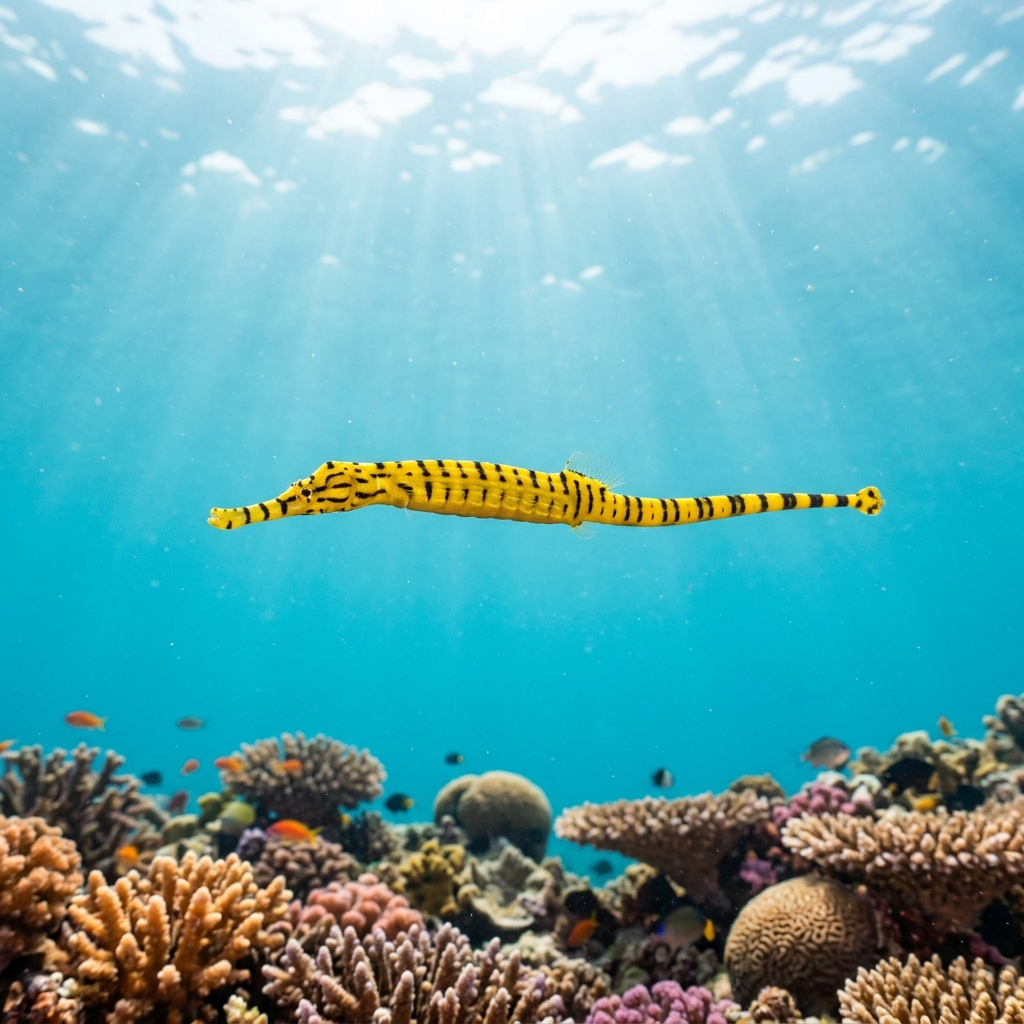
Banded rings of yellow and dark brown or black wrap the length of a slender, rigid body, giving this pipefish a striped tube-like appearance that stands out against rubble or coral. The snout is long and straight, as typical of the genus, and the body is notably elongated compared to seahorses or ghost pipefish. Look for the vivid yellow bands as the key field mark; other local pipefish species tend toward plain reds, whites, or mottled browns. Size is not well-documented in the wild, but like most reef pipefish it fits comfortably in the palm of a hand.
Like most pipefish, it tends to stay close to structure, anchoring itself among coral branches, sponges, or rubble with its tail, and drifting very little when approached. Divers who find one report it moving slowly and deliberately, relying on its banding as camouflage rather than fleeing. It is most reliably spotted by hovering at reef level and scanning crevices and coral bases rather than looking out into open water.
In syngnathid fish (the pipefish and seahorse family), it is the male that carries eggs, brooding them in a specialised pouch or along a brood patch on the underside of the trunk, until the young are ready to emerge as miniature adults.
There is not enough monthly sighting data to identify a peak season, so it should be treated as a year-round resident where conditions suit it. Its observed temperature niche of roughly 26 to 29 °C points to the warm, tropical reef systems where it has been recorded.
Most sightings come from Western Australia and the Visayas region of the Philippines, with a small number of records from the Safaga area of the Egyptian Red Sea. Within the Philippines, both central and eastern-northern Visayas sites have produced observations, making the wider Visayas a reasonable focus for anyone targeting this species. Australia accounts for the largest cluster of known sites, spread across Western Australian reefs.
Mapping where Yellowbanded Pipefish is logged…
The strongest concentration of recorded sightings is in Western Australia, with further sites across the Visayas region of the Philippines, including central and eastern-northern Visayas. There is also at least one record from the Safaga area of Egypt's Red Sea.
There is not enough seasonal data to point to a specific peak time of year. It appears to be a year-round resident on the warm tropical reefs where it occurs, with water temperatures in the 26 to 29 °C range suiting it well.
Look for the alternating yellow and dark brown or black rings wrapping around a long, rigid, tube-like body with an extended straight snout. The bold yellow banding is the key field mark that separates it from most other pipefish on the same reefs.
It is rated rare at most sites where it has been recorded, and uncommon at just a couple of sites. Finding one takes patience, sharp eyes, and a willingness to scan slowly along the reef at close range.
Site and sighting data is aggregated from diver logs, iNaturalist and GBIF. For taxonomy and conservation status:
Seahorse
1,346 sites