Dunckerocampus dactyliophorus
Spot banded pipefish in the Visayas and Sulawesi between Aug, Jan. Bold zebra-striped body makes this uncommon find worth searching for.
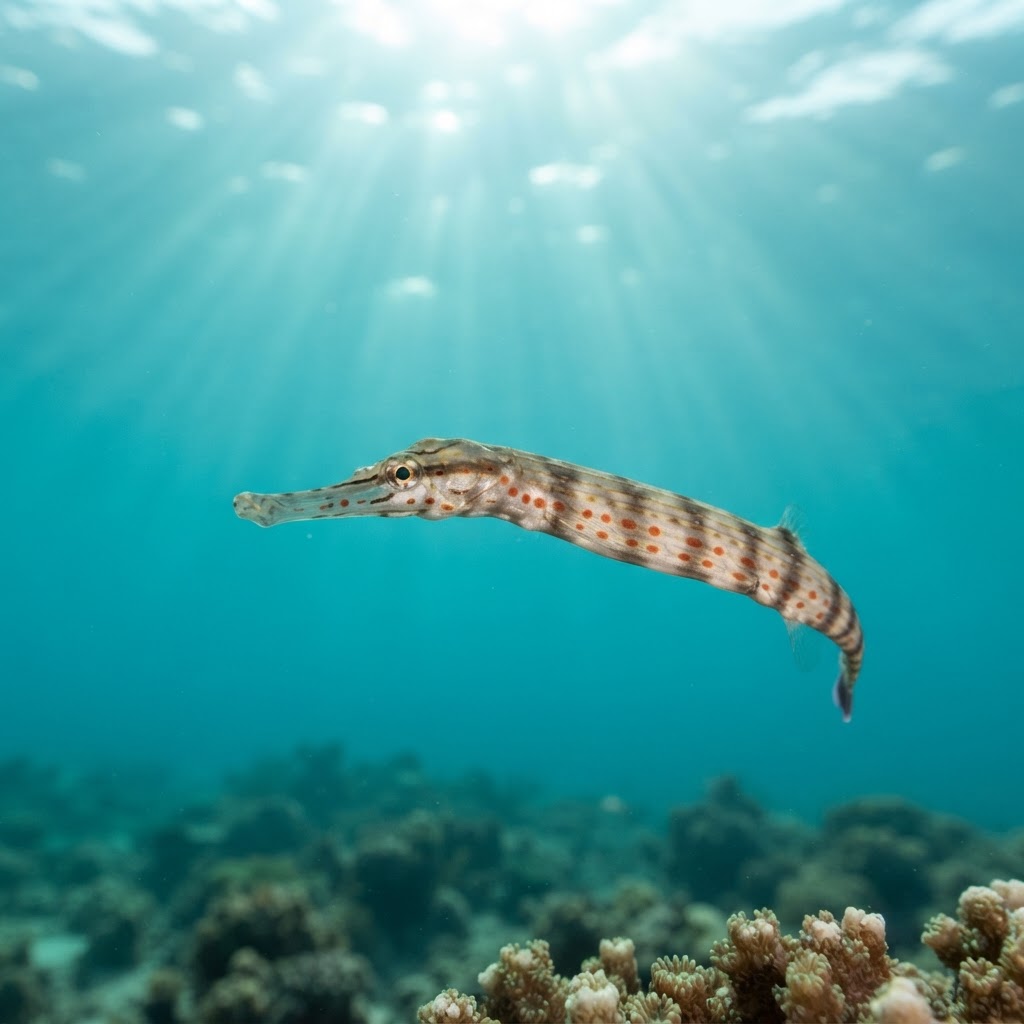
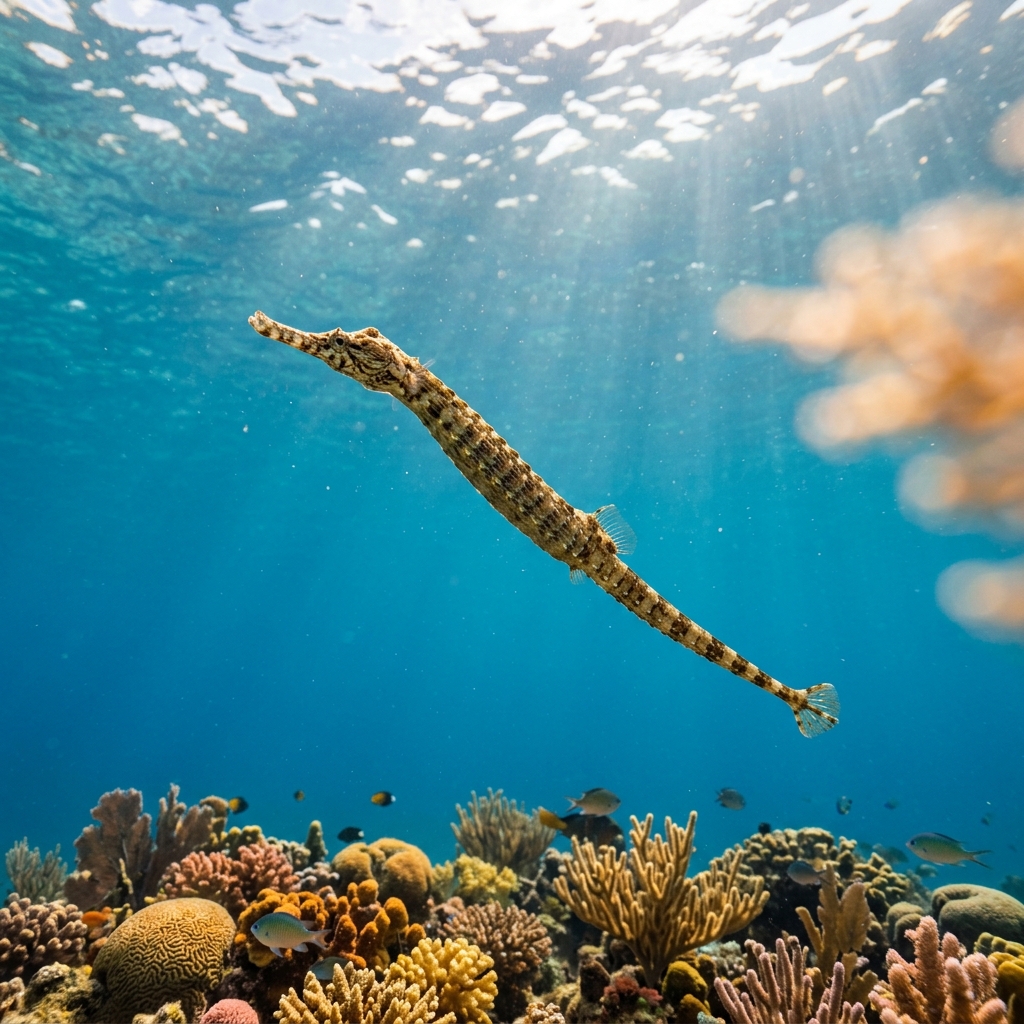
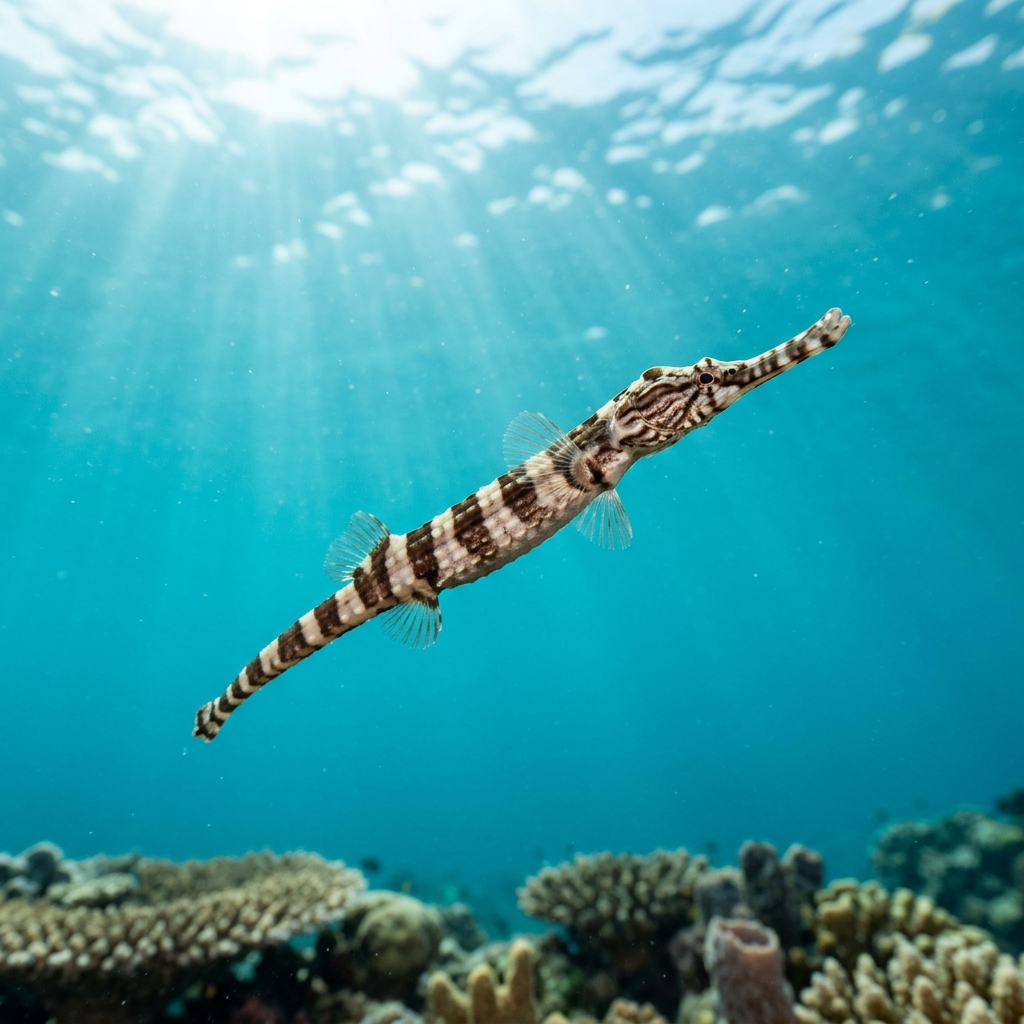
Bold, alternating white and dark-brown rings wrap the entire length of its slender, pipe-like body, making it look like a tiny barber's pole drifting near the reef. The tail is distinctively fan-shaped with bright red and white markings, a feature no other common pipefish shares. It typically hovers head-down or at an angle close to coral heads, sea fans, or crevices. At observed sizes typical of the genus, it is usually short enough to fit in the palm of your hand.
You will usually find it hovering vertically or at a steep angle close to a coral head, sea fan, or sponge, using its prehensile (grasping) tail to anchor itself against gentle current. It is not especially shy but tends to tuck slightly deeper into structure when approached closely, so slow, patient movement pays off. Sightings are typically solitary, though pairs are occasionally found together near suitable shelter.
Like all syngnathids, it is the male that carries the eggs, brooding them in a pouch under his tail until they hatch as fully formed miniature pipefish.
Northern Hemisphere sightings concentrate from August through January, so that window is the best bet for the Philippines, Indonesia, Malaysia, and Palau. The single Southern Hemisphere data point points to a similar August, December peak.
Most sightings come from the Philippines, particularly the Central and Eastern Visayas regions, where it is logged across more dive sites than anywhere else. Indonesia is the next strongest destination, with Sulawesi and Bali both producing regular records. Malaysia's Sipadan and East Sabah sites, along with the Rock Islands of Palau, round out the reliable options.
Mapping where Banded Pipefish is logged…
The strongest populations are logged in the Visayas region of the Philippines, followed by Sulawesi and Bali in Indonesia, Sipadan and East Sabah in Malaysia, and the Rock Islands of Palau. All of these sites sit within the warm Coral Triangle, where the species is most reliably encountered.
Sightings across its main range in the northern tropics are most concentrated from August through January. If you are planning a trip to the Philippines, Indonesia, or Malaysia specifically to look for one, that seasonal window gives you the best odds.
Look for the bold, evenly spaced white and dark-brown rings that cover the whole body, combined with a distinctively fan-shaped tail marked in red and white. That tail pattern is the single most reliable field mark and separates it from other pipefish at a glance. It is typically found hovering vertically close to coral or sea-fan structure.
Across the sites where divers log it, banded pipefish is most often described as uncommon, and at many sites it tips into rare. It is not an animal you can count on seeing on every dive, so if you spot one consider yourself lucky and take your time with it.
Site and sighting data is aggregated from diver logs, iNaturalist and GBIF. For taxonomy and conservation status:
Seahorse
1,346 sites