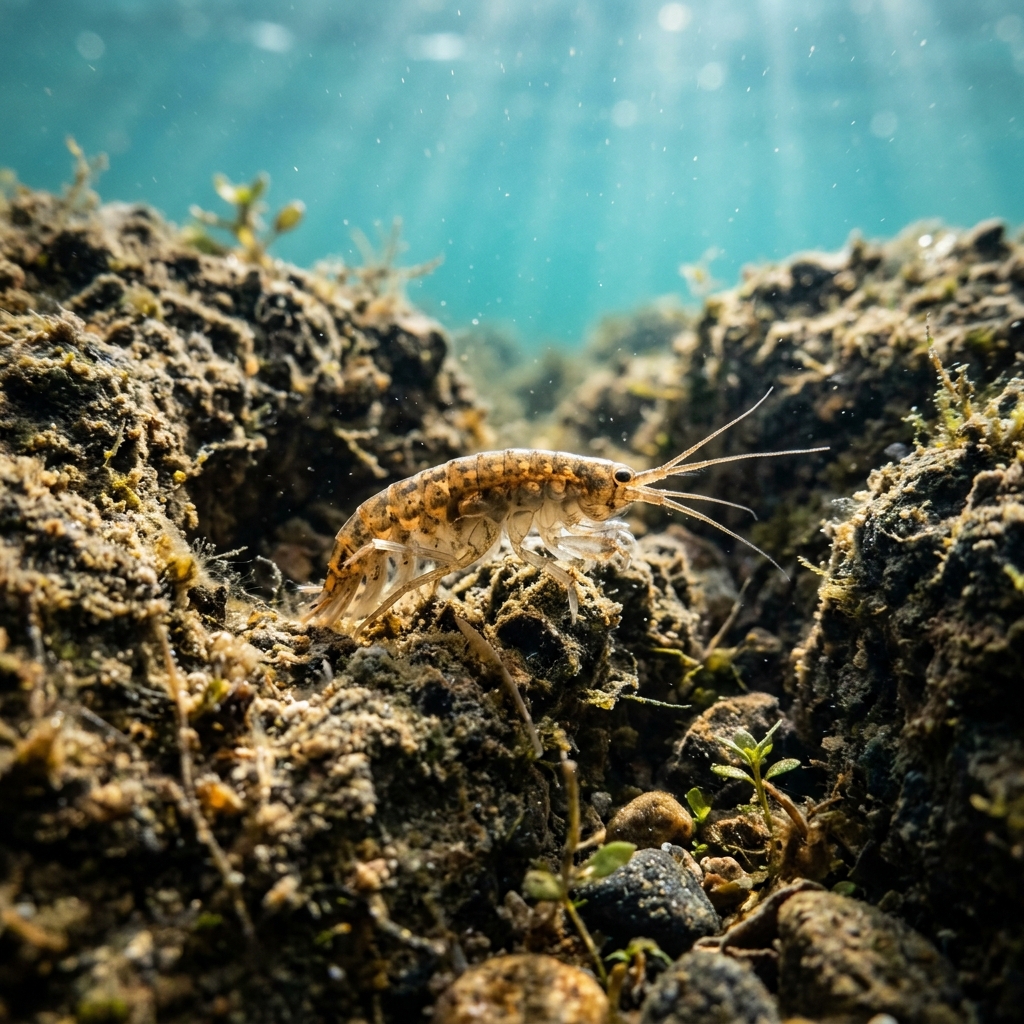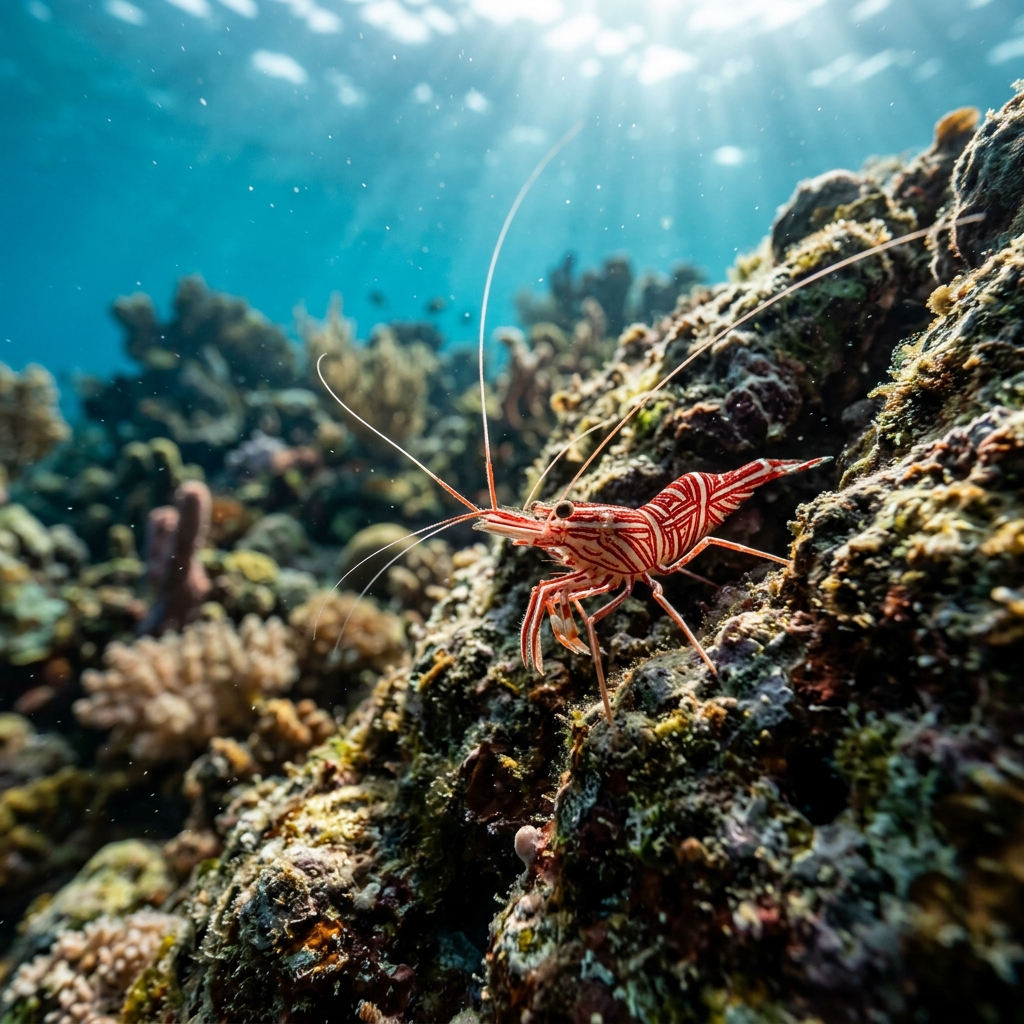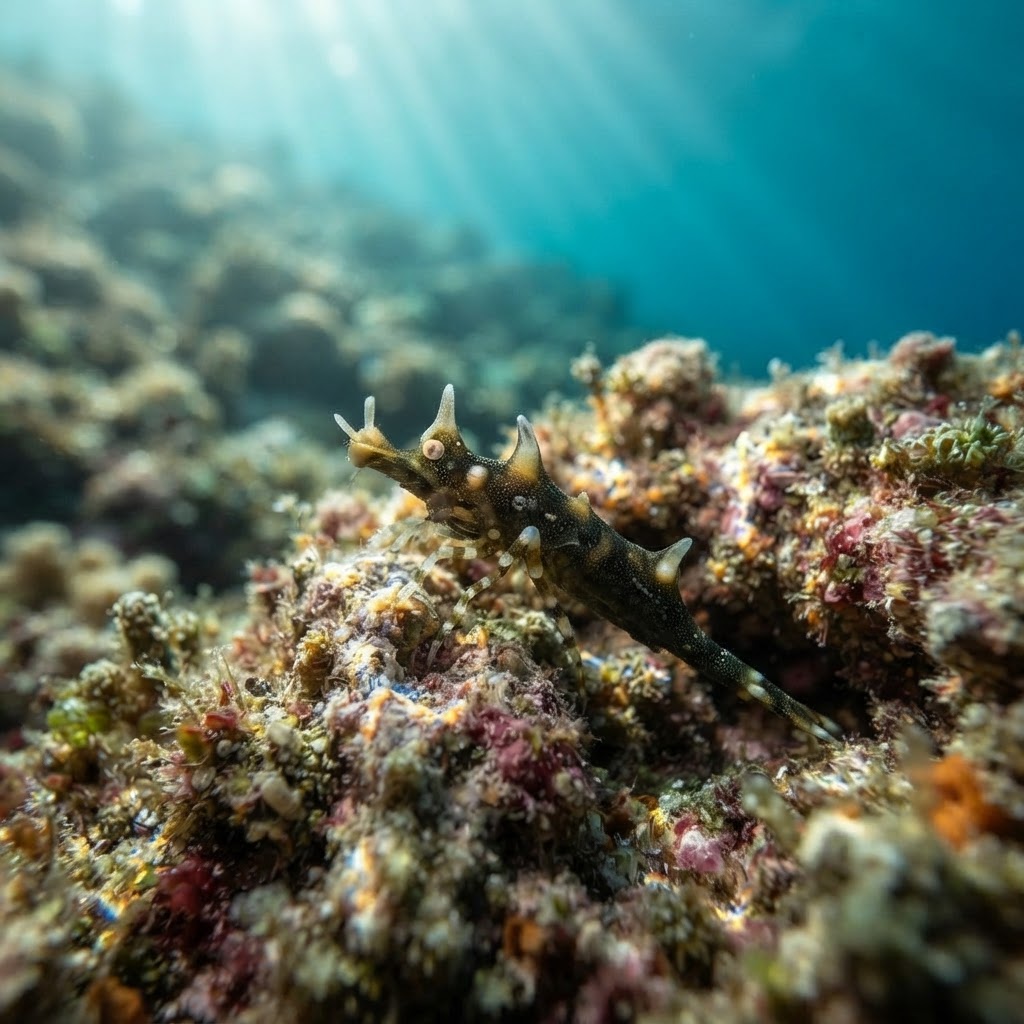
Miropandalus hardingi
A 1cm crustacean spotted mostly in Visayas, Philippines, on warm reefs between 25 and 31C. Here's how to spot one.
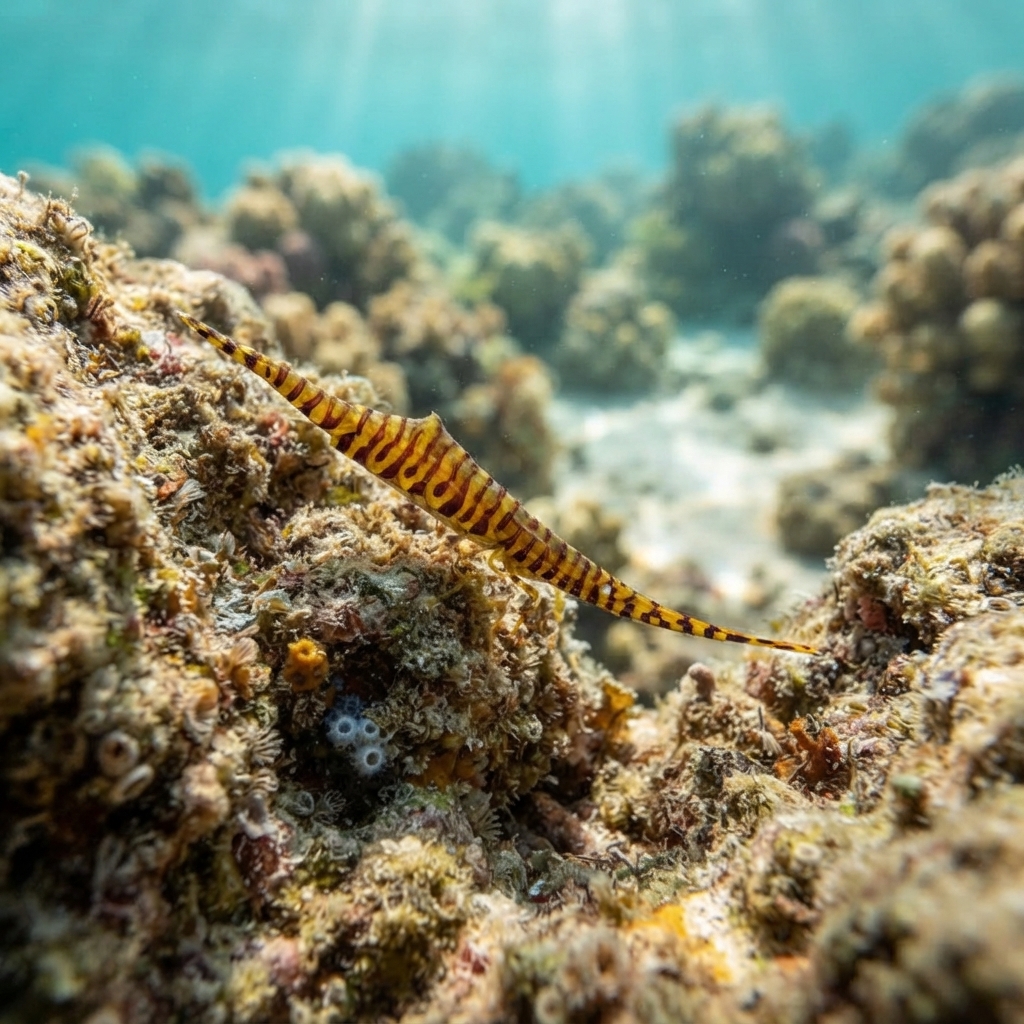
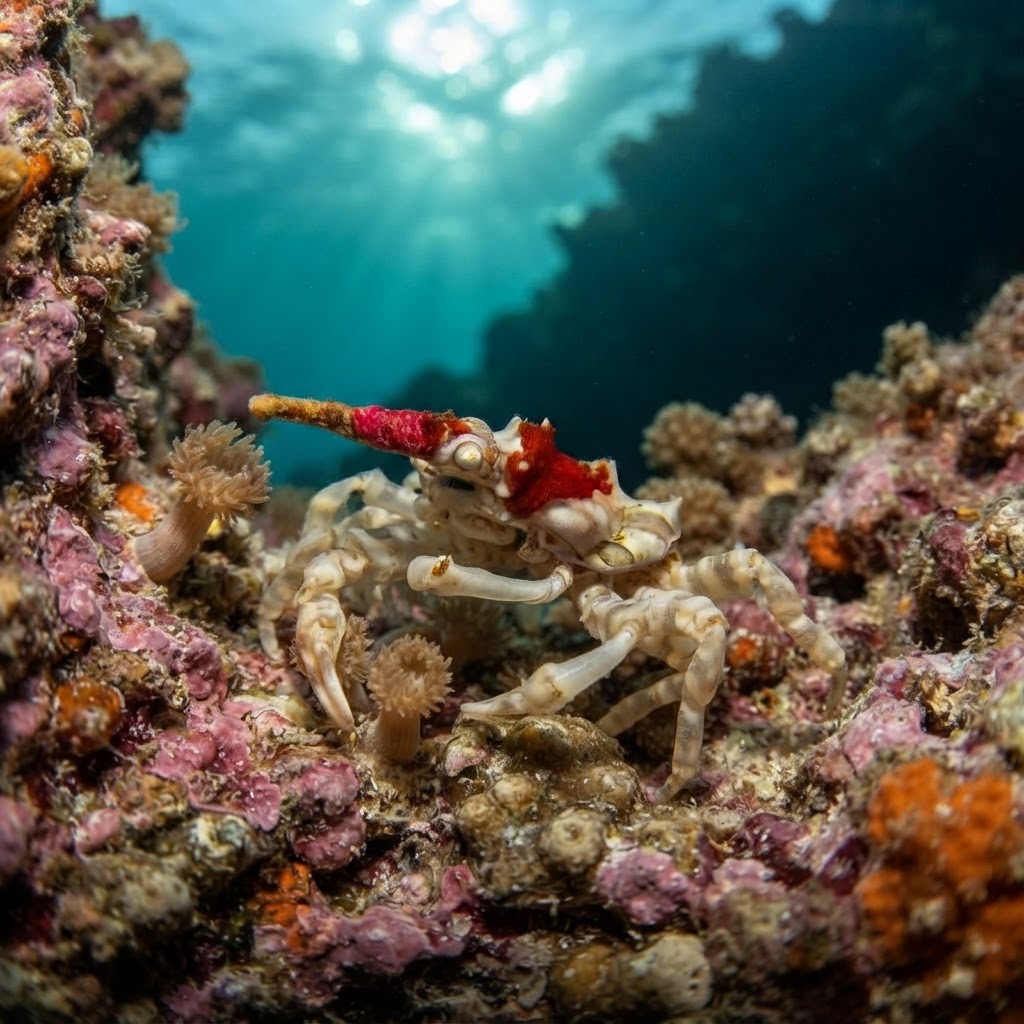
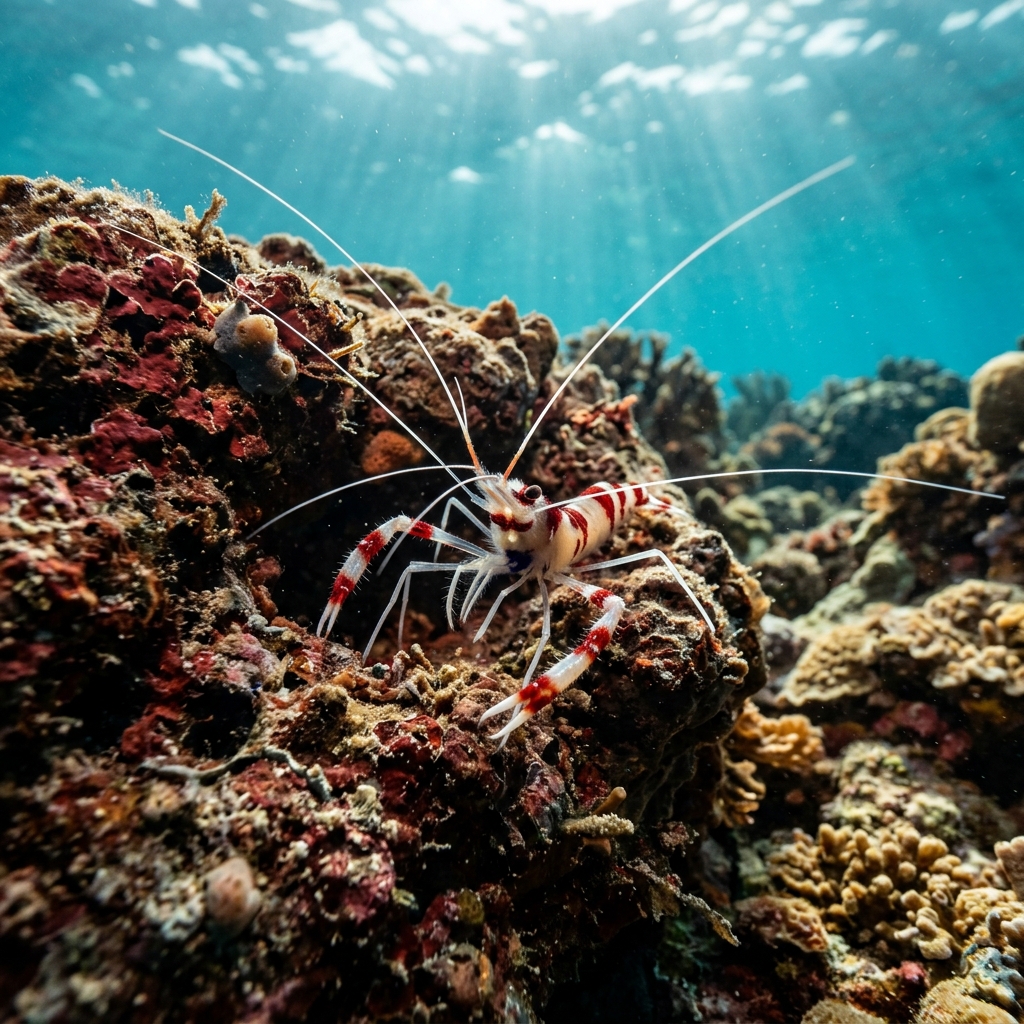
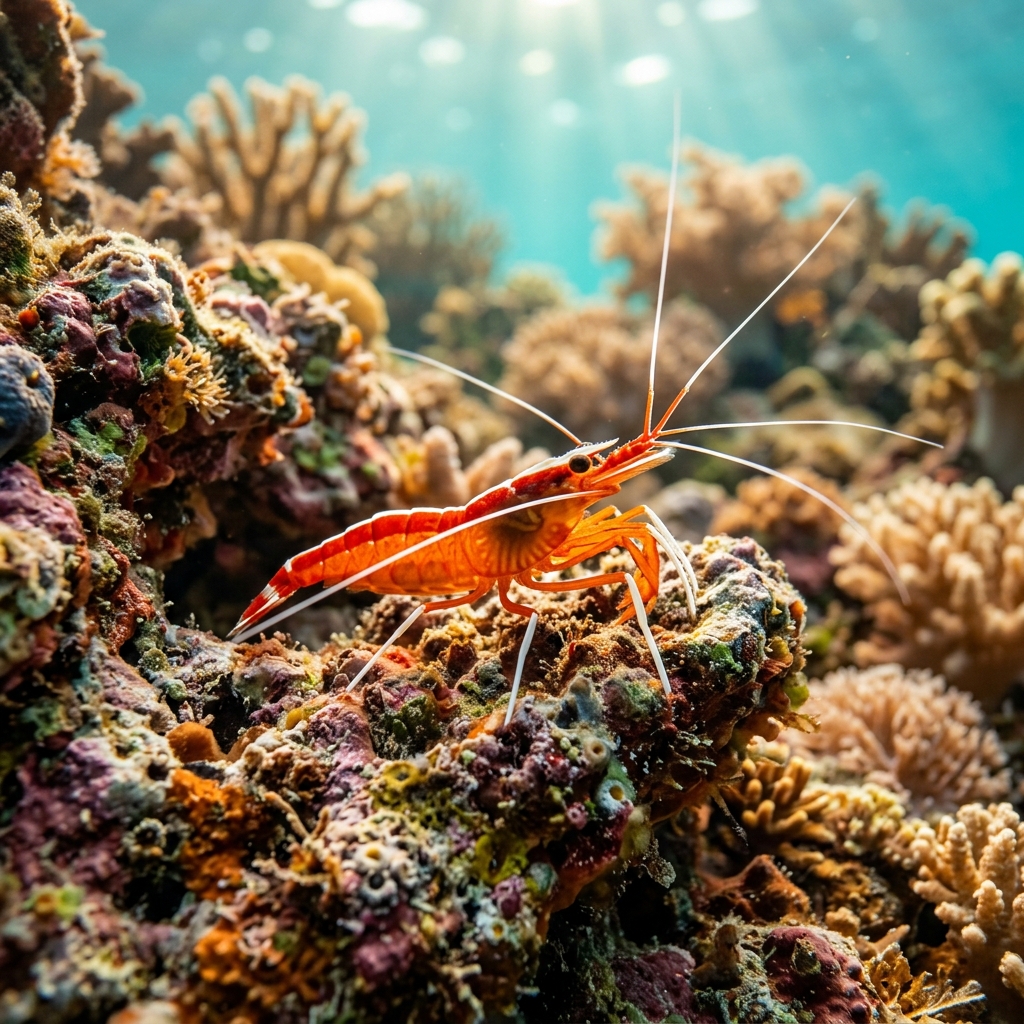
Barely a centimetre long, so you're hunting for a translucent body with fine red or maroon markings and unusually long, spindly walking legs rather than scanning for colour from a distance. The body carries small spiky projections along the back that give it a slightly armoured, dragon-like silhouette when lit head-on by a torch. Look for it sitting motionless on rubble or coral debris rather than swimming.
Divers log it sitting still on rubble, coral rock or fine debris, relying on its size and translucency to stay unnoticed rather than fleeing when approached. It's the kind of animal you find because a dive guide already knows the exact patch of rubble to check, not because it's cruising in the open. Most sightings happen on slow macro-focused dives where the group takes time to scan small stretches of substrate closely.
It's rated uncommon at every site where it has been recorded, so even in its Visayas stronghold this is a real find-of-the-dive moment rather than a reliable tick.
Sightings show no detectable seasonal pattern, and with water temperatures logged between 25.2 and 31.2C year-round, warm Visayan reefs stay within its comfort range every month. Treat it as a year-round find rather than something tied to a particular season.
Reef neighbours a diver could mistake it for. Use the identification notes above to tell them apart.
Almost every logged sighting comes from the Philippines, with the Visayas region, particularly around Cebu and Bohol, producing the bulk of records and Luzon adding a smaller handful of sites. If you're planning a trip specifically for this species, the Visayas is currently the only well-documented option.
Mapping where Dragon Shrimp is logged…
Nearly all logged sightings come from the Philippines, concentrated in the Visayas region around Cebu and Bohol, with a smaller number of records from Luzon.
There's no clear seasonal pattern in the sightings, and water temperatures stay within its 25 to 31C range year-round in the Visayas, so it can turn up on any month's dive.
Look for a translucent body under a centimetre long, with fine red markings and small spiky projections along the back, sitting still on rubble or coral debris rather than swimming in the open.
They're tiny, reaching around 1cm in length, which makes them one of the harder macro subjects to spot without a guide pointing them out.
No, they pose no threat to divers. They're small, stationary, and easily overlooked rather than defensive.
Site and sighting data is aggregated from diver logs, iNaturalist and GBIF. For taxonomy and conservation status:
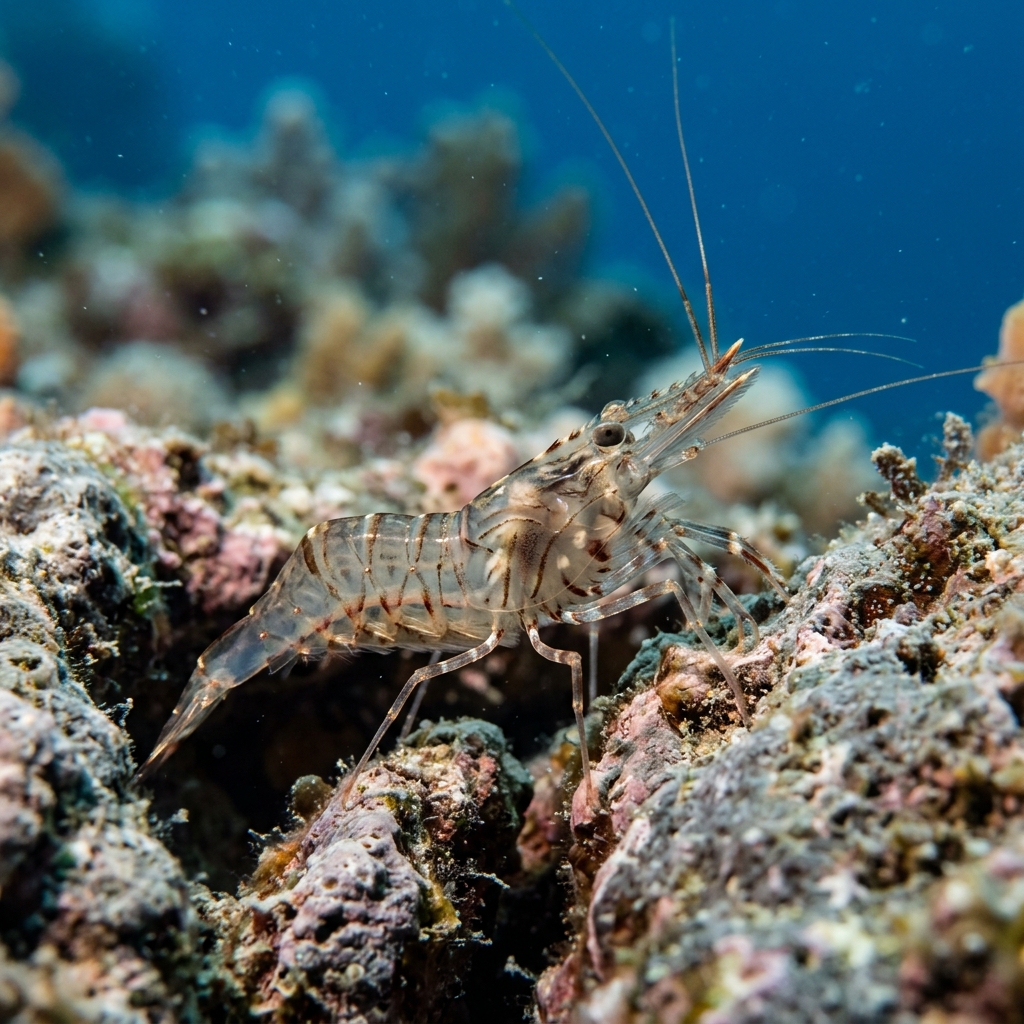
Rockpool Prawn
2,179 sites