Gymnothorax monochrous
An uncommon find on Sulawesi reef dives, this plain-bodied moray sits in 24-29C water year-round.
Safety warning
Morays have a strong bite and poor eyesight up close, so the real risk comes from divers or snorkellers putting hands into crevices to point out or feed them. Keep hands clear of holes and admire this one from a body length away and there is no issue.
If you're bitten
BiteGeneral first-aid guidance, not a substitute for professional medical care. In an emergency, call your local emergency number.
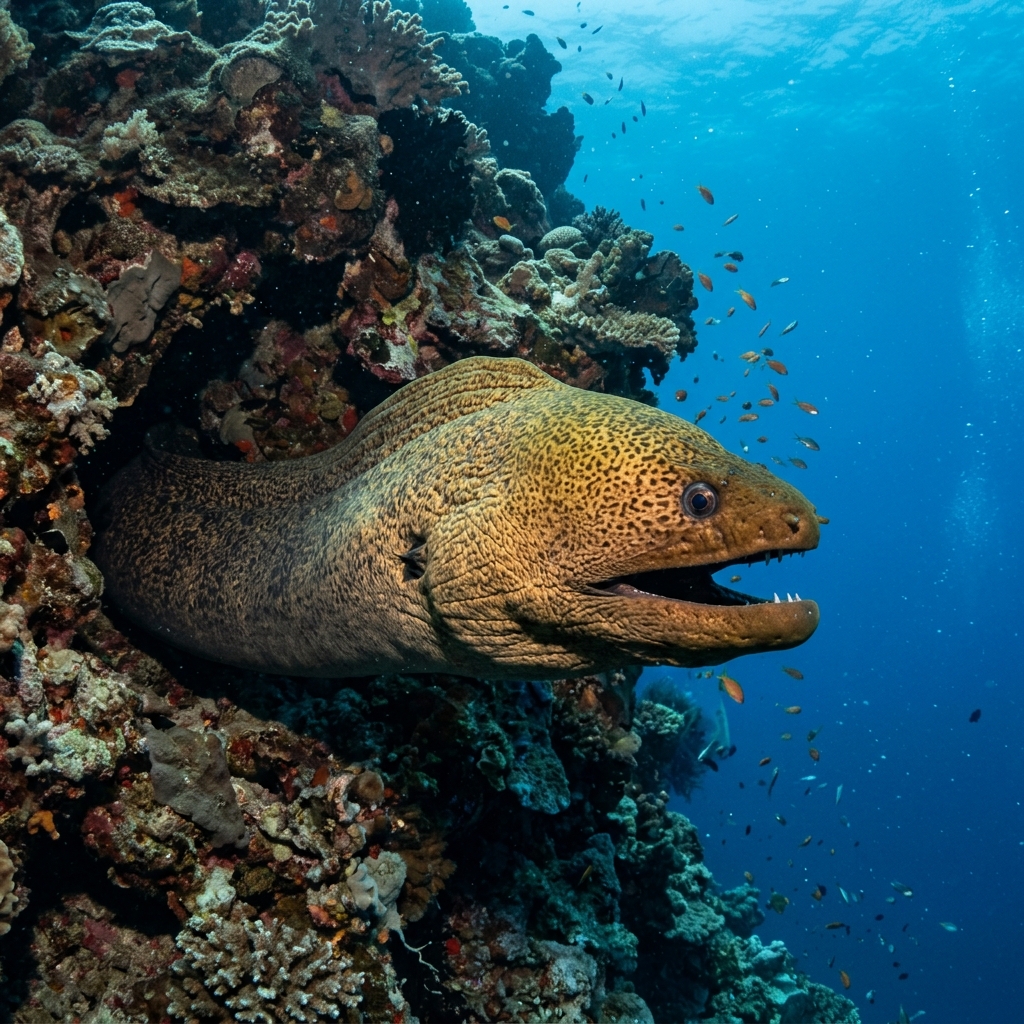
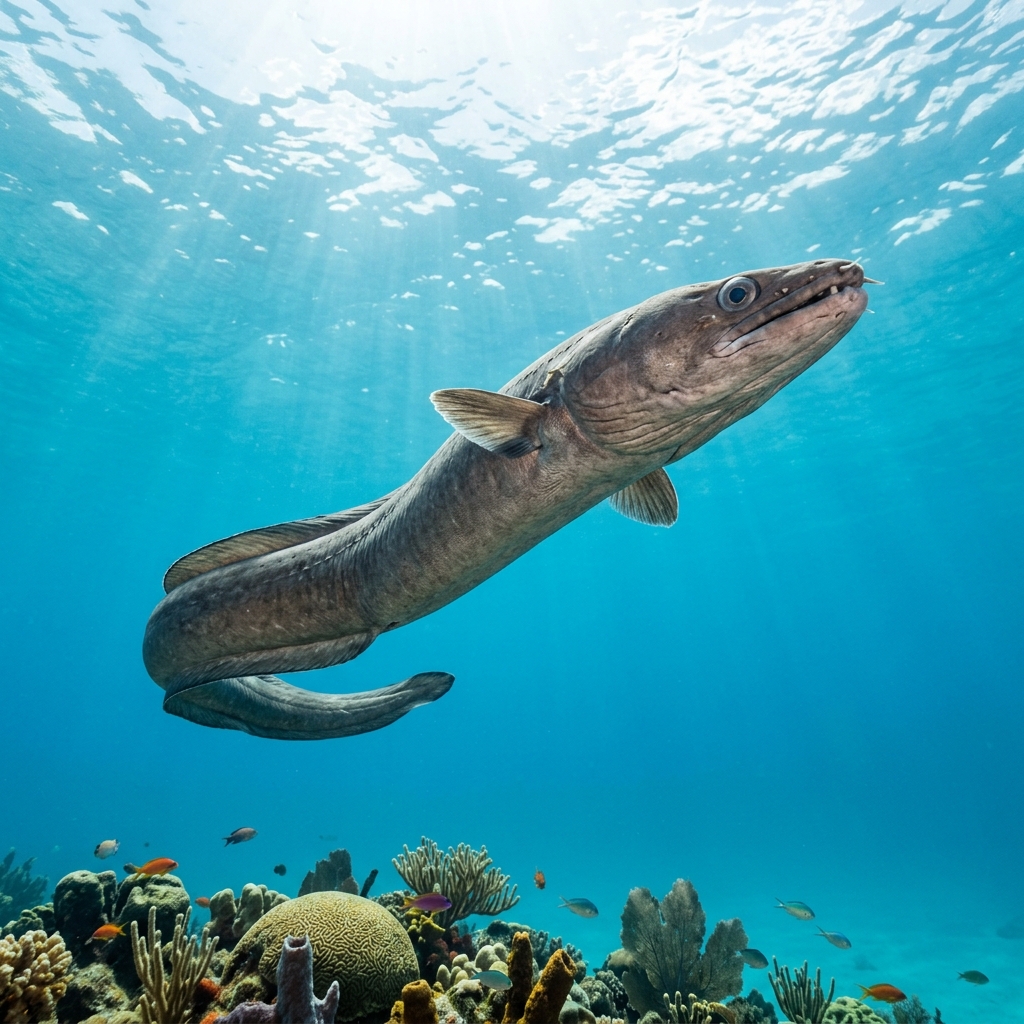
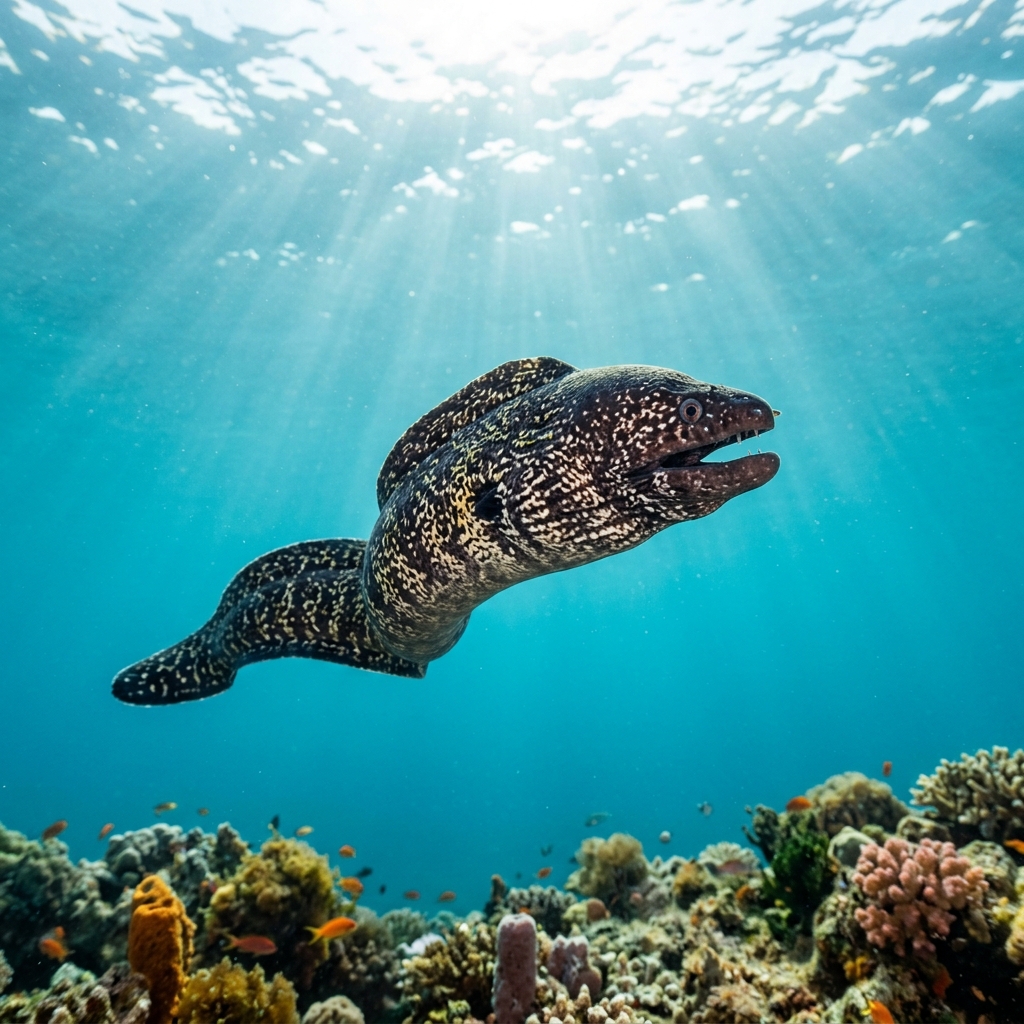
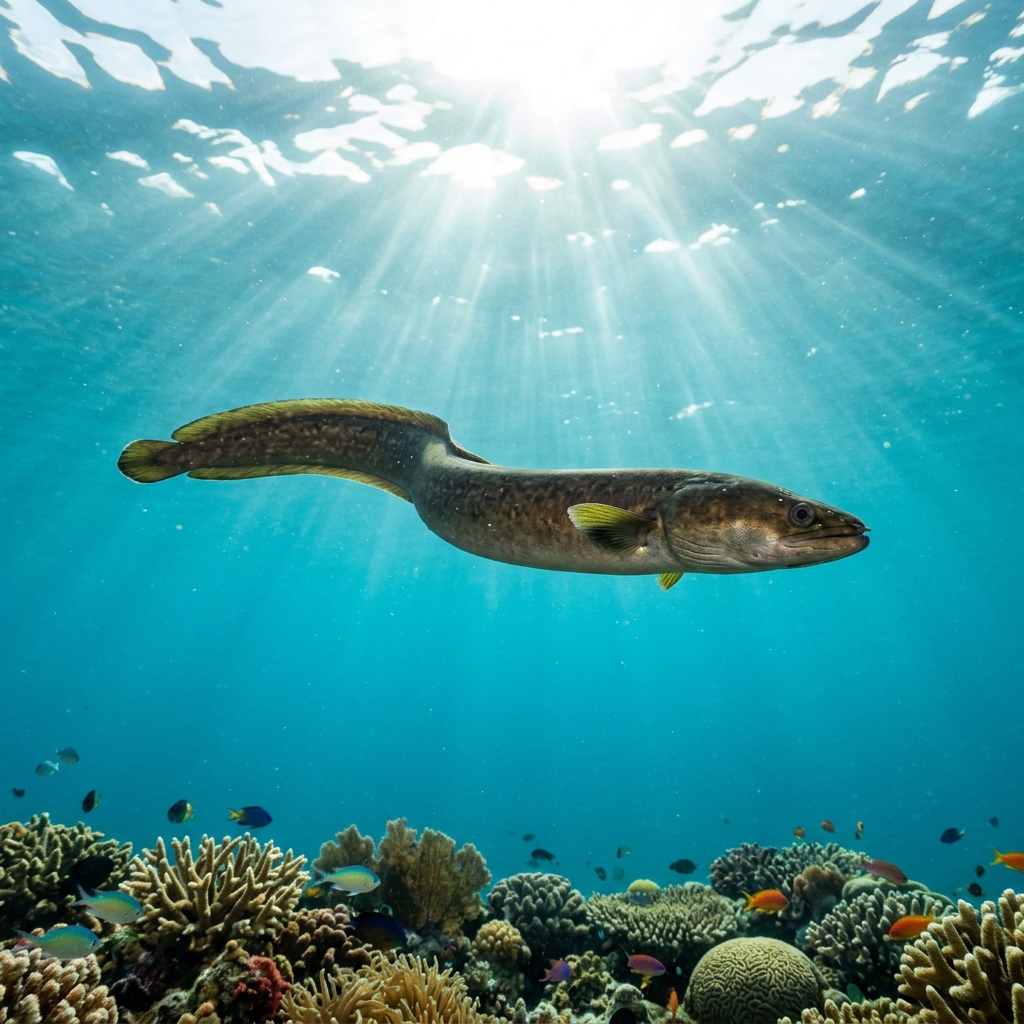
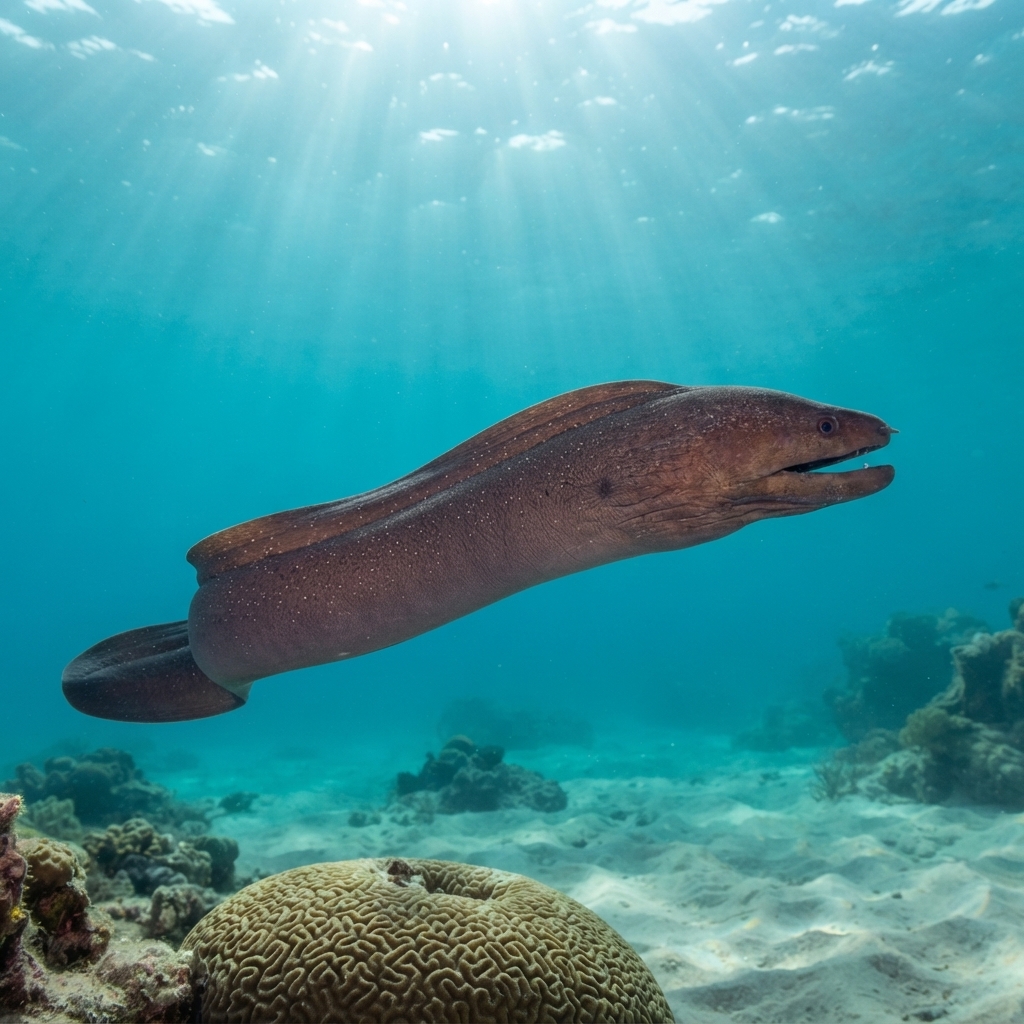
A stocky moray around half a metre long, with an even grey-brown or olive body that lacks the bold patterning most reef morays show, hence the name. The head is blunt and rounded, the body thickens through the middle then tapers to a slim tail, and there are no obvious spots, bars or edge markings to key on. With a plain colour scheme, ID underwater comes down to ruling out the boldly marked look-alikes rather than spotting a distinct mark.
Like most moray eels it spends daylight hours tucked into reef crevices or rubble with just its head showing, opening and closing its mouth to breathe rather than as a threat display. Divers who do encounter it typically find it wedged into a hole on the reef rather than out swimming, and it tends to hold its ground rather than bolt when approached slowly.
Morays rely on a second set of jaws in their throat (pharyngeal jaws) to drag prey down after the first bite, a trick most reef fish do not have.
Sightings are not tied to a particular season, and the observed water temperature range of 24.4 to 29.3C is typical of tropical reefs year-round, so there is no strong seasonal window to aim for. Go whenever you would normally dive Sulawesi.
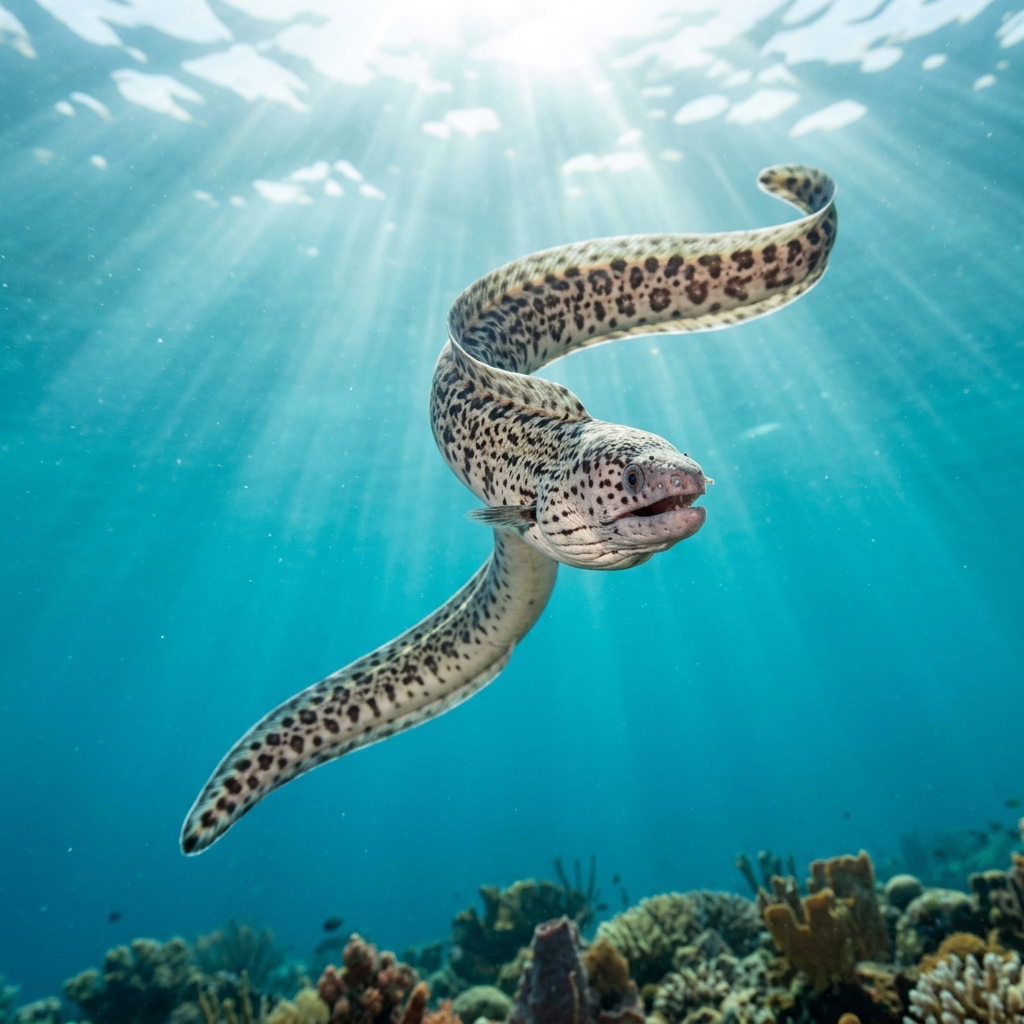
Reef neighbours a diver could mistake it for. Use the identification notes above to tell them apart.
The only confirmed dive sightings so far are from Sulawesi, Indonesia, making it the one region divers currently associate with this species. It is logged as uncommon even there, so treat any encounter as a real find rather than something to plan a dive around.
Mapping where Drab Moray is logged…
The only logged sightings so far are from Sulawesi, Indonesia, where it turns up as an uncommon find on reef dives. It has not yet been confirmed at other dive destinations.
There is no detected season for this species, and it sits comfortably in water from about 24 to 29C, the range typical of tropical reefs all year. Any time you are diving Sulawesi is as good as any other.
It can bite hard if provoked or if a hand is mistaken for food near its hiding hole, so it is considered dangerous in that sense. Left alone and not fed or handled, it poses no real risk to a passing diver.
Look for a stocky moray around half a metre long with a plain grey-brown or olive body and no distinct spots or bands. The lack of pattern is itself the clue, since most reef morays divers see have bold markings.
They reach around 56 cm in length, making them a smaller, more modestly sized moray compared to reef giants like the giant moray.
Site and sighting data is aggregated from diver logs, iNaturalist and GBIF. For taxonomy and conservation status:
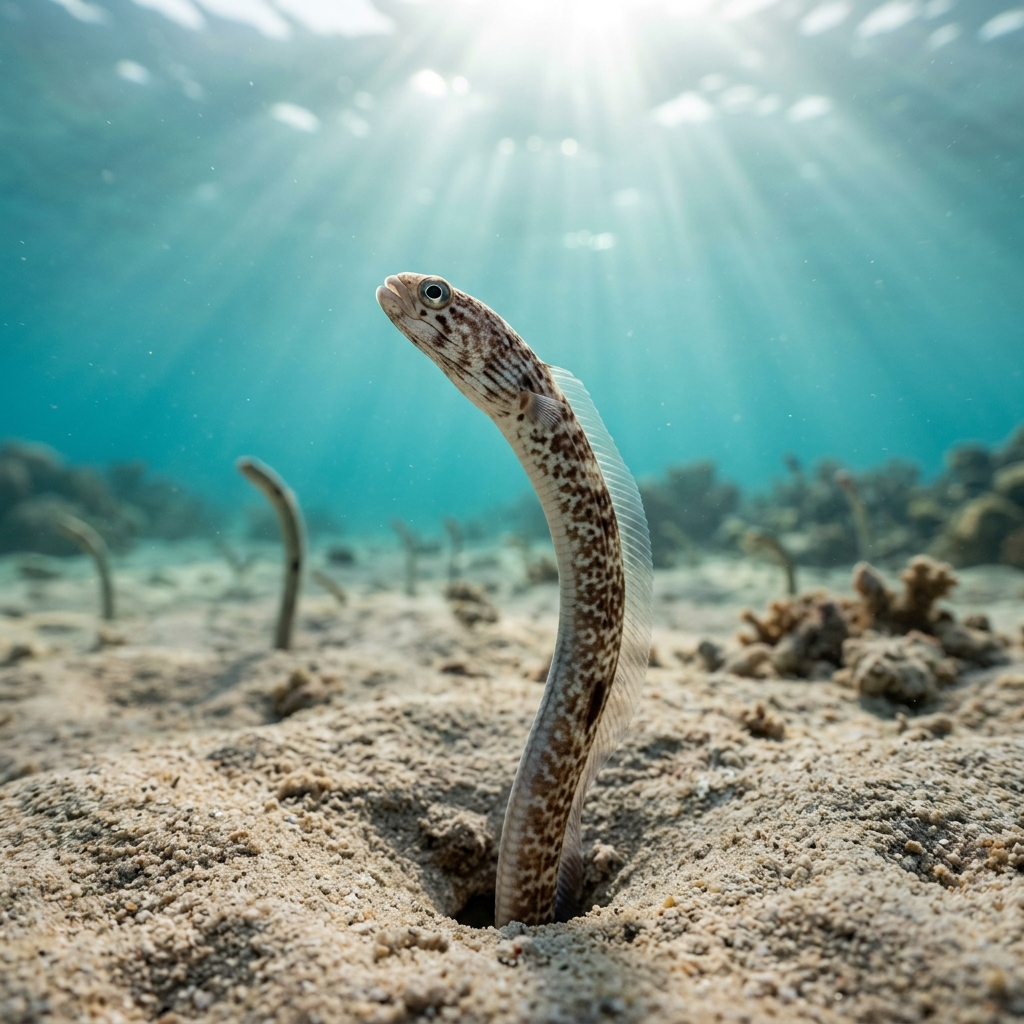
Garden Eel
2,448 sites