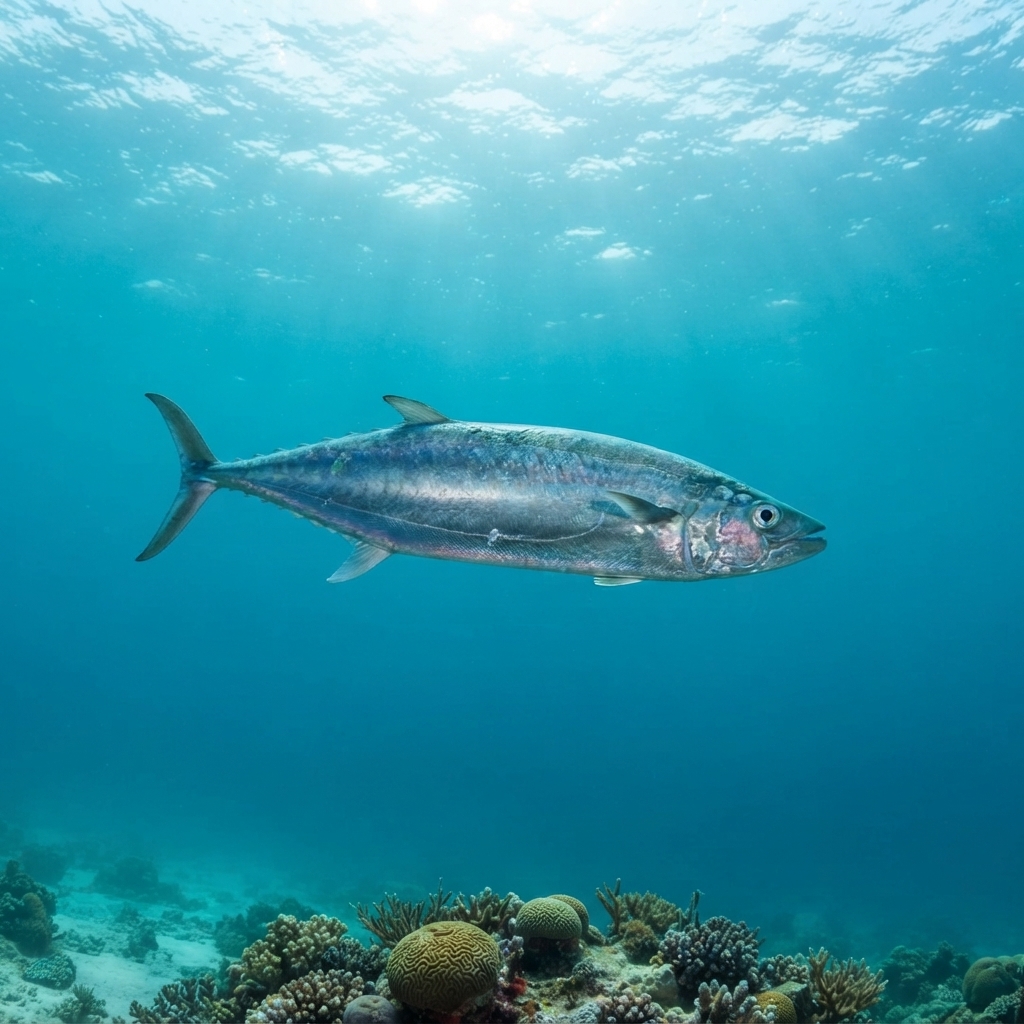
Grammatorcynus bicarinatus
Uncommon but reliable on Queensland reefs, this mackerel cruises reefs year-round in 22.6-27.8C water. Here's where and how to spot one.
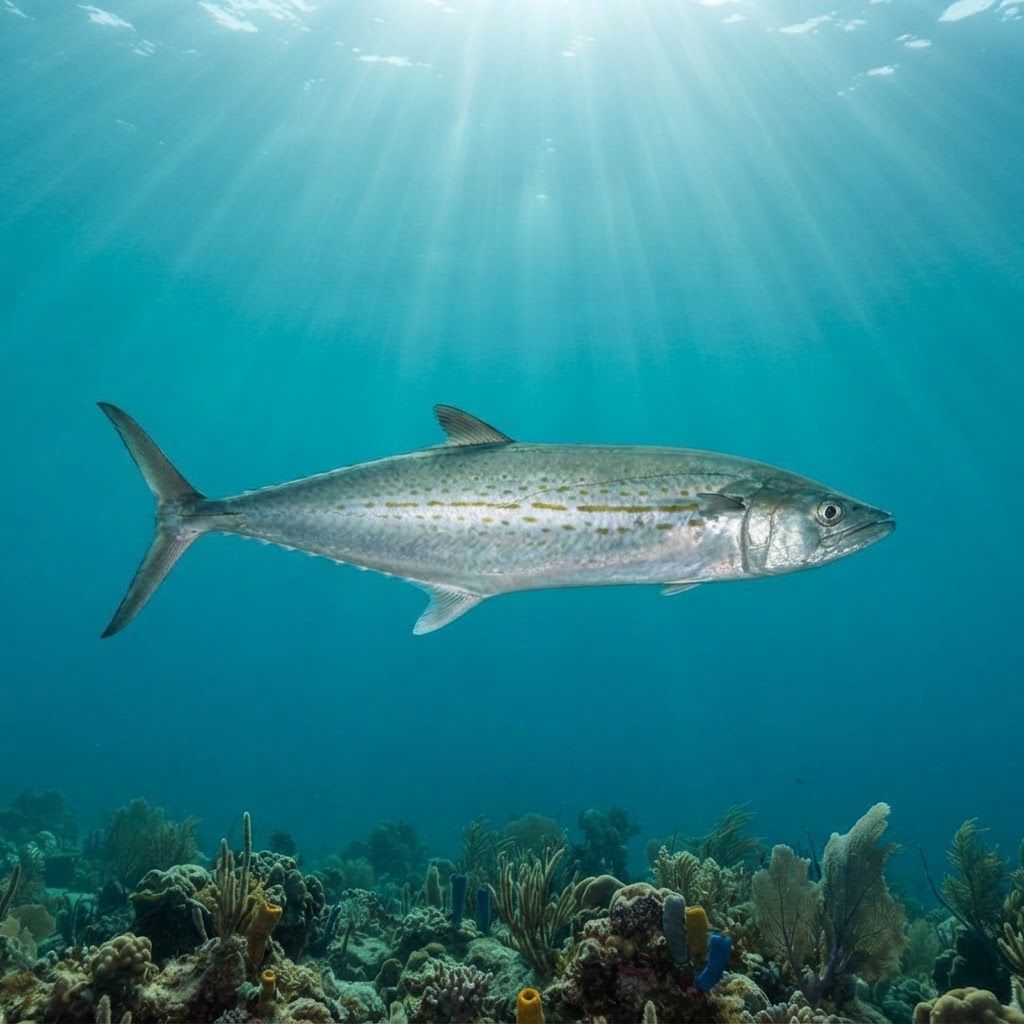
Look for a long, torpedo-shaped body with a silvery-blue back fading to pale sides, growing to around 78 cm. The giveaway is the pair of dark lines running along the upper flank, which is where the common name comes from. It swims with the steady, purposeful cruising style typical of open-water mackerel rather than darting like a reef fish.
Divers typically log it cruising in open water just off the reef, sometimes solo and sometimes in loose small groups, rather than tucked into structure. It keeps a fairly relaxed distance from divers and tends not to react much to bubbles or approach, more interested in patrolling than investigating. Most sightings are along reef edges where the bottom drops into deeper water.
Unlike many mackerel that need to keep moving to force water over their gills, this species can pump water actively, letting it hover or swim slowly without suffocating, a trait shared with only a couple of its close relatives.
No clear seasonal pattern shows up in the sightings, so treat it as a year-round possibility. Water temperatures logged for this species run 22.6 to 27.8C, which covers most of the diving calendar on Queensland reefs.
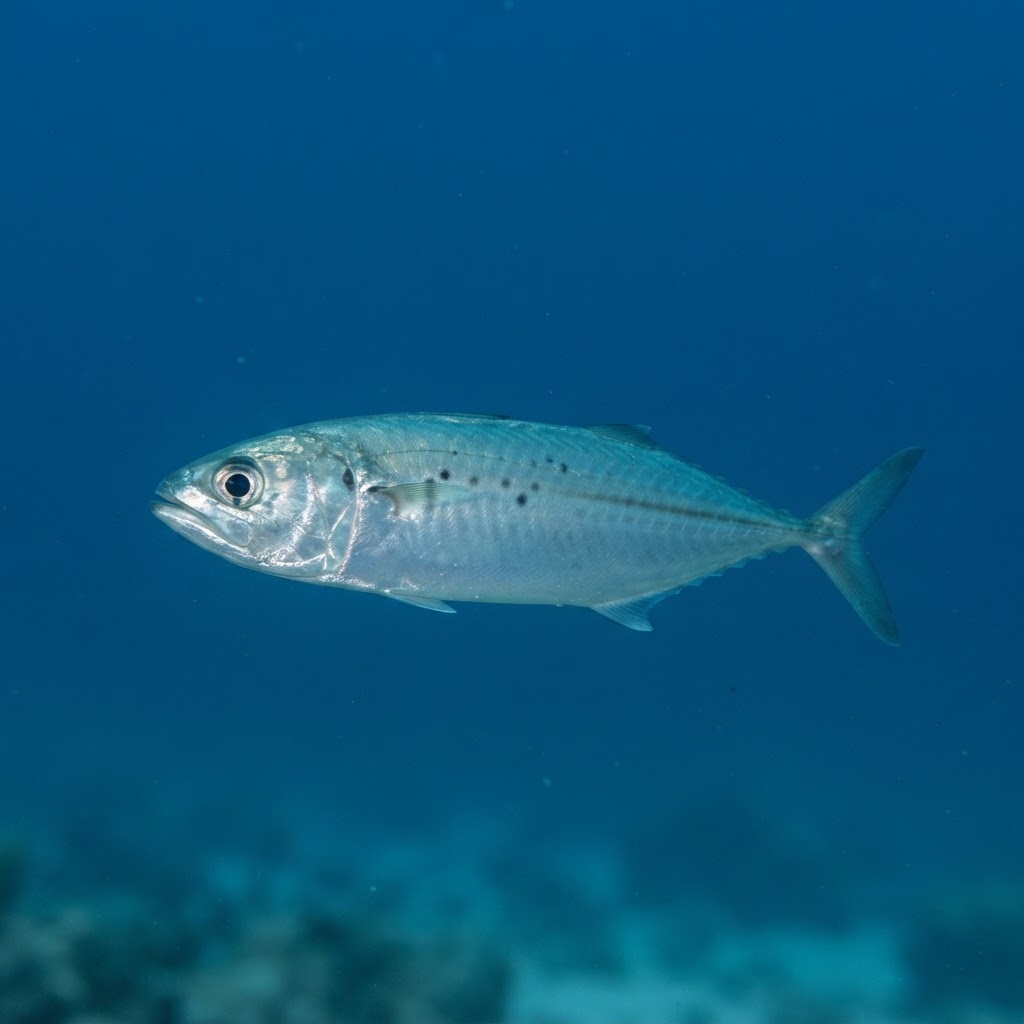
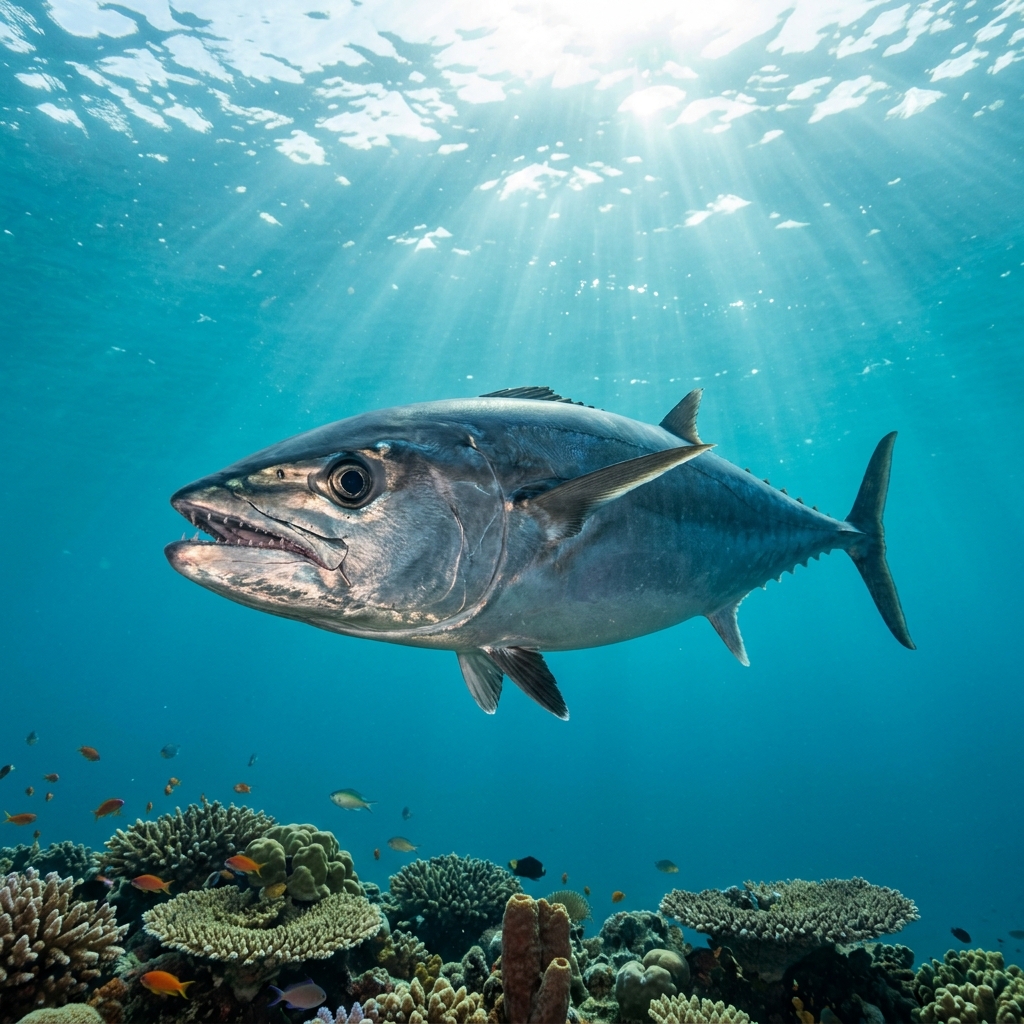
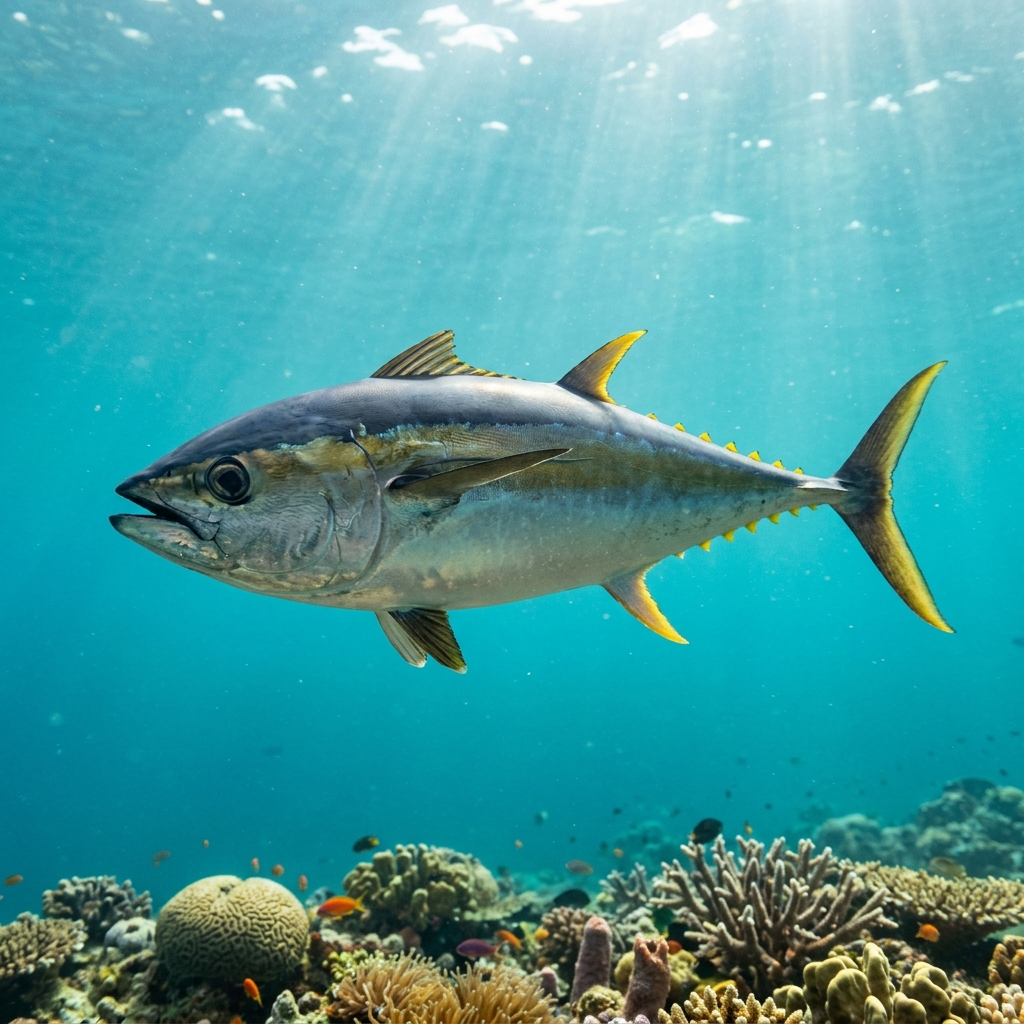
Reef neighbours a diver could mistake it for. Use the identification notes above to tell them apart.
Every logged sighting in Fin's data comes from Australia, concentrated in Queensland reefs. If you're diving the Queensland coast, this is the region to watch mid-water over reef edges rather than in the shallows.
Mapping where Shark Mackerel is logged…
All confirmed sightings come from Queensland, Australia, making it the region to target if you want a real chance of an encounter.
There's no strong seasonal signal in the sightings, so it's considered a year-round possibility on Queensland reefs where water sits between roughly 22.6 and 27.8C.
Check for a slim, silvery-blue body around 78 cm long with two dark lines tracking along the upper flank. It cruises steadily in open water near reef edges rather than hovering close to structure.
They reach around 78 cm in length, a mid-sized mackerel by scombrid standards, seen singly or in small loose groups over reef.
No, they're not considered a danger to divers and typically keep their distance, going about their business in open water.
It can actively pump water over its gills instead of relying purely on forward swimming, letting it slow down or hover briefly, an ability most mackerel lack.
Site and sighting data is aggregated from diver logs, iNaturalist and GBIF. For taxonomy and conservation status:
Dogtooth Tuna
629 sites