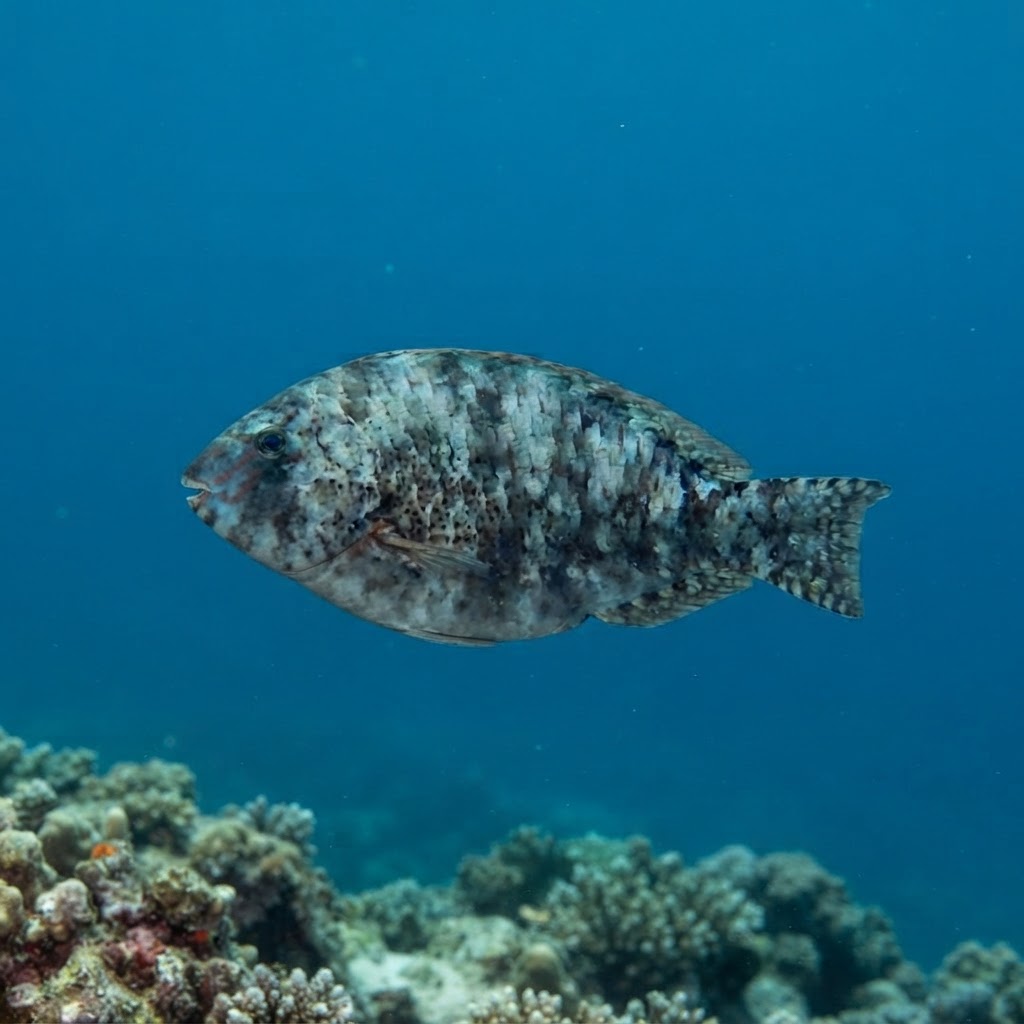
Calotomus viridescens
Uncommon but steady find across South Sinai and Marsa Alam, this small parrotfish grazes reef flats year-round in 25-29C water.
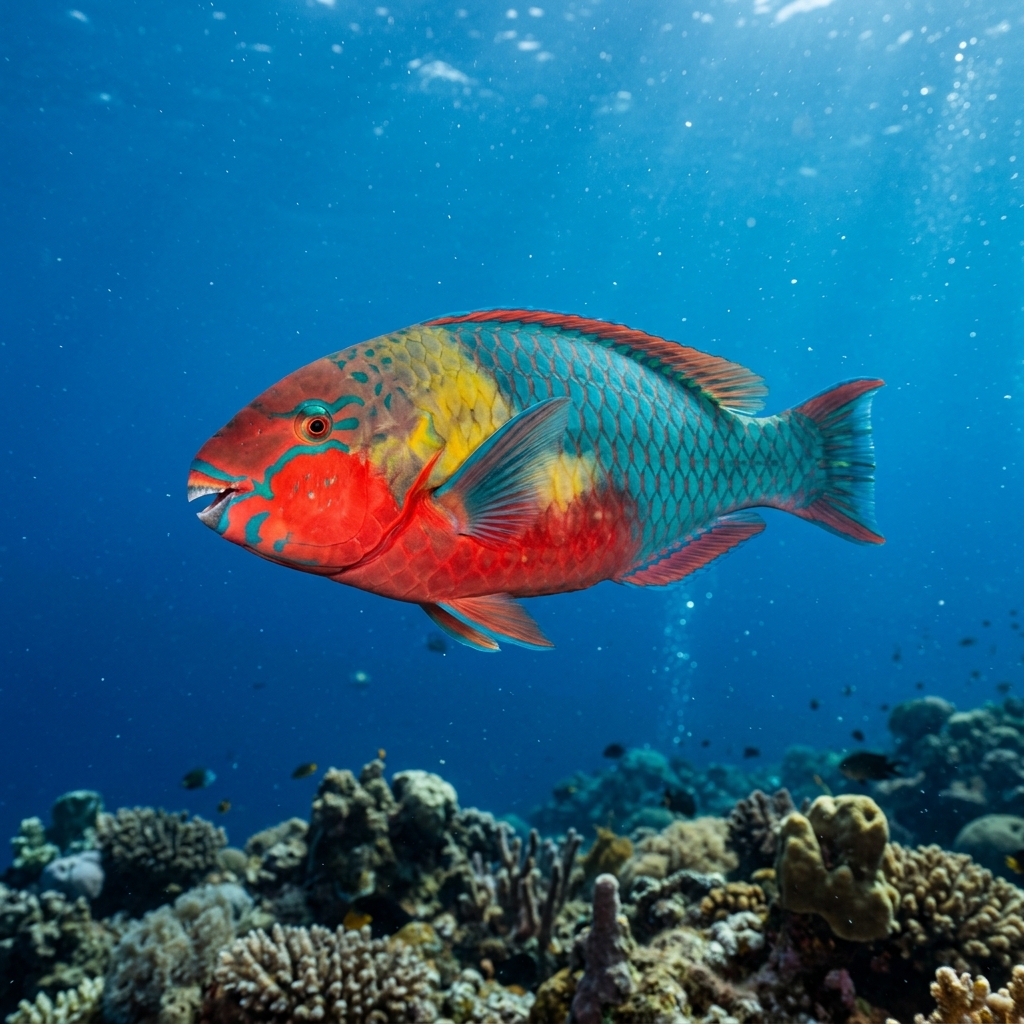
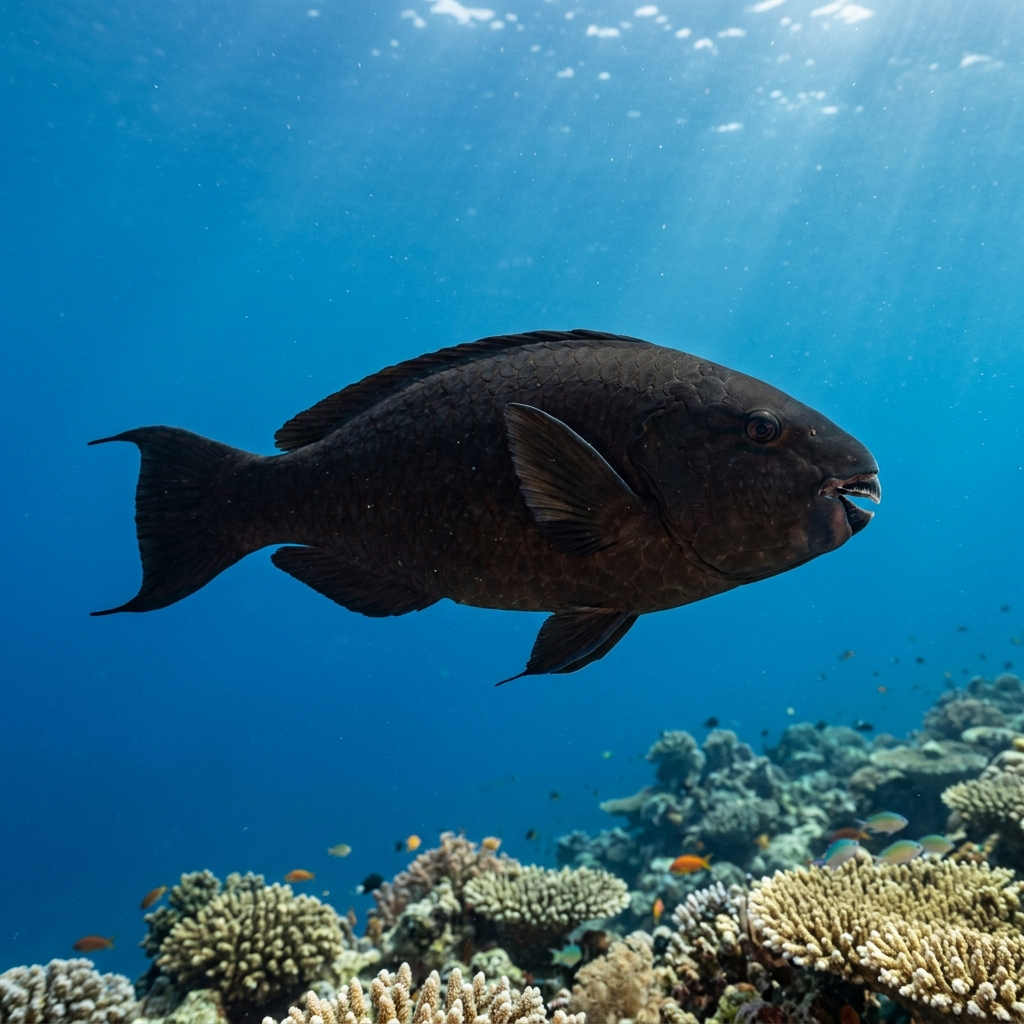
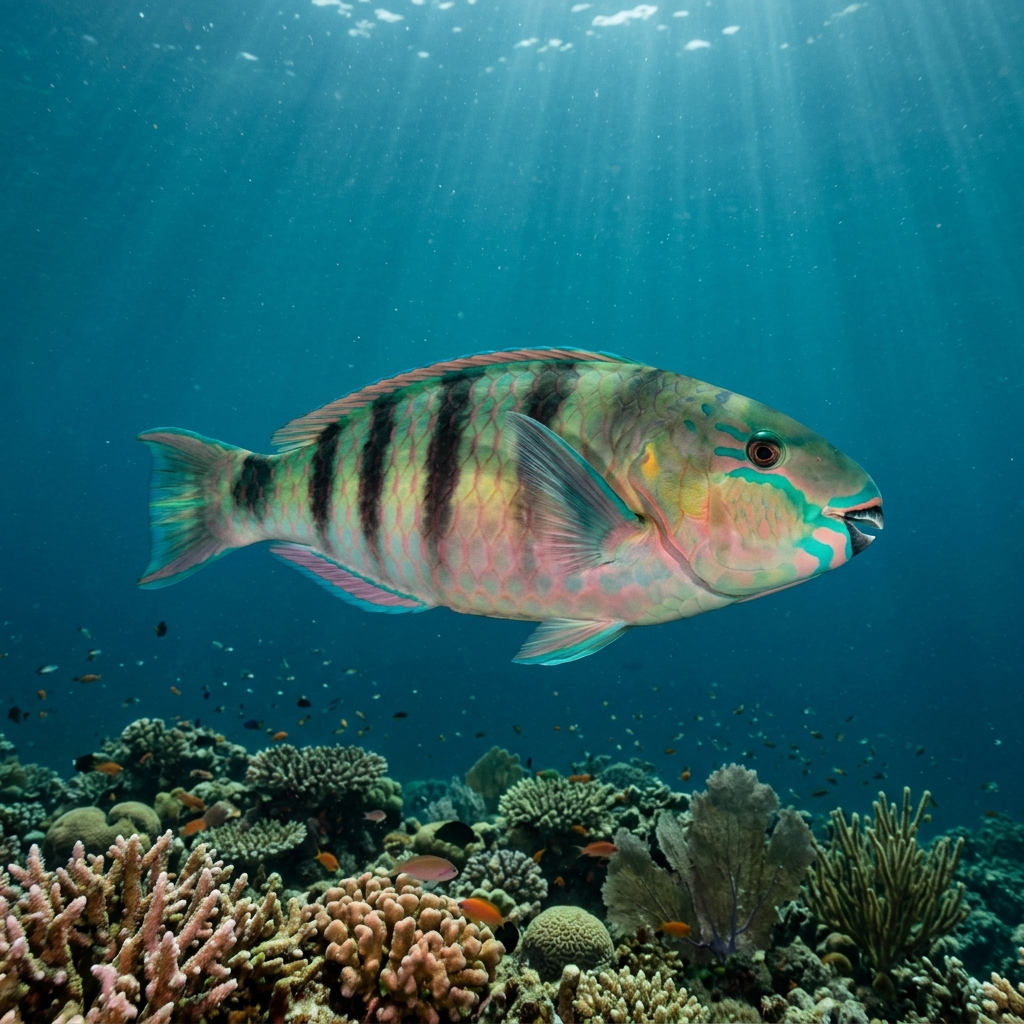
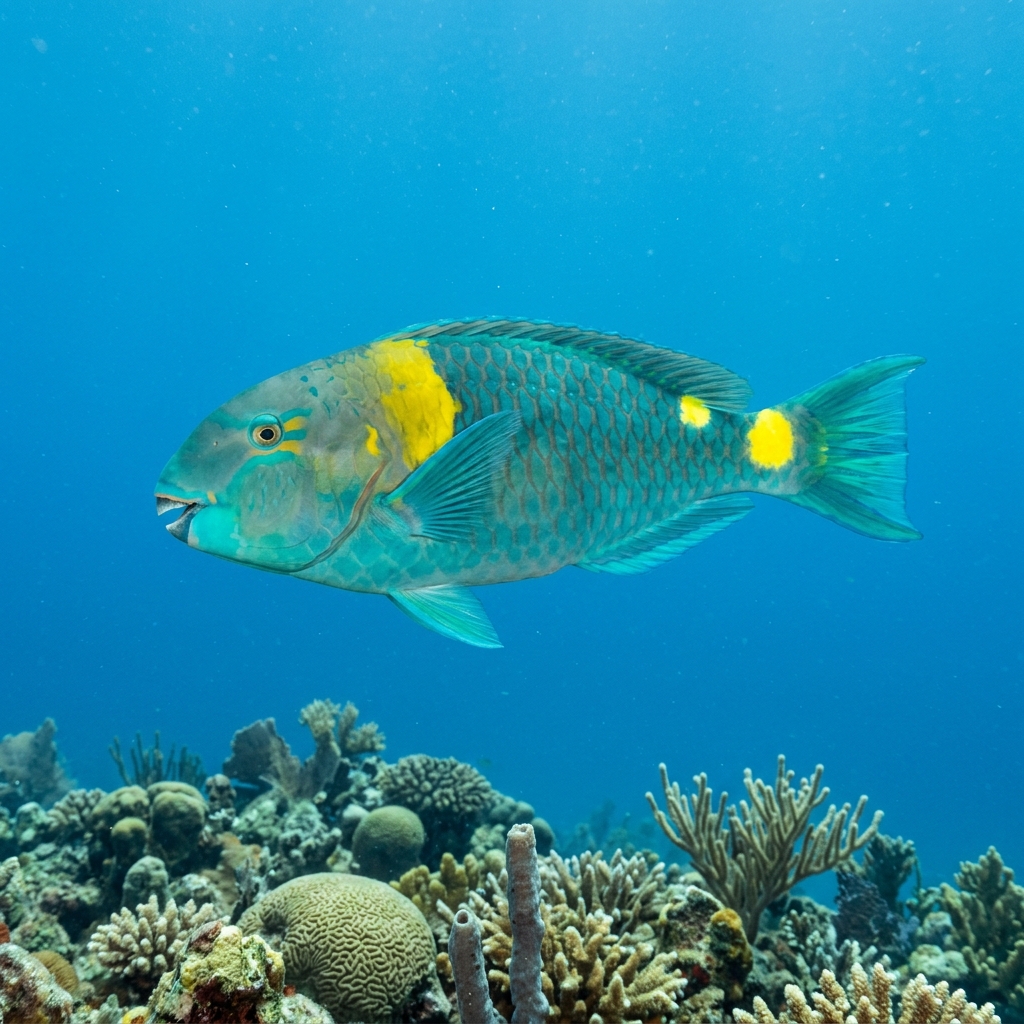
A small, stocky parrotfish topping out around 14 cm, with a mottled greenish-brown to olive body flecked with pale spots that give it its name. Look for the beak-like fused teeth typical of parrotfish and a rounded tail, usually seen hovering low over reef flats or rubble rather than out in open water. Its modest size and drab, speckled colouring make it easy to overlook next to brighter reef fish.
Divers typically find it browsing algae over reef flats and rubble patches, moving slowly and staying close to the substrate. It is not a fish that reacts much to divers, generally continuing to graze rather than bolting for cover, which makes it an easy one to approach quietly for a closer look at its markings.
Like other parrotfish, its fused beak-like teeth are built for scraping algae off rock and dead coral, a grazing habit that helps keep reef surfaces clear for new coral growth.
No clear seasonal pattern shows up in the sightings, and it sits comfortably in 24.8 to 29.2 C water, so it is a year-round find on Red Sea reefs.
Most reliably logged in Egypt, especially South Sinai, Marsa Alam and the Deep South, and the Red Sea Riviera, with further sightings in Eilat, Israel, Aqaba, Jordan, and the Red Sea Coast of Saudi Arabia. Across these Red Sea sites it turns up as an uncommon but dependable presence rather than a headline sighting.
Mapping where Dotted Parrotfish is logged…
Egypt is the stronghold, particularly South Sinai, Marsa Alam and the Deep South, and the Red Sea Riviera. It also turns up in Eilat, Israel, Aqaba, Jordan, and along Saudi Arabia's Red Sea coast.
There is no strong seasonal pattern in the sightings, and it tolerates a wide 24.8 to 29.2 C range, so it can be found on Red Sea reefs at any time of year.
Look for a small parrotfish, around 14 cm, with a mottled olive-brown body covered in pale flecks and a beak-like mouth. It is usually seen grazing slowly over reef flats or rubble rather than swimming in open water.
They stay small for a parrotfish, typically reaching around 14 cm in length, so they are easy to miss among larger reef fish.
No, they pose no danger to divers. They are peaceful herbivores that spend their time grazing algae off rock and dead coral, ignoring divers in the process.
At most sites where it has been logged, divers rate it uncommon, with fewer sites reporting it as common and only a handful calling it rare, so it is a plausible but not guaranteed sighting on a Red Sea reef dive.
Site and sighting data is aggregated from diver logs, iNaturalist and GBIF. For taxonomy and conservation status:
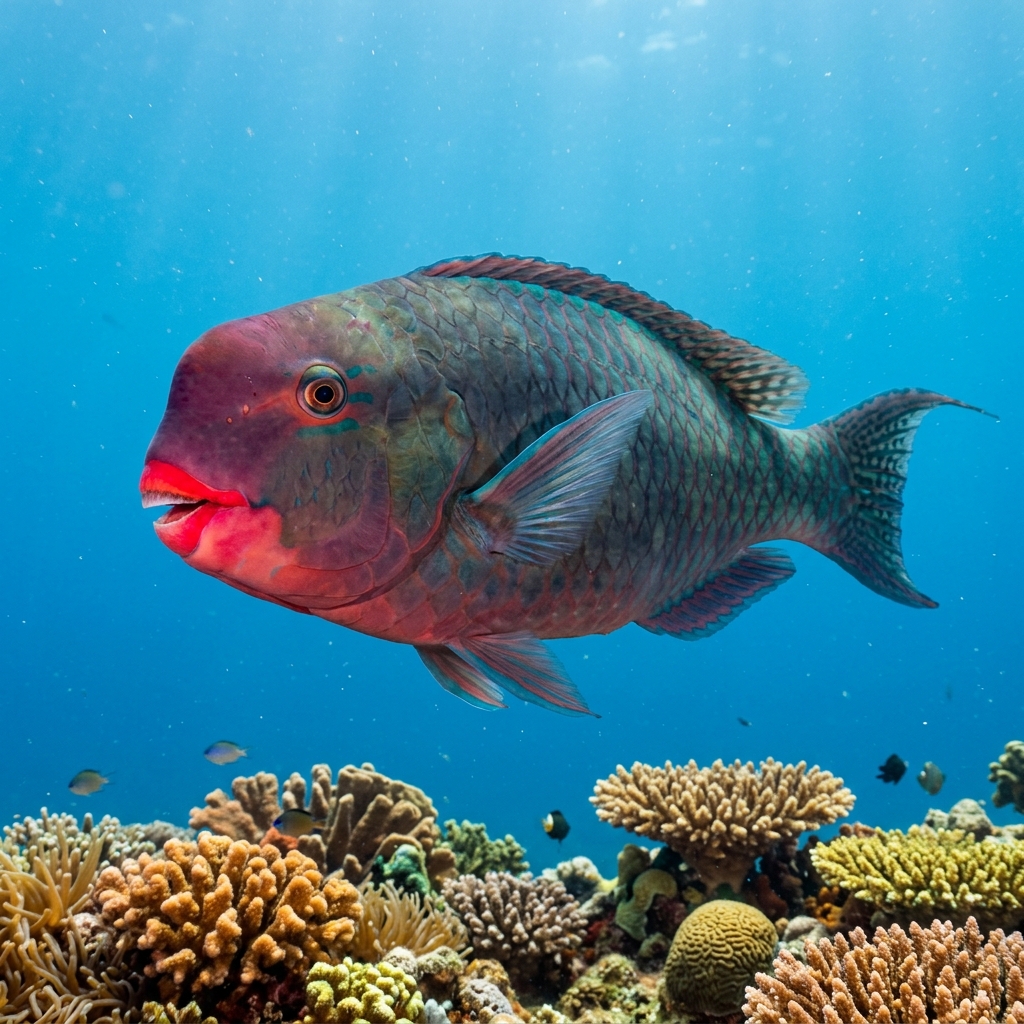
Redlip Parrotfish
2,789 sites