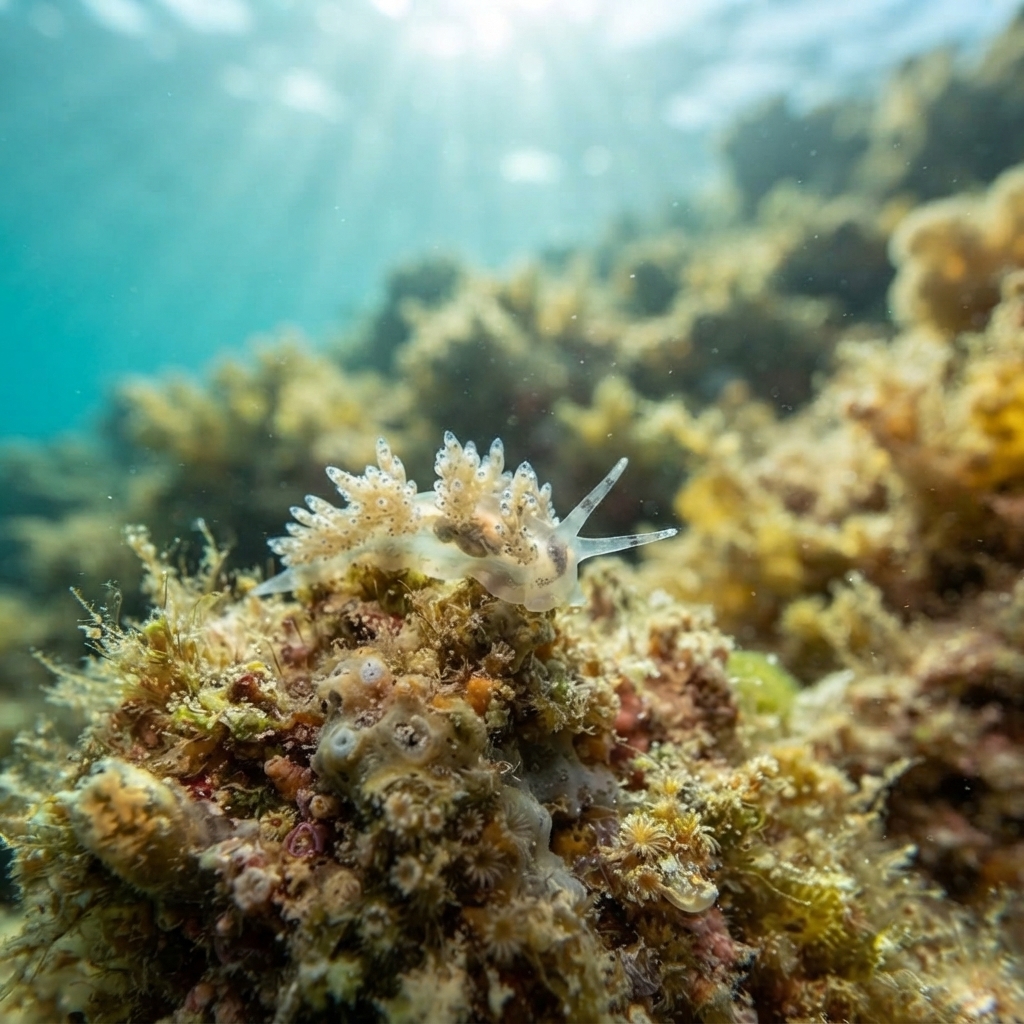
Doto cervicenigra
A small, uncommon nudibranch logged mainly along France's Riviera coast in water down to 14.6C. Here's how to spot one on a dive.
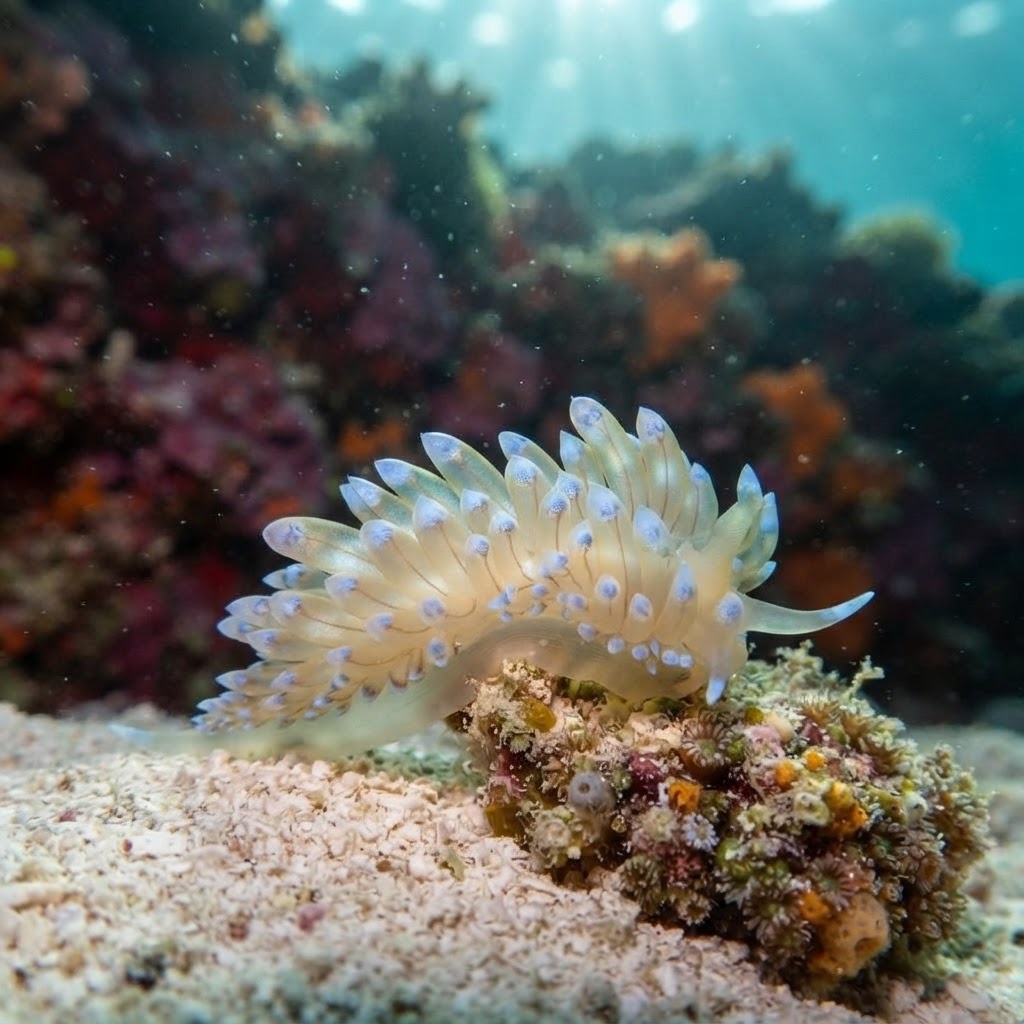
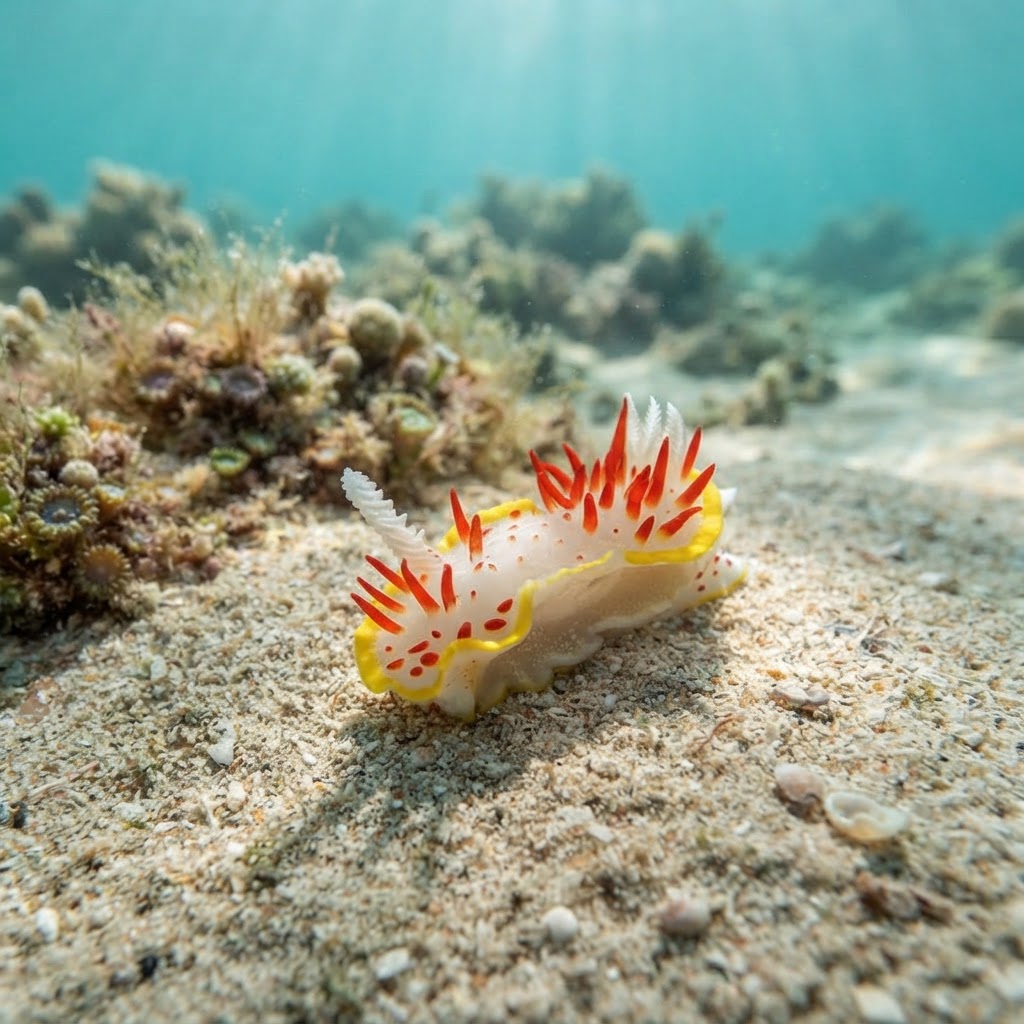
A small, translucent-bodied sea slug with clusters of tubercle-like projections (cerata) along its back, tipped in dark pigment that gives the species its common name reference to a dark neck or nape area. Its pale, almost see-through body makes the darker-tipped cerata the main feature divers pick out with a torch or magnifying lens. Like other Doto species, it stays small enough that most sightings come from divers deliberately scanning hydroid-covered rock and rubble rather than spotting it in open view.
Divers find this species clinging to hydroids or nearby rock and rubble, moving slowly as it grazes, which is typical for the genus Doto. It shows no reaction to divers beyond the usual slow retraction if directly disturbed, and is best looked for during a careful, slow-paced search rather than while cruising past on a reef swim. Most logs describe it as uncommon or rare at the sites where it does turn up, so patience pays off more than timing.
Doto species feed almost exclusively on hydroids, and many take on colouring or texture influenced by their prey, which is part of why spotting one usually means first finding a healthy patch of hydroids to search.
Sightings show no clear seasonal pattern, and with water temperatures logged between 14.6 and 20.6C it appears to turn up across the cooler and warmer parts of the Mediterranean diving year alike. Treat it as a year-round find rather than something tied to a particular month.
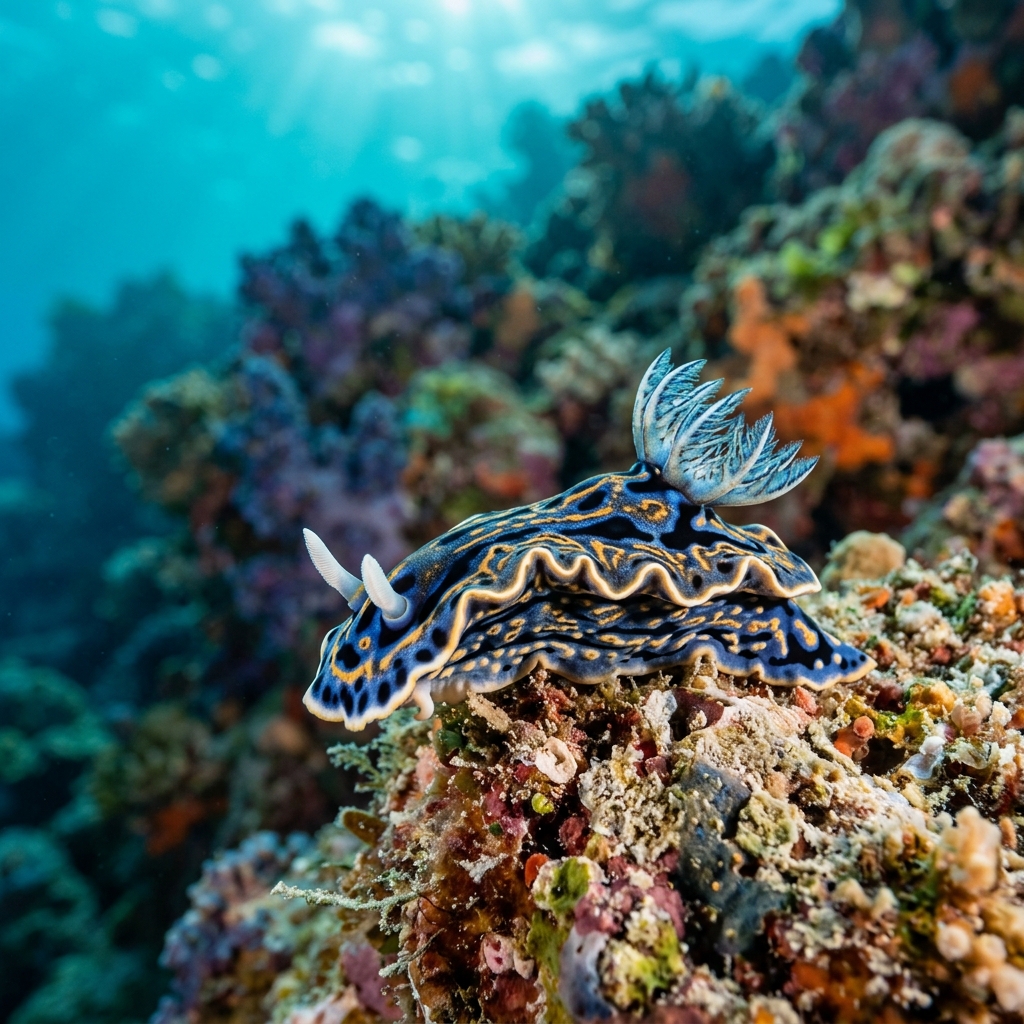
Reef neighbours a diver could mistake it for. Use the identification notes above to tell them apart.
Almost every logged sighting comes from France, with the French Riviera and Provence coastline standing out as the strongest area for this species. A smaller number of records come from Occitanie, further along the French Mediterranean coast, so search rocky and hydroid-rich sites in these two regions first.
Mapping where Doto Cervicenigra is logged…
Almost all recorded sightings are from France, particularly the French Riviera and Provence coastline, with a smaller number from Occitanie. It is not yet documented as a reliable find outside French Mediterranean waters.
There is no detected seasonal pattern in sightings, and it has been logged in water from 14.6 to 20.6C, suggesting it can be found across the diving calendar rather than in one particular season.
Look for a small, translucent-bodied nudibranch with clusters of dark-tipped cerata along its back. It is easiest to find by searching hydroid growth closely with a torch rather than scanning open reef.
Exact size data is not confirmed, but like other Doto species it stays small, typically only reaching a centimetre or two, so a close look at hydroid patches is needed to spot one.
It feeds on hydroids, grazing slowly across colonies attached to rock and rubble. This diet is shared across the genus Doto and is the main reason divers search hydroid-covered surfaces to find it.
No. It poses no threat to divers and is harmless to approach and photograph closely.
Site and sighting data is aggregated from diver logs, iNaturalist and GBIF. For taxonomy and conservation status:
Blue Dragon
3,163 sites