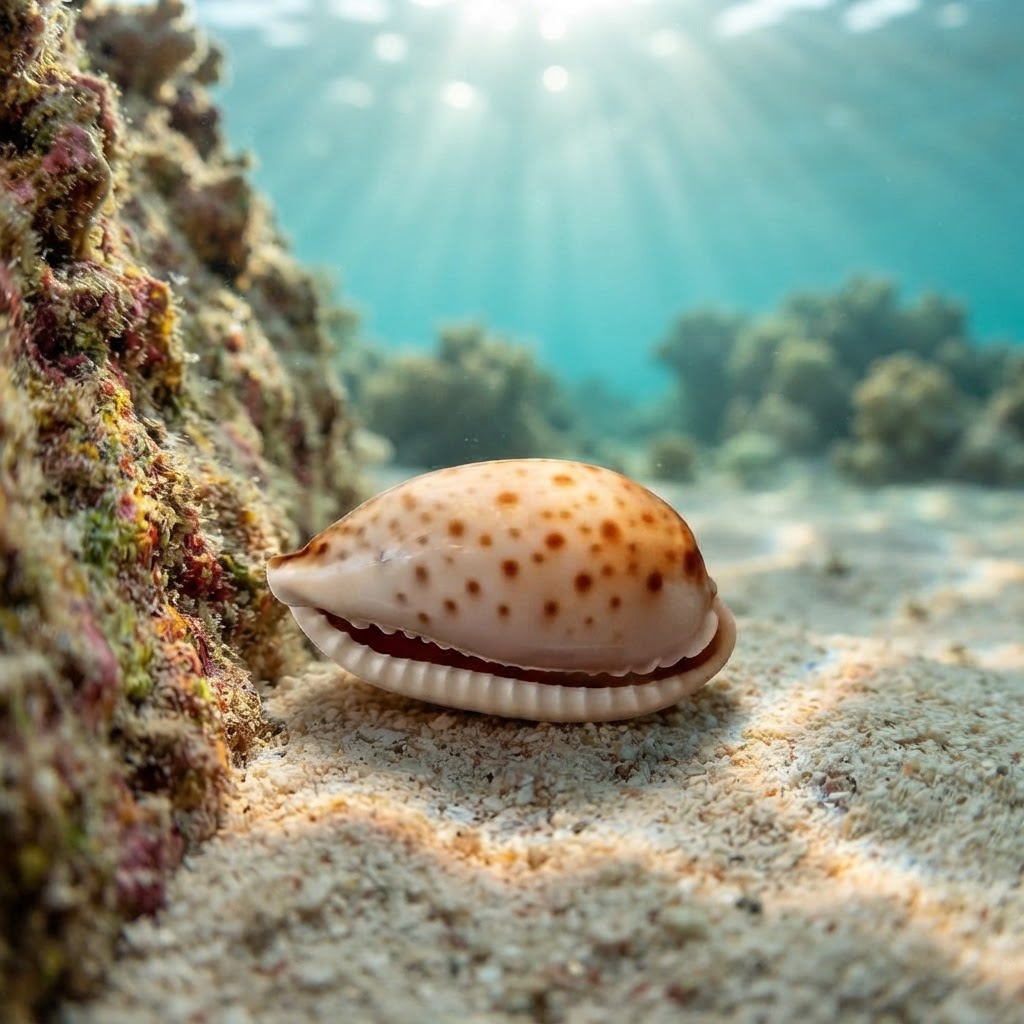
Naria spurca
A 2cm shelled snail logged across Sicily, Tenerife and El Hierro at 16 to 22C, usually spotted tucked under rocks on night dives.
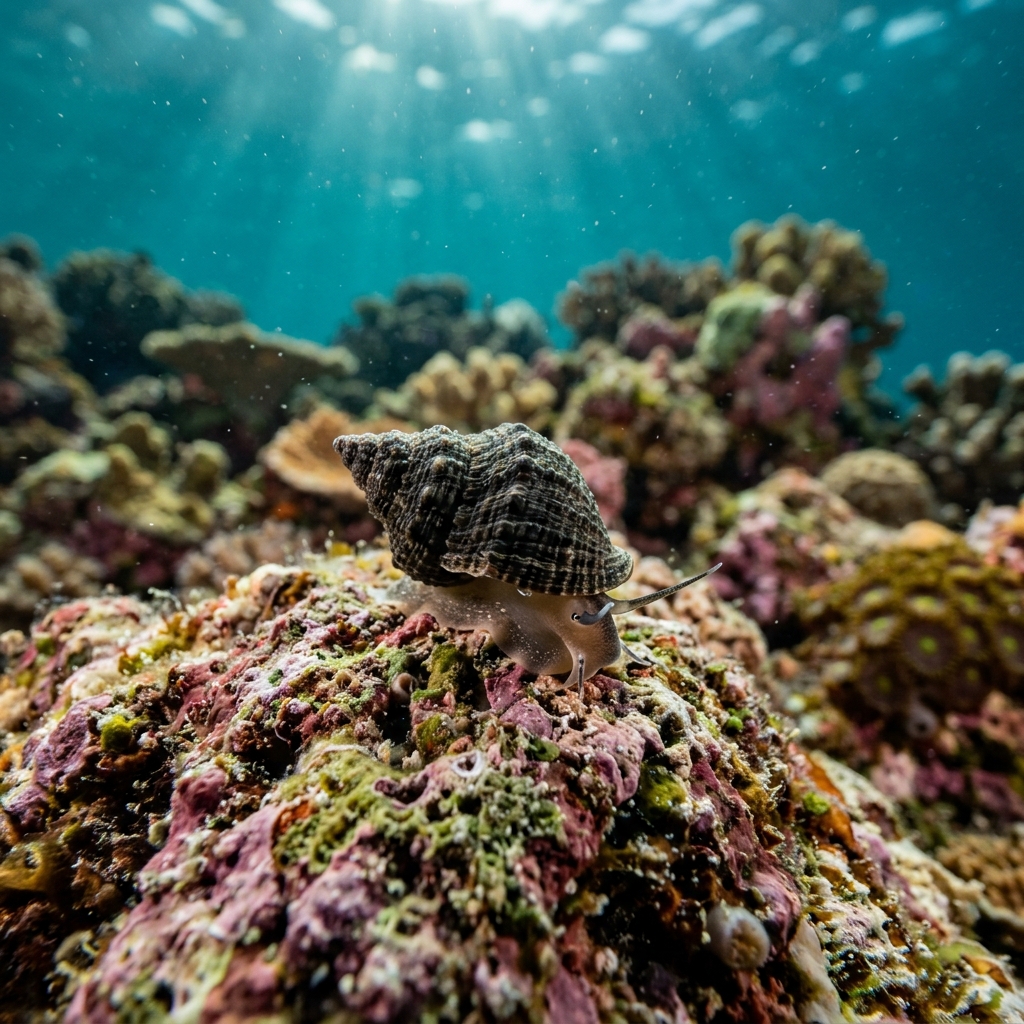
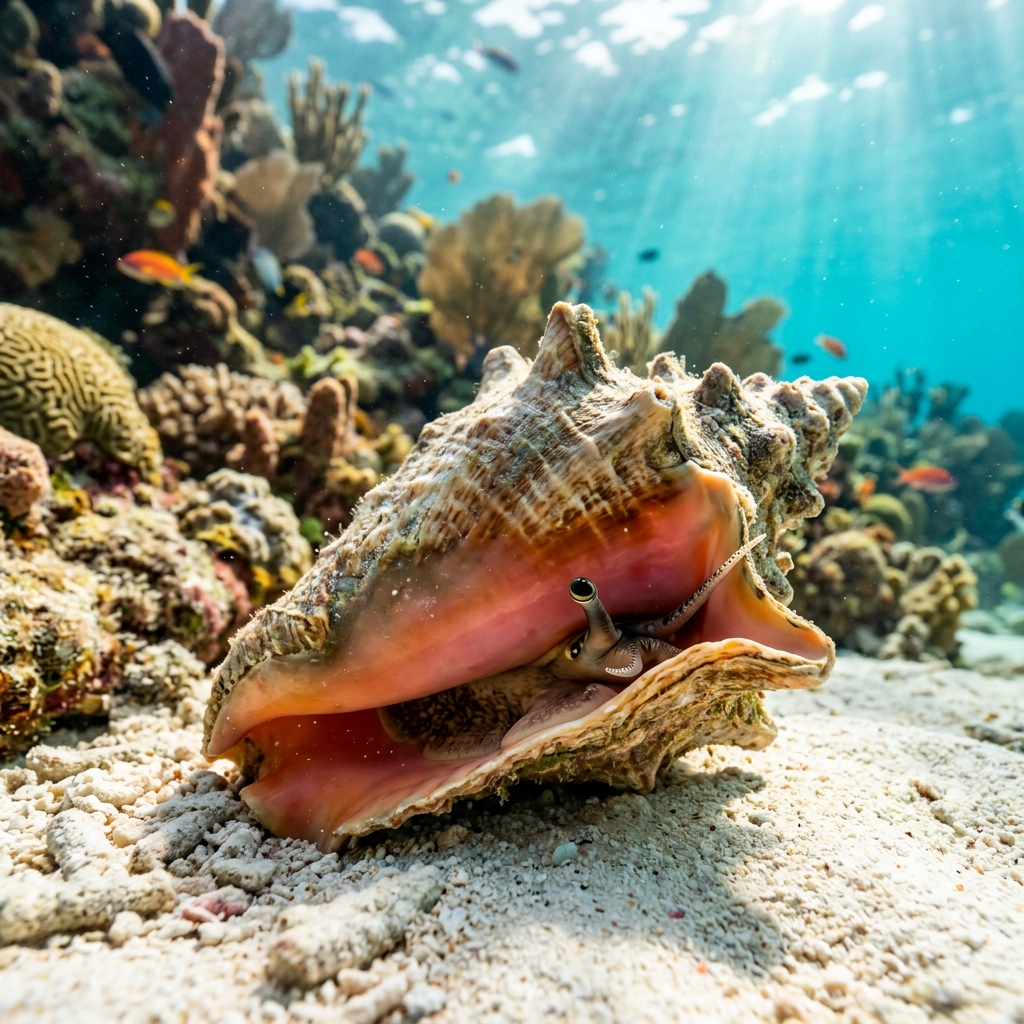
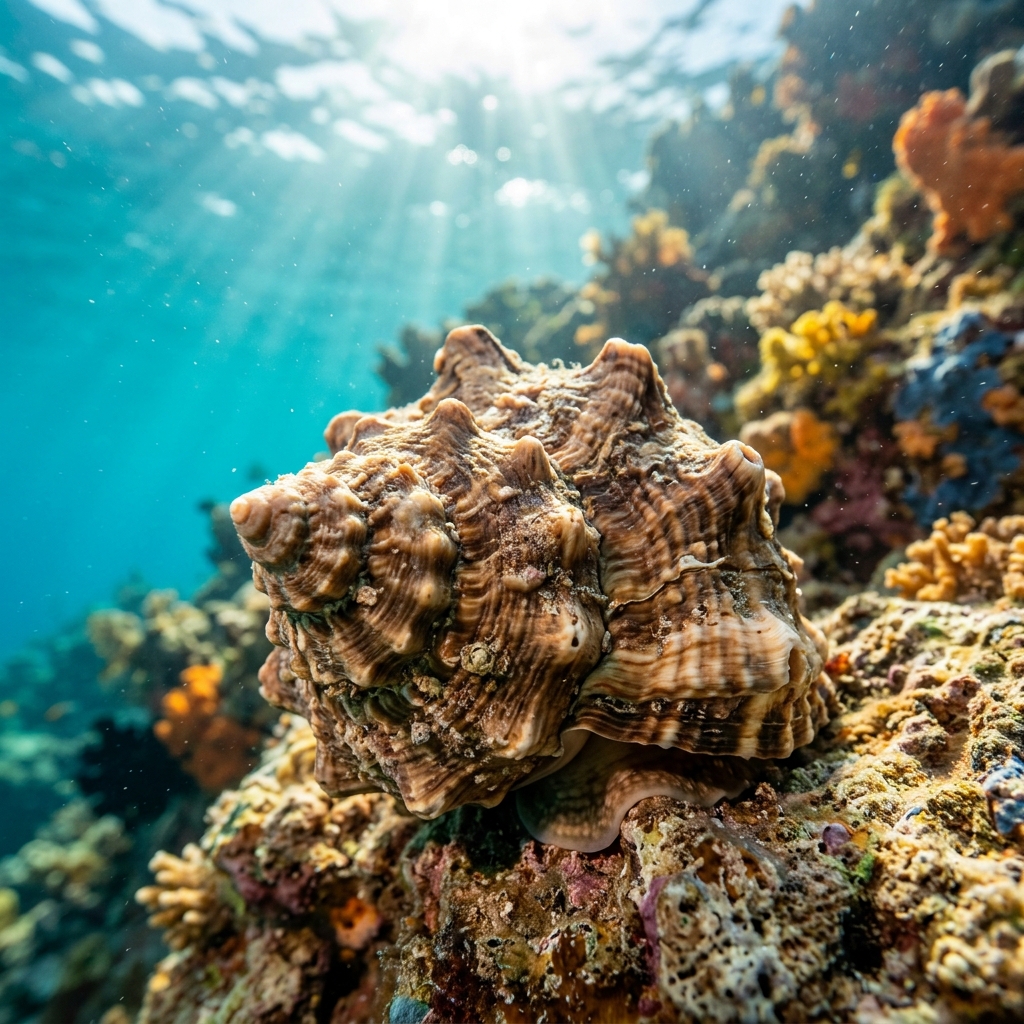
At 2cm this is a small, glossy-shelled sea snail, oval and domed like a smooth pebble, usually spotted tucked into a rock crevice rather than out in the open. The shell carries a mottled grey-brown to olive pattern that gives it a faintly grubby look against the clean shells of other cowries, which is exactly where the common name comes from. Look for the narrow slit-like opening running along the underside of the shell rather than any bold colour, since this is an animal you find by scanning rock texture, not by spotting a flash of pattern.
Divers mostly find this snail wedged into rock crevices or under overhangs during the day, staying put and doing very little that a diver would notice. It is a benthic (bottom-dwelling) grazer, so it is more active after dark, which is why careful torch-lit searches on night dives tend to turn up more of them than daytime swims. It shows no reaction to divers beyond withdrawing further into its shell if disturbed.
Cowries like this one secrete a thin layer of living tissue called a mantle that can wrap up over the shell surface, which is part of why the shell stays glossy despite living tucked in rough rock crevices.
Sightings sit in the 16.3 to 22.3C range with no clear seasonal spike in the data, so treat it as a year-round find on the rocky reefs where it occurs rather than something tied to a particular month.
This one turns up across the Mediterranean and the eastern Atlantic islands, with the strongest logs coming from Sicily and Lazio in Italy, Tenerife and El Hierro in the Canary Islands, and the Ionian Islands in Greece. Divers also report it fairly reliably around Murcia in Spain, Porto Santo in Madeira, and Malta, so rocky reef sites in any of these regions are worth a slow look.
Mapping where Dirty Cowrie is logged…
It is most reliably logged on rocky reef sites in Sicily and Lazio in Italy, Tenerife and El Hierro in the Canary Islands, and the Ionian Islands in Greece, with further sightings around Murcia in Spain, Madeira and Malta.
There is no strong seasonal pattern in the sightings, so it can be found year-round on suitable rocky reefs within its 16 to 22C temperature range.
Look for a small, 2cm, smooth oval shell with a mottled grey-brown pattern tucked into a rock crevice, rather than a bright or patterned shell out in the open. The dull, mottled colouring compared to other cowries is the main giveaway.
They are small, typically reaching around 2cm in shell length, so you are searching for something roughly the size of a fingernail wedged into rock texture.
No, this is a small, slow-moving snail with no capacity to harm divers. You can observe it closely without any risk.
Like other cowries, it can extend a living tissue layer called a mantle over its shell, which helps keep the shell polished even while it spends most of its time wedged into rough rock crevices.
Site and sighting data is aggregated from diver logs, iNaturalist and GBIF. For taxonomy and conservation status:
Triton Shell
2,297 sites