Diploprion bifasciatus
Spot the barred soapfish across the Gulf of Thailand and West Sabah reefs. Warm-water (22-29 °C) and most active in sheltered reef corners.
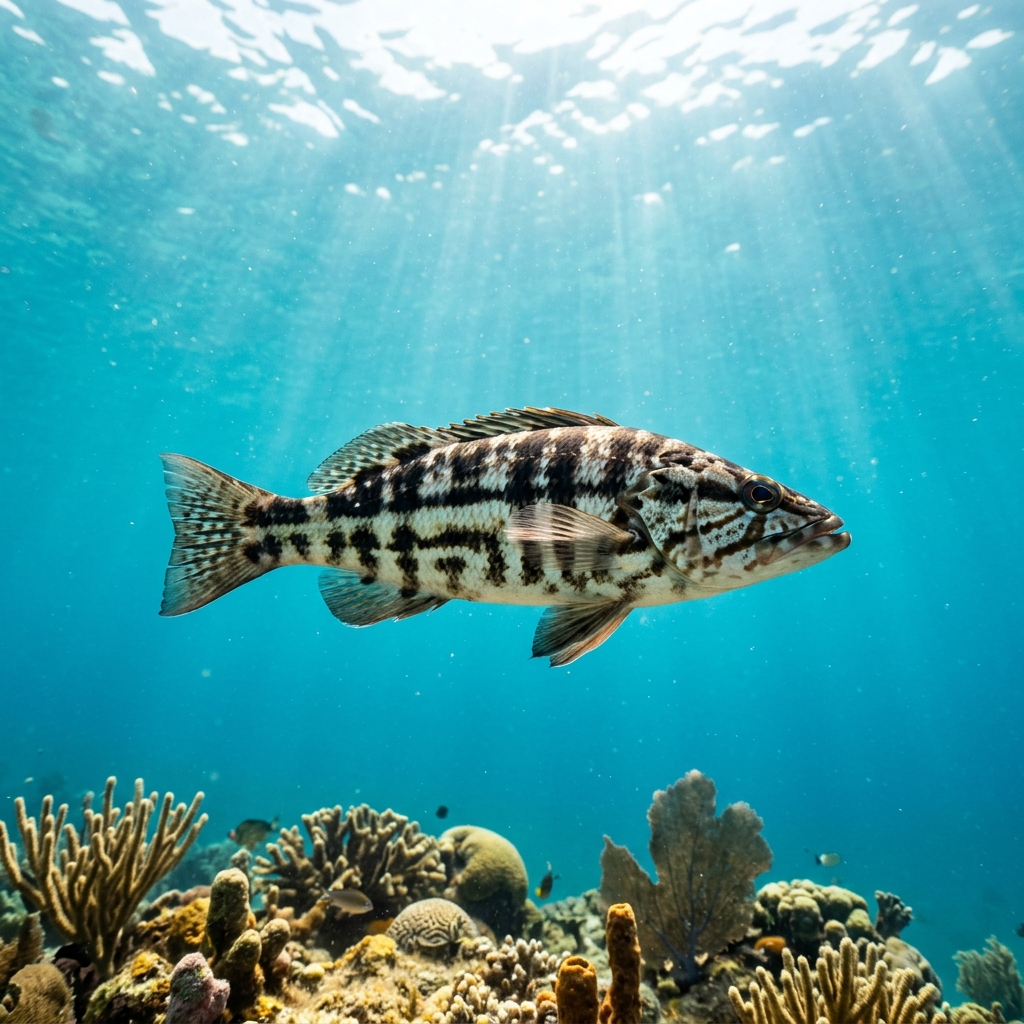
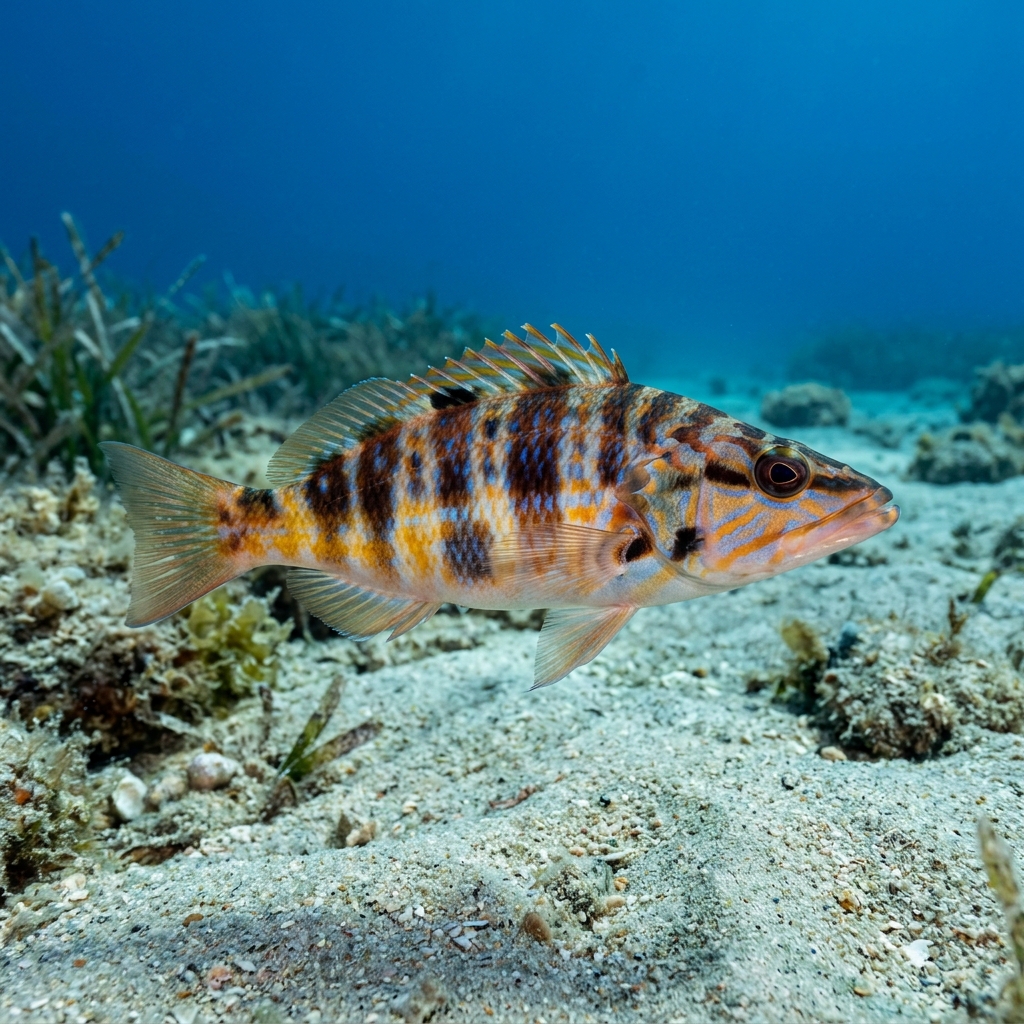
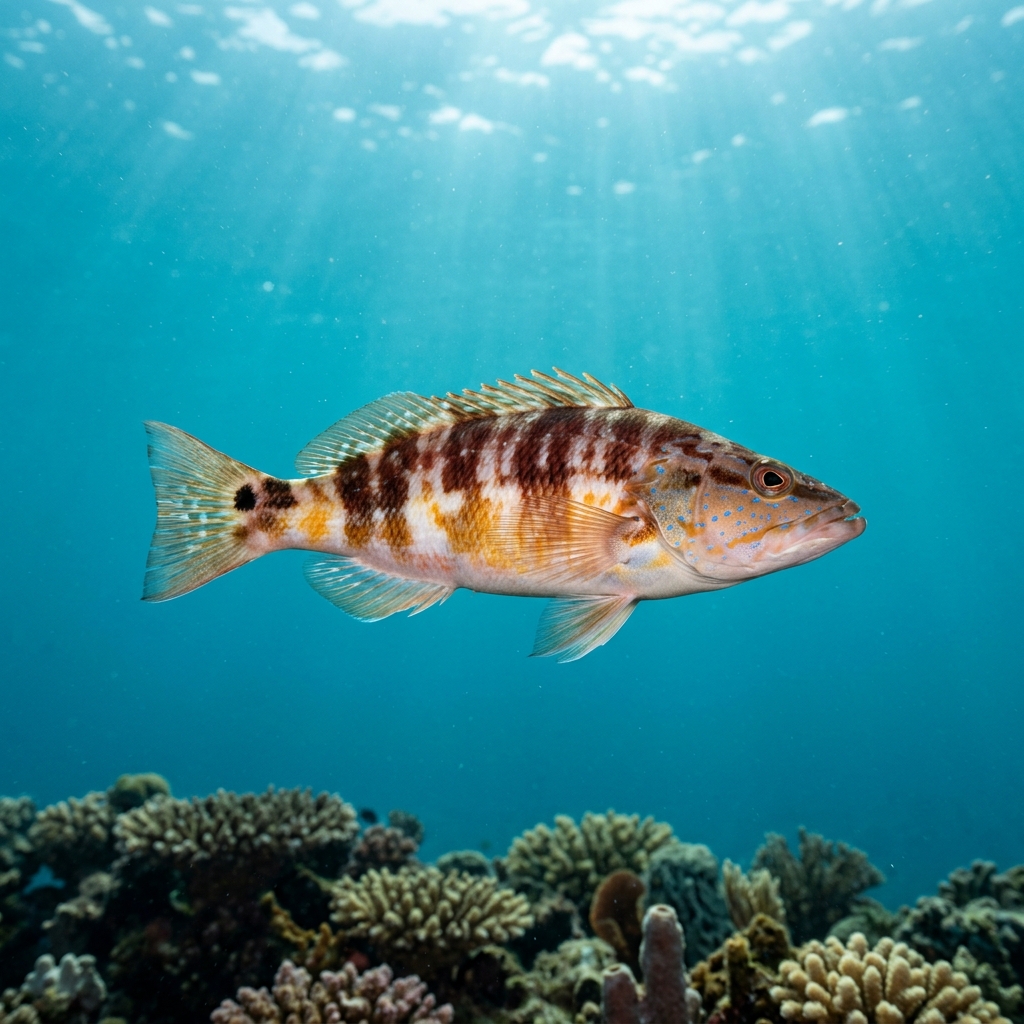
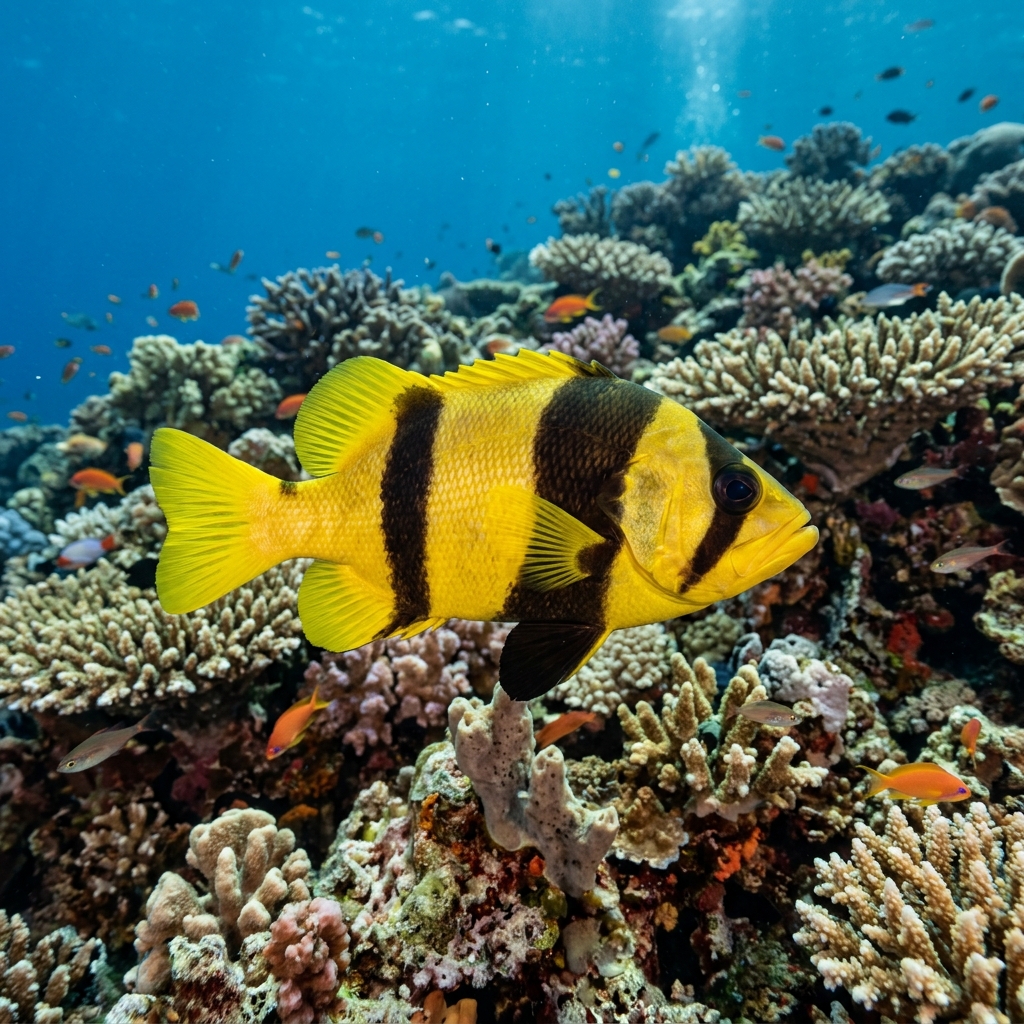
Two broad, dark brown-to-black vertical bars on a pale yellow or cream body are the key field mark, the first bar crosses the head through the eye, the second runs across the body just behind the pectoral fins. The body is stocky and somewhat compressed, with a large upturned mouth that gives it a permanently grumpy expression. Juveniles are notably more vividly yellow with sharper, blacker bars than the often faded adults. It typically sits motionless or moves with slow, deliberate undulations very close to the reef.
Barred soapfish favour shaded overhangs, crevices, and the sheltered bases of coral bommies (isolated reef structures), where they hover almost motionless or creep slowly along the substrate. They are ambush predators and tend to ignore divers entirely, holding their position until approached too closely, then retreating a short distance back into cover. Encounters are usually brief and close-range, the fish rarely ventures into open water, which is part of why it can be easy to miss despite being right in front of you.
The 'soapfish' name comes from a real defence mechanism: when stressed, the skin releases grammistin, a toxic mucus that lathers like soap in the water and is bitter and poisonous to potential predators.
Northern Hemisphere sightings concentrate in February through June and again in October to November, so those windows are worth targeting in Thailand, the Philippines, and Malaysia. The species' warm-water comfort range of 22 to 29 °C keeps it present on tropical reefs across much of the year in southern sites such as Queensland and Indonesia.
Most logged in Thailand, particularly the Gulf of Thailand South and around Phuket and Phi Phi, where sightings are spread across a large number of sites. West Sabah and Labuan in Malaysia are also a strong area, as are the Visayas in the Philippines and Queensland, Australia. Indonesia's Maluku and Papua region rounds out the core Indo-Pacific range where divers regularly encounter it.
Mapping where Barred Soapfish is logged…
The best-documented spots are in Thailand's Gulf of Thailand and around Phuket and Phi Phi, plus West Sabah and Labuan in Malaysia. Strong populations are also recorded across the Visayas in the Philippines and in Queensland, Australia. The species is an Indo-Pacific reef fish found across a broad tropical belt.
In the northern tropics, Thailand, Philippines, and Malaysia, sightings peak during February to June and again in October to November. In southern sites such as Queensland, the comfortable water temperatures year-round mean you have a reasonable chance in any season.
Look for the two wide, dark vertical bars on a pale yellow or cream body, one through the eye, one across the mid-body. The large upturned mouth and habit of hovering motionless in shaded reef corners are also distinctive. No other common Indo-Pacific reef fish shares exactly this banded pattern combined with that body shape.
Precise size data is limited, but adults are generally a small to medium reef fish, typically reported up to around 25-30 cm in length. Underwater they appear compact and deep-bodied rather than elongated.
When threatened or handled, barred soapfish secrete grammistin, a toxic mucus from the skin that foams in water much like soap. This bitter, poisonous lather deters predators effectively. It poses no risk to divers who simply observe the fish without touching it.
No. Barred soapfish are not dangerous to divers. They are timid, slow-moving, and will retreat rather than confront. Their skin toxin only becomes relevant if the fish is handled or ingested, neither of which applies to a standard dive encounter.
Site and sighting data is aggregated from diver logs, iNaturalist and GBIF. For taxonomy and conservation status:
Blacktip Grouper
2,726 sites