Bodianus diana
Uncommon but reliable in the Maldives' Central Atolls and KwaZulu-Natal reefs, this small wrasse turns up year-round in warm water.
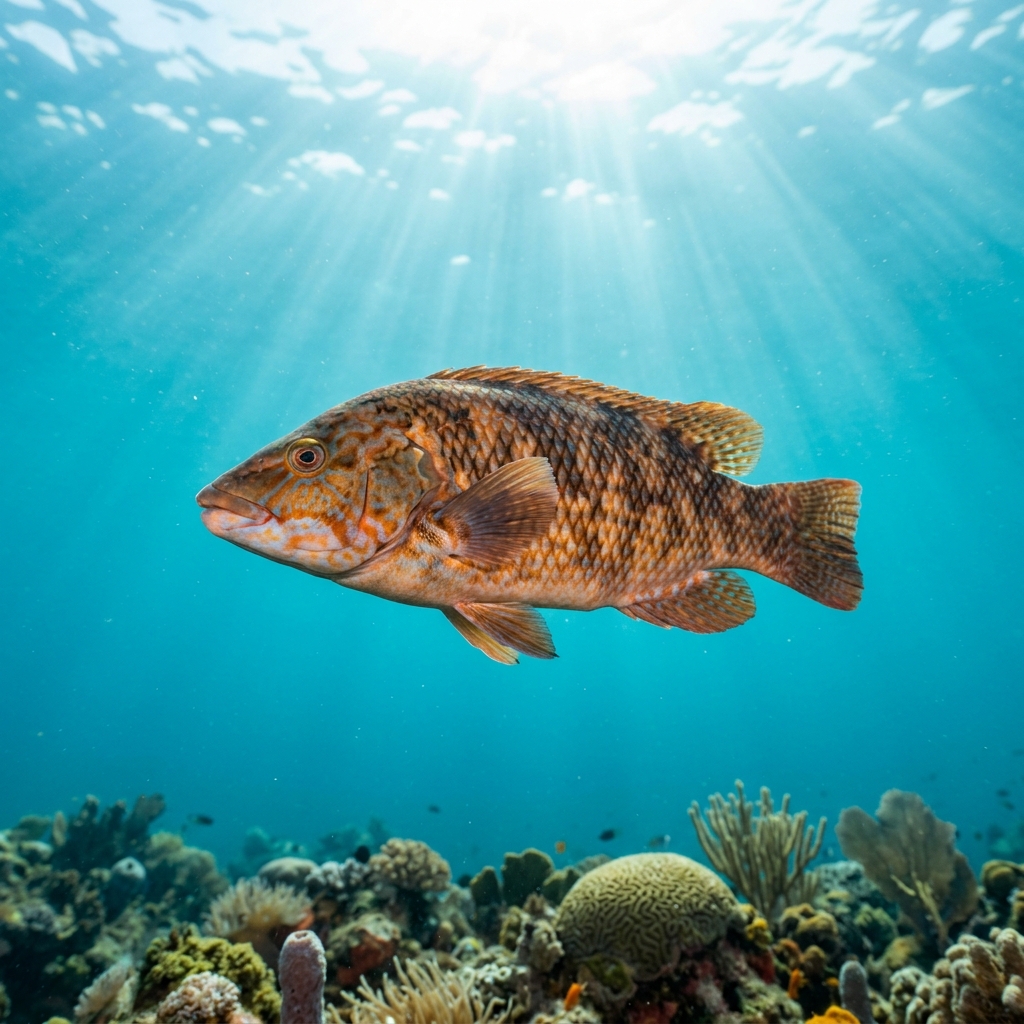
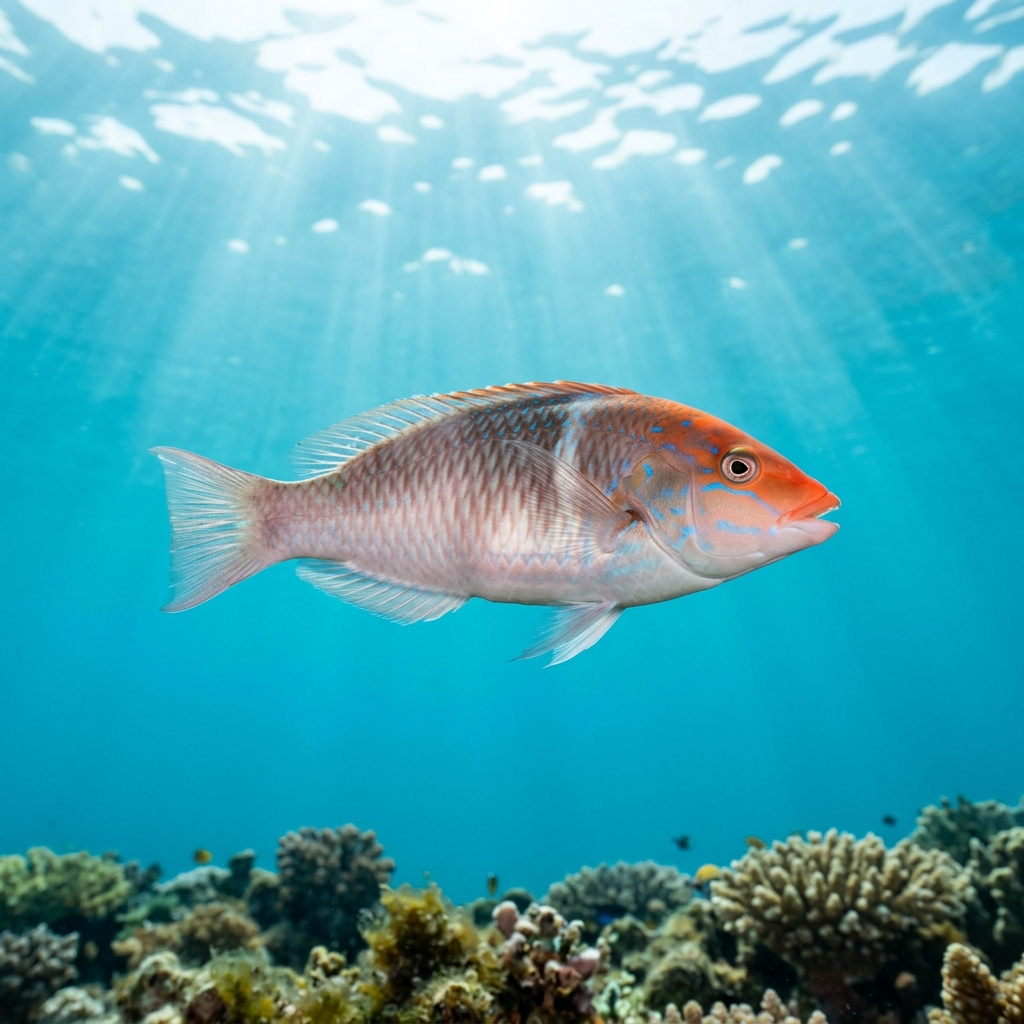
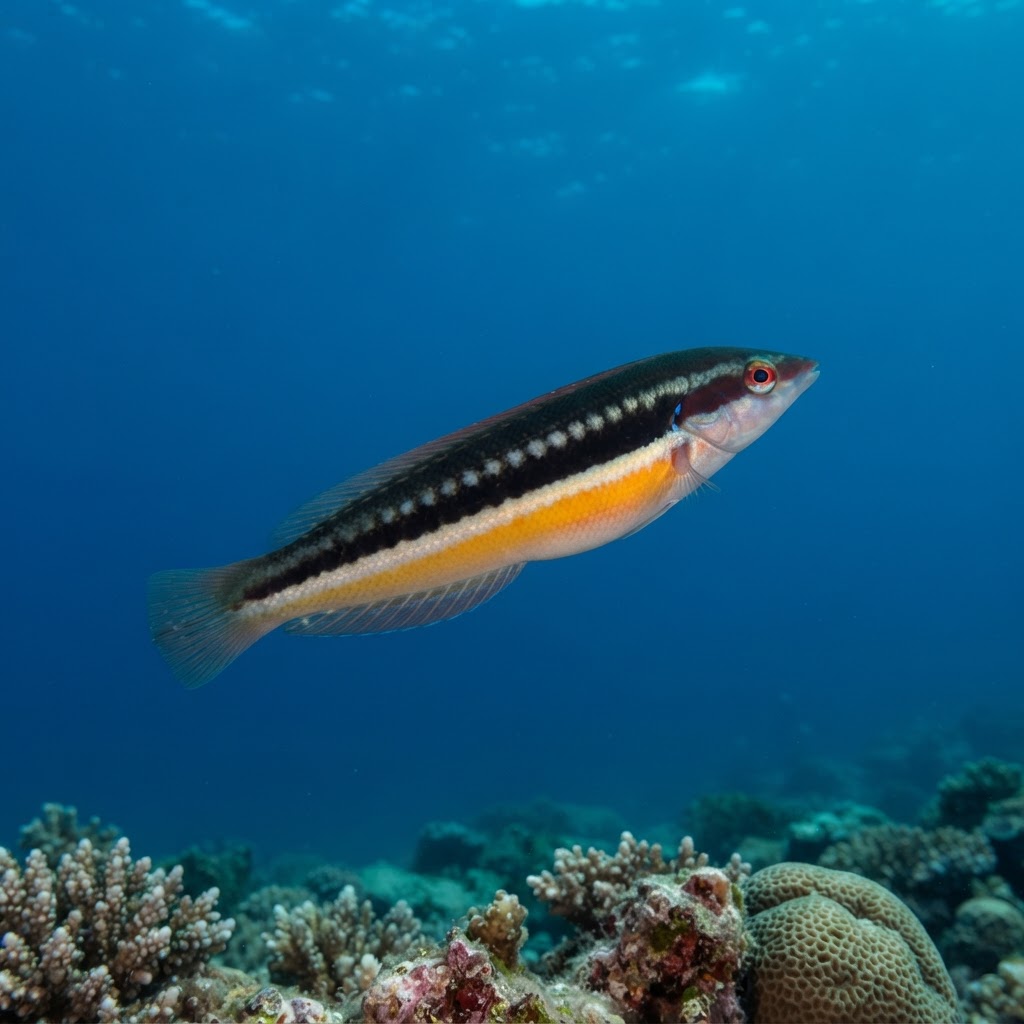
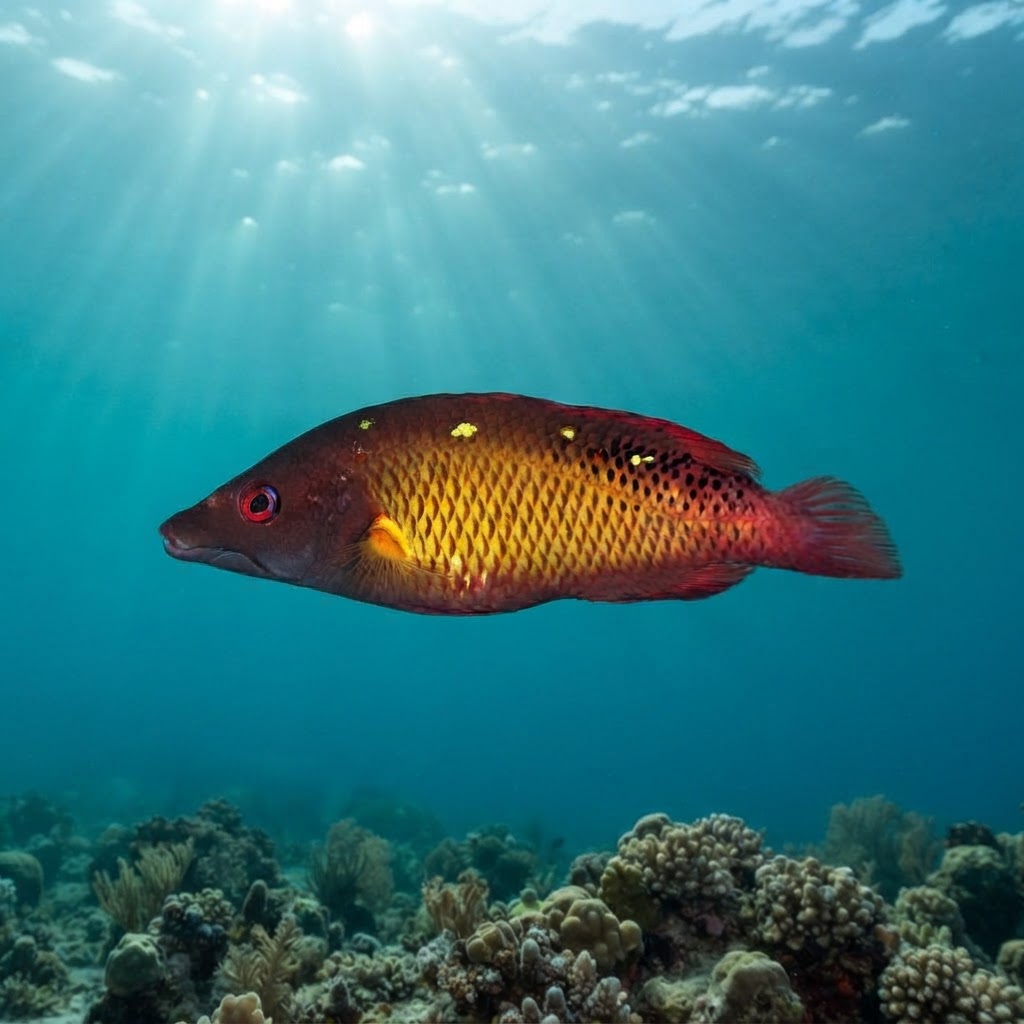
A small wrasse, topping out around 12 cm, with a reddish-orange body broken up by yellow saddle-like patches and a scattering of white spots along the back. Look for the bold white blotch on the front of the dorsal fin, which is the easiest single mark to key on at a glance. The body is elongated and slightly compressed, typical of the hogfish group within the wrasse family, and it tends to hold a slight downward tilt as it noses along the reef.
Divers typically find it picking around rubble patches, coral crevices and the reef base, working slowly rather than darting, in the way many small bottom-feeding wrasses do. It is not shy but also not attention-seeking, usually continuing to forage as divers pass rather than approaching or fleeing outright. Logged as uncommon at the sites where it does appear, so it rewards divers who take time to look closely at reef nooks rather than scan open water.
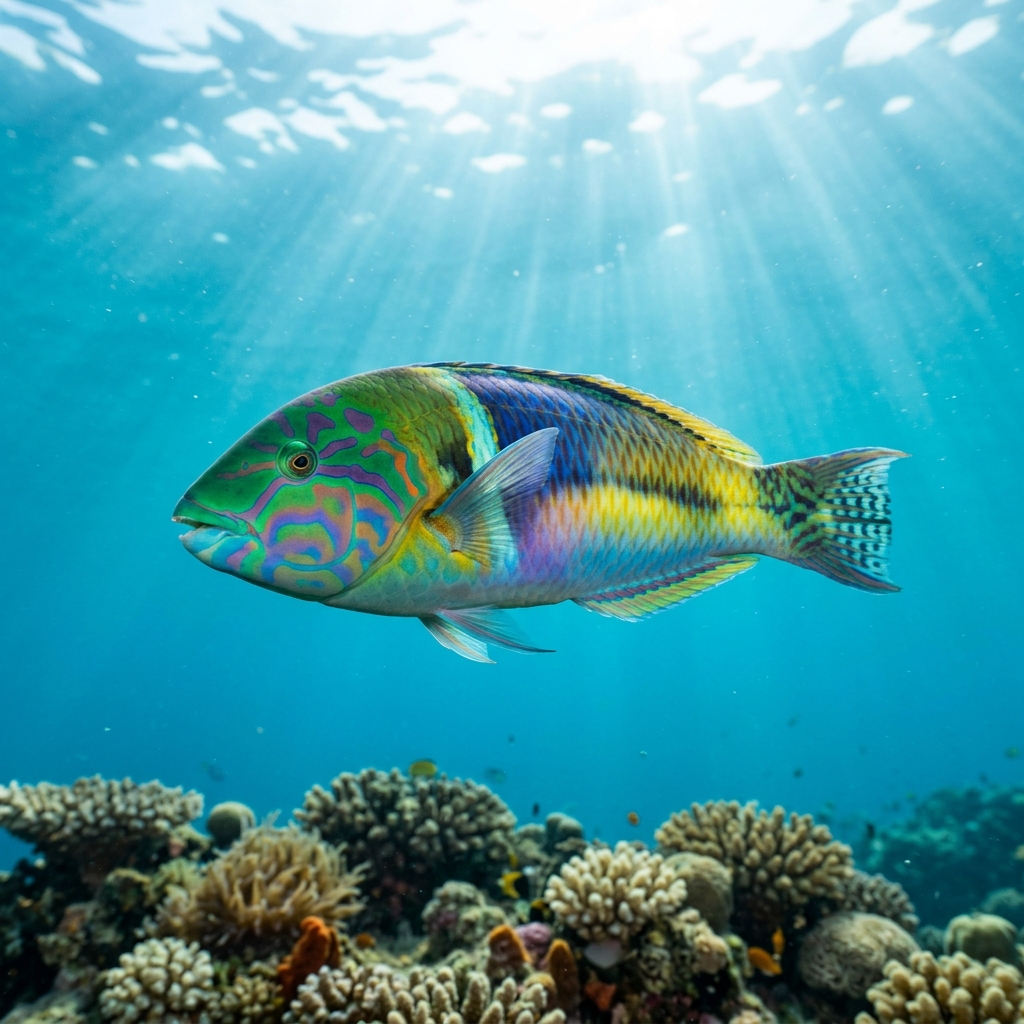
Like many wrasses, it likely shifts colour pattern and even sex across its life, a trait common to the hogfish group that makes a single fixed field-guide image unreliable for this genus.
No clear seasonal pattern shows up in the sighting data, and with a comfortable range of roughly 25 to 29C, this fish stays active on tropical and subtropical reefs all year. Plan around good visibility and reef structure rather than a particular month.
Most reliably logged in the Maldives, especially across the Central Atolls, and in South Africa's KwaZulu-Natal reefs, where sightings are strong but never guaranteed. Smaller but steady numbers turn up in Thailand around Khao Lak and Koh Phi Phi, and in Egypt's Red Sea sites around Marsa Alam and the Deep South and offshore reefs.
Mapping where Diana's Hogfish is logged…
The strongest sightings come from the Maldives' Central Atolls and South Africa's KwaZulu-Natal coast, with additional records from Khao Lak in Thailand and Marsa Alam in Egypt's Red Sea.
There is no strong seasonal signal in the data, and its comfortable temperature range of roughly 25 to 29C means it can be encountered on tropical reefs at any time of year.
Look for a small, slender wrasse around 12 cm long with a reddish-orange body, yellow saddle patches, scattered white spots, and a distinctive white blotch at the front of the dorsal fin.
They stay small, typically reaching around 12 cm in length, making them easy to overlook against busier reef backgrounds.
No, they pose no danger to divers and simply go about foraging on the reef when approached.
It is logged as uncommon even at the sites where it does occur, so spotting one usually takes a bit of patient searching around reef crevices and rubble rather than an open-water encounter.
Site and sighting data is aggregated from diver logs, iNaturalist and GBIF. For taxonomy and conservation status:
Bird Wrasse
3,632 sites