Zosimus aeneus
Mottled, fist-sized and armed with toxic flesh, the devil crab hides in Bali's reef rubble year-round in 24 to 30C water.
Safety warning
Never handle or attempt to eat this crab, since its tissue can contain neurotoxins strong enough to cause serious poisoning. For divers the risk is essentially zero if you just look and don't touch, but resist the urge to pick one up for a photo.
Handle with care
Toxic if eatenGeneral first-aid guidance, not a substitute for professional medical care. In an emergency, call your local emergency number.
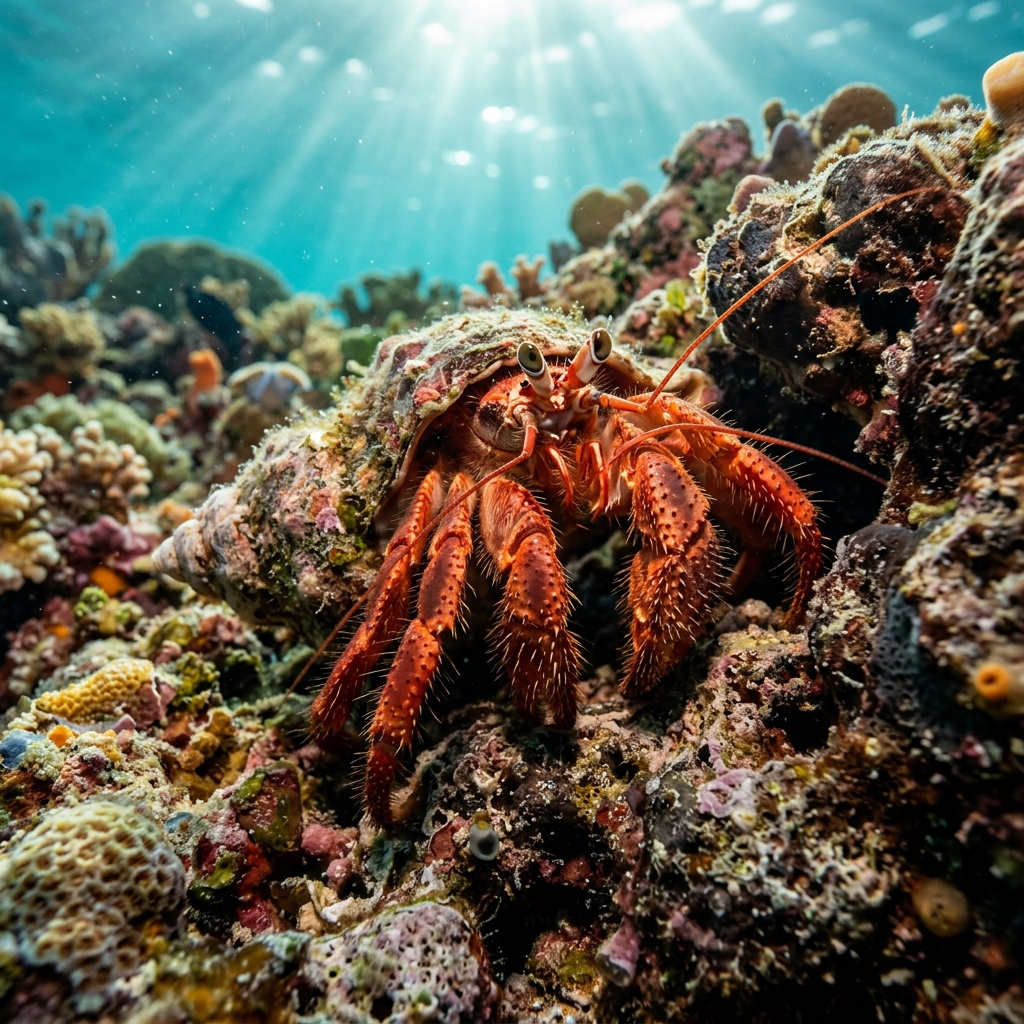
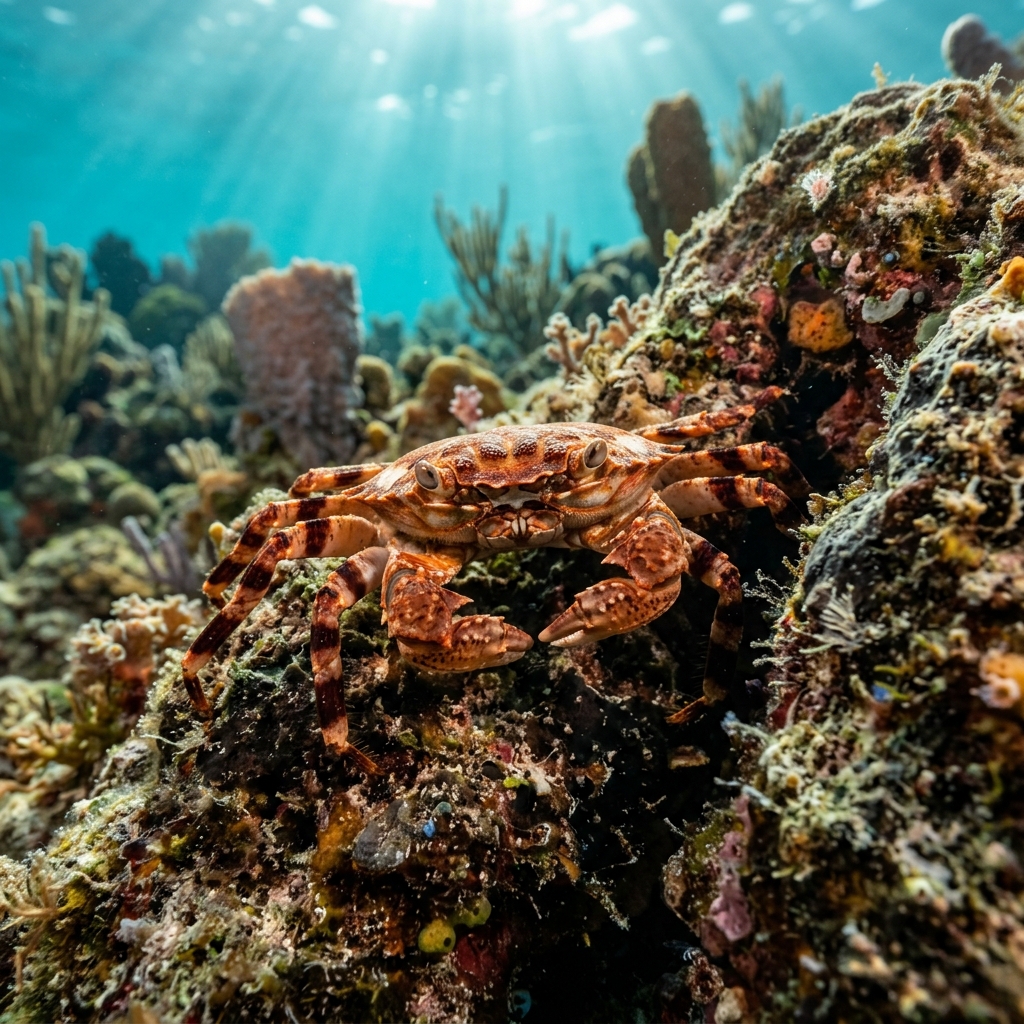
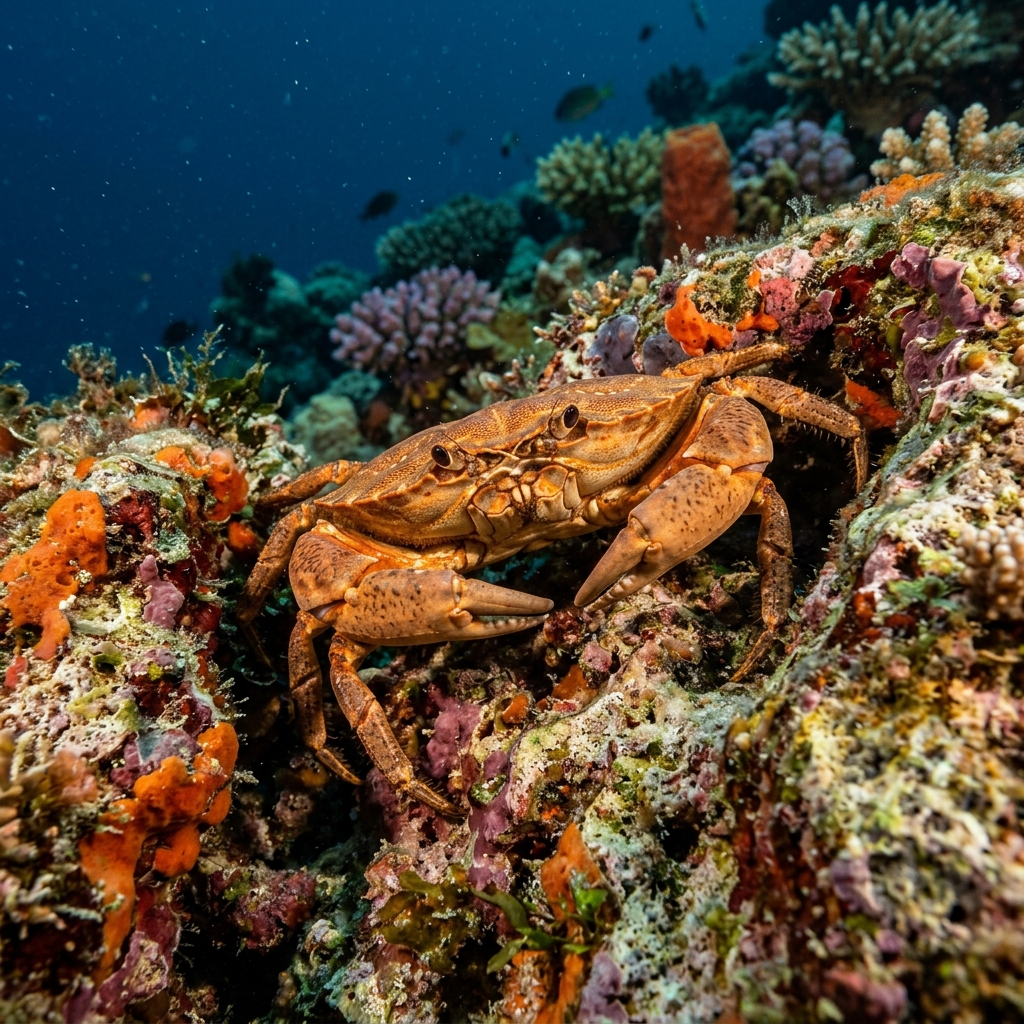
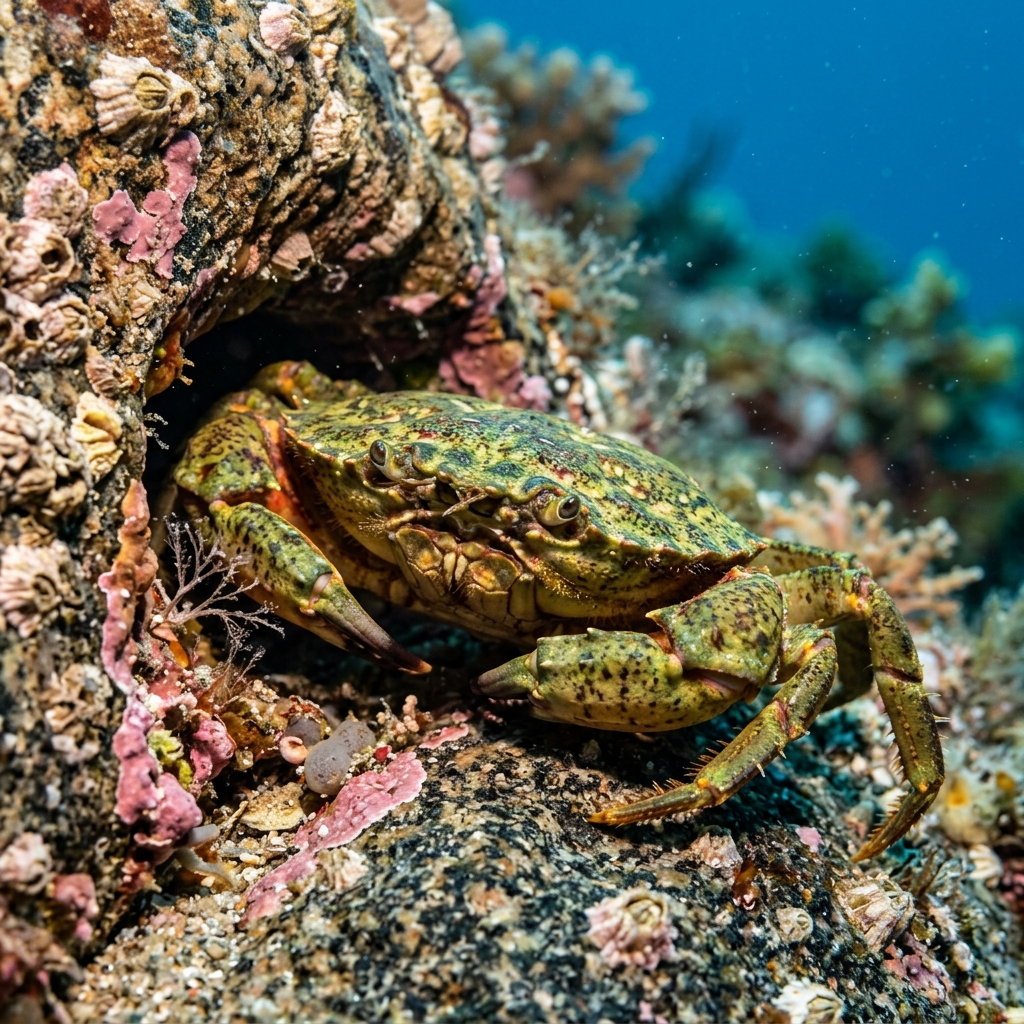
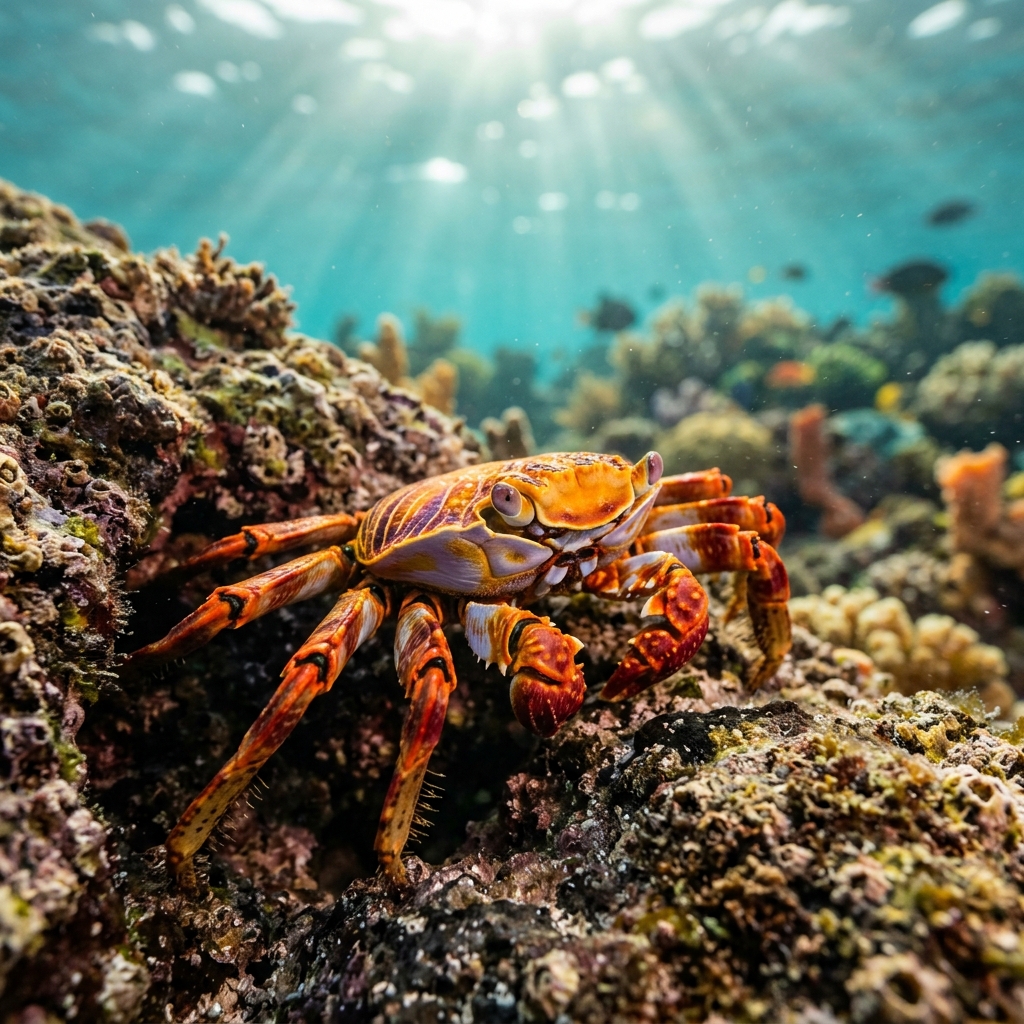
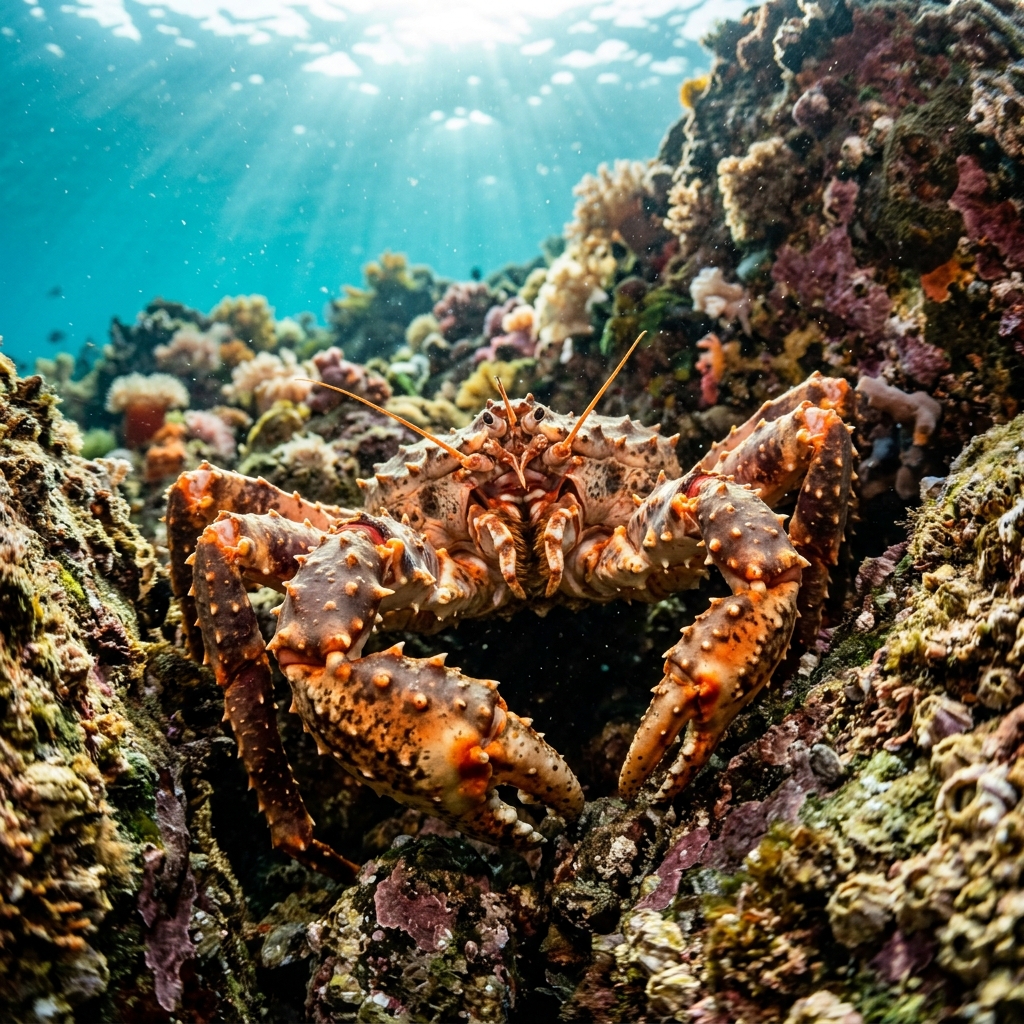
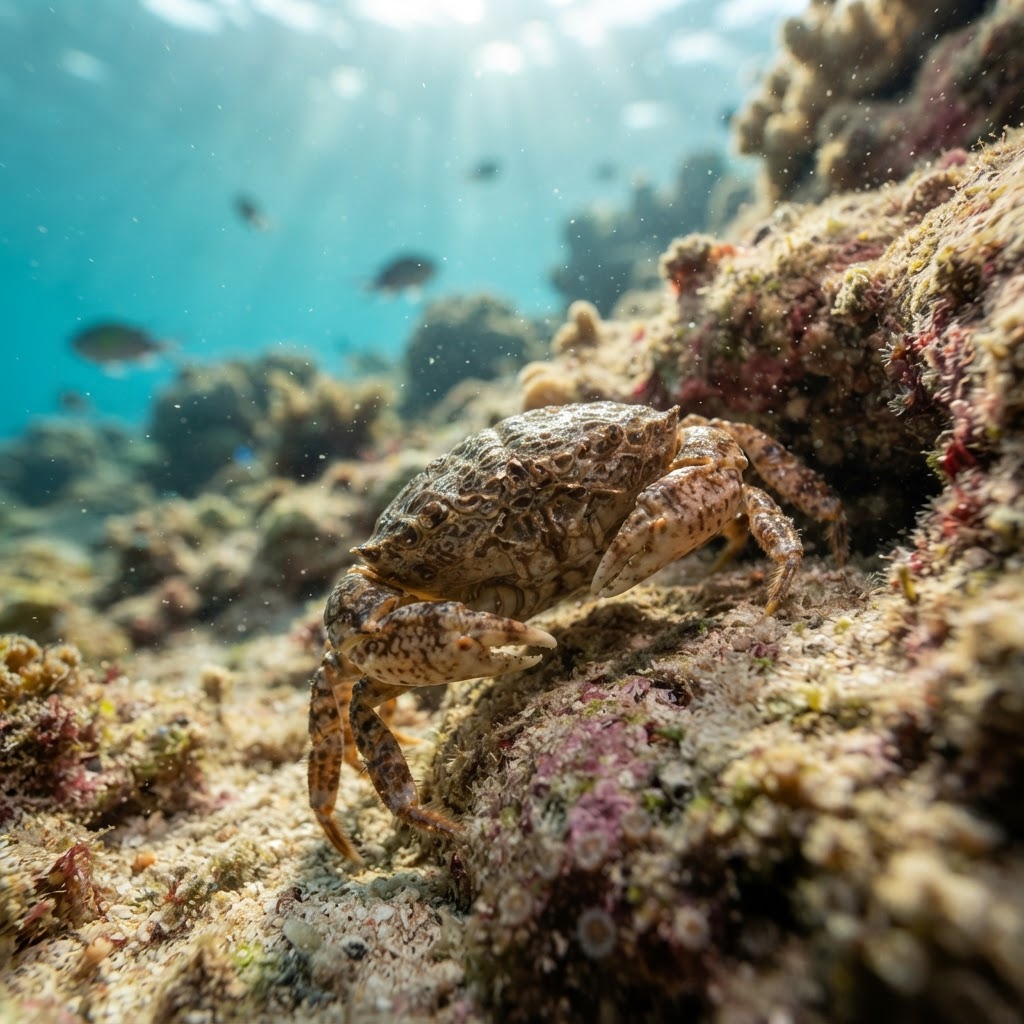
Squat, heavy-shelled crab around 7 cm across, patterned with a mosaic of brown, cream and rust-coloured polygons that breaks up its outline against rubble and coral debris. The claws are stout and dark-tipped, and the whole animal has a low, dome-like profile rather than the flatter shape of swimming crabs. Divers usually spot it by the pattern first, not the shape, since it sits still and blends into broken coral and reef rock.
Expect to find it wedged into crevices or tucked under rubble and coral rock during the day, sitting motionless rather than foraging in the open. It's slow-moving and unbothered by divers who keep their distance, relying on its camouflage to go unnoticed rather than fleeing. Most logs describe single individuals turning up on rubble patches and reef flats rather than open sand or walls.
Its flesh and shell carry potent toxins including tetrodotoxin and saxitoxin, the same neurotoxin families found in pufferfish, making it one of the few crabs where the animal itself is hazardous rather than just its pinch.
No clear season shows up in the sightings, and its 23.8 to 29.8C comfort range covers tropical reef temperatures all year, so it's a year-round find at these sites rather than a seasonal one.
Bali in Indonesia turns up the most sightings by a clear margin, with Green Island and Kenting in Taiwan also reliable spots. Smaller numbers come from the Society Islands in French Polynesia, plus single logged sites in Okinawa, Japan and the east coast of Guam.
Mapping where Devil Crab is logged…
Bali in Indonesia has the most logged sightings, followed by Green Island and Kenting in Taiwan. It also turns up occasionally in the Society Islands of French Polynesia, Okinawa in Japan, and Guam's east coast.
There's no strong seasonal pattern in the sightings, and its warm-water niche of roughly 24 to 30C is a year-round condition on the reefs where it's found, so any month works.
Its shell and flesh can contain tetrodotoxin and saxitoxin, potent neurotoxins, so it's dangerous if handled or eaten. Simply observing one on the reef poses no risk to divers.
Look for a squat, dome-shaped crab about 7 cm across with a mottled brown, cream and rust polygon pattern across its shell. It sits still in rubble or crevices rather than swimming or scuttling in open view.
They typically reach around 7 cm across the shell, making them a fist-sized find rather than a large crab.
Despite looking like an ordinary reef crab, it carries the same neurotoxins found in pufferfish, strong enough to be lethal if eaten, which is unusual among crab species.
Site and sighting data is aggregated from diver logs, iNaturalist and GBIF. For taxonomy and conservation status:
European Green Crab
2,469 sites