Ecsenius dentex
A 4cm blenny peeking from a hole in the reef, uncommon but reliable across South Sinai and Aqaba in 24-28C water year-round.
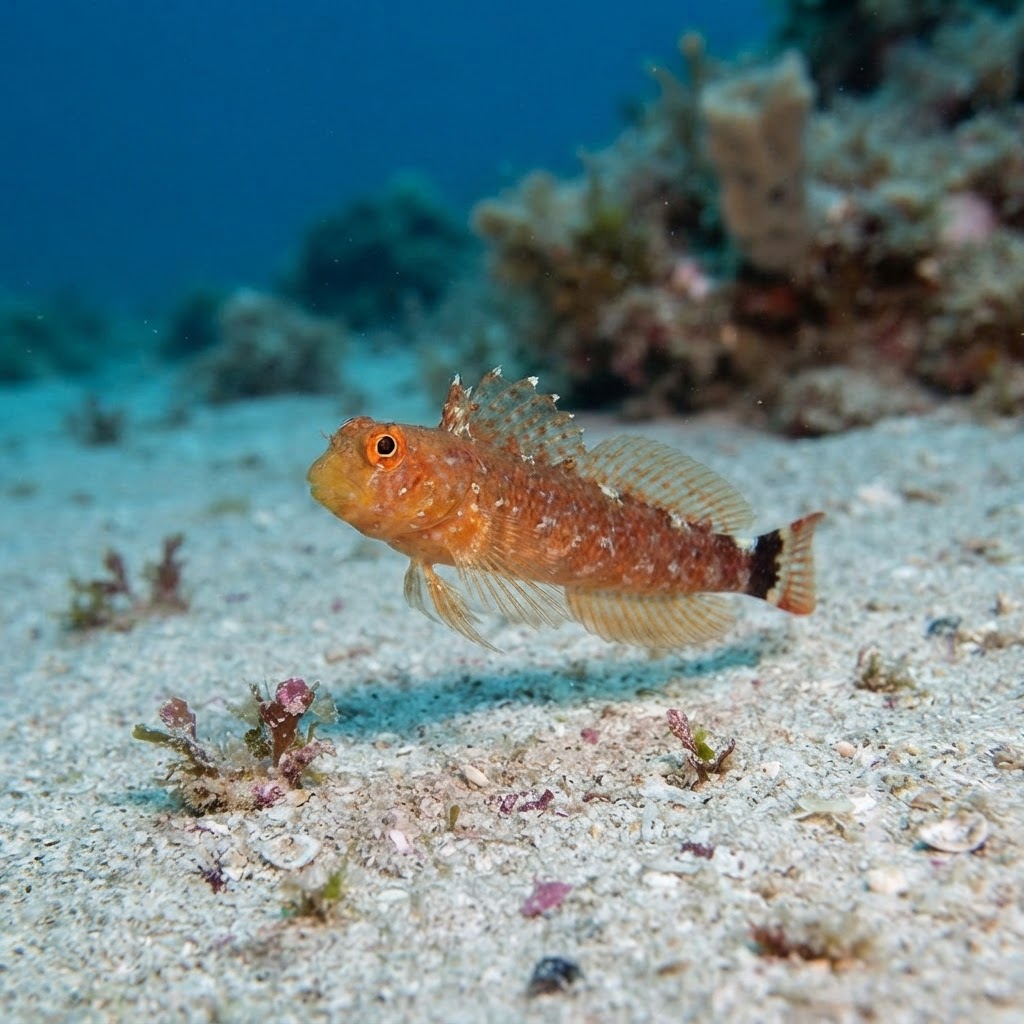
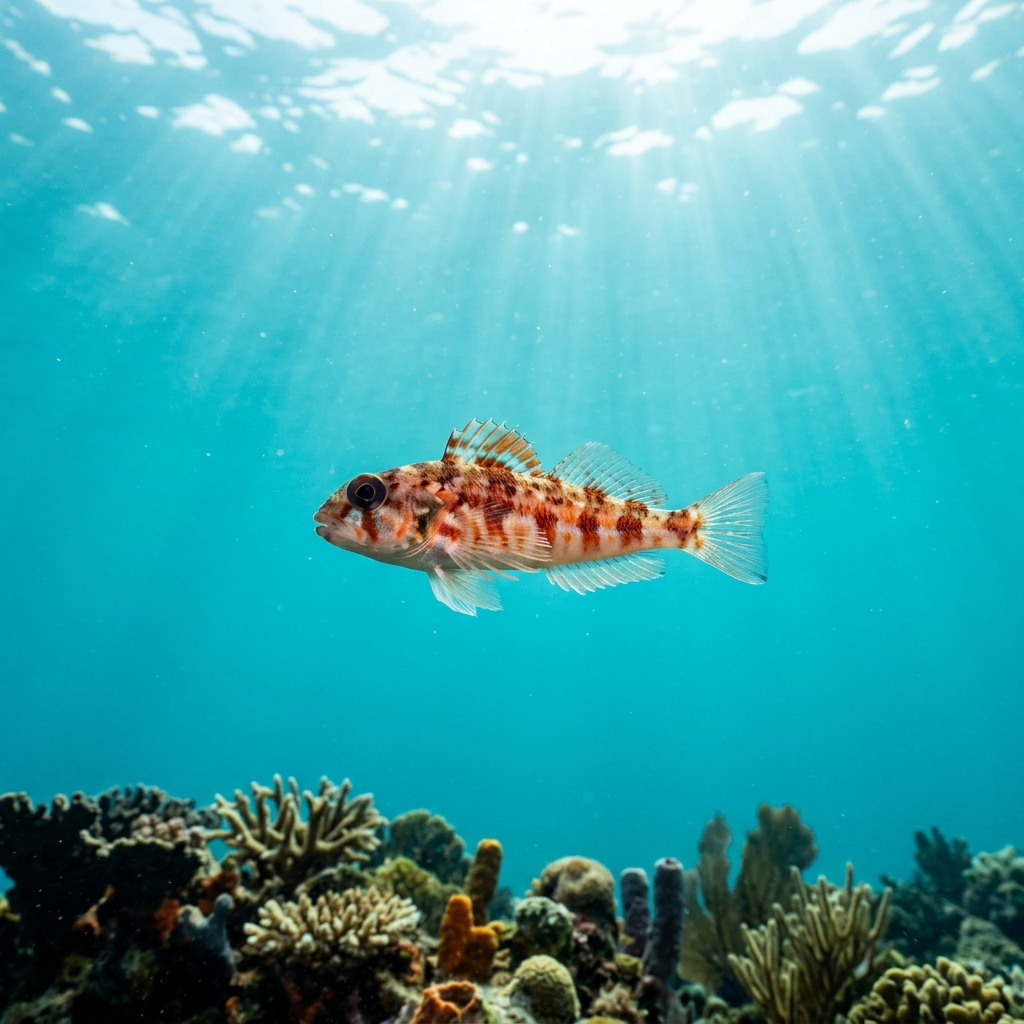
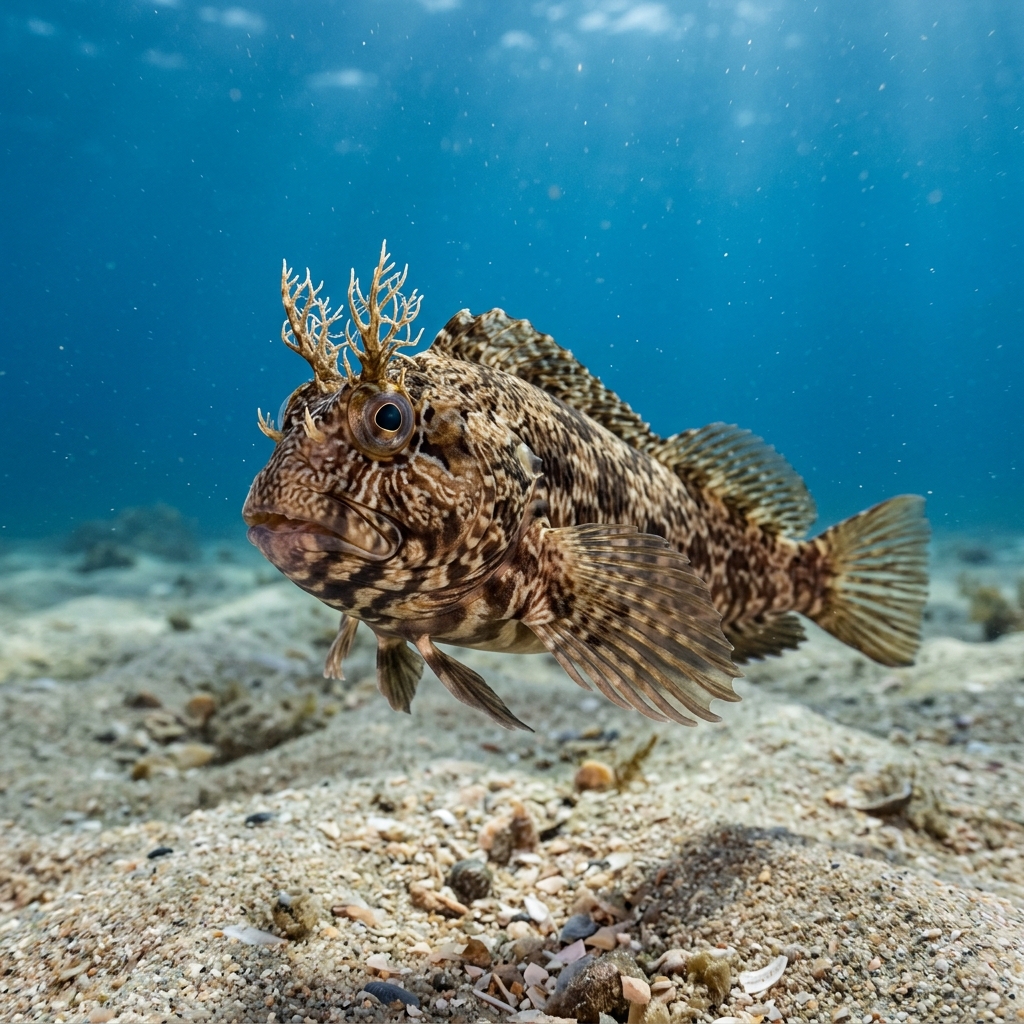
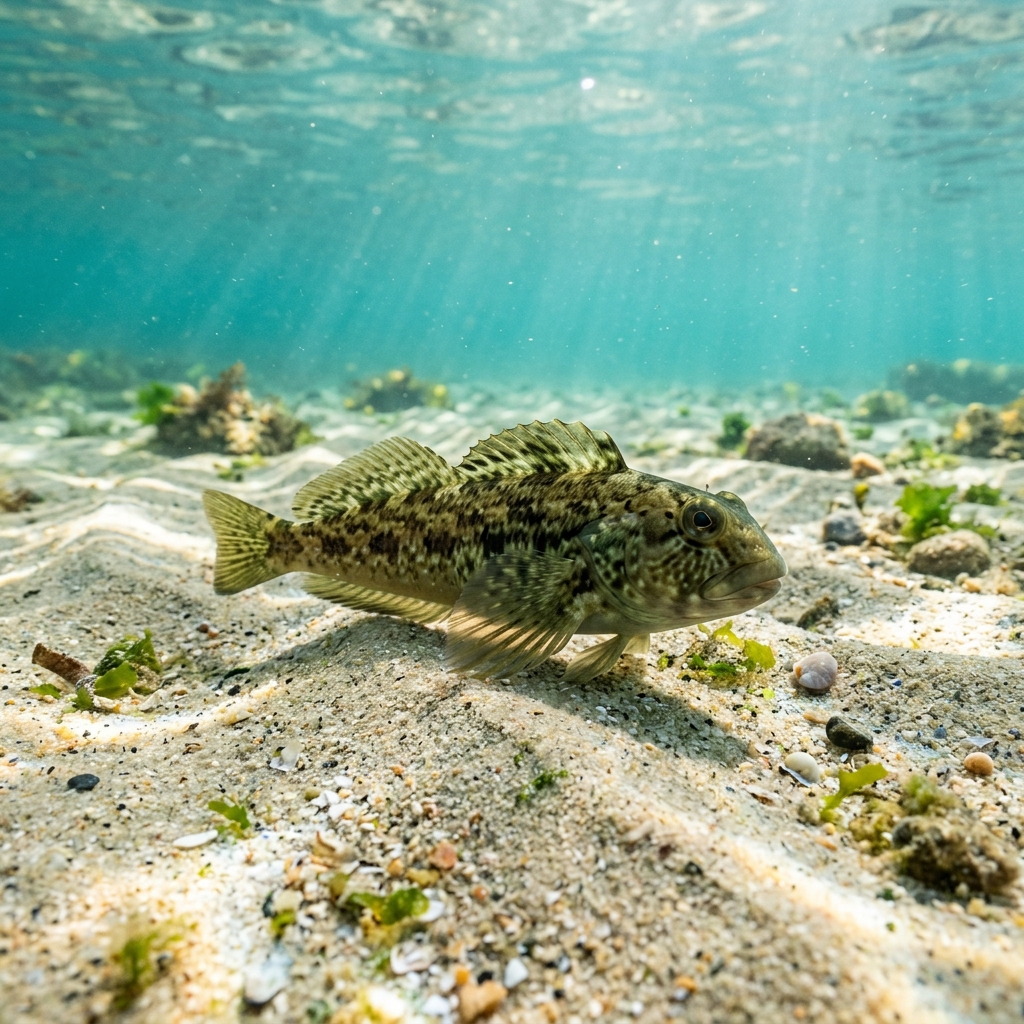
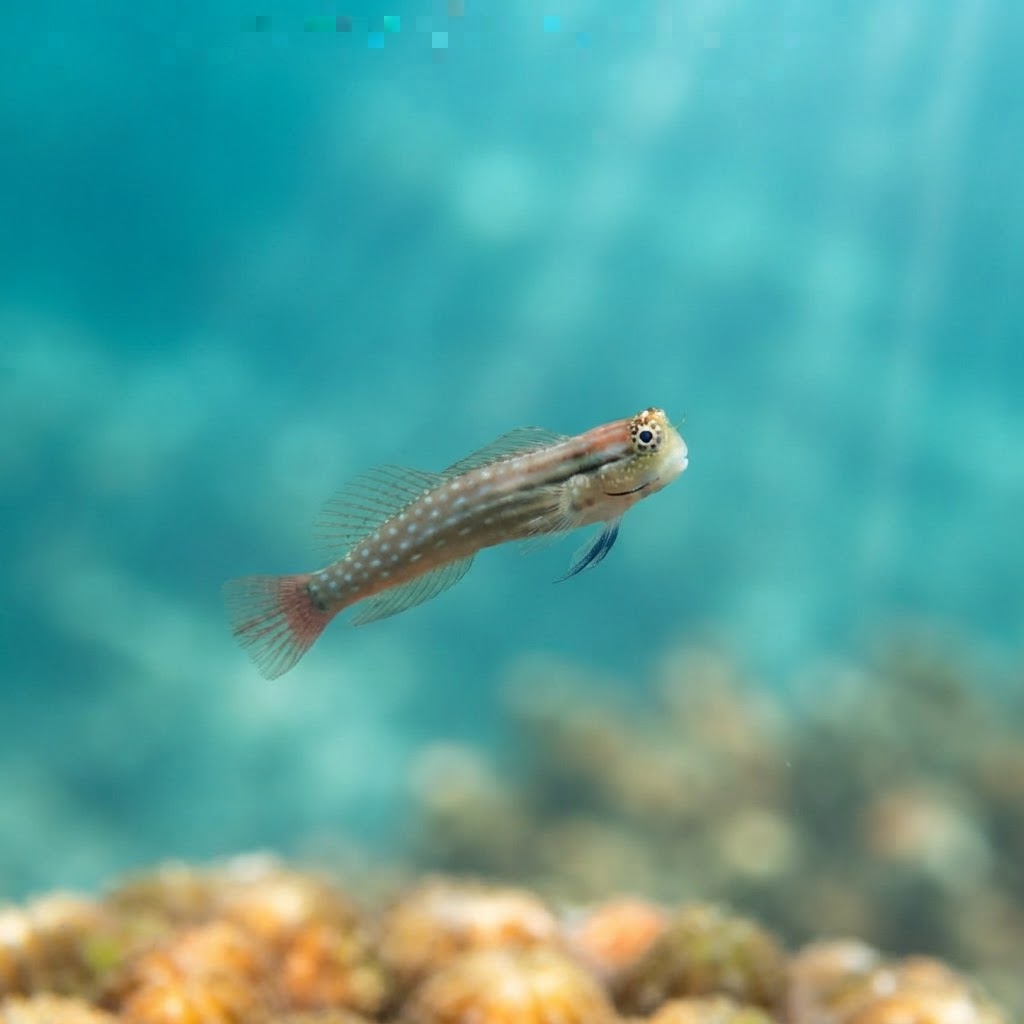
A tiny blenny at just 4 cm, mottled brown to olive with faint speckling that blends into rubble and coral rock. Look for the perched posture typical of combtooth blennies: body propped on pelvic fins, head raised out of a hole in the reef, and large eyes set high on the head. There is no bold pattern to key on, so it is the shape and behaviour, sitting still in a burrow with only the head exposed, that gives it away more than colour.
Spends most of its time perched at the entrance of a small hole or crevice in the reef, watching the water column rather than swimming out into it. Divers usually spot it by slowing down and scanning rubble patches and low reef structure rather than open coral, since it tends to duck back in at the first sign of a close approach. Most sightings come from divers who pause near the substrate rather than cruising past at speed.
Combtooth blennies like this one use comb-shaped teeth to graze algae and detritus straight off the rock surface, browsing in short bursts from the safety of their burrow entrance.
No clear seasonal pattern in the data, and its comfort range of roughly 24 to 28 C matches Red Sea and Gulf of Aqaba conditions for most of the year, so it is a fair bet on any dive in this range.
Reef neighbours a diver could mistake it for. Use the identification notes above to tell them apart.
Most reliably found in the Egyptian Red Sea, especially South Sinai and the Red Sea Riviera, with Marsa Alam and the Deep South also producing sightings. Aqaba in Jordan is close behind as a strong second hotspot, and it turns up in smaller numbers around Eilat in Israel.
Mapping where Dentex Blenny is logged…
Egypt's South Sinai and Red Sea Riviera are the strongest areas, with Marsa Alam and the Deep South also worth checking. Aqaba in Jordan is another consistent spot, and it has been logged around Eilat in Israel too.
There is no strong seasonal pattern in the sightings data, and water temperatures of 24 to 28 C occur across most of the year in the Red Sea and Gulf of Aqaba, so it can turn up on any dive there.
Look for a tiny, 4 cm mottled brown fish perched with just its head out of a hole in the reef rather than swimming freely. It relies on this perched posture and camouflage rather than bold colour, so slow, close-focus scanning of rubble patches is the best way to spot one.
They stay small, reaching only around 4 cm in length, which is typical for combtooth blennies of this genus.
No, they pose no danger to divers. They are small, reef-bound fish that retreat into their burrow rather than approach or interact with divers.
Like other combtooth blennies, it feeds using comb-like teeth to scrape algae and detritus directly off rock surfaces, grazing in short trips out from its burrow entrance rather than roaming the reef.
Site and sighting data is aggregated from diver logs, iNaturalist and GBIF. For taxonomy and conservation status:
Rusty Blenny
2,605 sites