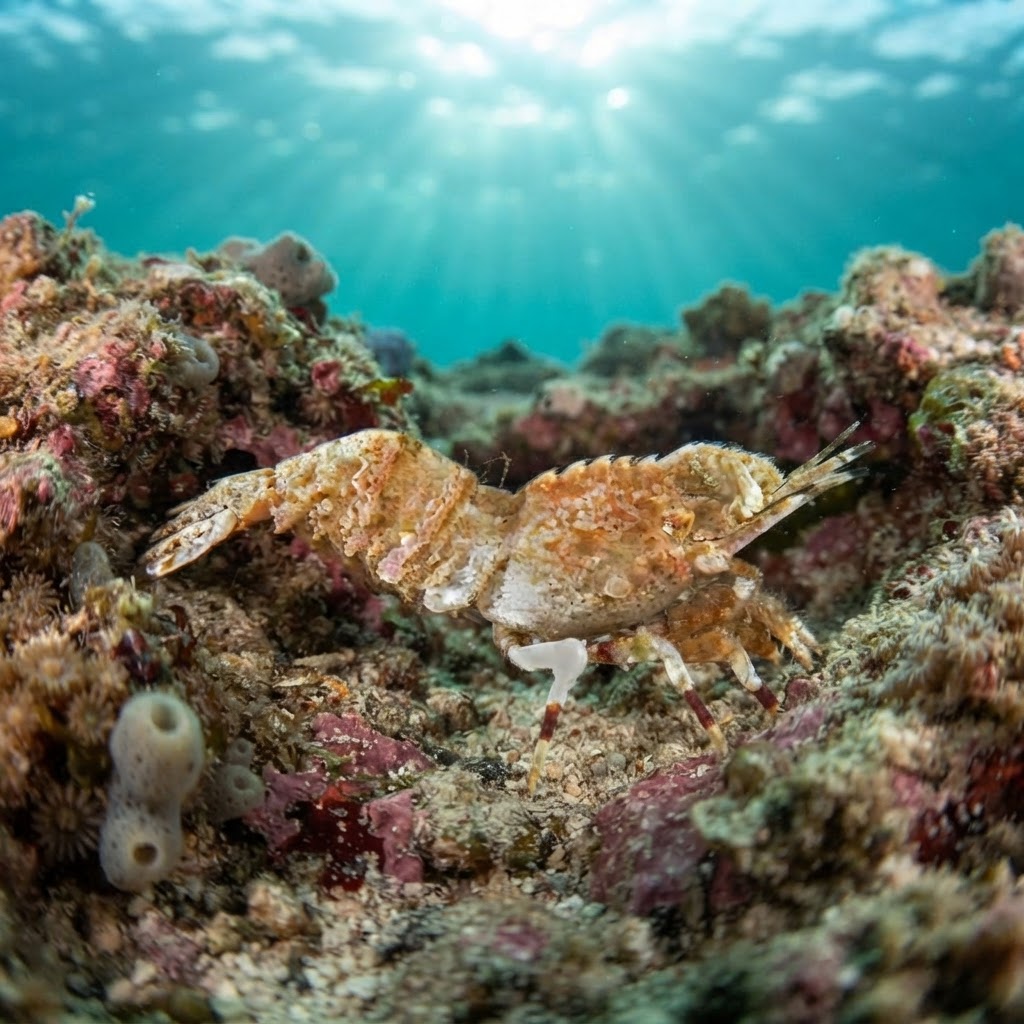
Spirontocaris prionota
A cold-water shrimp most reliably logged in British Columbia's chilly 8.5 to 14.5C waters, uncommon but present year-round.
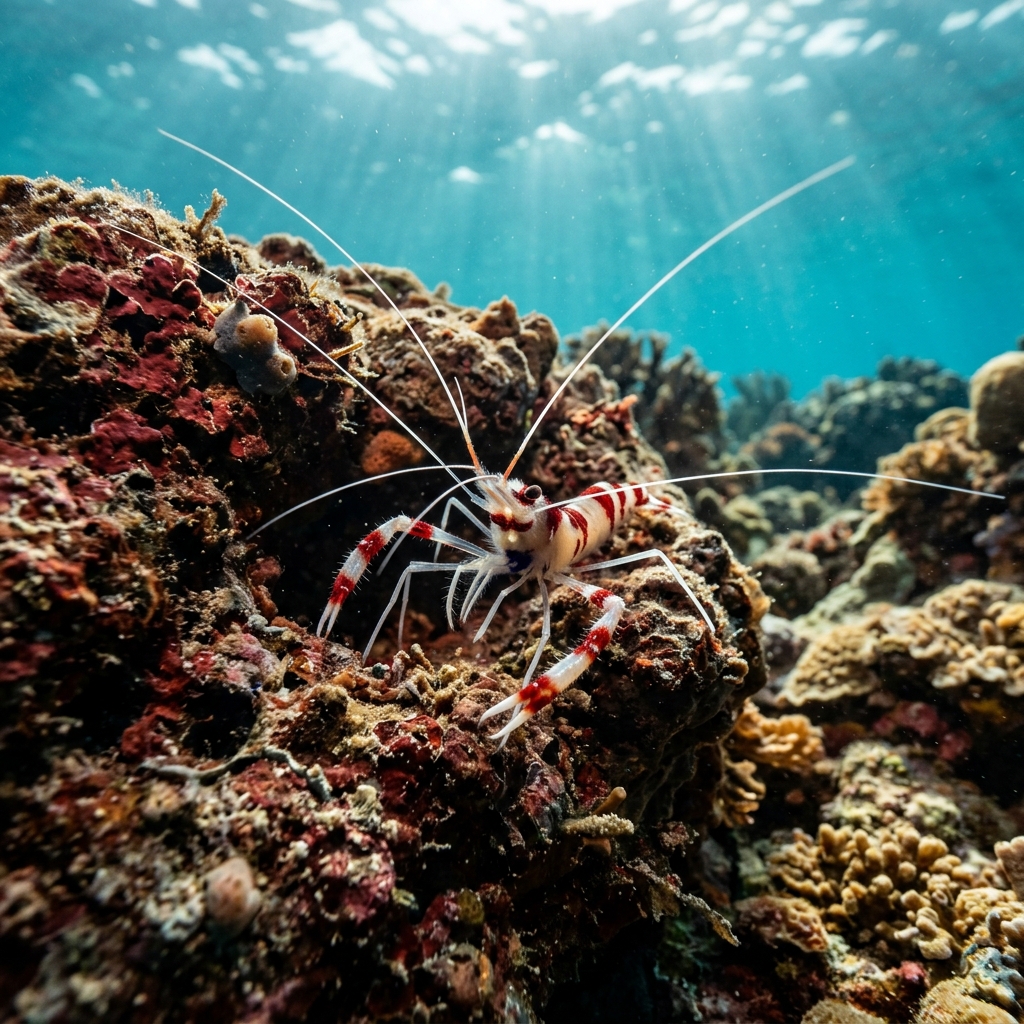
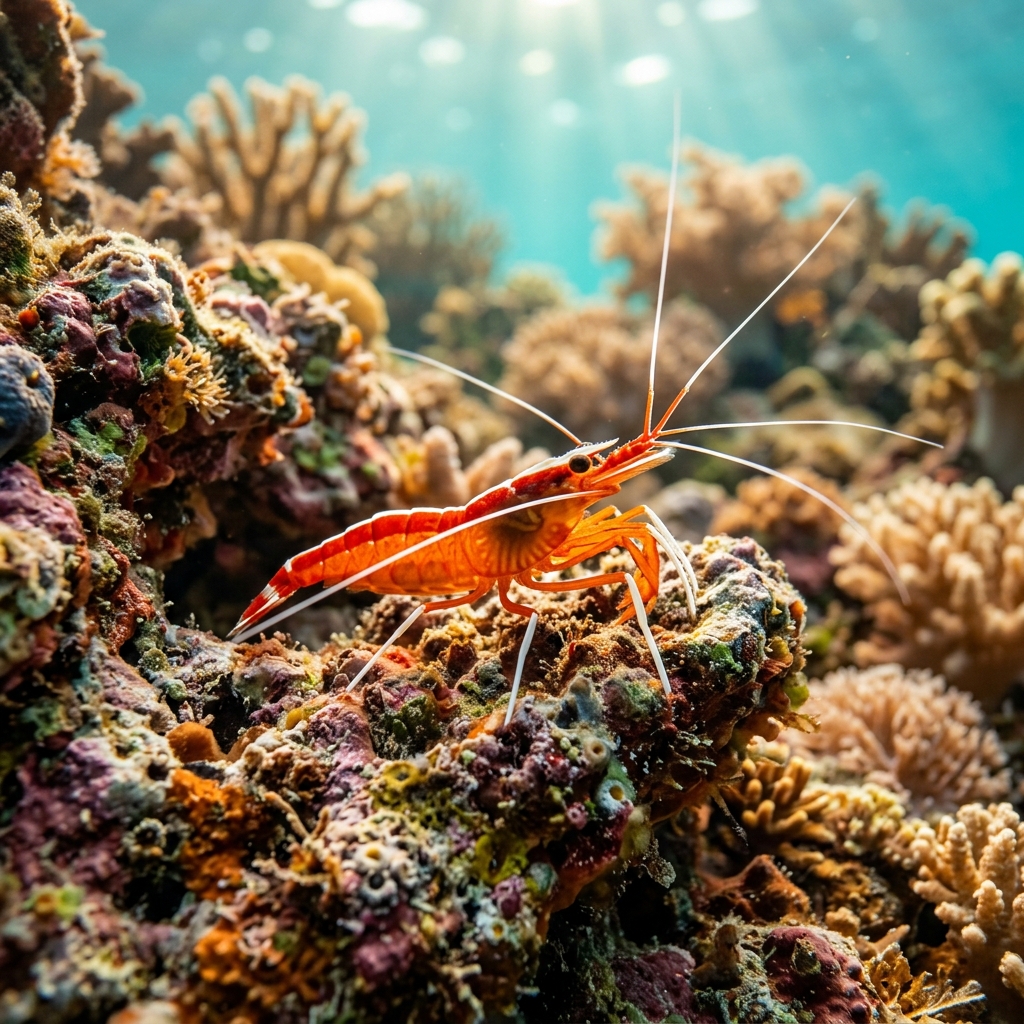
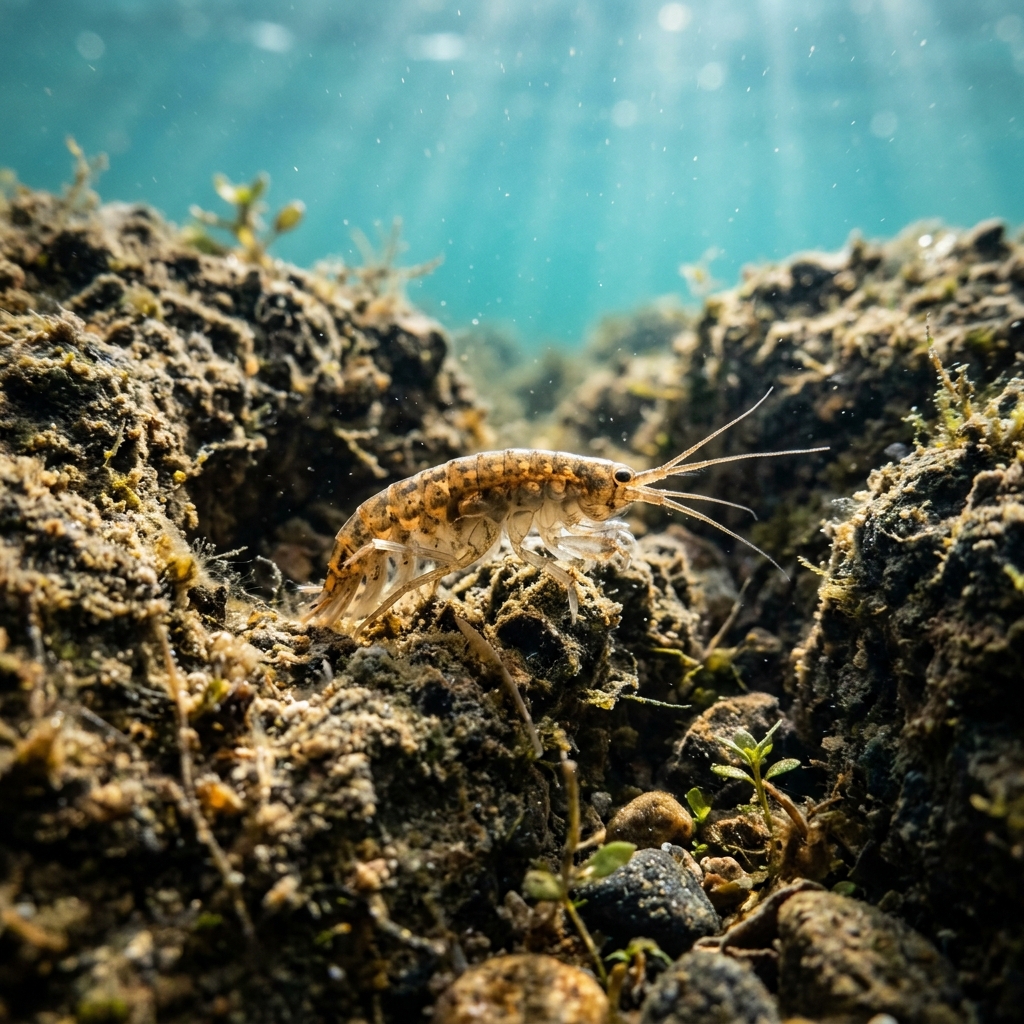
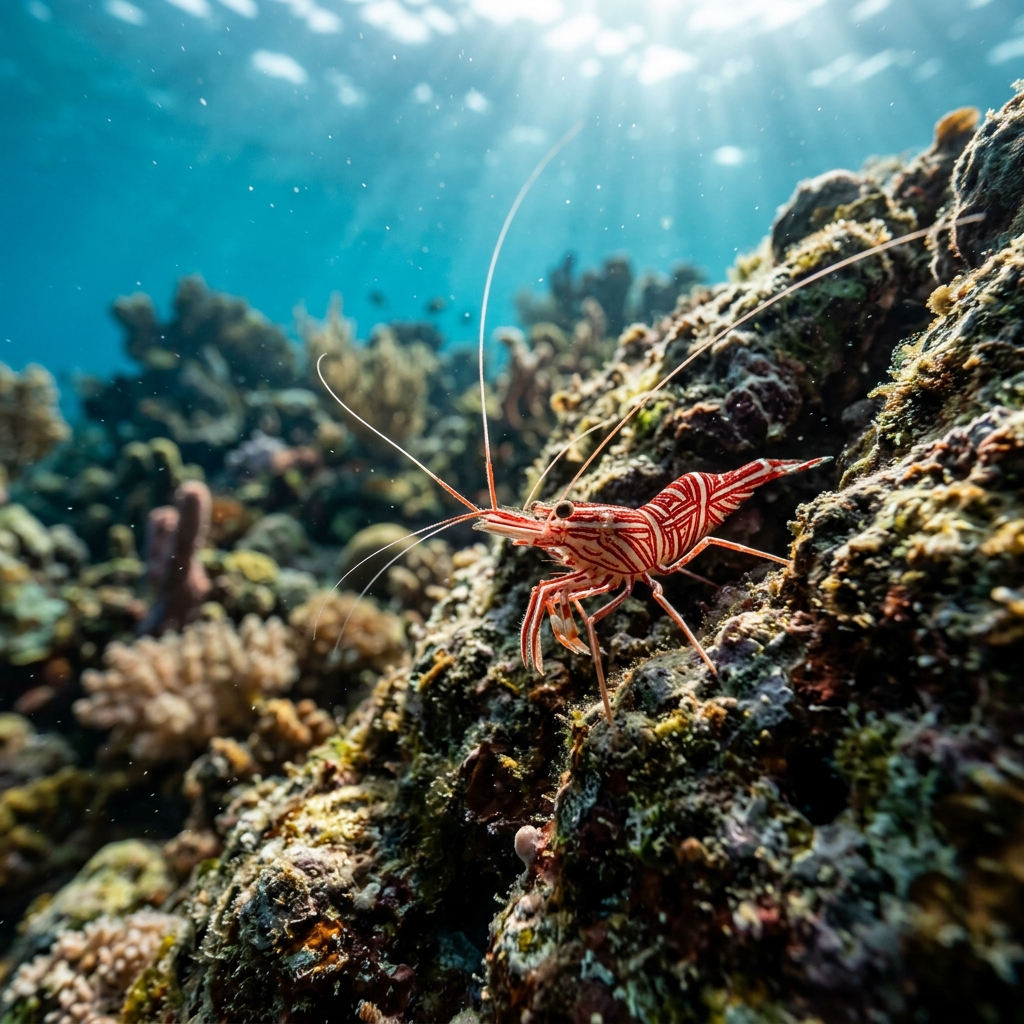
A small, slender-bodied shrimp with a laterally compressed, blade-like shape that gives it its common name. Colouring tends toward translucent reds and browns, blending into the rocky, cold-water reef surfaces it clings to. Look for the elongated rostrum (the pointed frontal spine) and thin walking legs tucked close to rock crevices rather than swimming in open water.
Divers typically find this shrimp tucked against rocky substrate or in crevices rather than out in the open, moving slowly and staying close to cover when a light passes over it. It is not a species that schools or displays; most sightings come from divers deliberately scanning rock faces and ledges on slow, methodical cold-water dives.
It belongs to the Thoridae family, a group of small, often overlooked cold-water shrimp that spend most of their time wedged into rocky crevices rather than exposed on open reef, which is a big part of why sightings stay in the uncommon-to-rare range even where it is present.
No clear seasonal pattern shows up in the data, and with a narrow cold-water niche of 8.5 to 14.5C year-round in these regions, it appears to be a consistent, if uncommon, find across the calendar rather than tied to a particular month.
Most logged in British Columbia, Canada, which accounts for the bulk of recorded sightings, making it the strongest bet for a targeted search. Smaller numbers turn up in the Pacific Northwest and Alaska in the United States, so cold-water divers along the whole Pacific coast from Alaska down through British Columbia have a reasonable shot at spotting one.
Mapping where Deep Blade Shrimp is logged…
British Columbia, Canada is the strongest region for sightings, with additional records from the Pacific Northwest and Alaska in the United States. It favours cold, rocky reef habitat rather than tropical reef systems.
There is no strong seasonal pattern in the sighting data, and its cold-water temperature niche of 8.5 to 14.5C holds steady across the year in these regions, so it is best treated as a year-round possibility rather than a seasonal target.
Look for a small, laterally flattened, blade-shaped body in translucent red or brown tones, tucked into rock crevices rather than swimming openly. A pointed rostrum and thin legs held close to the body are the key visual cues on a close look.
Exact size figures are not well documented for this species, but it falls in with other small-bodied Thoridae shrimp, meaning it is a close-focus find best spotted with a slow scan of rocky surfaces rather than a distant sighting.
No, this species poses no danger to divers. It has no venom or defensive behaviour of concern and simply retreats into crevices when approached.
Site and sighting data is aggregated from diver logs, iNaturalist and GBIF. For taxonomy and conservation status:
Rockpool Prawn
2,179 sites