Chirolophis decoratus
Shaggy-faced and easy to miss: find decorated warbonnets tucked in rocky crevices across British Columbia in 4 to 10 C water, year-round.
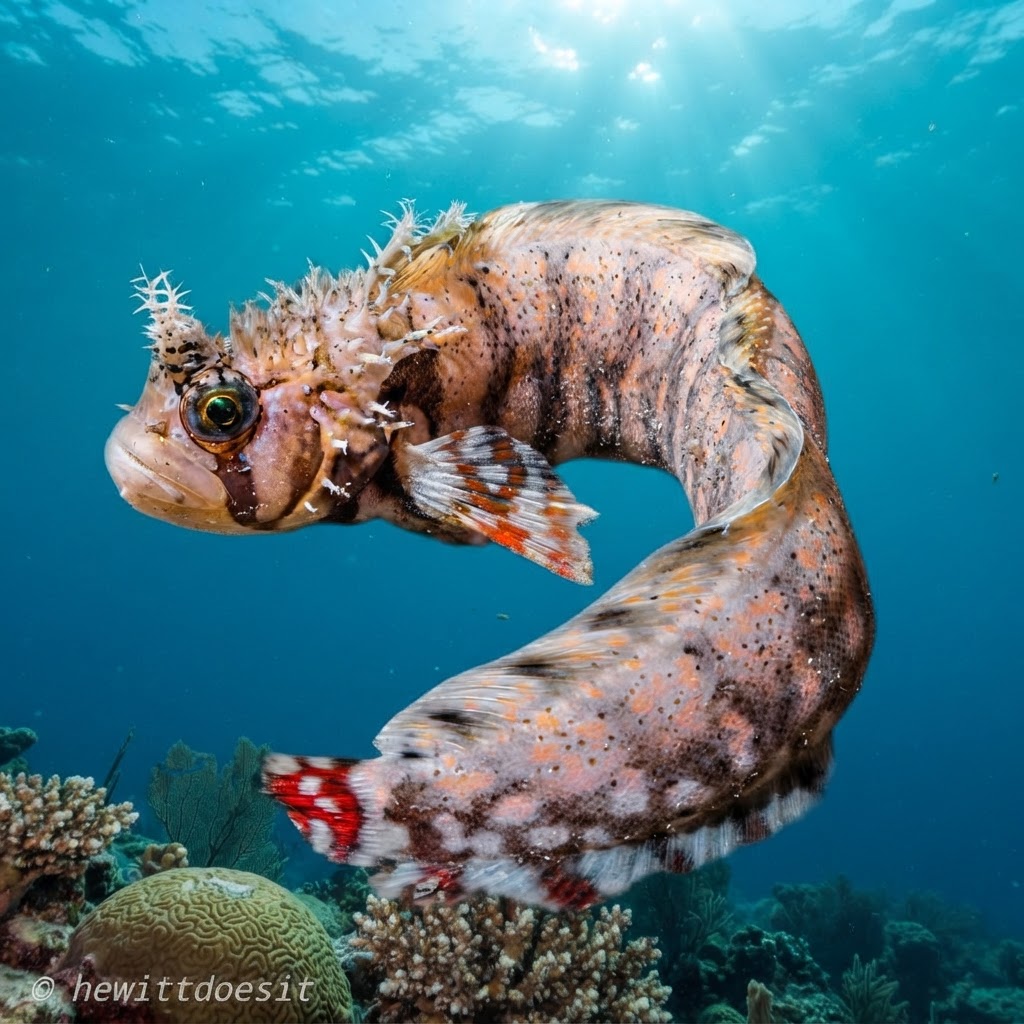
Grows to around 29 cm with a long, eel-like body that tapers back into rocky holes, so usually only the head and front third are visible. The face is the giveaway: fleshy, branched cirri (skin flaps) above the eyes and along the head give it a shaggy, bearded look. Mottled brown, tan and cream blotching camouflages it against encrusted rock and gives it an almost seaweed-like texture at a glance.
Spends most of its time wedged head-out in a crevice, rock hole or abandoned barnacle shell, watching the reef rather than swimming across it. It holds still as divers pass, relying on its camouflage and stillness rather than fleeing, which makes it a good subject for a slow macro pass with a torch. Most encounters happen on rocky reef and wreck structure rather than sand or open water.
Those cirri above the eyes aren't decorative fluff for looks alone: they help break up its outline against encrusted rock, and males are known to guard egg masses inside their chosen crevice.
Sightings show no clear seasonal pattern, and with a temperature niche of 4.1 to 10.4 C it stays put in cold Pacific Northwest water year-round. Any month works, though visibility and boat access in British Columbia tend to favour the drier months for planning a trip.
Most logged sightings come from British Columbia, Canada, with a smaller but reliable presence in the Pacific Northwest of the United States. Divers find it tucked into rocky reef crevices and old pilings rather than open water, so it rewards slow, close-look dives more than wide reef scans.
Mapping where Decorated Warbonnet is logged…
British Columbia, Canada is the strongest area for sightings, with additional records from the Pacific Northwest coast of the United States. Look on rocky reef, pilings and wreck structure rather than open sand.
There is no strong seasonal pattern in sightings, and they tolerate cold water year-round, so any month can produce a sighting in British Columbia or the Pacific Northwest.
Look for a shaggy, bearded face with branched skin flaps above the eyes, poking out of a rocky crevice. The mottled brown and cream body blends into encrusted rock, so most of what you see is just the head.
They reach around 29 cm in length, though most of that body stays hidden in a crevice, so only the head and front section are usually visible to divers.
No, they pose no danger to divers. They are shy, crevice-dwelling fish that hold still rather than approach or bother anyone nearby.
Their fringed, eyebrow-like cirri help disguise their outline against rocky, encrusted surfaces, and males will guard egg clusters inside the same crevice they shelter in.
Site and sighting data is aggregated from diver logs, iNaturalist and GBIF. For taxonomy and conservation status:
Blacktip Grouper
2,734 sites