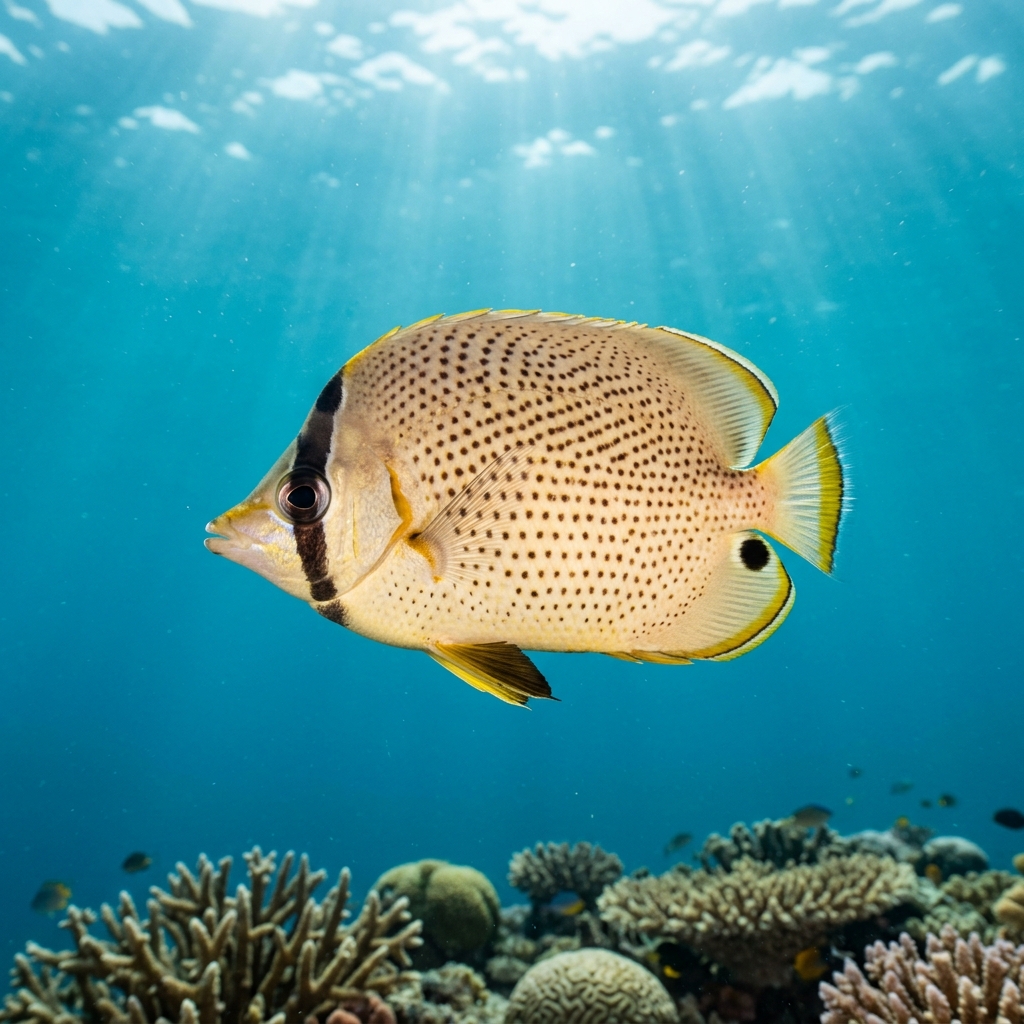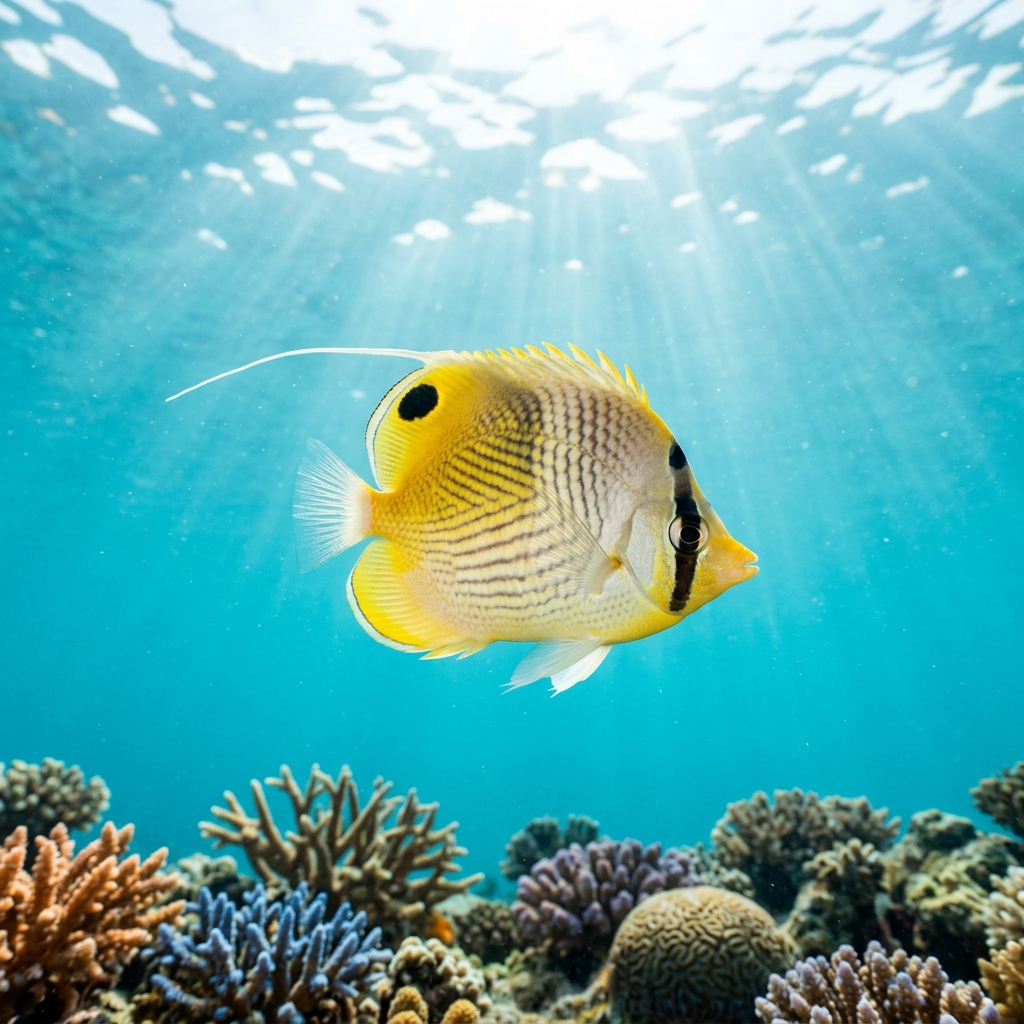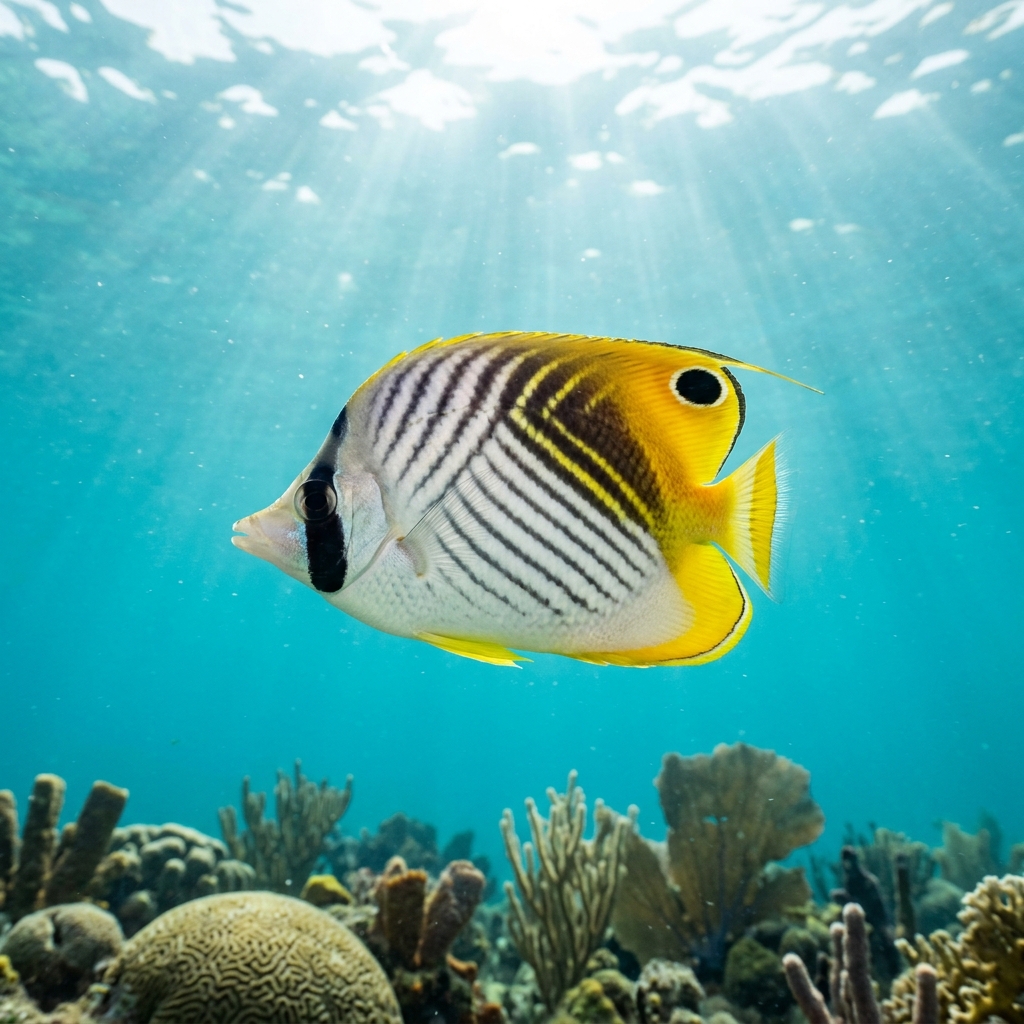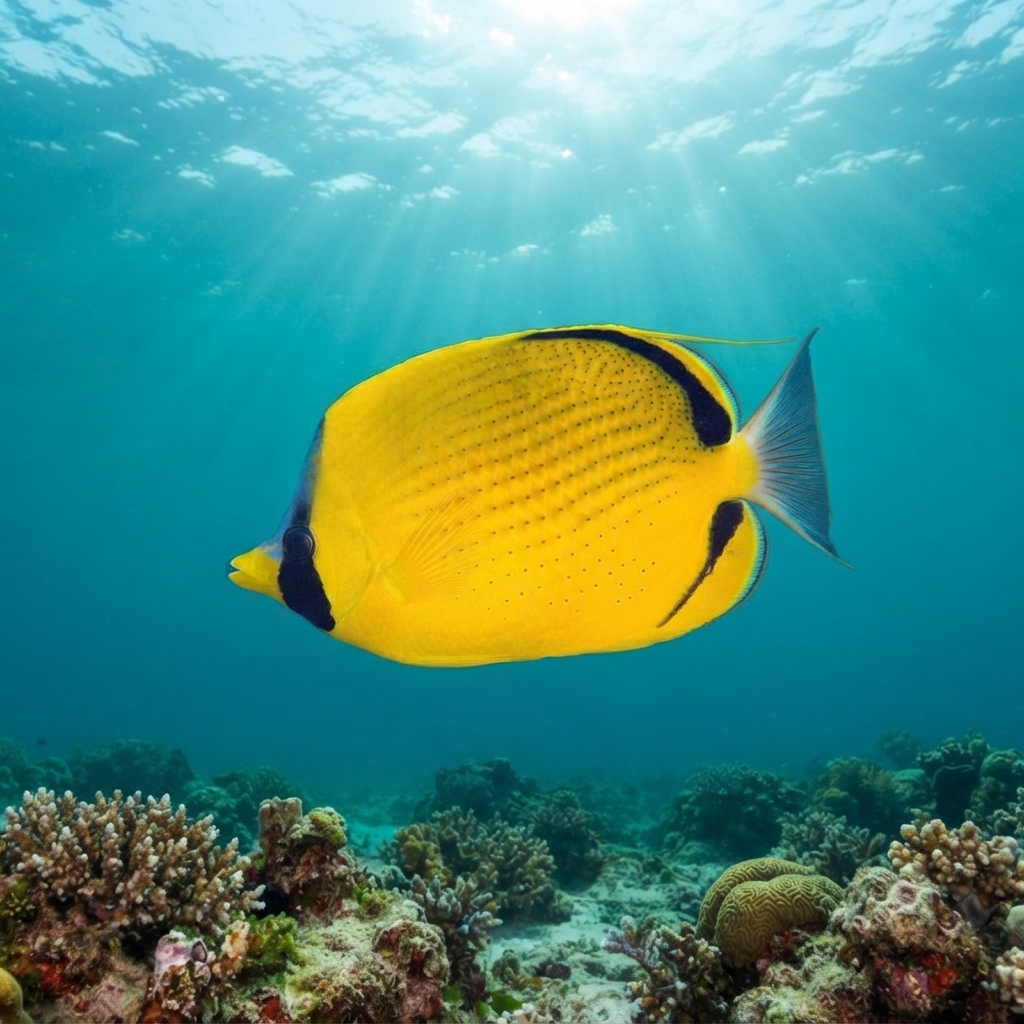
Chaetodon semeion
A common reef sight in Koror & Malakal, Palau and Raja Ampat, thriving year-round in 25-29C water.
Look for a disc-shaped body around 18cm covered in a fine speckled pattern of dark spots over a silvery-yellow base, giving it a dusted or stippled look rather than bold bands. A dark patch sits near the rear of the dorsal fin, and the tail is often edged in yellow or orange. There is no dramatic eye bar like many of its relatives, which is itself a useful clue when sorting it from busier-patterned butterflyfish.
Usually seen picking around coral heads and reef slopes alone or in loose pairs, moving steadily along the substrate rather than darting. It keeps a respectful distance from divers without bolting for cover, making it an easy fish to watch for a minute or two before it drifts back into the reef structure.
Like most butterflyfish it feeds on coral polyps and small invertebrates, picking food directly off the reef surface rather than scavenging in open water.
No clear seasonal pattern shows up in the sightings data, and with a comfortable range of roughly 25 to 29C, reefs across its range stay within its niche all year, so it is a fair bet on any visit.
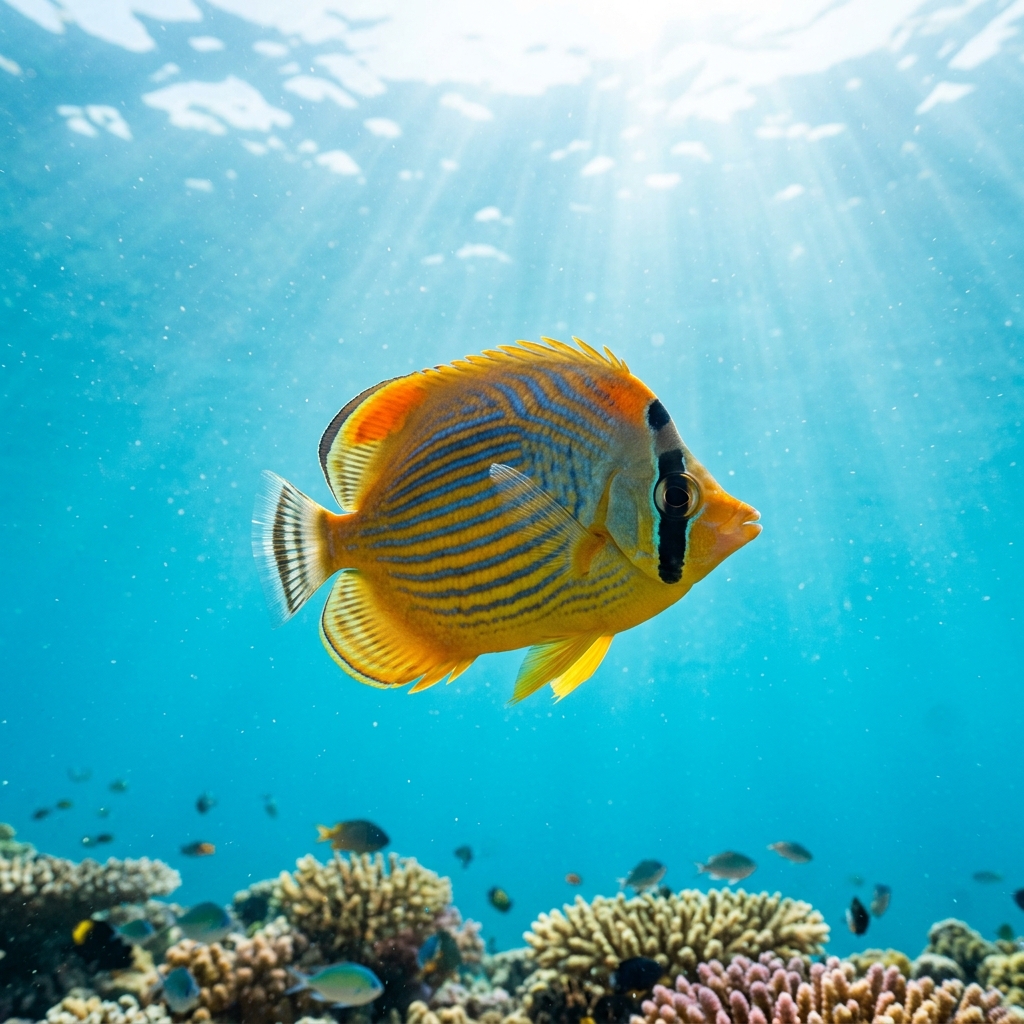
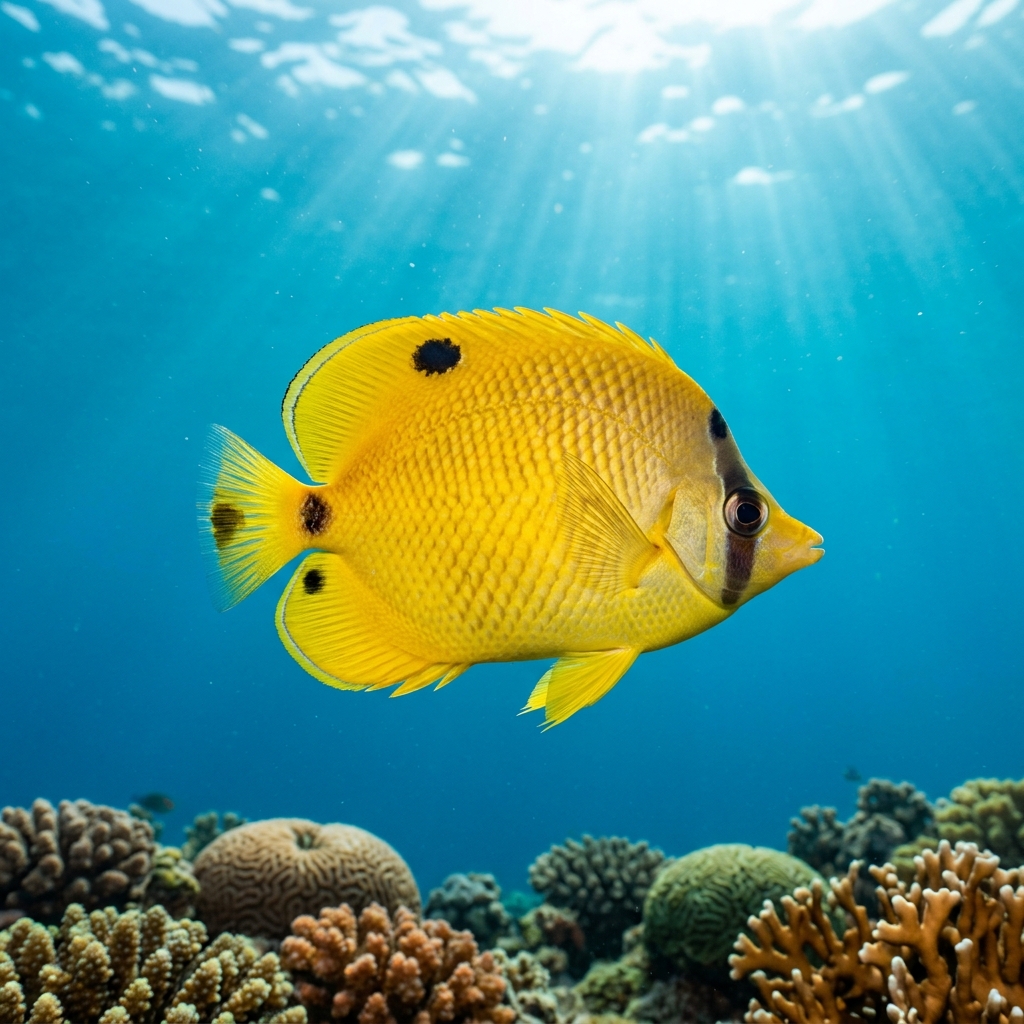
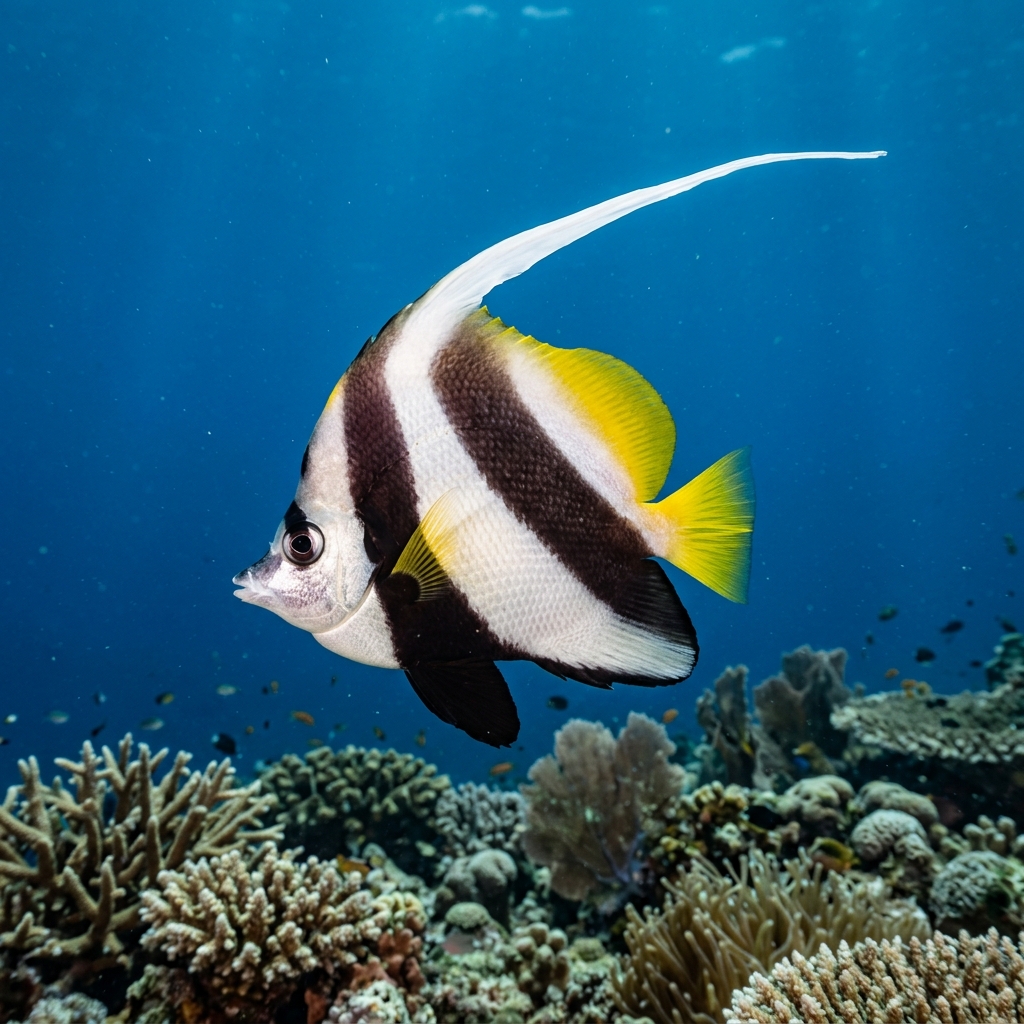
Reef neighbours a diver could mistake it for. Use the identification notes above to tell them apart.
Most reliably logged in Palau, especially around Koror & Malakal and the Rock Islands, and a strong second stronghold in Indonesia's Raja Ampat and Sulawesi. Smaller but consistent numbers turn up in the Marshall Islands' Kwajalein Atoll, with occasional sightings at Apra Harbor in Guam and Kavieng in Papua New Guinea.
Mapping where Decorated Butterflyfish is logged…
Palau is the strongest area for sightings, particularly Koror & Malakal and the Rock Islands, with Raja Ampat and Sulawesi in Indonesia close behind. Smaller populations are logged in the Marshall Islands, Guam and Papua New Guinea.
There is no strong seasonal signal in the sightings, and the species sits comfortably in 25 to 29C water year-round, so any time of year on these reefs works.
Check for a silvery-yellow disc-shaped body covered in fine dark speckles rather than bold stripes, a dark smudge near the back of the dorsal fin, and a yellow-tinged tail. It lacks the strong dark eye bar seen on many other butterflyfish.
They typically reach around 18cm, a fairly average size for a butterflyfish, making them easy to spot but not oversized on the reef.
No, they pose no danger to divers and are simply reef grazers that go about their business at a comfortable distance.
They feed mainly on coral polyps and small invertebrates picked directly off the reef surface, a common feeding style across the butterflyfish family.
Site and sighting data is aggregated from diver logs, iNaturalist and GBIF. For taxonomy and conservation status: